The decentralized finance (DeFi) sector is poised for a significant institutional shift as Aave, one of the largest lending protocols in the blockchain ecosystem, prepares to launch a specialized Real World Asset (RWA) credit market on the Avalanche network. This initiative, facilitated through the forthcoming Aave V4 RWA Hub, represents a strategic evolution in how traditional financial institutions interact with on-chain liquidity. By enabling entities to borrow against tokenized assets—such as Treasuries, real estate, and private credit—without liquidating their underlying positions, Aave is effectively bridging the gap between legacy capital markets and decentralized infrastructure.
The Mechanics of the Aave V4 RWA Hub
At the core of this development is the integration of Aave V4’s architectural advancements. The RWA Hub leverages the "Hub and Spoke" model, a sophisticated design that allows for the creation of isolated credit markets. In this framework, each RWA-focused "spoke" maintains its own unique collateral requirements and risk parameters, ensuring that the volatility or specific risk profiles of tokenized assets do not adversely impact the broader Aave liquidity pool.
Despite this isolation, these markets remain interconnected with Aave’s vast global liquidity network, providing participants with a seamless experience. The initial deployment on Avalanche will serve as a pilot for this structure, utilizing Tether’s USA stablecoin—issued by the federally regulated Anchorage Digital Bank—as the primary borrowing asset. This selection is intentional; by utilizing a dollar-backed, regulated instrument, Aave provides institutional participants with a familiar, low-volatility medium of exchange for both borrowing and settlement.
Contextualizing the RWA Market Boom
The launch of the RWA Hub arrives at a pivotal moment for the tokenization sector. According to industry data, the market for tokenized real-world assets has experienced a robust expansion of approximately 40% throughout the current calendar year, pushing the total valuation of such assets beyond $51 billion. This growth is driven by an increasing institutional appetite for the efficiency, transparency, and 24/7 liquidity that blockchain technology affords to traditionally illiquid assets.
Avalanche has established itself as a primary hub for this activity, currently hosting more than $3.4 billion in tokenized assets. The network’s emphasis on high throughput and low latency, combined with its specialized subnet architecture, makes it a logical choice for Aave’s institutional expansion. The deployment builds upon Aave’s existing presence on Avalanche, signaling a commitment to deepening the protocol’s utility within this specific ecosystem.
A Chronology of Institutional DeFi Integration
To understand the significance of this move, it is necessary to look at the timeline of Aave’s institutional journey. Aave has long prioritized the development of "Aave Arc," its permissioned liquidity pool, which was designed to comply with Know Your Customer (KYC) and Anti-Money Laundering (AML) requirements. The transition toward V4 and the RWA Hub represents the next logical step: moving from basic compliance-ready pools to asset-specific, risk-managed credit markets.
In early 2024, the broader DeFi market began to pivot away from purely speculative yield-farming models toward sustainable, collateralized lending anchored in tangible assets. Throughout the second and third quarters, major financial institutions—ranging from asset managers like BlackRock to regional banking players—began tokenizing money market funds on various public blockchains. Aave’s announcement confirms that the industry is now moving into the "utilization phase," where these tokenized assets are no longer just held as digital certificates, but are actively deployed as collateral to access on-chain liquidity.
Strategic Rationale and Official Perspectives
Aave founder Stani Kulechov has frequently highlighted that the primary hurdle for institutional DeFi adoption is not the issuance of tokenized assets, but their lack of utility. If an institution tokenizes a Treasury bond but cannot utilize it within a credit market, the capital efficiency remains stagnant. The RWA Hub is designed to solve this by providing a secondary market environment for these assets.
From the perspective of institutional participants, the ability to borrow against tokenized holdings without selling them is a critical treasury management feature. Selling an asset often triggers tax events, capital gains liabilities, and potential loss of yield. By pledging these assets as collateral in a regulated, secure, and isolated Aave pool, institutions can unlock capital for operational needs or further investment while retaining ownership of their long-term holdings. The use of USA—a stablecoin managed by Anchorage Digital Bank—further reinforces the trust layer, as Anchorage is a federally chartered bank, providing the regulatory comfort necessary for traditional financial entities to participate in an on-chain environment.
Implications for the Financial Landscape
The introduction of the Aave V4 RWA Hub on Avalanche carries several profound implications for the broader financial system:
- Increased Capital Efficiency: By allowing tokenized real estate, corporate bonds, and Treasuries to act as collateral, Aave is creating a global credit market that operates with higher efficiency than traditional over-the-counter (OTC) desk lending.
- Standardization of Risk: The Hub and Spoke architecture sets a new industry standard for risk management. By isolating collateral rules, Aave prevents systemic contagion, allowing institutions with different risk appetites to enter the market without exposure to the entire protocol’s risk profile.
- Liquidity Fragmentation Reduction: While the markets are isolated in their risk, they are conceptually tied to Aave’s massive liquidity network. This helps to mitigate the fragmentation often seen in private, closed-loop institutional blockchains.
- Regulatory Convergence: The inclusion of Anchorage-backed stablecoins suggests that the "permissionless" nature of DeFi is evolving into a "permissioned-access" model, where the rails are decentralized but the participants are vetted.
Future Outlook and Market Challenges
Despite the optimism surrounding this launch, the success of the RWA Hub will depend on several external factors. First, the regulatory landscape for tokenized assets remains fluid. While the U.S. and other jurisdictions are showing increased interest in digital assets, legal clarity regarding the status of tokenized securities and their treatment in bankruptcy or liquidation events is still being refined.
Second, the adoption rate will hinge on the interoperability of these tokenized assets across different blockchains. While Avalanche is a robust platform, institutions often require cross-chain liquidity to manage global portfolios. The ability of the Aave V4 RWA Hub to bridge these gaps will be a primary indicator of its long-term viability.
Lastly, the role of institutional custodians cannot be overstated. By partnering with entities like Anchorage Digital Bank, Aave is effectively outsourcing the "on-ramp" and "off-ramp" complexities. This collaborative model—where DeFi protocols provide the infrastructure and banks provide the regulatory wrapper—is likely to become the dominant paradigm for institutional blockchain adoption over the next decade.
Conclusion
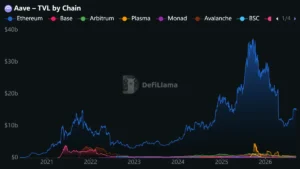
The rollout of the Aave V4 RWA Hub on Avalanche serves as a definitive marker of the maturation of decentralized finance. By moving beyond the initial hype of crypto-native assets and providing a structured, risk-managed framework for real-world instruments, Aave is positioning itself as a foundational layer for the future of global finance. As the tokenized asset market continues to grow, the ability to leverage these assets for liquidity will become a critical competitive advantage for financial institutions. The success of this initiative will be measured not just by the total value locked (TVL) within the hub, but by the diversity of institutions that choose to transition their balance sheet operations onto this new, high-speed, and efficient blockchain infrastructure.