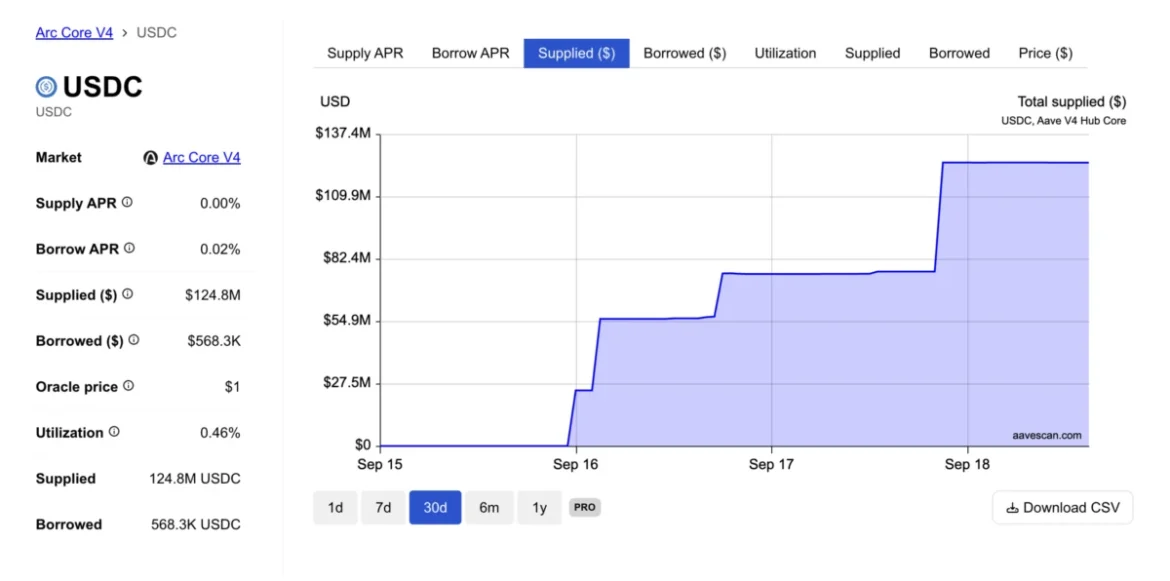
Decentralized finance (DeFi) liquidity pioneer Aave has unveiled a groundbreaking governance proposal aimed at unlocking a massive, yet previously untapped, pool of institutional capital. Titled "Custodied Collateral Lending," the framework is designed to allow regulated institutional entities—such as hedge funds, asset managers, and corporate treasuries—to borrow stablecoins directly from Aave markets using traditional, off-chain assets secured by qualified digital asset custodians.
By bridging the gap between traditional compliance-heavy custody solutions and decentralized on-chain lending protocols, Aave seeks to solve a long-standing structural inefficiency in the digital asset ecosystem. Historically, institutions bound by strict fiduciary mandates or regulatory frameworks have been barred from interacting with DeFi protocols because doing so required self-custodying digital assets or relying on unsecured bridging mechanisms. The new proposal looks to dismantle this barrier by integrating regulated institutional custody providers, starting with Anchorage Digital, directly into the Aave V4 architecture through isolated hubs and spokes.
The Structural Bottleneck: Bridging Institutional Custody and On-Chain Liquidity
For years, the intersection of institutional finance and decentralized protocols has been plagued by a fundamental incompatibility. Traditional financial institutions and regulated funds are legally required to store their crypto holdings with qualified, insured custodians like Anchorage, Coinbase Custody, or BitGo. These custodial environments prioritize maximum security, regulatory compliance, and multi-signature cold storage, completely isolating assets from the internet.
Conversely, decentralized lending markets like Aave and Morpho operate entirely on-chain, relying on programmatic smart contracts, real-time liquidation mechanisms, and self-custodied wallet signatures. For an institutional player to leverage their Bitcoin (BTC) or Ethereum (ETH) holdings to secure a stablecoin loan in DeFi, they traditionally had to resort to workaround solutions. The most common method involved converting underlying assets into wrapped equivalents, such as Wrapped Bitcoin (WBTC), and transferring them to a self-custody wallet compatible with Web3 applications.
However, this workaround introduces substantial risks that many institutional risk committees simply cannot approve. Relying on wrapped assets exposes funds to third-party bridge risks, complex smart contract vulnerabilities, and regulatory ambiguities regarding asset backing and compliance. Consequently, billions of dollars in institutional digital assets have remained stranded in institutional cold storage—completely inaccessible as productive collateral for on-chain borrowing and leverage opportunities.
Mechanics of Custodied Collateral Lending
Aave’s newly detailed governance proposal addresses this friction through a sophisticated integration of institutional custody infrastructure and decentralized tokenomics. According to the forum discussion submitted under the Aave V4 isolated hub-and-spoke framework, the operational lifecycle of a custodied collateral loan is designed to be seamless for the borrower while maintaining strict cryptographic and legal boundaries.
Under the proposed model, an institutional borrower deposits their underlying asset—such as Bitcoin—into an account with a regulated custodian like Anchorage Digital. Crucially, the physical or native asset never leaves the secure, regulated confines of the custodian’s vault. Instead, the custody provider communicates the proof of deposit on-chain via advanced middleware solutions, specifically utilizing Chainlink’s CustodySync technology.
Once the deposit is verified and mirrored on-chain, Custodied Collateral Tokens (CoCTs) are minted. These tokens function essentially as cryptographic receipts, representing the exact value and ownership of the underlying assets held securely by Anchorage. The institutional borrower then deposits these CoCTs into an isolated market on Aave V4 as collateral. With this collateral established, the institution can draw down stablecoin liquidity—predominantly USD Coin (USDC)—to deploy across various financial strategies.
The repayment and unwinding process mirrors this operational loop in reverse. When the borrower is ready to close the position, they repay the borrowed stablecoins alongside accrued interest to the Aave protocol. Upon successful verification of the repayment, the corresponding CoCTs are systematically burned, triggering an automated signal to Anchorage Digital to release the encumbered native assets back to the institution’s primary custodial account. This architecture ensures that counterparty risk is minimized, compliance standards are upheld, and systemic smart contract exposure to the underlying native asset is effectively eliminated.

Background Context and Market Dynamics
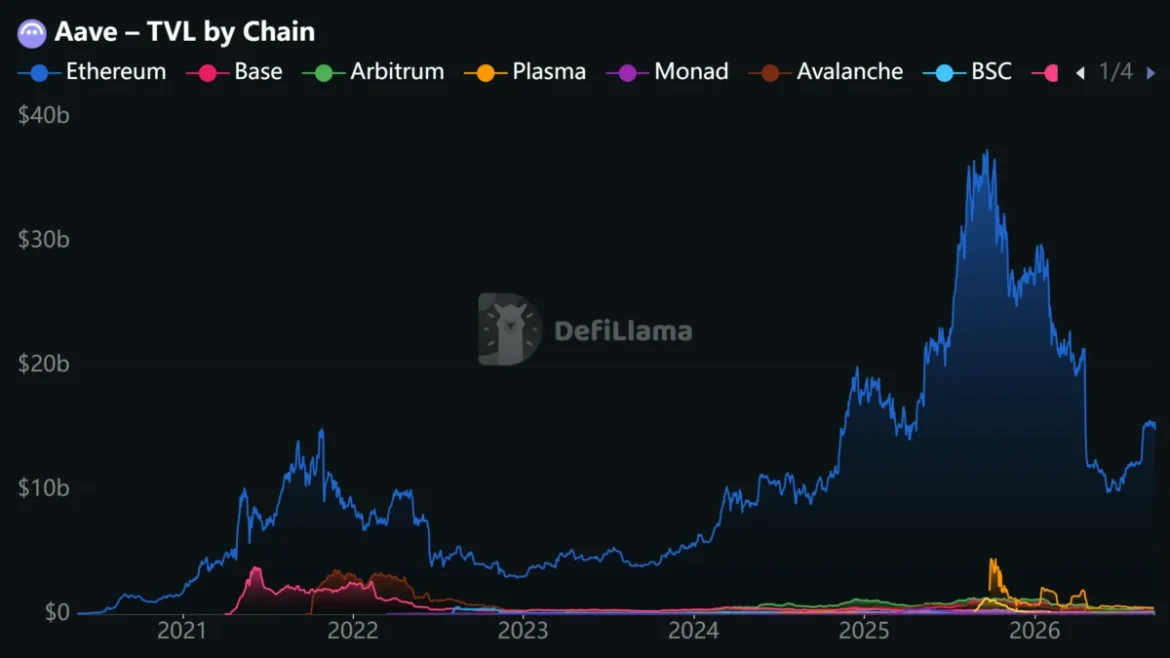
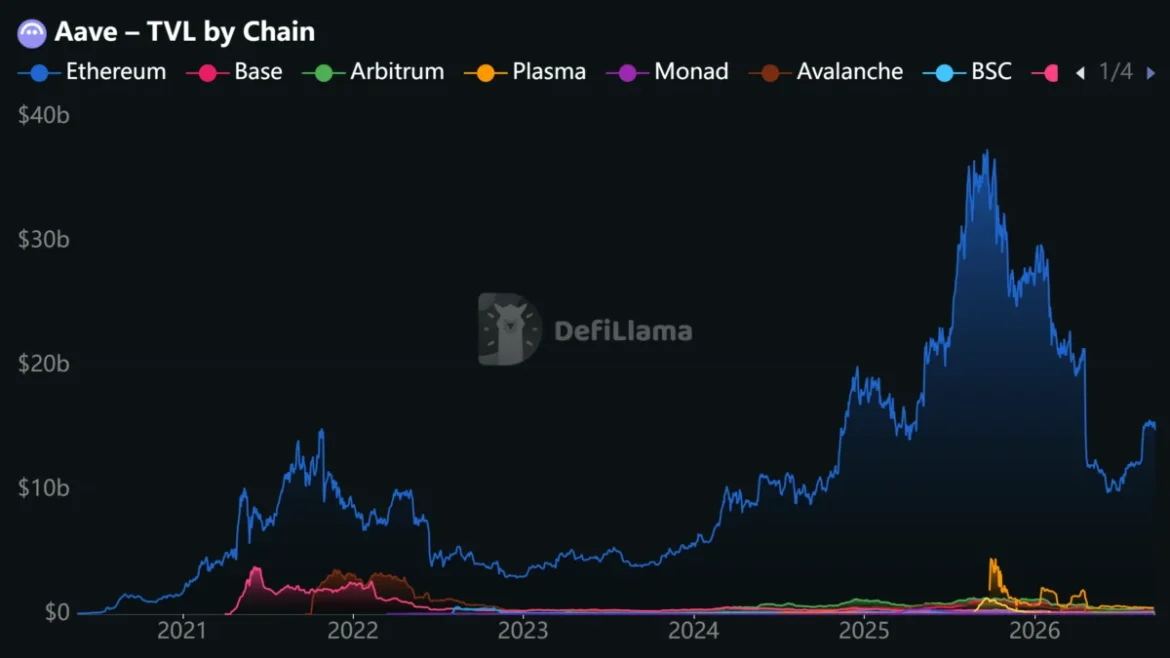
The timing of Aave’s proposal coincides with a broader resurgence in decentralized finance activity and a structural shift in how legacy financial institutions approach blockchain infrastructure. Aave, which commands a dominant share of the DeFi lending market, has experienced a robust recovery throughout the year. Total Value Locked (TVL) on the protocol rebounded sharply from approximately $12.5 billion in June to nearly $19 billion, signaling a 52% expansion that underscores renewed institutional and retail appetite for on-chain leverage during the third quarter.
Despite this massive liquidity, a significant portion of capital within the broader digital asset economy remains idle because traditional market participants cannot navigate the friction of DeFi onboarding. Aave founder Stani Kulechov highlighted the significance of the initiative during community discussions, categorizing the framework as a "first-of-its-kind proposal to enable institutions to borrow stablecoins on Aave V4 against collateral held with a qualified custodian, accessing liquidity directly from Aave V4 markets."
The proposal also arrives as competing lending markets—such as Morpho and Kamino—explore various avenues to capture institutional flow. By pioneering a standardized, regulator-friendly framework that leverages top-tier institutional custodians and oracle networks like Chainlink, Aave is attempting to establish a durable moat that could set the industry standard for institutional DeFi adoption.
Governance Timeline and Path to Execution
The path for the Custodied Collateral Lending framework follows Aave’s established decentralized governance process. The initiative was initially introduced as an Aave Request for Comment (ARFC) on the official governance forum, allowing community members, risk service providers, and token holders to debate the technical and economic parameters of the integration.
Following the initial feedback and refinement phase, the proposal must transition through a series of formal governance milestones:
- Temperature Check: A preliminary off-chain vote to gauge general community sentiment and alignment regarding the integration of regulated custodians.
- Snapshot Vote: A formal signaling vote where Aave token holders register their preferences on the specific operational and economic terms of the V4 isolated hub implementation.
- On-Chain Governance Vote: If the Snapshot vote passes with a supermajority, a final smart contract-executable proposal is submitted to the Aave DAO.
- Execution and Deployment: Upon successful on-chain passage, the necessary smart contract modules, Chainlink CustodySync integrations, and Anchorage operational pipelines will be deployed to launch the isolated lending markets.
Given the complexity of coordinating between decentralized protocols and regulated financial entities, the timeline from initial forum discussion to full mainnet deployment is expected to span several months, subject to rigorous security audits and legal reviews.
Broader Implications for the DeFi Ecosystem
The successful implementation of Aave’s custodied collateral lending plan could serve as a watershed moment for the broader cryptocurrency industry. For years, the narrative surrounding institutional adoption has centered on spot exchange-traded funds (ETFs) and tokenized real-world assets (RWAs). While these products have successfully brought traditional capital into passive crypto exposure, they have largely failed to integrate traditional capital into the native, composable mechanics of decentralized finance.
By creating a secure bridge that respects institutional custody requirements while utilizing DeFi liquidity pools, Aave is effectively dismantling the wall that has separated traditional finance from decentralized capital markets. If institutional borrowers can comfortably leverage billions of dollars in dormant custody assets without violating compliance mandates, the depth and liquidity of DeFi lending markets could expand exponentially.
Furthermore, this model establishes a blueprint that other decentralized protocols will likely be forced to study and adapt to. As competition intensifies among leading lending markets to capture high-value institutional volume, innovations that prioritize regulatory compliance alongside decentralization will likely define the next era of market growth. Whether competitors like Morpho and Kamino will introduce parallel custody bridges or forge independent institutional partnerships remains to be seen, but Aave’s proactive maneuver has firmly positioned it at the forefront of the institutional DeFi frontier.