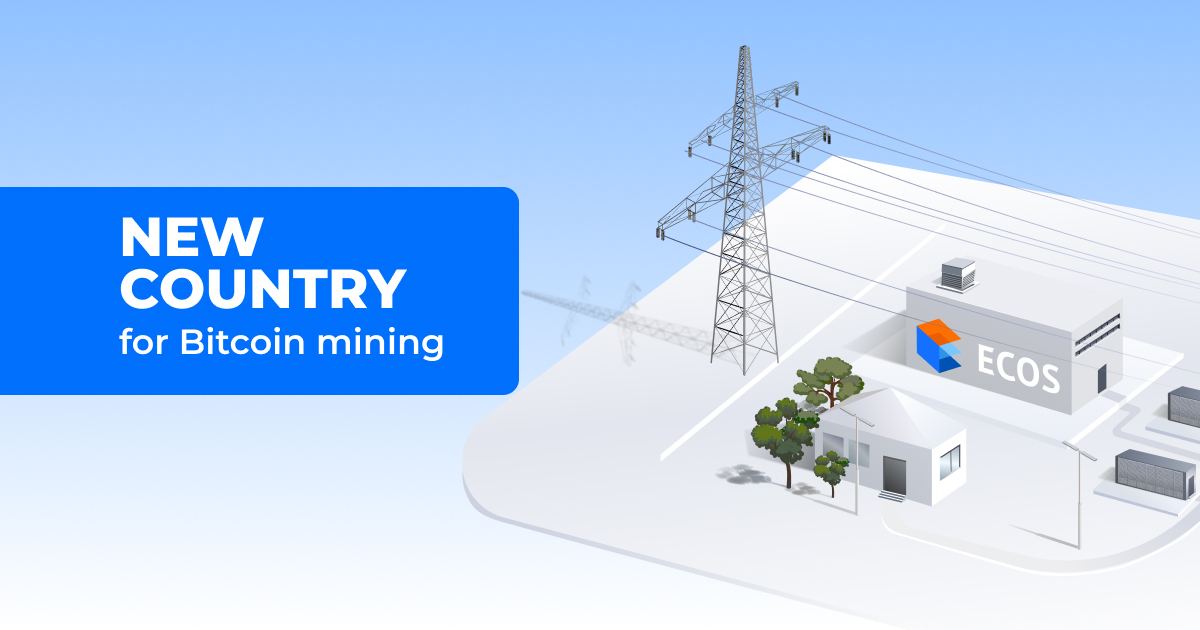
The landscape of global cryptocurrency mining is undergoing a structural shift, driven by the pursuit of regions offering regulatory clarity, scalable energy grids, and optimized climatic conditions. Amidst this evolving industrial paradigm, ECOS, a prominent player in the digital asset infrastructure sector, has officially announced the launch of its state-of-the-art 60-megawatt (MW) data center located within the Free Economic Zone (FEZ) of Armenia. This strategic expansion marks a significant milestone not only for the company—which currently serves a global user base exceeding 250,000 accounts through cloud mining and hardware hosting services—but also for the South Caucasus nation, which continues to position itself as a welcoming jurisdiction for blockchain technology and high-performance computing (HPC).
The newly inaugurated facility, situated in the region of Hrazdan, is engineered to house upwards of 20,000 advanced mining application-specific integrated circuit (ASIC) devices across a sprawling 2.2-hectare plot. Crucially, the site has been designed with future scalability in mind, boasting the potential to absorb an additional 200 MW of power as demand dictates. By integrating directly into high-voltage electrical grids, the facility secures a stable, clean, and economically viable energy supply, paving the way for near-100% operational uptime. This development arrives at a critical juncture for the cryptocurrency industry, as operators worldwide grapple with volatile energy markets, tightening regulatory frameworks, and the persistent challenge of sourcing sustainable power.
Background and Chronology of the Armenian FEZ Initiative
Armenia’s emergence as a strategic hub for cryptocurrency mining and blockchain innovation is not a recent phenomenon; rather, it is the result of deliberate legislative and economic planning that began nearly a decade ago. The genesis of the current ecosystem can be traced back to 2018, when the Armenian government formally recognized the economic potential of the digital asset sector. In a bid to attract foreign direct investment and foster technological expertise, the state officially partnered with ECOS, entrusting the company with the mandate to create and manage a specialized Free Economic Zone dedicated to high technologies and blockchain infrastructure.
The establishment of the FEZ was accompanied by a comprehensive package of fiscal incentives designed to maximize capital returns for institutional and retail investors alike. Under the legislative framework established by the Armenian government, companies operating within the FEZ enjoy a highly favorable tax regime. This includes a 0% corporate income tax rate, a 0% Value Added Tax (VAT) on goods and services, exemption from property and real estate taxes, and a complete waiver of import and export duties for equipment and technological components. Significantly, these statutory benefits have been legally secured for a duration of 25 years, providing investors with a rare degree of long-term predictability in an otherwise volatile sector.
Over the subsequent years, ECOS focused on constructing the foundational architecture necessary to support a robust industrial-scale mining operation. This included establishing reliable supply chains for hardware acquisition, securing high-voltage power allocations, and integrating comprehensive security measures. The launch of the 60 MW facility in Hrazdan represents the culmination of this multi-year development phase, transitioning the jurisdiction from an experimental blockchain zone to a mature, enterprise-grade mining destination.
Infrastructure, Engineering, and Operational Advantages
Industrial-scale cryptocurrency mining requires meticulous planning regarding power distribution, hardware maintenance, and thermal management. The newly launched ECOS facility has been engineered to address these operational bottlenecks comprehensively, incorporating several distinct engineering advantages that enhance its competitive positioning in the global market.
Foremost among these advantages is the region’s natural climate. The city of Hrazdan boasts an average annual ambient temperature of 4.8°C. This naturally cool environment provides a significant operational benefit by mitigating the risk of hardware overheating without requiring energy-intensive mechanical cooling systems. By leveraging the local climate, the facility optimizes its Power Usage Effectiveness (PUE), thereby reducing operational overhead and maximizing the hash rate output of deployed ASIC units.
Power reliability represents another cornerstone of the facility’s infrastructure. Connected directly to high-voltage domestic networks, the data center receives a continuous supply of clean and affordable electricity. In an industry where grid instability can result in catastrophic downtime and hardware degradation, the ability to claim near-100% uptime provides a distinct economic edge to clients hosting their equipment within the facility.
Furthermore, ECOS has implemented an end-to-end operational model designed to minimize friction for participants. Recognizing that hardware procurement, logistics, and maintenance can present formidable barriers to entry for retail investors and institutional funds alike, the company offers a fully integrated service suite. This includes direct partnerships with major hardware manufacturers such as Bitmain for the procurement of cutting-edge mining rigs, comprehensive on-site installation, and round-the-clock technical monitoring by a dedicated team of engineers and security personnel. The facility itself is fortified with 24/7 armed guards and secure warehousing to protect valuable digital asset infrastructure.
To bridge the gap between complex industrial operations and user-friendly management, ECOS has integrated its infrastructure with a proprietary mobile application. This software interface allows clients to monitor their mining rigs, track hash rate efficiency, and manage their accumulated digital assets remotely with minimal technical friction, effectively democratizing access to industrial-scale mining operations.
Leadership Insights and Strategic Intent
The inauguration of the Hrazdan facility underscores a broader corporate strategy aimed at simplifying participation in the digital asset economy for a global clientele. Ilya Goldberg, Managing Partner at ECOS, articulated the vision behind the expansion, emphasizing the importance of infrastructure readiness and user accessibility.
"We have come a long way from legalizing mining in Armenia to launching our own energy infrastructure that is ready for scaling," Goldberg stated. "We want to offer our partners simplicity in everything: from launching your mining business on our data-center to daily monitoring of the result in the application without leaving your home. Our bundled product is made to serve both institutional and retail clients from any part of the world."
The dual focus on institutional-grade security and retail accessibility reflects a concerted effort by ECOS to capture market share from diverse segments of the cryptocurrency ecosystem. By offering turnkey solutions that handle the logistical complexities of cross-border hardware deployment, the company aims to attract traditional financial capital that might otherwise be deterred by the technical nuances of blockchain infrastructure management.
Broader Market Implications and Economic Analysis
The launch of a major 60 MW mining facility in Armenia arrives at a pivotal juncture for the global cryptocurrency markets. Following an extended period of consolidation and depressed valuations colloquially referred to as the "crypto winter," macroeconomic indicators suggest a renewed institutional appetite for digital assets, coupled with an increasing recognition of Bitcoin as a legitimate macroeconomic hedge.
However, the global mining landscape has faced significant headwinds in recent years. Traditional mining hubs have experienced regulatory pushback, heightened environmental scrutiny regarding energy consumption, and escalating power tariffs. In response, mining operations have increasingly decentralized, migrating toward jurisdictions that offer abundant, affordable, and ideally renewable energy sources coupled with stable regulatory frameworks.
Armenia’s proactive stance toward the blockchain sector positions it favorably within this global relocation trend. By combining government-backed fiscal exemptions with robust energy infrastructure, the country offers a compelling value proposition for miners seeking shelter from regulatory unpredictability in other jurisdictions.
From an economic perspective, the expansion of industrial-grade mining infrastructure within the Hrazdan Free Economic Zone generates multifaceted benefits. Locally, it stimulates job creation, fosters technological literacy, and contributes to the modernization of regional electrical grids through sustained commercial demand. Globally, it enhances the decentralization and security of the Bitcoin network by diversifying the geographic distribution of computational hash power away from single-point vulnerabilities.
As the digital asset sector matures, the viability of mining operations will increasingly depend on three critical pillars: access to low-cost power, regulatory longevity, and operational efficiency. The integration of ECOS’s new facility into Armenia’s legislative and economic framework illustrates a working model of public-private synergy designed to meet these industry demands. With provisions for future expansion up to an additional 200 MW, the project not only secures ECOS’s market position for the foreseeable future but also cements Armenia’s status as a formidable anchor in the international blockchain infrastructure landscape.