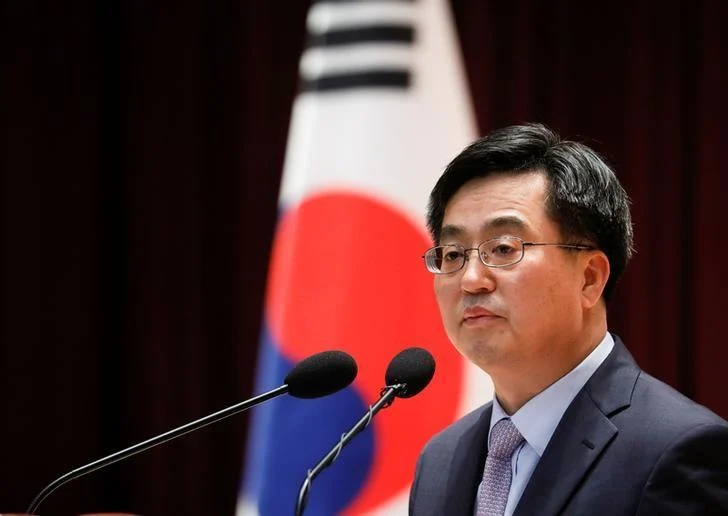
The South Korean government is reportedly preparing to reverse its blanket prohibition on Initial Coin Offerings (ICOs), signaling a significant transition toward a more structured and supportive regulatory framework for the digital asset industry. According to reports from the Korea Times and internal government sources, financial authorities have initiated high-level discussions with the nation’s tax agency, the Ministry of Justice, and other relevant administrative bodies to establish a legal pathway for ICOs to operate within the country under specific regulatory conditions. This potential policy shift represents a stark departure from the restrictive stance adopted in late 2017, when South Korean regulators moved to stifle the burgeoning cryptocurrency market amid concerns over speculative volatility and financial crime.
The move to reconsider the ICO ban comes as the Financial Services Commission (FSC) and other regulatory entities face increasing pressure to modernize the nation’s financial laws to accommodate the rapid advancement of blockchain technology. While the 2017 ban was intended to protect retail investors from fraudulent schemes and market manipulation, it also led to a significant "capital flight" of domestic blockchain startups, many of which relocated their operations to crypto-friendly jurisdictions such as Singapore and Switzerland. By establishing a framework for legal ICOs, the South Korean government aims to reclaim its position as a global hub for technological innovation while maintaining a firm grip on market integrity.
The Evolution of South Korea’s Regulatory Landscape
To understand the significance of the current policy shift, it is essential to examine the historical context of South Korea’s relationship with digital currencies. In 2017, South Korea emerged as one of the most active cryptocurrency markets in the world, at times accounting for more than 20% of global Bitcoin trading volume despite having a population of only 51 million. This surge in interest led to the phenomenon known as the "Kimchi Premium," where digital assets traded at significantly higher prices on South Korean exchanges compared to international platforms.
Concerned by the "irrational exuberance" of the market, the South Korean Ministry of Justice and the FSC implemented a series of draconian measures. In September 2017, the government officially banned all forms of ICOs, regardless of their technical merit or the legitimacy of the issuing entity. This was followed by a period of intense uncertainty in early 2018, characterized by conflicting statements from government officials. At one point, the Justice Minister suggested that the government was considering a total shutdown of all domestic cryptocurrency exchanges, a statement that triggered a massive sell-off in the global market and led to a public outcry within South Korea.
However, the tide began to turn as the economic potential of blockchain technology became undeniable. The government’s current trajectory suggests a move away from total prohibition toward a "regulated legitimacy" model. This approach seeks to distinguish between speculative "coin-flipping" and the legitimate use of blockchain technology for industrial and financial infrastructure.
Chronology of the Cryptocurrency Crackdown and Subsequent Softening
The timeline of South Korea’s regulatory journey reflects the challenges faced by many advanced economies in balancing innovation with consumer protection.
- September 2017: The Financial Services Commission announces a total ban on all domestic ICOs, citing the high risk of financial fraud and the speculative nature of the market.
- December 2017: The government introduces the "Real-Name Verification System," requiring all cryptocurrency traders to link their exchange accounts to verified bank accounts. This effectively ended anonymous trading in the country.
- January 2018: Public tension reaches a breaking point when over 200,000 citizens sign a petition to the Blue House (the presidential residence) demanding that the government stop its aggressive regulation of virtual currencies.
- February 2018: The South Korean government responds to the petition, clarifying that while it will regulate the market to prevent illegal activities, it has no intention of banning or suppressing the trading of digital assets entirely.
- March 2018: Reports emerge that the FSC is collaborating with other ministries to draft a framework for allowing "conditional" ICOs, marking the first official step toward lifting the 2017 ban.
This chronology illustrates a government that has moved from a reactive, fear-based policy to a proactive, structured approach. The realization that blockchain technology is a cornerstone of the "Fourth Industrial Revolution" has played a pivotal role in this evolution.
The Role of the Financial Services Commission (FSC) in Policy Reform
Central to this policy shift is the Financial Services Commission and its internal divisions focused on cryptocurrency trading policies. Kang Young-soo, an official overseeing these policies at the FSC, has noted that while no official government-wide policy has been finalized, the dialogue regarding the legalization of ICOs is active. Kang emphasized that the government is currently acknowledging third-party views and industry feedback as it crafts a sustainable model.
The proposed "conditional" allowance of ICOs is expected to involve rigorous vetting processes. Projects seeking to launch an ICO in South Korea will likely need to demonstrate a clear business use case, provide audited financial disclosures, and adhere to strict investor protection protocols. By setting a high bar for entry, the FSC hopes to filter out "scam" projects that plagued the 2017 market while allowing legitimate blockchain startups to flourish.
Furthermore, the FSC is exploring the separation of blockchain technology from the speculative trading of tokens. This distinction allows the government to provide subsidies and institutional support for blockchain research and development while maintaining a cautious stance on the volatile cryptocurrency market.
Investor Protection and Anti-Money Laundering Frameworks
Even as the government moves toward a more inclusive ICO policy, it has made it clear that Anti-Money Laundering (AML) and Know Your Customer (KYC) regulations remain non-negotiable. South Korea has been a leader in implementing strict AML standards for the crypto sector, often exceeding the recommendations of the Financial Action Task Force (FATF).
The current framework prevents foreigners from trading on South Korean exchanges and prohibits minors from participating in the market. These restrictions are expected to remain in place even if the ICO ban is lifted. The government’s primary objective is to prevent the country’s financial system from being used as a conduit for money laundering or the financing of illicit activities.
By maintaining these stringent protections, South Korea aims to create a "walled garden" for its domestic market. While this limits the globalization of the local crypto economy, it provides a level of security and stability that is attractive to institutional investors who have previously been hesitant to enter the space due to regulatory uncertainty.
Supporting Data: The Economic Impact of the Crypto Sector
The economic data surrounding South Korea’s crypto market highlights why the government is keen to formalize the industry. At the height of the 2017-2018 bull market, South Korea’s daily trading volume frequently surpassed that of the KOSDAQ, the country’s secondary stock exchange.
Research indicates that the "Kimchi Premium" was not merely a result of local enthusiasm but also a reflection of the country’s capital controls and the high demand for alternative investment vehicles among the younger generation. The "2030 generation" (those in their 20s and 30s) has been particularly vocal about the need for digital asset legalization, viewing it as a path to wealth generation in an economy characterized by high real estate prices and stagnant wage growth.
Furthermore, the blockchain sector has become a significant driver of high-tech employment. By lifting the ICO ban, the government expects to see an influx of venture capital investment into domestic tech firms, potentially creating thousands of jobs in software development, cybersecurity, and financial services.
Global Competitive Positioning and Capital Flight Prevention
South Korea’s decision to revisit the ICO ban is also influenced by the competitive landscape in East Asia. While China has maintained a strict prohibition on most cryptocurrency activities, Japan has moved in the opposite direction, establishing a licensing system for exchanges and recognizing Bitcoin as a legal form of payment.
South Korean policymakers are aware that by maintaining a total ban on ICOs, they are effectively ceding leadership in the blockchain space to their regional neighbors. The relocation of South Korean firms like ICON (ICX) and Hdac to foreign jurisdictions represented a loss of tax revenue and intellectual property. A legalized ICO framework would allow the government to capture this economic activity and ensure that South Korean talent remains within the country.
Broader Impact and Implications for the Future
The potential lifting of the ICO ban in South Korea is expected to have a ripple effect across the global cryptocurrency market. As one of the world’s most sophisticated digital economies, South Korea’s regulatory choices often serve as a blueprint for other nations. A successful implementation of a "conditional ICO" model could provide a middle-ground solution for regulators in Europe and North America who are struggling to balance innovation with oversight.
However, challenges remain. The coordination between the Ministry of Justice, which often takes a more conservative view of digital assets, and the Ministry of Science and ICT, which promotes technological advancement, will be critical. The final policy will need to address complex issues such as the taxation of ICO proceeds and the legal status of utility tokens versus security tokens.
In conclusion, South Korea is at a crossroads. The transition from a policy of total prohibition to one of regulated engagement marks a significant milestone in the maturation of the digital asset industry. By integrating ICOs into the formal financial system, South Korea is not only protecting its investors but also ensuring its relevance in the rapidly evolving global digital economy. The world will be watching closely as the FSC and other government agencies finalize a framework that could define the future of blockchain technology in Asia.