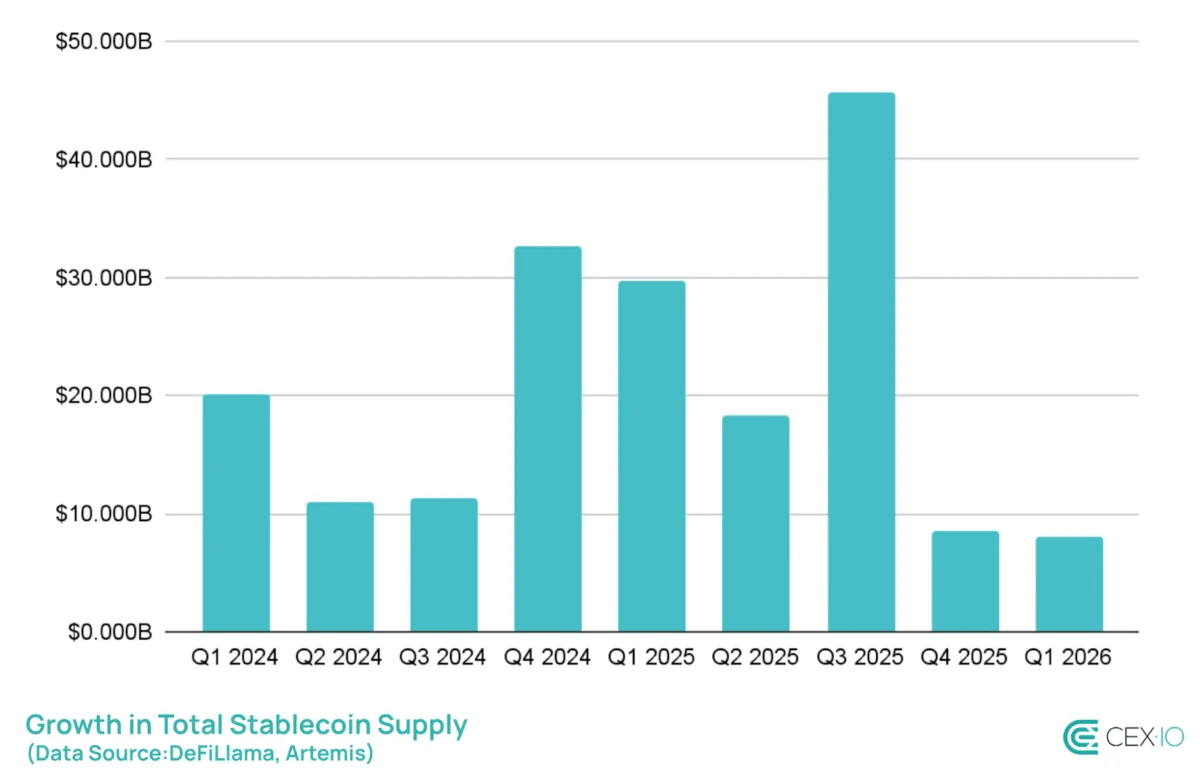
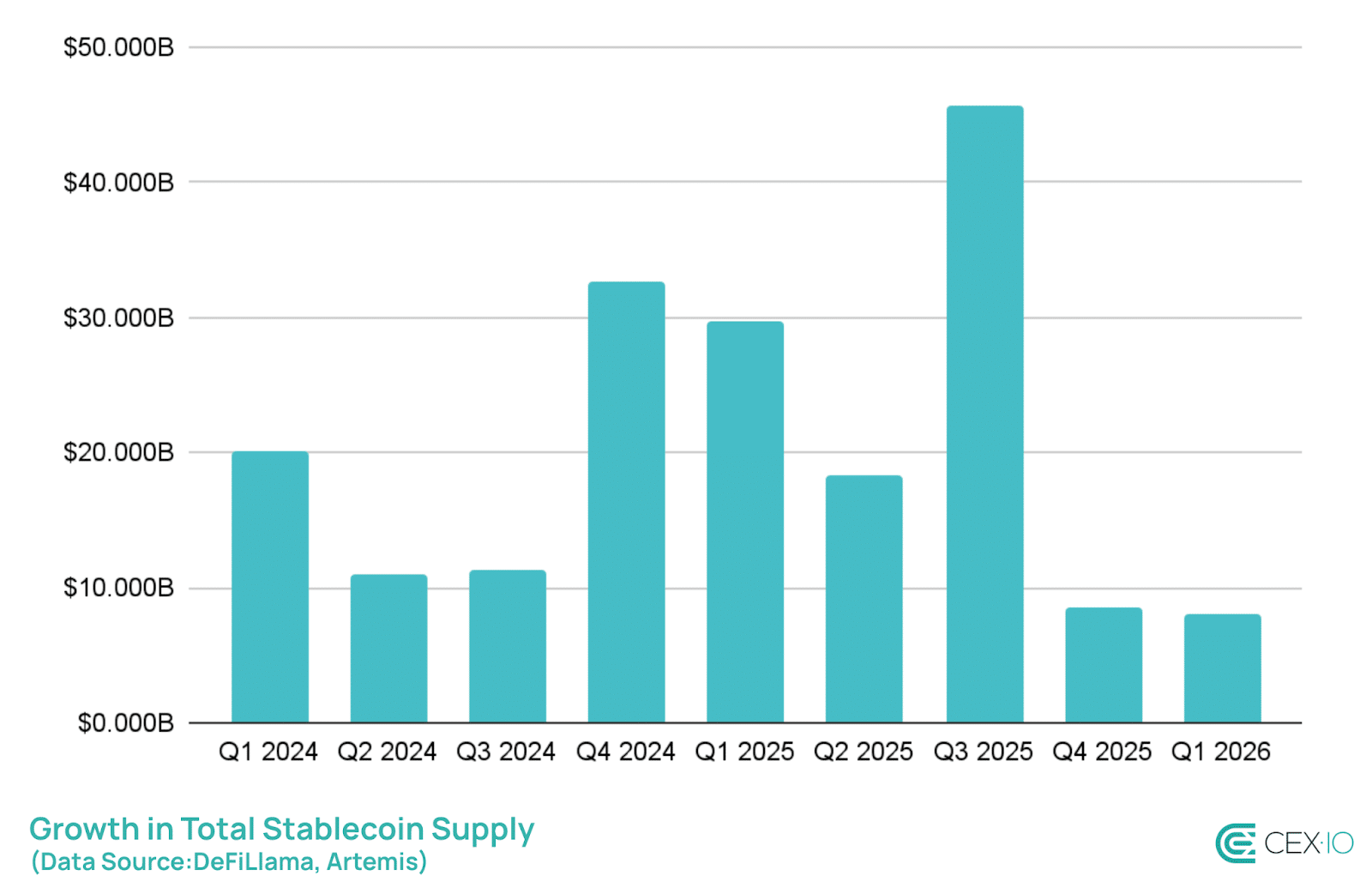
The first quarter of 2026 witnessed a significant recalibration within the digital asset market, characterized by a record surge in stablecoin supply reaching $315 billion, an increase of approximately $8 billion, even as broader cryptocurrency markets faced a contraction. This notable divergence was underscored by contrasting performances from the two leading stablecoin issuers, Circle’s USDC and Tether’s USDT. Data from CEX.IO reveals that USDC experienced substantial market share expansion, while Tether’s USDT recorded its first quarterly supply decline since the second quarter of 2022. This structural shift within the stablecoin sector, occurring against a backdrop of stablecoins capturing an unprecedented 75% of total crypto trading volume, signals a deepening reliance on these digital dollar equivalents for liquidity and value preservation within the cryptocurrency ecosystem.
The $315 billion figure for total stablecoin supply represents more than just an aggregate number; it signifies a strategic pivot by market participants. Capital flowing into stablecoins during a period of general market weakness is not a passive occurrence. Instead, it reflects a deliberate strategy to maintain dollar-denominated exposure within the crypto sphere, rather than exiting the digital asset market entirely for traditional fiat currencies. This trend is further substantiated by the record trading volume share achieved by stablecoins, coupled with a staggering $28 trillion in total stablecoin transaction volume during the quarter. These metrics reinforce the notion that stablecoins have cemented their position as the foundational liquidity layer of the digital asset market, a role that is anticipated to solidify as institutional adoption continues to mature.
USDT Stablecoin Supply Contraction: A New Chapter in Market Dynamics
Tether’s USDT experienced a notable contraction in its circulating supply, declining by approximately $3 billion in the first quarter of 2026. This marks the first net quarterly contraction for USDT since the second quarter of 2022, a period that was heavily defined by the collapse of the Terra-LUNA ecosystem and the subsequent widespread crypto credit crisis. However, the current decline in USDT supply is occurring within a fundamentally different market context. Instead of a sudden systemic shock, the contraction appears to be driven by a more gradual retreat influenced by stagnating retail adoption and escalating regulatory scrutiny.
Tether’s market share among stablecoins, which had previously peaked near 70% in 2022, has been undergoing a steady compression. This erosion of market dominance can be attributed to the increasing acceptance of compliance-oriented stablecoin alternatives by institutional investors. The underlying mechanisms contributing to USDT’s supply contraction are multifaceted, operating on both retail and regulatory fronts.

At the retail demand level, CEX.IO’s data indicates a significant 16% decrease in retail-sized stablecoin transfers, representing the steepest such drop on record. This trend directly impacts Tether, a stablecoin that has historically relied on a larger proportion of its circulating supply from retail users and emerging markets compared to its primary competitor, USDC. This suggests a waning appetite for USDT among individual investors, potentially due to evolving market preferences or increased caution.
Concurrently, regulatory pressures are exerting considerable influence. The European Union’s Markets in Crypto-Assets (MiCA) framework, for instance, has effectively curtailed USDT’s distribution within EU-regulated financial venues. This regulatory action has effectively removed a significant demand channel that had previously supported USDT’s supply growth through 2024. The combined effect of weakened retail flows and restricted regulatory access presents a structural headwind for Tether, rather than a mere cyclical dip in demand. Therefore, the Q1 data should be interpreted as indicative of a more profound, long-term shift in the stablecoin market’s dynamics.
To date, Tether has not released a quarterly report specifically addressing this supply contraction. While the company has increased the frequency of its reserve attestations compared to previous years, persistent questions among institutional compliance officers regarding the composition of its backing assets remain unresolved. This ongoing opacity continues to create a bifurcation in institutional demand. A growing segment of dollar-denominated on-chain capital is now favoring issuers whose reserve structures can withstand rigorous legal and regulatory scrutiny within key jurisdictions such as the United States and the European Union. This preference for transparency and regulatory compliance is a critical factor shaping institutional investment decisions in the stablecoin market.
USDC’s Ascendancy: Driven by Compliance and Institutional Trust
In stark contrast to USDT’s trajectory, Circle’s USDC has experienced a significant expansion, reaching approximately $78 billion in circulating supply by the end of the first quarter of 2026. This figure represents an impressive growth of roughly 220% since the fourth quarter of 2023 and signifies a materially larger share of the total stablecoin float compared to its standing just two years prior.
The growth of USDC has been particularly concentrated on the Ethereum and Solana blockchains. On these networks, USDC has become the primary settlement asset for a wide array of decentralized finance (DeFi) protocols, on-chain trading operations, and institutional business-to-business (B2B) payment flows. Analysis of transaction data reveals that the average transaction size for USDC clusters well below typical retail norms, averaging approximately $557 per transfer. Furthermore, the transaction velocity of roughly 90 times per period is consistent with programmatic and algorithmic usage patterns, rather than large-lot institutional block transfers. This suggests that USDC is being utilized as a foundational tool for high-frequency trading and automated financial processes within the digital asset space.
The structural catalyst behind USDC’s expansion appears to be less about organic retail demand and more about compliance-driven issuer selection. Circle’s proactive positioning in anticipation of legislative developments, such as the Guiding and Establishing National Innovation for U.S. Stablecoins Act (GENIUS Act), has positioned USDC as the default choice for treasury teams, payroll processors, and financial institutions. These entities are actively seeking a stablecoin whose reserve structure, blacklisting capabilities, and regulatory disclosures align with stringent U.S. legal requirements.
This robust compliance posture, while potentially controversial at times, carries significant operational advantages. Circle’s decision to freeze and subsequently unfreeze a blacklisted USDC wallet, a move that drew criticism from some segments of the crypto community, ultimately signaled to institutional counterparties its commitment to cooperating with legal processes. This represents a materially different risk profile compared to USDT, and institutional capital has increasingly begun to price this distinction.
Furthermore, state-level regulatory developments have provided an additional tailwind for USDC. Frameworks such as those advancing through Delaware’s stablecoin banking legislation are establishing supervised issuance pathways. These pathways tend to favor issuers that are already operating under federal compliance standards, a category in which USDC holds a more credible position than many of its competitors. The growing clarity and structure in regulatory environments are thus creating a more favorable landscape for compliant stablecoins like USDC, driving their adoption among regulated entities.
The Evolving Role of Stablecoins in the Crypto Ecosystem
The significant increase in total stablecoin supply, reaching a record $315 billion in Q1 2026, amidst a broader crypto market contraction, highlights a fundamental shift in how market participants are navigating volatility and preserving capital within the digital asset space. The sustained dominance of stablecoins in crypto trading volume, reaching 75%, underscores their role as the primary liquidity infrastructure. This indicates a maturing market where stablecoins are not merely a bridge to fiat but an integral component of digital asset trading and settlement strategies.
The divergence between USDT and USDC provides a clear illustration of the underlying forces shaping the stablecoin market. The decline in USDT’s supply, while attributed to a combination of reduced retail demand and regulatory headwinds, signals a potential loss of confidence among certain user segments and a growing preference for more transparent and regulated alternatives. The historical reliance of USDT on emerging markets and retail users makes it more susceptible to shifts in these demographics and regulatory environments.
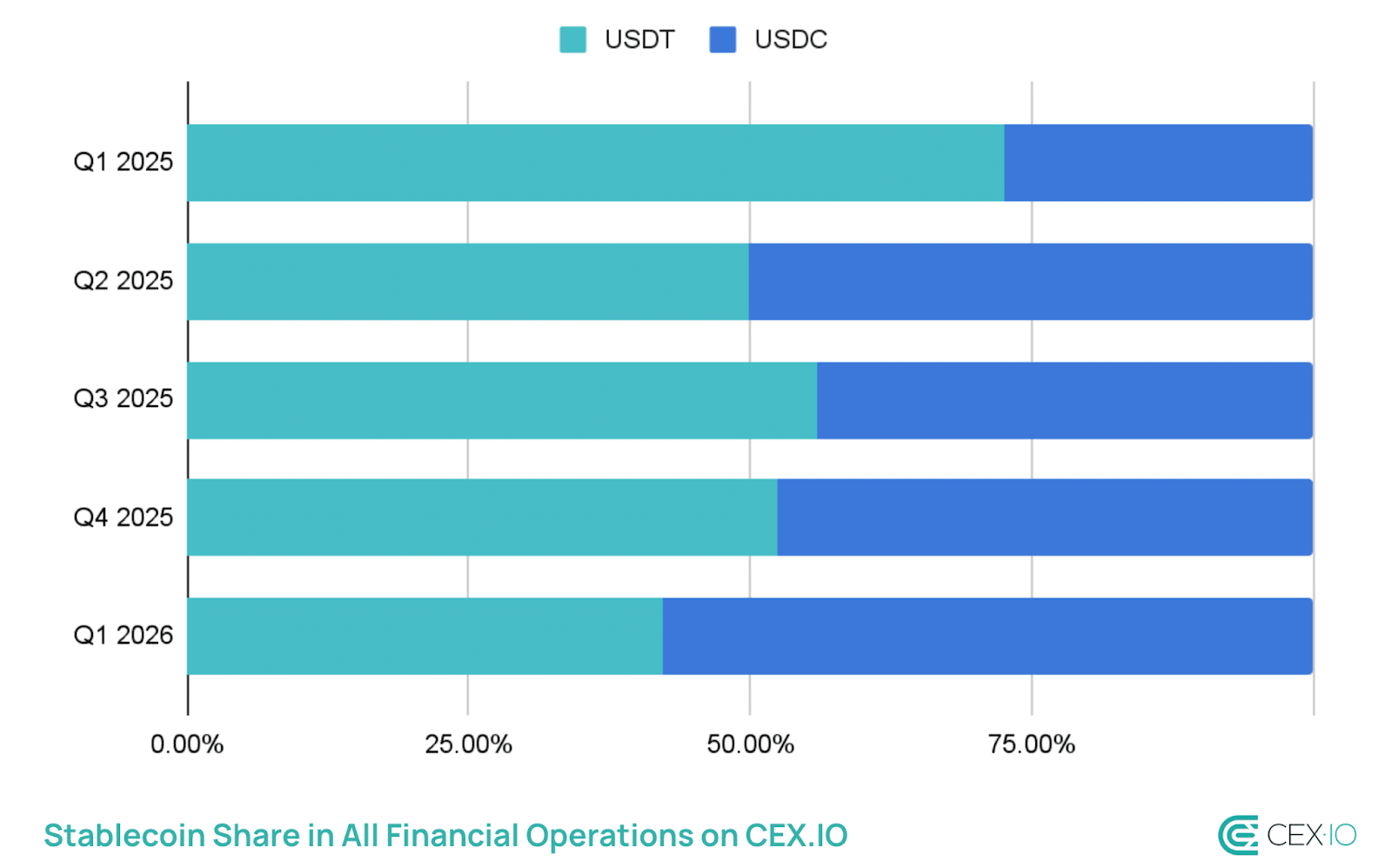
Conversely, USDC’s robust growth, fueled by its strong compliance framework and alignment with U.S. regulatory expectations, positions it as the preferred choice for institutional adoption. Circle’s ability to navigate the complex regulatory landscape and offer a stablecoin that meets the stringent requirements of traditional financial institutions has been a key driver of its success. The increasing adoption of USDC in institutional use cases, such as treasury management and payment processing, further solidifies its position as a trusted and compliant stablecoin.
The trend of capital rotating into stablecoins during market downturns is not merely a short-term reaction but a reflection of a structural evolution. As institutional investors increasingly engage with the digital asset market, their demand for reliable, transparent, and compliant stablecoins will continue to grow. This trend is likely to further bifurcate the stablecoin market, favoring issuers that prioritize regulatory adherence and robust reserve management.
The implications of these developments are far-reaching. For the broader crypto market, the continued dominance of stablecoins as the primary liquidity layer suggests a pathway towards greater institutional integration and stability. As more regulated entities enter the space, the demand for stablecoins that meet their rigorous compliance standards will intensify. This could lead to further consolidation within the stablecoin market, with issuers that fail to adapt to evolving regulatory and institutional demands potentially falling behind.
The future of stablecoins will likely be defined by a continuous interplay between technological innovation, regulatory clarity, and market demand. While the current trend favors compliant, institutionally-aligned stablecoins, the inherent nature of the crypto market suggests that innovation and adaptability will remain crucial for long-term success. As the digital asset ecosystem matures, the role of stablecoins will undoubtedly continue to evolve, reflecting the changing needs and priorities of its diverse participants. The data from Q1 2026 clearly indicates that the era of unquestioned dominance for any single stablecoin issuer may be drawing to a close, replaced by a more nuanced landscape driven by trust, transparency, and regulatory compliance.
Disclaimer: This article is for informational purposes only and does not constitute financial or investment advice. The cryptocurrency market is volatile and subject to rapid changes. Readers are encouraged to conduct their own research and consult with a qualified financial professional before making any investment decisions.