CaixaBank has officially obtained authorization from Spain’s National Securities Market Commission (CNMV) as a crypto asset service provider (CASP) under the European Union’s landmark Markets in Crypto-Assets (MiCA) Regulation. This development marks a significant regulatory achievement, positioning CaixaBank as the final major Spanish banking institution to secure this crucial license. The move signifies a maturing regulatory landscape for digital assets within the EU and highlights the increasing integration of crypto services into mainstream financial offerings.
The authorization follows closely on the heels of its major domestic competitors. BBVA, another of Spain’s largest banks, was an early mover, launching its crypto services in July 2025. Santander’s digital banking arm, Openbank, demonstrated an ambitious international approach, first going live with its crypto offerings in Germany in September 2025 before expanding its services to its home market in Spain shortly thereafter. The sequential acquisition of these licenses by the "big three" Spanish banks underscores a strategic alignment with the EU’s regulatory framework and a clear intent to capitalize on the growing demand for regulated crypto services.
Scope of CaixaBank’s CASP Authorization
CaixaBank’s newly acquired CASP license from the CNMV grants the bank the authority to offer a comprehensive suite of crypto-related services. Specifically, the license covers critical functions including the custody of crypto assets, the transmission and execution of orders for crypto assets, and the facilitation of client transfers. This broad authorization enables CaixaBank to provide a secure and compliant platform for its customers seeking to engage with the digital asset ecosystem.
While the bank has not provided an exact launch date, it has indicated that its crypto services will be rolled out to the public in the coming months. This strategic phased approach suggests a careful implementation plan, likely involving further internal testing and customer onboarding procedures.
Existing Engagement with Digital Assets and Blockchain Technology
This regulatory milestone for CaixaBank is not an entirely new foray into the digital asset space. The bank already has a presence in the crypto market through its existing offerings. It currently provides access to Bitcoin Exchange Traded Products (ETPs) via its digital banking platform and its innovative mobile banking app, imagin. This indicates a prior commitment to making crypto-related investments accessible to its customer base, albeit through regulated investment vehicles.
Furthermore, CaixaBank is an active participant in the broader blockchain ecosystem. The bank is a member of the Qivalis consortium, a collaborative initiative involving twelve prominent European banks. This consortium is dedicated to the development of a euro-linked stablecoin, a project aimed at enhancing the efficiency and innovation of payments within the European Union. CaixaBank’s involvement in such pioneering projects underscores its forward-thinking approach to financial technology and its commitment to shaping the future of digital finance.
MiCA Regulation and the Streamlined Path for Banks
The EU’s MiCA Regulation, which came into full effect on June 30, 2024, represents a groundbreaking effort to establish a harmonized regulatory framework for crypto assets across all member states. The regulation aims to foster innovation while ensuring investor protection, market integrity, and financial stability. A key aspect of MiCA is its differentiated approach to licensing, which has significantly benefited existing credit institutions.
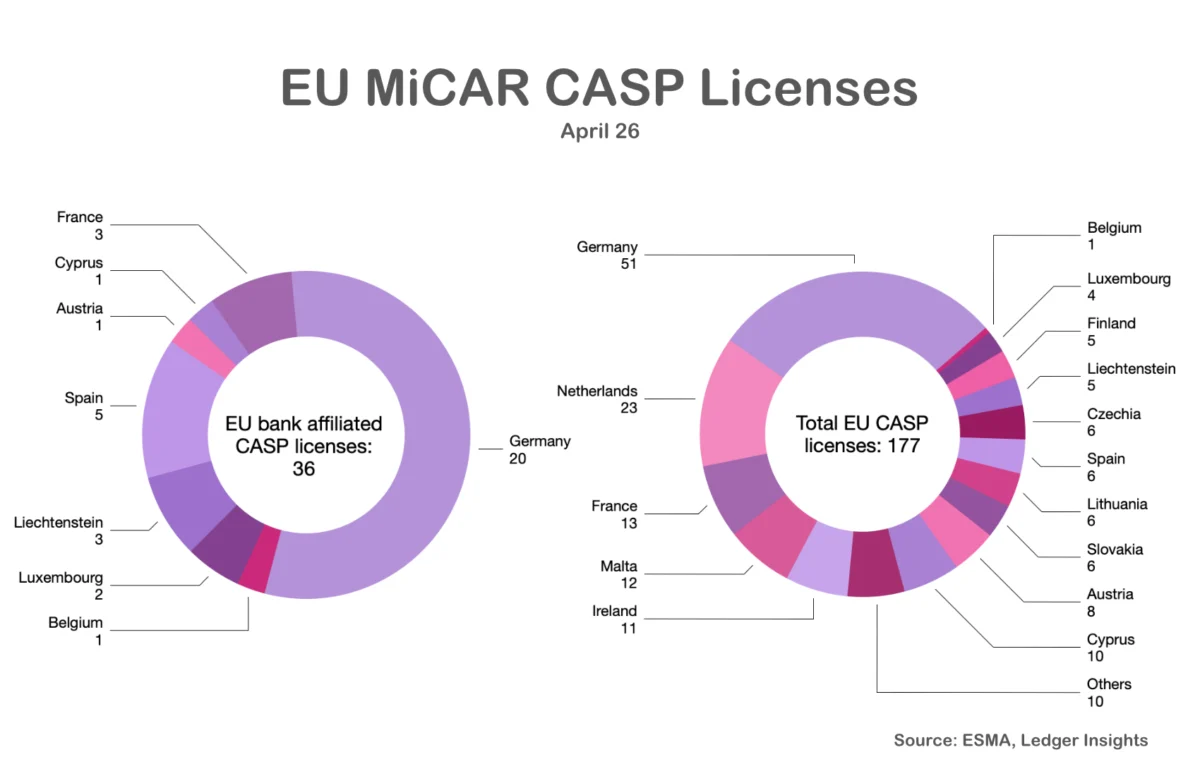
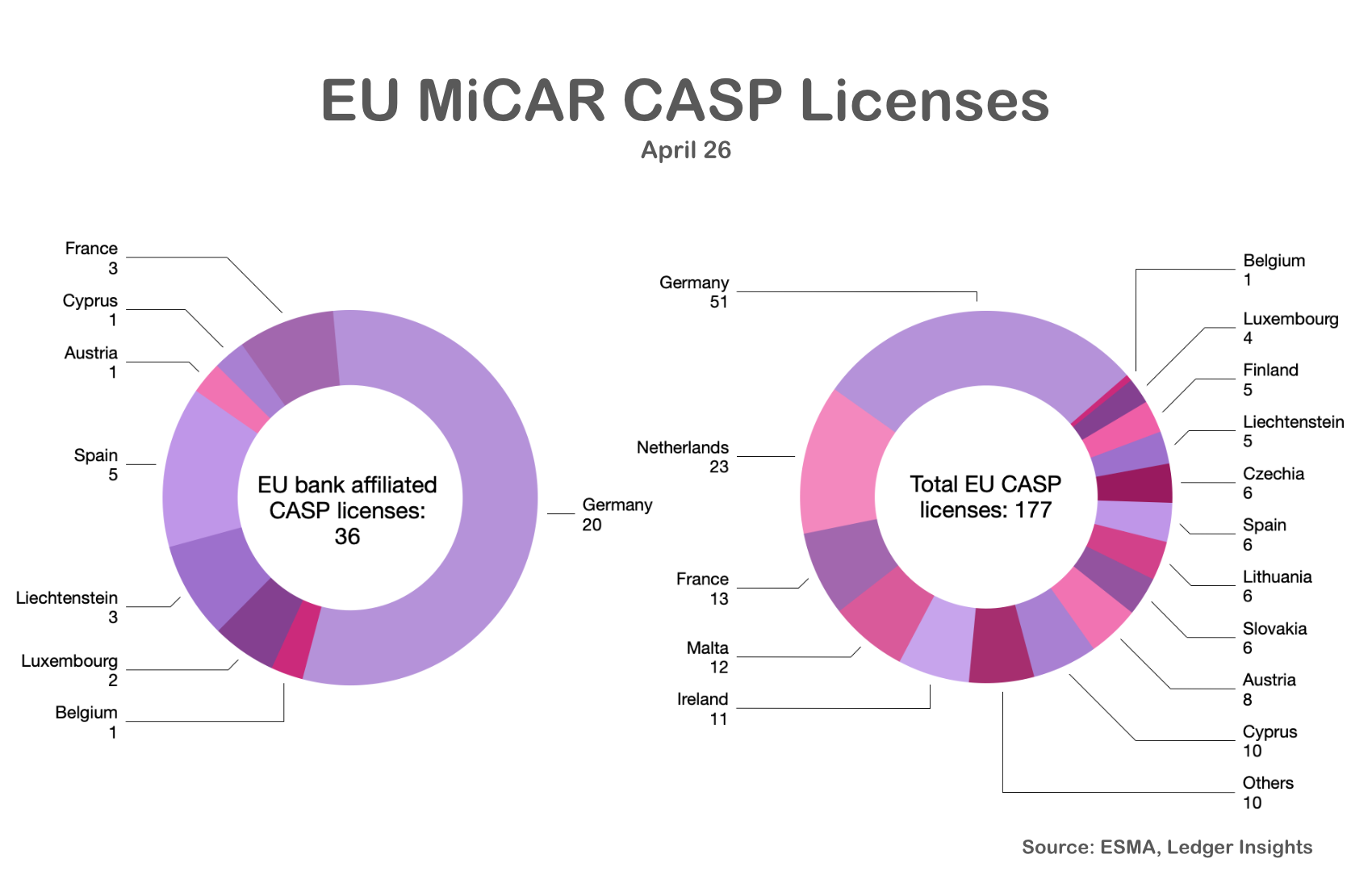
As of the latest available data, a substantial number of CASP licenses have been awarded across the EU, totaling 177. Notably, 36 of these licenses have been granted to banks. This high proportion is a direct consequence of the streamlined authorization process that MiCA offers to established financial entities. While banks are still required to demonstrate full compliance with the stringent requirements outlined in MiCA, they benefit from a significantly expedited path to market. Instead of undergoing a comprehensive new application process, existing credit institutions are permitted to notify their national competent authority (NCA) of their intention to offer crypto asset services. This notification requires a statutory notice period of just 40 days before the commencement of services. This "opt-in" mechanism for licensed banks significantly reduces the administrative burden and time-to-market, encouraging traditional financial institutions to engage with the digital asset sector.
Broader Implications of MiCA and Bank Adoption
The widespread adoption of MiCA licenses by European banks, as exemplified by CaixaBank, BBVA, and Santander, has profound implications for the cryptocurrency industry and the broader financial landscape.
Enhanced Legitimacy and Trust
The licensing of major banks under MiCA lends significant legitimacy and credibility to the crypto asset sector. For retail and institutional investors who may have been hesitant due to regulatory uncertainty or concerns about security and fraud, the involvement of trusted financial institutions provides a reassuring signal. This can lead to increased adoption of crypto services by a wider demographic, driving further market growth.
Increased Investor Protection
MiCA’s stringent requirements, including robust governance, capital adequacy, and consumer protection measures, are designed to safeguard investors. When banks offer crypto services under this framework, they are held to these high standards, ensuring that clients’ assets are managed securely and that risks are clearly communicated. This contrasts with the often less regulated environment of many standalone crypto exchanges.
Integration of Traditional and Digital Finance
The ability of banks to offer crypto services facilitates the seamless integration of traditional financial products and services with the emerging world of digital assets. This can lead to innovative new offerings, such as crypto-collateralized loans, crypto-denominated savings accounts, and more sophisticated investment products that bridge the gap between fiat and digital currencies.
Competitive Landscape Shift
The entry of established banks into the CASP market intensifies competition for existing crypto-native businesses. While this can drive innovation and lower costs for consumers, it also poses a challenge for smaller or less established crypto firms. Banks, with their extensive customer bases, capital, and existing infrastructure, are well-positioned to capture a significant share of the market.
Regulatory Evolution and Global Influence
MiCA is seen as a pioneering regulatory framework for digital assets. Its successful implementation in the EU is likely to influence regulatory approaches in other jurisdictions. As more countries develop their own rules for crypto assets, the principles and structures established by MiCA may serve as a blueprint, fostering greater global regulatory coherence.
Future Outlook for Digital Asset Services
The current wave of bank licensing under MiCA suggests that crypto services are no longer a niche offering but are becoming an integral part of a modern financial institution’s product portfolio. As regulations continue to mature and consumer demand evolves, we can anticipate further innovation in the types of crypto-related services offered by banks. This includes the potential for tokenized real-world assets, central bank digital currencies (CBDCs), and more sophisticated decentralized finance (DeFi) integrations.
The acquisition of CASP licenses by major Spanish banks like CaixaBank signifies a pivotal moment in the evolution of financial services. It underscores the EU’s commitment to a regulated and secure digital asset market and positions traditional financial institutions at the forefront of this transformative industry. The coming months will be crucial in observing how CaixaBank and its peers translate their regulatory approvals into tangible, customer-facing services, further shaping the future of finance in Europe and beyond.