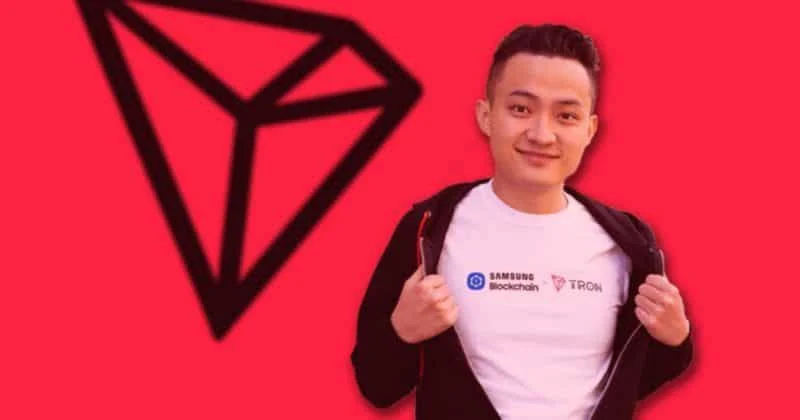
The contentious revelation emerged as scrutiny intensified around WLFI’s operations, particularly following a controversial decentralized finance (DeFi) lending maneuver that raised alarms within the crypto community. Sun, a prominent figure in the cryptocurrency landscape known for his significant investments and sometimes controversial ventures, had been an early and substantial capital contributor to WLFI. His current holdings in the WLFI token stand at approximately 545 million, valued at an estimated $43 million, according to data from Arkham Intel, underscoring the personal financial stake he holds in the project’s integrity. Sun publicly articulated his criticism on the social media platform X on a recent Sunday, marking an escalation of concerns he had previously voiced.
The Genesis of the Dispute: Sun’s Investment and WLFI’s Promise
Justin Sun’s involvement with World Liberty Financial was, by his own account, rooted in an alignment with the project’s initial promise: to democratize finance and dismantle traditional financial middlemen through innovative blockchain technology. A long-time supporter of former President Donald Trump and his crypto-friendly policy stances, Sun stated that his early investment was driven by a belief in WLFI’s potential to embody the ideals of financial liberation and user empowerment—a stark contrast to the centralized control he now alleges.
The concept of decentralization is foundational to the philosophy of blockchain and cryptocurrencies. It posits a system where control and decision-making are distributed across a network, rather than concentrated in a single entity. This architecture is designed to enhance transparency, security, and resistance to censorship, making any mechanism that allows for unilateral control over assets a direct contradiction to these principles. Sun’s accusation of a hidden “backdoor blacklist function” directly challenges the very premise of WLFI as a decentralized financial offering. Such a function, if proven, would imply that the project maintains a centralized authority capable of overriding individual ownership rights, a capability that typically belongs to traditional financial institutions, not open, permissionless blockchain protocols.
The Alleged "Backdoor Blacklist" and Its Implications
Sun’s central allegation is profound and, if true, represents a significant breach of trust within the DeFi space. He asserts that the smart contract governing the WLFI token contains a secret, undisclosed feature that allows the company to unilaterally freeze, restrict, or even confiscate the property rights of any token holder. Crucially, Sun claims this can be done "without notice, without reason, and without any avenue for recourse." This is the crux of his criticism: a supposed DeFi project operating with centralized, unchecked power over its users’ assets.
In the realm of smart contracts, which are self-executing contracts with the terms of the agreement directly written into code, the immutability and transparency of the code are paramount. Any hidden function that grants extraordinary powers to a central entity undermines the trust model that smart contracts are built upon. A blacklist function in a token contract typically allows an issuer or administrator to prevent certain addresses from sending or receiving tokens, or even from accessing their balance. While such functions can be implemented for legitimate reasons, such as compliance with anti-money laundering (AML) regulations or to combat illicit activities, their existence must be transparently disclosed and governed by clear, publicly defined protocols. The lack of disclosure and the unilateral nature of the alleged control are what Sun finds egregious, famously stating, "This is the antithesis of decentralization. It is a trap masquerading as a door."
A Timeline of Escalation: From Freeze to Public Outcry
The current public dispute is not Sun’s first encounter with WLFI’s alleged centralized control. The first significant incident occurred in September 2025, when the DeFi project reportedly froze Sun’s WLFI address, effectively locking approximately 540 million tokens. This action followed transfers from Sun’s wallet to various exchanges, which the project team apparently interpreted as suspicious selling activity.
At the time, Sun vehemently denied any malicious intent, clarifying that these transfers were merely "minor tests" and not an attempt to offload his substantial holdings. He urged the WLFI team to reverse its decision to blacklist his wallet, issuing a stern warning that such unilateral freezes of investor assets would severely erode confidence in the broader ecosystem. His concerns, however, appear to have gone unheeded, or at least unresolved to his satisfaction.
The recent controversy surrounding WLFI’s lending operations seemingly reignited Sun’s concerns and prompted his latest, more comprehensive public criticism. In his recent post on X, Sun reiterated his earlier message but expanded his accusations, detailing a pattern of alleged misconduct by the WLFI team. He accused them of imposing undisclosed fees, implementing hidden controls over assets, freezing funds without transparency or due process, and operating outside of fair governance frameworks. He further argued that any governance votes used to justify these actions were fundamentally flawed, characterized by restricted participation, missing critical information, and predetermined outcomes that failed to genuinely represent the interests of the broader community of token holders. These actions, Sun emphatically stated, were "not what he signed up for."
WLFI’s Controversial Lending Activities and Market Reaction
The backdrop to Sun’s renewed accusations is the mounting pressure on World Liberty Financial following reports of its project-linked wallets engaging in large-scale lending operations on the Dolomite DeFi lending protocol. On-chain data indicates that hundreds of millions of WLFI tokens were deployed as collateral in these operations. This maneuver sparked significant apprehension within the market, raising fears that a decline in the token’s price could trigger liquidations of the collateralized positions, potentially leading to further selling pressure and a downward spiral for the WLFI token.
DeFi lending protocols like Dolomite allow users to borrow cryptocurrencies by providing other cryptocurrencies as collateral. The system is often overcollateralized to mitigate risk, but if the value of the collateral falls below a certain threshold relative to the borrowed amount, the collateral is automatically liquidated to repay the loan. Such liquidations, especially when involving large sums, can flood the market with the collateralized asset, exacerbating price drops.
In response to these growing concerns and the "FUD" (fear, uncertainty, and doubt) circulating, the WLFI project team issued a public statement. They asserted that their lending positions were not at risk of liquidation, announced that they had already repaid a portion of the loan, and committed to proposing a governance initiative to address the issue. On April 9, 2026, the official WLFI X account posted: "Let’s talk about the FUD going around our WLFI Markets lending position. It’s wrong. Here’s what’s actually happening – and why the real story is a lot more interesting." This statement aimed to reassure investors and counter the negative narrative, yet it appears to have done little to quell Sun’s fundamental concerns about transparency and centralized control.
The market’s reaction to the combined pressure of lending fears and Sun’s allegations has been severe. The WLFI token’s price experienced a sharp decline during this tumultuous period, plummeting to a record low of $0.077 on April 11, according to CoinGecko. At press time, the token traded at approximately $0.079, marking a staggering decline of about 76% from its all-time high of $0.3, which was achieved in September of the previous year. This dramatic price depreciation reflects a significant loss of investor confidence and highlights the fragility of projects perceived to deviate from core DeFi principles.
Broader Implications for DeFi and Regulatory Landscape
Justin Sun’s allegations against World Liberty Financial resonate far beyond the immediate dispute, touching upon fundamental challenges and debates within the broader DeFi ecosystem. The very promise of DeFi rests on the pillars of transparency, immutability, and decentralization. If a project, especially one associated with prominent public figures like the Trump family, is found to harbor hidden centralized controls, it casts a long shadow over the entire space.
Firstly, it erodes investor trust. The crypto community is acutely sensitive to issues of centralized power and potential manipulation, largely due to a history of scams, rug pulls, and opaque operations in earlier iterations of the digital asset market. An accusation of a "backdoor blacklist" mechanism strikes at the heart of what many believe DeFi should represent: a financial system where users are truly in control of their assets. Such revelations can deter new participants and lead existing investors to question the integrity of other purportedly decentralized projects.
Secondly, the incident could attract increased regulatory scrutiny. Global financial regulators, including the U.S. Securities and Exchange Commission (SEC), have been closely monitoring the DeFi space, often expressing concerns about consumer protection, market integrity, and the potential for illicit activities. Projects that claim decentralization but exhibit centralized control mechanisms are particularly vulnerable to regulatory action, as they may be deemed to be operating outside established frameworks without providing the transparency and safeguards expected of financial institutions. The SEC, for instance, has previously pursued cases against projects it deemed to be offering unregistered securities, often focusing on the level of centralization and the role of promoters. Sun himself has faced regulatory challenges from the SEC in the past, including charges related to unregistered securities offerings and market manipulation for TRON (TRX) and BitTorrent (BTT) tokens, which he has contested. This personal history adds another layer of complexity and experience to his current critique.
Finally, the controversy reignites the ongoing debate within the crypto community about what truly constitutes "decentralization." As DeFi evolves, many projects incorporate elements of centralized control for various reasons, including efficiency, compliance, or to address technical limitations. However, the extent and transparency of these centralized components are critical. Sun’s call for token access to be restored, transparency to be improved, and development to be guided by integrity underscores a demand for accountability that is crucial for the sustainable growth and legitimization of the DeFi sector. The incident serves as a stark reminder that the ethos of decentralization must be actively upheld through transparent code, fair governance, and unwavering commitment to user autonomy, rather than merely being a marketing slogan.
As the situation unfolds, all eyes will remain on World Liberty Financial’s response to Justin Sun’s severe allegations and how the project navigates the complex landscape of investor confidence, market dynamics, and the foundational principles of decentralized finance. Sun, for his part, has called for complete transparency and a return to the foundational principles he believes WLFI initially promised. The resolution of this high-profile dispute could set a precedent for how the crypto community and regulators alike view projects that straddle the line between centralized control and decentralized aspirations.