
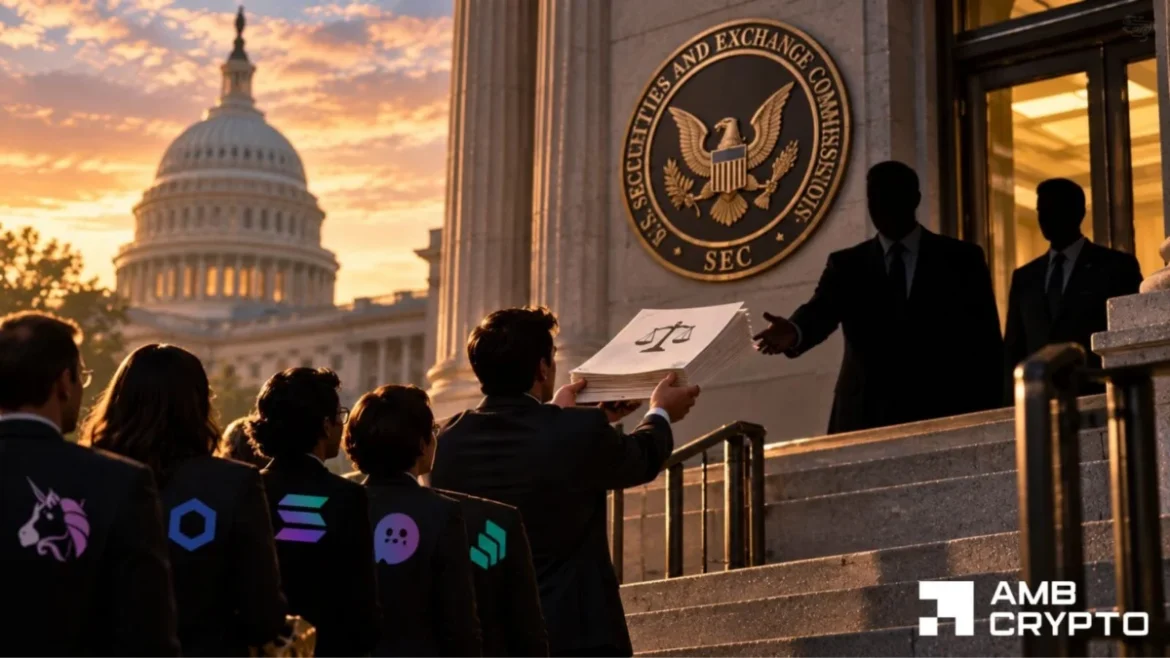
The cryptocurrency industry has intensified its lobbying efforts regarding the United States Securities and Exchange Commission (SEC), formally requesting substantial regulatory concessions within the agency’s proposed Innovation Exemption framework. On September 22, prominent voices from the digital asset sector—led by Miles Jennings, General Counsel at venture capital firm a16z Crypto, alongside the advocacy group DeFi Education Fund—submitted a formal joint letter to the federal regulator. The correspondence outlines two primary demands aimed at reshaping how decentralized finance (DeFi) protocols, decentralized exchanges (DEXes), and crypto asset trading platforms are governed under federal securities laws.
This latest regulatory intervention arrives at a crucial juncture for American digital asset policy. As traditional financial institutions increasingly integrate blockchain technology and tokenized assets into their legacy infrastructures, policymakers and regulators are grappling with how to apply century-old securities laws to permissionless, software-driven networks. The proposals submitted by a16z Crypto and the DeFi Education Fund directly challenge the SEC’s historical approach to exchange registration, highlighting a persistent tension between technological innovation and regulatory compliance in the United States financial markets.
Core Demands: Carve-Outs for Permissionless Systems and DEX Developers
The joint submission focuses primarily on securing regulatory relief for decentralized exchanges, the front-end applications that facilitate access to them, and the underlying software developers who write the code. Specifically, the letter urges the SEC to clarify the precise operational circumstances under which developers of decentralized exchange protocols and user-facing DEX applications fall completely outside the mandatory exchange registration requirements outlined in the Securities Exchange Act of 1934.
According to Jennings, establishing these regulatory boundaries is essential to "extend regulatory clarity to truly permissionless systems." The underlying philosophy of the request is rooted in the principle that software development constitutes protected speech and that passive, autonomous protocols should not be held liable as traditional intermediaries if they do not exercise direct custody over user funds.
Crucially, the industry’s proposal dictates that this regulatory relief should apply even if a decentralized platform handles assets that the SEC deems to be tokenized securities. Provided that the protocol remains strictly non-custodial—meaning it never takes possession or control of user assets during a trade—it should be entirely exempted from the stringent broker-dealer and exchange registration mandates enforced by the agency.
In addition to seeking relief for decentralized protocols, the venture firm’s second major proposal outlines an alternative, modernized approval pathway tailored specifically for centralized crypto asset trading platforms (CTPs). Unlike permissionless DEXes, these centralized entities function much like traditional financial intermediaries, holding user funds and executing trades through centralized order books. By proposing a distinct framework for CTPs, the industry hopes to establish a workable compliance bridge for custodial entities that currently struggle to fit into the SEC’s rigid, legacy regulatory pigeonholes.
Chronology and Legislative Context
The push for developer protections and DeFi-specific exemptions is not occurring in a vacuum; it represents the continuation of a fierce, multi-year policy battle in Washington, D.C. Earlier legislative efforts, most notably embodied in the stalled CLARITY Act, featured aggressive debates surrounding liability protections for software developers. As the legislative text of the CLARITY Act underwent multiple revisions, several key developer protections were notably watered down or dropped entirely amid intense negotiations between lawmakers, traditional financial lobbyists, and crypto advocates.
Frustrated by the slow pace and uncertain outcomes of Capitol Hill policymaking, industry stakeholders have increasingly turned their lobbying focus directly toward regulatory agencies like the SEC and the Commodity Futures Trading Commission (CFTC). This strategy shift gained momentum following notable regulatory actions throughout 2024.
Most prominent among these was the SEC’s aggressive enforcement posture toward major decentralized players, highlighted by the Wells notice and subsequent enforcement actions targeting Uniswap Labs. The Uniswap enforcement action served as a primary catalyst for a16z Crypto and allied advocacy groups, underscoring the urgent need for clear administrative guidelines that protect decentralized software creators from existential legal threats.
Furthermore, the crypto industry’s current strategy draws inspiration from recent regulatory wins in other federal agencies. Earlier, the CFTC provided significant regulatory relief to "passive software" developers—such as the creators of the Phantom wallet—shielding them from being incorrectly classified as introducing brokers under the Commodity Exchange Act. However, because the CFTC’s regulatory purview is strictly limited to derivatives and commodities like perpetual futures, its protections do not extend to spot market assets that the SEC might unilaterally classify as securities.
Stakeholder Reactions and Industry Divisions
The latest proposals from a16z Crypto have laid bare the deep ideological and commercial divisions that exist within the broader financial services landscape regarding digital asset regulation. While the crypto industry champions the Innovation Exemption as a necessary catalyst for technological progress, traditional financial market participants view expansive carve-outs with deep skepticism.
Traditional broker-dealers and legacy market infrastructure providers—represented heavily by associations such as the Securities Industry and Financial Markets Association (SIFMA), alongside corporate giants like Citadel Securities—have previously voiced significant structural criticisms of the SEC’s Innovation Exemption proposal. Industry analysts suggest that while traditional financial firms might cautiously support the second component of a16z’s proposal (the structured approval pathway for centralized, custodial crypto platforms that mirror traditional market participants), they are expected to fiercely oppose any broad regulatory exemptions for permissionless decentralized exchanges and independent software developers.
Legacy market participants argue that granting blanket exemptions to DEXes creates an unlevel playing field, allowing permissionless entities to operate outside the rigorous investor protection, anti-money laundering (AML), and market surveillance standards imposed on traditional exchanges. Conversely, crypto advocates counter that applying traditional exchange rules to immutable, autonomous smart contracts is technically impossible and economically destructive to the burgeoning Web3 economy.
Broader Economic and Market Implications
The SEC’s eventual response to the joint petition by a16z Crypto and the DeFi Education Fund will carry profound implications for the future trajectory of capital formation and financial technology in the United States. As financial regulators globally race to establish regulatory perimeters for tokenized real-world assets (RWAs), corporate debt, and equity securities on public blockchains, the United States risks losing its competitive edge if regulatory frameworks remain prohibitively ambiguous.
If the SEC chooses to integrate these requested carve-outs into its evolving Innovation Exemption framework, it could trigger a massive wave of institutional participation in decentralized finance. Clear regulatory guidelines would provide the legal certainty required for venture capital funds, institutional asset managers, and traditional corporations to safely interact with permissionless liquidity pools and tokenized financial instruments without fear of retroactive enforcement actions.
Conversely, if the agency rejects the proposals and continues its aggressive enforcement-first approach toward decentralized protocols, developers and liquidity providers may increasingly migrate to more welcoming offshore jurisdictions. This geographic arbitrage could diminish the global dominance of American financial technology markets and push algorithmic innovation further underground.
As the SEC deliberates on how to balance its statutory mandate of investor protection with the undeniable evolution of market structure, the debate over decentralized exchange exemptions remains one of the defining regulatory battles of the modern financial era. Market participants and legal experts alike are closely monitoring the agency’s next administrative moves to determine whether American regulation will adapt to the realities of decentralized code or entrench the supremacy of traditional financial intermediaries.
