The cryptocurrency landscape is experiencing a seismic shift as regulatory pressures intensify, casting a long shadow over privacy coins. A recent policy push, spearheaded by the Trump administration with David Sacks reportedly playing a key role as a crypto czar, is ushering in stricter rules for digital assets. This regulatory tightening, particularly concerning Anti-Money Laundering (AML) and Know Your Customer (KYC) compliance, is arriving at a critical juncture for privacy-focused cryptocurrencies, which have historically thrived on their inherent anonymity.
The implications of these new regulations are profound, directly challenging the core value proposition of privacy coins. For years, assets like Zcash (ZEC) and Monero (XMR) have attracted a segment of investors seeking to safeguard their financial privacy, a feature that has also unfortunately made them attractive for illicit activities. The U.S. Treasury’s Financial Crimes Enforcement Network (FinCEN), the nation’s Anti-Money Laundering (AML) and Counter-Terrorist Financing (CTF) watchdog, is now mandating stricter adherence to these compliance frameworks, effectively eroding the anonymity that defined these digital assets.
This regulatory crackdown is not an isolated incident. It follows a broader trend of increasing scrutiny on stablecoins, which saw a significant crypto bill earlier this year proposing to cap stablecoin rewards. That legislation sparked considerable market concern, with some fearing potential repercussions for the global banking system, and even drew criticism from prominent figures like Circle’s CEO. The current focus on privacy coins suggests a widening regulatory net, aiming to bring greater transparency and control to the digital asset space.
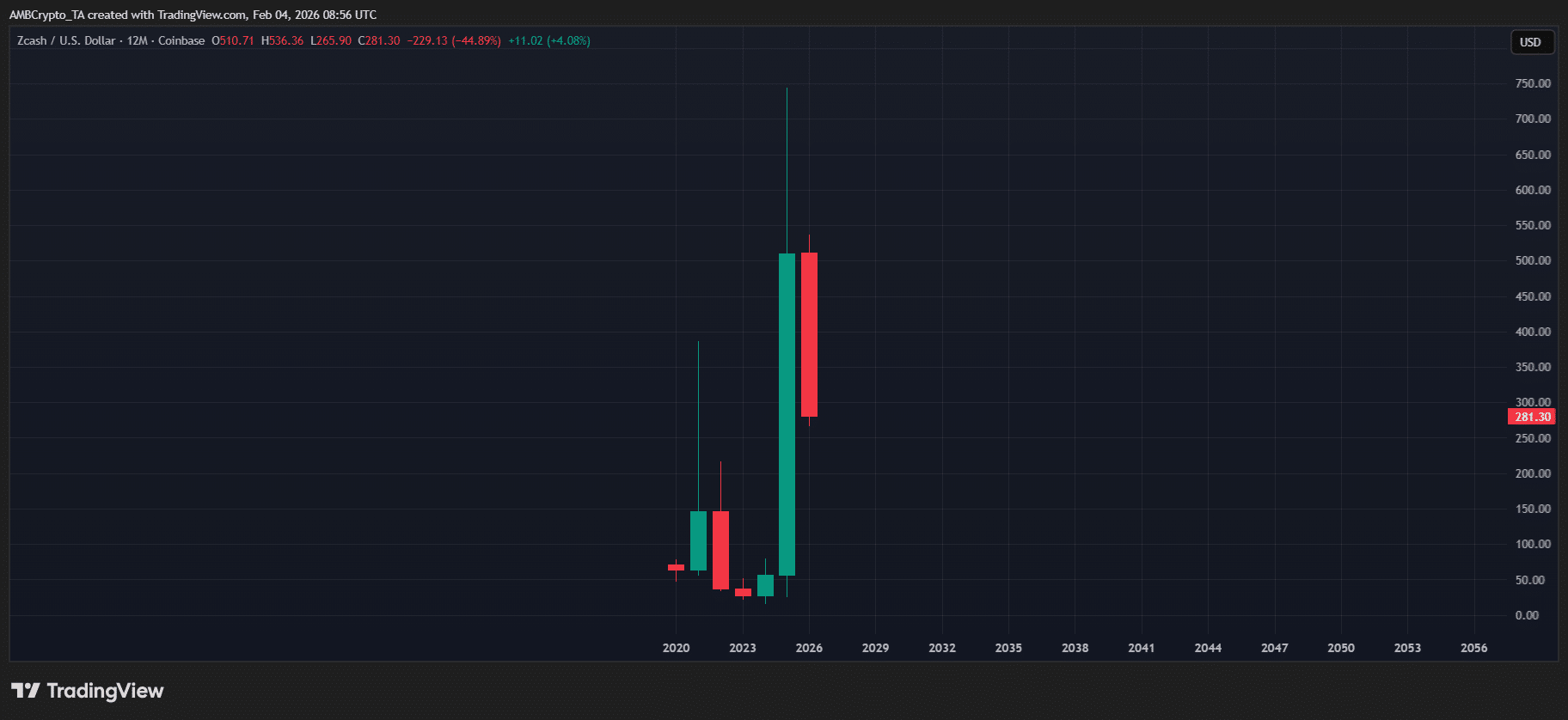
The timing of this regulatory push is particularly noteworthy. The 2025 crypto cycle witnessed a remarkable resurgence for privacy coins. Zcash, for instance, experienced an astonishing rally of over 800%, demonstrating the market’s appetite for secure and private transaction options when regulatory sentiment was more permissive. However, the landscape has dramatically changed. Exchanges are now acting proactively, with India’s crypto exchanges recently delisting Zcash and other privacy-focused assets. This move by Indian exchanges, a significant emerging market for cryptocurrency adoption, signals a growing global trend towards regulatory compliance that may force the hand of exchanges worldwide.
The immediate impact on the market is palpable. Zcash (ZEC) has already seen a significant decline of approximately 45%, indicating that these coins are facing considerable headwinds. The broader implications of these regulatory actions raise the specter of a potential "ban" on privacy coins, a scenario that was once considered remote but now appears increasingly plausible as governments prioritize combating financial crime and terrorism financing within the digital asset ecosystem.
The Erosion of Anonymity: A Fundamental Shift for Privacy Coins
The fundamental appeal of privacy coins lies in their ability to shield transaction details from public view, offering a level of financial discretion that resonates with users concerned about their digital footprint. This anonymity, however, has also been a significant concern for regulators worldwide, who view it as a potential enabler of illicit financial activities, including money laundering and sanctions evasion.
The latest U.S. policy directives, spearheaded by FinCEN, represent a direct challenge to this core feature. By enforcing stringent AML and KYC rules, the U.S. government is aiming to ensure that all digital asset transactions, regardless of the underlying technology, are traceable and accountable. This means that privacy coins, which were designed to obfuscate transaction origins and destinations, will now be subject to the same transparency requirements as other cryptocurrencies.

This regulatory mandate has far-reaching consequences. For privacy coins to operate within regulated jurisdictions, they would need to integrate mechanisms that allow for identity verification and transaction monitoring. This would effectively strip them of their defining characteristic: anonymity. The question then becomes whether privacy coins can retain their appeal and utility if they are forced to compromise on their core design principles.
Market Reactions and Technical Indicators
The market’s response to these evolving regulatory pressures has been swift and decisive. The double-digit drops observed across major privacy coins on weekly charts are not coincidental. Monero (XMR), historically the market leader in the privacy coin sector by market capitalization, has seen a substantial loss of over $1 billion in market value within a single week. This significant downturn has pushed its valuation back to levels not seen since the fourth quarter of the previous year, reflecting investor apprehension and a clear re-evaluation of risk associated with these assets.
From a technical analysis perspective, these price movements suggest a significant level of investor concern. Charts often reflect market sentiment, and the sharp declines in privacy coin prices are a strong indicator that traders and investors are factoring in the increased regulatory risks. The delisting by Indian exchanges, coupled with the broader U.S. regulatory stance, creates a ripple effect, potentially prompting similar actions from exchanges in other regions to avoid compliance issues.
The Historical Context: From Privacy Haven to Regulatory Target
The journey of privacy coins from niche technological innovations to regulated assets has been a complex one. Initially, they emerged as a response to the perceived transparency of early blockchain technologies like Bitcoin, which, while pseudonymous, could still be traced on public ledgers. Projects like Zcash, with its use of zk-SNARKs (zero-knowledge proofs), and Monero, with its ring signatures and stealth addresses, offered enhanced privacy features that appealed to a growing segment of the crypto community.

The 2025 cycle, as mentioned, was a period of significant growth for these assets, driven by both technological advancements and a generally favorable regulatory climate. Investors were attracted to the promise of secure and private transactions, pushing valuations to new heights. However, this period of unchecked growth also coincided with increasing concerns from global law enforcement agencies regarding the potential misuse of these technologies for illicit purposes.
The shift in regulatory sentiment has been gradual but persistent. Early concerns about illicit use cases began to translate into more concrete policy proposals. The current administration’s focus, with President Trump and his appointed crypto czar David Sacks, signals an acceleration of this trend. The emphasis on federal enforcement of AML and KYC rules suggests a more robust and coordinated effort to bring privacy coins under regulatory oversight.
Broader Implications and the Future of Anonymity in Crypto
The implications of this regulatory crackdown extend beyond the immediate price performance of privacy coins. It signals a broader trend towards greater accountability and transparency in the entire cryptocurrency ecosystem. While the stated aim is to combat financial crime, critics argue that this could stifle innovation and limit individual financial freedom.
The core question remains: can privacy coins survive in a world where anonymity is increasingly viewed with suspicion by regulators? If these coins are forced to abandon their privacy features to comply with regulations, they risk losing their primary appeal. This could lead to a significant contraction of their market share and a shift in investor interest towards other, more regulation-compliant digital assets.
However, there’s also the possibility of a bifurcated market. Privacy coins might continue to exist in a less regulated, offshore environment, accessible only to those willing to operate outside the purview of major regulatory bodies. This would create a clear divide between regulated, transparent cryptocurrencies and unregulated, privacy-focused alternatives, each catering to different user bases and risk appetites.
Furthermore, the development of new privacy-enhancing technologies that can coexist with regulatory requirements might emerge. These could involve advanced encryption techniques or novel blockchain architectures that allow for selective disclosure of information, striking a balance between privacy and compliance.
The current regulatory environment is dynamic, and the long-term impact on privacy coins will depend on a variety of factors, including the willingness of developers to adapt, the extent of global regulatory coordination, and the evolving preferences of cryptocurrency users. What is clear is that the era of unchecked anonymity in the cryptocurrency space is drawing to a close, ushering in a new chapter defined by increased scrutiny and the pursuit of greater financial transparency. The future of privacy coins hinges on their ability to navigate this complex and challenging regulatory landscape.