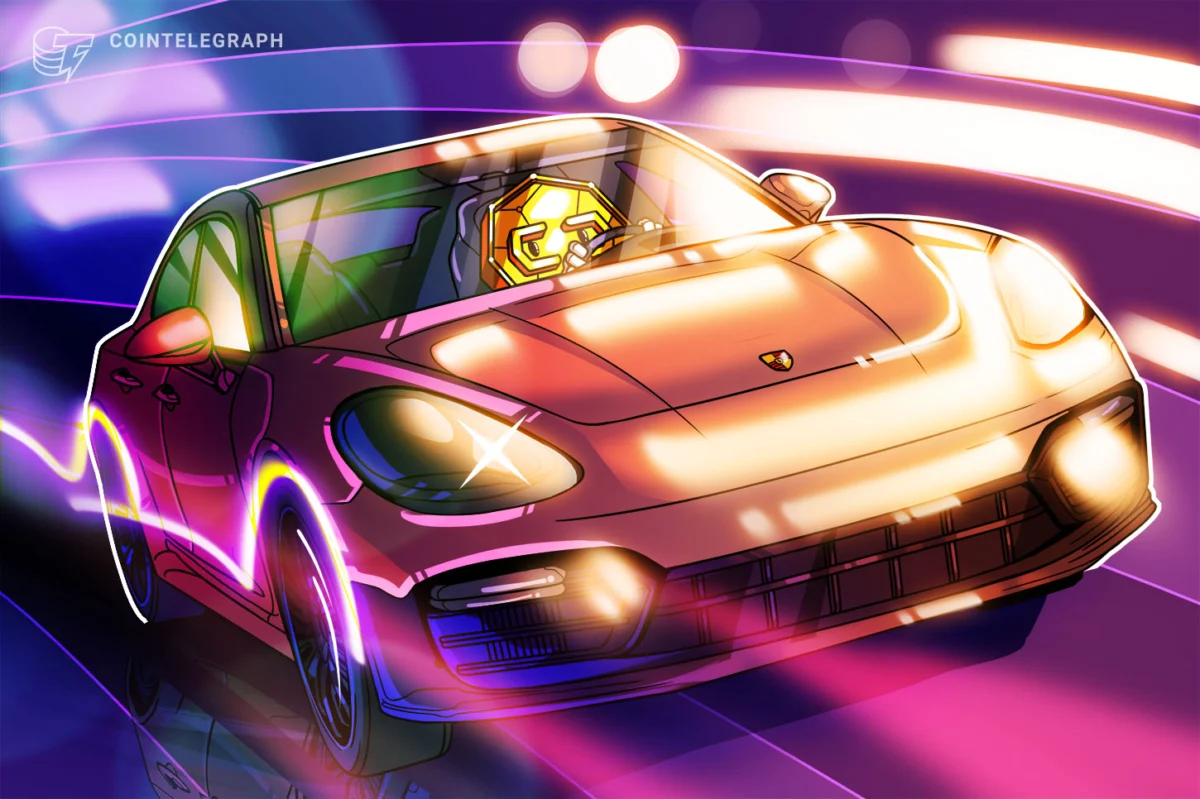
German luxury sports car manufacturer Porsche has officially announced the winding down of its Web3 initiative and the accompanying Pioneers Circle community. The decision, revealed nearly four years after the high-profile rollout of its iconic 911-themed nonfungible token (NFT) collection, marks a definitive retreat from the digital asset landscape. The move underscores the broader challenges legacy corporate entities face in maintaining long-term engagement within volatile blockchain and virtual asset markets.
In an official statement published on the social media platform X, the company addressed its digital community, stating that the Porsche Web3 project and the Pioneers Circle have reached their natural conclusion. What began as an ambitious exploration into decentralized technologies, metaverse integrations, and digital collectibles eventually expanded into a hybrid ecosystem of online and offline events. However, plummeting trading volumes and waning market interest ultimately forced the brand to re-evaluate the utility and viability of the project.
Despite the closure of active operations, Porsche has assured current asset holders that the existing Porsche 911 NFTs will remain secure in their digital wallets, continuing to exist onchain indefinitely. To preserve the history of the community, the automaker announced plans to transition its official Discord server into a read-only archive while scaling down updates on the project’s dedicated social media channels.
A Controversial Inception and Shorter-Than-Planned Supply
The decline of Porsche’s Web3 footprint traces back to its turbulent launch phase in January 2023. Initially unveiled with grand ambitions at Art Basel in Miami in December 2022, the digital initiative aimed to bridge traditional automotive prestige with cutting-edge blockchain mechanics. At the time of the launch, Lutz Meschke, Porsche’s deputy chairman and member of the executive board for finance and IT, framed the venture as a long-term commitment. Meschke and other executives spoke expansively about leveraging Web3 architecture for future purchasing experiences, metaverse applications, and even supply chain efficiencies.
However, the execution of the flagship Porsche 911 NFT collection encountered immediate friction from both crypto-native enthusiasts and traditional brand loyalists. The collection was originally minted with a planned total supply of 7,500 tokens. Collectors quickly pushed back against the initial pricing structure, criticizing the release for high mint costs relative to the perceived utility offered by the brand.
Faced with mounting public backlash and a sluggish secondary market uptake, Porsche took the rare step of halting the minting process mid-stream. As a result, the total circulating supply of the collection was permanently capped at just 2,363 tokens—significantly lower than the initial projection. This early stumble cast a long shadow over the project, creating a steep uphill battle for community retention and asset liquidity.
Market Data Reflects Steep Declines in Trading Activity
While the initial mint captured global headlines, secondary market metrics over the subsequent years illustrated a steady decline in user participation and speculative interest. According to historical and real-time data from leading NFT marketplaces like OpenSea, the Porsche 911 collection accumulated an all-time trading volume of approximately $20 million.
Yet, a granular look at recent transaction data reveals that the project’s momentum had essentially evaporated. Over the 12 months preceding the shutdown announcement, the collection generated a meager $38,000 in secondary trading volume. In the final month leading up to the closure, that figure dropped further to approximately $2,900. These stark metrics highlight a broader industry trend where corporate-backed NFT initiatives frequently struggle to sustain organic secondary market liquidity once the initial novelty wears off.
Industry Implications: Corporate Web3 Strategies Under Scrutiny
Porsche’s retreat from the digital asset space reflects a broader recalibration among mainstream multinational corporations regarding their engagement with blockchain technology. During the peak of the 2021–2022 digital asset bull market, numerous luxury brands, fashion houses, and automotive giants rushed to establish a presence in the metaverse, launch NFT collections, and build token-gated communities.
Executives often viewed these digital experiments as innovative marketing channels aimed at younger, tech-savvy demographics. However, as the macroeconomic climate shifted and crypto market dynamics matured, the cost and operational overhead required to maintain active Web3 communities often outweighed the marketing benefits. Furthermore, regulatory uncertainty and consumer skepticism regarding digital collectibles have prompted conservative boardrooms to refocus on core business operations.
For Porsche, the wind-down of the Pioneers Circle does not signal an abandonment of technological innovation altogether, but rather a strategic retreat from decentralized digital tokens. The luxury carmaker continues to invest heavily in vehicle electrification, digital in-car infotainment systems, and software-defined vehicle architectures—areas directly tied to its core manufacturing identity.
Looking Ahead: The Legacy of Corporate Digital Collectibles
As the Pioneers Circle transitions into a static archive, the project serves as a definitive case study for legacy enterprises venturing into the Web3 ecosystem. It highlights the delicate balance required between maintaining brand exclusivity and fostering decentralized community participation.
While holders of the Porsche 911 NFTs retain their digital assets onchain as historical artifacts of the automaker’s early metaverse experiments, the closure marks the end of an era for corporate-led automotive communities. As the digital asset landscape continues to mature, future corporate explorations into blockchain technology will likely prioritize pragmatic, utility-driven infrastructure over speculative consumer-facing NFT drops.