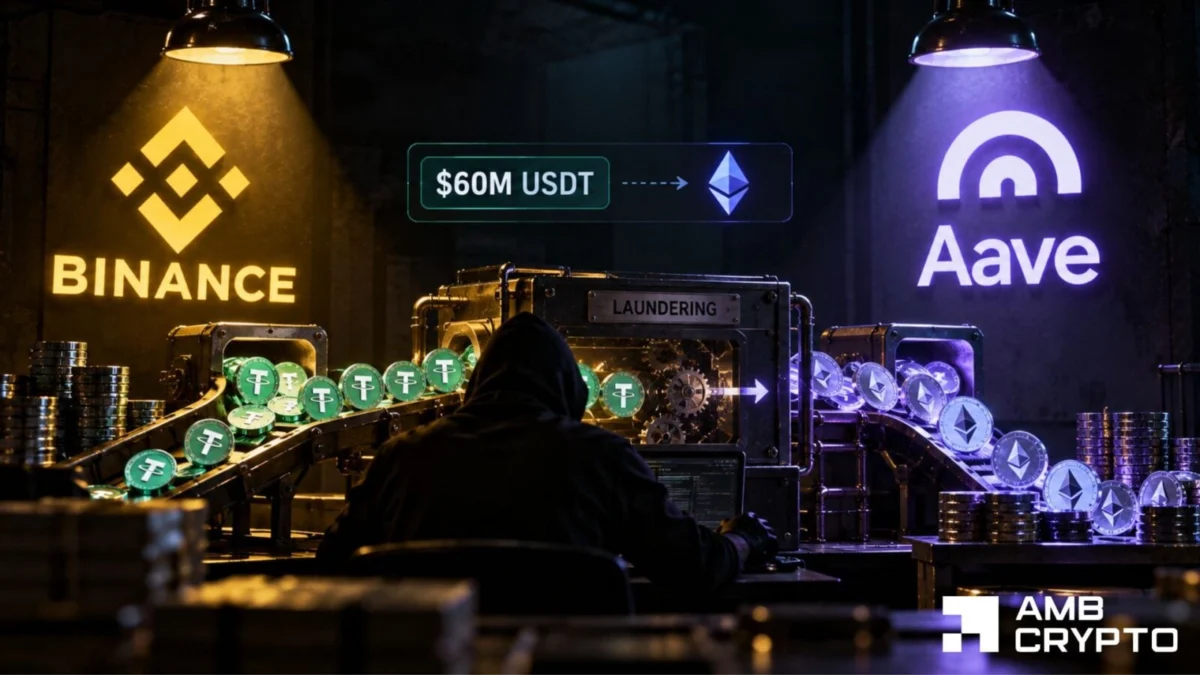
The recent multi-billion-dollar security breach affecting global cryptocurrency exchange Binance has highlighted an evolving sophistication in how threat actors launder digital assets. Identified by cybersecurity and blockchain intelligence firms as the notorious North Korean state-sponsored hacking collective TraderTraitor, the attacker executed a meticulously planned operation on the Ethereum network. By anticipating the rapid countermeasures typically deployed by centralized stablecoin issuers, the perpetrator successfully bypassed potential asset freezes through the strategic integration of decentralized finance (DeFi) protocols, notably Aave and UniswapX.
The incident has reignited intense industry-wide discussions regarding the structural vulnerabilities inherent in the intersection of centralized custody and decentralized liquidity. As regulatory bodies, centralized issuers, and decentralized autonomous organizations (DAOs) dissect the chronology of the exploit, the event serves as a watershed moment for understanding how modern cybercriminals weaponize permissionless liquidity pools to evade traditional asset recovery mechanisms.
Chronology and Timeline of the Exploit
The sequence of events unfolded rapidly on Thursday, beginning with a monumental initial sweep on the Ethereum network that netted approximately $3.79 billion in digital assets. This haul included 200,630 native Ethereum (ETH) tokens alongside various stablecoins extracted directly from Binance wallets. Recognizing that major centralized entities—specifically Tether and Circle—maintain the technical capability to blacklist addresses and freeze stablecoin smart contracts instantly, the attacker initiated a race against time to obfuscate the funds.
Between 20:58 UTC and 21:01 UTC, the perpetrator deposited $60 million worth of Tether (USDT) into the decentralized lending protocol Aave. Leveraging this capital as collateral, the attacker immediately borrowed 19,760 Wrapped Ethereum (WETH), valued at approximately $45.13 million.
Simultaneously, recognizing the need to liquidate remaining holdings before issuers could implement automated freezing protocols, the attacker utilized UniswapX and 1inch to swap an additional $325 million in USDT between 21:09 UTC and 21:34 UTC. On-chain data and blockchain analysts revealed that the hacker deliberately incurred a steep 10% premium in transaction fees to fast-track these orders, ensuring miners prioritized their execution ahead of incoming security blacklists. While the Aave borrowing mechanism executed within a remarkably swift five-minute window, the UniswapX routing required roughly 35 minutes to clear completely.
Immediately following these liquidity maneuvers, the attacker unwrapped the acquired WETH into native, unfreezable Ethereum, securing 142,062 native ETH. Tether and Circle officially initiated their coordinated asset freezes at approximately 21:18 UTC, successfully halting further conversions for any remaining static USDT held in the compromised addresses. However, by that juncture, the preventive measures were rendered partially obsolete; the hacker had already consolidated a massive chest totaling roughly 420,000 ETH, comprising the newly unwrapped tokens, the original Ethereum extracted from Binance, and other non-USDT assets swapped prior to the freeze command.
DeFi Mechanics and the Aave Bad Debt Controversy
The tactical execution of borrowing native assets against stablecoin collateral has drawn sharp comparisons to previous exploits, most notably the KelpDAO security breach earlier in the year. In the KelpDAO incident, threat actors leveraged similar DeFi lending loops to cash out and launder stolen funds, ultimately leaving the Aave protocol exposed to over $120 million in bad debt.
Because the Binance hacker deposited stablecoins to borrow WETH before the blacklisting protocols took effect, market observers quickly raised concerns about the solvency of the lending pools involved. Industry analysts pointed out the unique structural reality of the maneuver: while Tether retained the technical right to freeze the USDT sitting inside Aave’s smart contracts, it possessed no legal or technical mechanism to recall or freeze the ETH that the borrower had already withdrawn from the protocol. Consequently, Aave was left holding collateralized stablecoins that were effectively frozen by the issuer, while the bad actor walked away with fully liquid, unencumbered native assets.
Addressing these mounting concerns, Aave founder Stani Kulechov stepped forward to clarify the protocol’s financial standing, firmly denying that bad debt claims were applicable to the Binance hack scenario. Kulechov emphasized that the position established by the hacker was strictly over-collateralized by stable assets at the time of borrowing, distinguishing the event fundamentally from the KelpDAO exploit.
Despite assurances regarding protocol solvency, significant ambiguity remains within the broader financial ecosystem. Industry stakeholders are currently grappling with complex recovery questions, chief among them being the issue of restitution: whether financial compensation for the $60 million locked in Aave should flow back to Binance as the primary victim of the initial security breach, or if the burden falls upon the DeFi liquidity providers and protocol stakeholders caught in the crossfire.
Vulnerabilities in Centralized Hot Wallets and Non-Custodial Architecture
Beyond the immediate mechanics of the blockchain-level laundering, the incident has exposed deep divisions regarding operational security models across the digital asset landscape. Security researchers and blockchain forensics experts have expressed bewilderment over how transactions exceeding $1 million—let alone a staggering $325 million sweep—could be signed off from Binance hot wallets without mandatory human intervention or multi-sig approval delays.
For centralized exchanges, implementing strict withdrawal caps, velocity limits, and multi-layered manual review boards has long been considered an industry best practice to mitigate the impact of private key compromises. However, the architecture of decentralized finance operates under a fundamentally different paradigm. Non-custodial protocols like Aave, UniswapX, and 1inch are purposely engineered to eliminate intermediaries and human intervention, executing trades and loans deterministically based on immutable smart contract logic. This structural dichotomy creates an inherent friction point: centralized entities designed for compliance and safety must interact with permissionless protocols designed for censorship resistance and absolute finality.
According to a comprehensive advisory issued by blockchain analytics firm Chainalysis, the exploit points to a specific technical vulnerability present in certain wallet implementations running on the Ethereum network. Platforms utilizing vulnerable node architectures or outdated smart contract dependencies have been strongly urged to conduct immediate security audits and upgrade their infrastructure to prevent lateral exploitation by state-sponsored cyber units.
Broader Economic and Regulatory Implications
The TraderTraitor operation against Binance and its subsequent ripple effects across the DeFi ecosystem underscore the growing sophistication of state-sponsored cyber warfare within financial technology sectors. North Korean threat actors have increasingly targeted cryptocurrency exchanges and decentralized liquidity pools as primary vectors for generating illicit revenue to fund state programs, bypassing traditional international economic sanctions through decentralized rails.
The incident is expected to accelerate regulatory scrutiny on both centralized exchanges and decentralized protocols. Regulators in major jurisdictions have repeatedly voiced concerns over the ease with which stolen capital can be fragmented, bridged, and laundered through automated market makers (AMMs) and lending pools before law enforcement can coordinate a response. The rapid execution window—where multi-million-dollar loans and swaps were completed in mere minutes—demonstrates that traditional legal avenues and asset freezing requests are often too slow to combat automated, on-chain attacks.
Moving forward, institutional players and DeFi developers face mounting pressure to implement smarter circuit breakers, enhanced cryptographic monitoring tools, and tighter integration between centralized compliance databases and decentralized liquidity pools. While permissionless innovation remains the core ethos of decentralized finance, events of this magnitude starkly illustrate that the absence of friction can simultaneously serve as the ultimate refuge for illicit actors. As the investigation into the Binance breach continues, the crypto industry stands at a critical juncture, forced to balance the ideals of decentralization against the practical necessities of security and financial accountability.