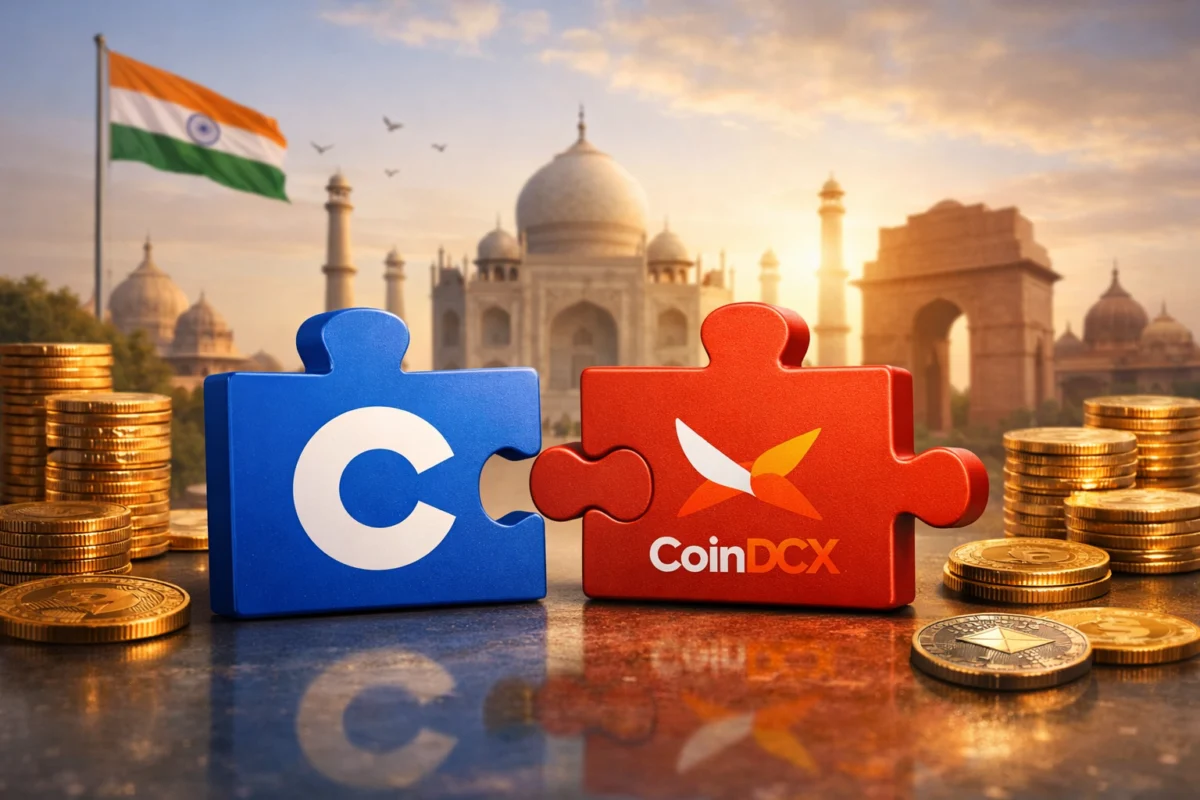
US-based cryptocurrency exchange giant Coinbase has cleared a major regulatory hurdle in India, following official approval from the Competition Commission of India (CCI) for its planned minority stake acquisition in DCX Global Limited, the parent company of leading domestic exchange CoinDCX. This decisive regulatory clearance underscores a significant turning point for international digital asset companies seeking engagement within one of the world’s most populous and digitally active nations. The landmark approval arrives amid a broader strategic realignment by Coinbase, signaling a calculated return to the South Asian market following a prolonged hiatus driven by domestic regulatory friction, tax burdens, and compliance hurdles.
The official sign-off from the CCI, communicated through a public disclosure on the social media platform X, validates a transaction that was initially disclosed by Coinbase in mid-October. By taking a minority position in DCX Global Limited, Coinbase is deliberately opting for an indirect, insulated exposure to India’s burgeoning crypto ecosystem. This nuanced approach allows the American multinational to participate in the growth of local market infrastructure while remaining structurally detached from the direct day-to-day operations and complexities of local retail onboarding.
Chronology of Coinbase’s Engagement
with the Indian Crypto Market
The timeline of Coinbase’s entry, retreat, and subsequent resurgence in India illustrates the high-stakes navigation required by global fintech enterprises operating under restrictive jurisdictions.
In early 2022, during the height of a global cryptocurrency market boom, Coinbase identified India as a critical growth frontier. The exchange hosted a high-profile launch event in the country, announcing major investment plans targeting homegrown crypto startups, including CoinDCX and its competitor, CoinSwitch Kuber. During this initial expansion phase, Coinbase outlined ambitions to aggressively recruit engineering and product talent in the country.
However, momentum stalled rapidly. By mid-2022, the Reserve Bank of India (RBI) and the Ministry of Finance maintained a stern posture against digital assets, expressing deep macro-financial stability concerns. The introduction of punitive domestic tax policies—specifically a 1% Tax Deducted at Source (TDS) on all crypto transactions and a flat 30% tax on digital asset gains—triggered a massive liquidity drain from Indian exchanges. Domestic trading volumes plummeted by up to 90% within months. Facing mounting regulatory resistance and payment gateway suspensions, Coinbase quietly paused its user onboarding and scaling initiatives in India by 2023, effectively freezing its direct operational footprint in the country.
The recent flurry of developments marks a dramatic shift in strategy. In December, Coinbase abruptly ended its two-year onboarding freeze by reopening registration portals for Indian users, initially rolling out strictly crypto-to-crypto trading pairs. This phased market re-entry is projected to culminate in the integration of a direct Indian Rupee (INR) fiat on-ramp by 2026, pending further legal clarity and banking partnerships. The CCI approval for the CoinDCX investment acts as a vital institutional anchor for this renewed offensive.
Navigating Structural Hurdles and Security Challenges at CoinDCX
The timing of Coinbase’s deepened integration with CoinDCX is notable, coming on the heels of an operationally demanding year for the domestic exchange. In July, CoinDCX faced a significant test of its risk management infrastructure when it disclosed a security breach involving one of its auxiliary wallets, resulting in an estimated $44.2 million loss. Although executive leadership acted swiftly to reassure the public that user funds remained fully protected and solvent through internal reserves, the incident amplified the scrutiny surrounding digital asset security in emerging markets.
Despite these operational bumps, CoinDCX has managed to retain its position as a market leader in India, boasting millions of verified users and robust venture backing. By taking a stake in a seasoned domestic entity like CoinDCX, Coinbase is essentially leveraging localized expertise, compliance frameworks, and existing user acquisition channels. This strategy mitigates the direct regulatory exposure that foreign entities typically face when trying to establish independent operational entities in heavily regulated or tax-punitive regions.
Broader Regulatory and Economic Context in India
India’s macroeconomic and regulatory stance toward cryptocurrencies remains a paradox. On one hand, the nation consistently ranks near the top of global adoption indices, according to metrics compiled by blockchain analytics firms like Chainalysis. Millions of retail investors, particularly among India’s tech-savvy youth demographic, view digital assets as a viable alternative asset class.
On the other hand, Indian financial authorities—led by the RBI—have maintained an unyielding skepticism. The central bank has repeatedly characterized cryptocurrencies as a threat to sovereign monetary sovereignty, warning of risks related to capital flight, money laundering, and terrorist financing. The absence of a unified, comprehensive digital asset bill has left industry participants operating in a state of regulatory ambiguity, where compliance relies heavily on existing tax laws rather than tailored digital asset legislation.
Nevertheless, the CCI’s greenlight for the Coinbase-CoinDCX transaction offers a glimmer of pragmatic optimism. It indicates that India’s competition regulators are willing to facilitate foreign direct investment and corporate restructuring within the tech sector, provided that the transactions adhere strictly to statutory competition reviews and transparency standards.
Strategic Implications for the Global Crypto Landscape
The interplay between Coinbase and CoinDCX serves as a potential blueprint for how major global cryptocurrency exchanges may approach high-growth emerging markets facing stringent local regulations. Direct expansion—characterized by heavy localized marketing, standalone banking integrations, and direct consumer retail acquisition—has become increasingly risky and expensive in jurisdictions with hostile regulatory climates.
By utilizing minority equity investments and strategic partnerships, global exchanges can gain indirect exposure to high-potential markets without committing excessive capital or absorbing direct regulatory liabilities. This indirect strategy protects corporate balance sheets while maintaining a strategic foothold for the day comprehensive regulatory frameworks eventually materialize.
As Coinbase moves forward with its phased return to India—balancing crypto-to-crypto availability today against a planned rupee on-ramp by 2026—all eyes will remain on how the nation’s financial regulators respond to foreign capital re-entering the ecosystem. For now, the CCI’s approval of the Coinbase-CoinDCX alliance stands as a notable validation of cross-border collaboration, proving that institutional pathways can still be forged even within complex and heavily guarded financial landscapes.