The landscape of large language models (LLMs) has undergone a significant shift with OpenAI’s latest release, GPT-5.6, marking a strategic departure from its previous unified model approach. For the first time, OpenAI is not merely offering a single model with adjustable "thinking dials," but rather three distinct LLMs—Sol, Terra, and Luna—each meticulously engineered with unique training methodologies, pricing structures, and defined capability ceilings. This move signals a maturing market where specialized tools are becoming paramount, directly challenging competitors, most notably Anthropic’s Claude Fable 5, which has recently endured a tumultuous period marked by a government ban, service interruptions, and repeated deadline extensions.
OpenAI’s New Multi-Model Paradigm: GPT-5.6 Unveiled
OpenAI’s decision to launch GPT-5.6 as a suite of three specialized models represents a calculated evolution in its product strategy. Historically, developers and users have adapted a single powerful model, often GPT-4, to a diverse range of tasks by tweaking parameters or "thinking dials." The introduction of Sol, Terra, and Luna suggests an acknowledgment of the varied demands of different applications, from high-performance, complex reasoning to cost-efficient, specialized tasks.
Sol, positioned as the flagship model within the GPT-5.6 family, is designed for cutting-edge performance, directly competing with the most capable LLMs on the market. Its pricing reflects this premium offering, set at $5 per million input tokens and $30 per million output tokens. This places it in direct contention with Anthropic’s Claude Fable 5, which currently costs $10 per million input tokens and $50 per million output tokens, making Sol notably more cost-effective for comparable capabilities.
Terra, while not detailed in the initial announcement, is expected to occupy a mid-range position, balancing performance with affordability. Luna, the most economical of the trio, is priced at an aggressive $1 per million input tokens and $6 per million output tokens. This aggressive pricing strategy, coupled with its reported performance, positions Luna to disrupt segments traditionally dominated by less powerful or more expensive models. Remarkably, Luna has already demonstrated superior coding capabilities compared to Anthropic’s Opus 4.8, a significant detail that foreshadows intensified competition in the developer ecosystem.
This multi-model strategy allows OpenAI to cater to a broader spectrum of user needs, from enterprises requiring maximum power to individual developers and startups prioritizing cost-efficiency. It also enables more targeted improvements and optimizations for each model, potentially leading to greater efficiency and specialized performance gains.
Anthropic’s Fable 5: A Month of Unprecedented Challenges
In stark contrast to OpenAI’s strategic rollout, Anthropic’s Claude Fable 5 has navigated a challenging month, experiencing a series of setbacks that have cast a shadow over its market position and operational stability. The troubles began on June 12 when the U.S. government imposed a ban on Fable 5. This drastic measure followed a critical discovery by Amazon researchers, who identified a "jailbreak" vulnerability that could transform the model into an "unintended vulnerability scanner." This incident raised serious concerns about AI safety and misuse, prompting Anthropic to pull Fable 5 globally for a substantial 19-day period.
During this hiatus, Anthropic reportedly worked on developing and implementing a new safety classifier to address the identified vulnerability. Fable 5 eventually made its return to public access on July 1, albeit with a "compressed access window" and under heightened scrutiny. The incident underscored the delicate balance between developing powerful AI models and ensuring their responsible deployment, highlighting the complex regulatory and ethical challenges facing the industry.
Since its return, Fable 5 has been operating under a series of precarious deadlines regarding its accessibility and pricing. Anthropic initially planned to move the model behind a usage-credits paywall on July 7. This deadline was subsequently pushed to July 12, and then again to July 19. Each extension was communicated just hours before the cutoff, typically via informal announcements on platforms like X (formerly Twitter), rather than through formal press releases or official blog posts. This lack of clear, consistent communication has likely contributed to uncertainty among developers and users reliant on Fable 5.
The impending July 19 deadline, if not extended again, represents a critical juncture for Anthropic. Should Fable 5 transition to a usage-credits paywall, Anthropic’s most capable model available to paying subscribers would revert to Opus 4.8. This scenario is problematic given that OpenAI’s Luna, the cheapest of the new GPT-5.6 models, already outperforms Opus 4.8 in coding benchmarks at a significantly lower cost. Industry analysts suggest that keeping Fable 5 accessible, even with reduced weekly limits, is Anthropic’s primary strategy to prevent its subscription tier from appearing vastly inferior to OpenAI’s mid-range offerings. The repeated extensions highlight Anthropic’s struggle to manage its premium model’s availability while grappling with safety concerns and competitive pressures.
Head-to-Head: Benchmarks and Performance Analysis
The intense rivalry between OpenAI and Anthropic is most vividly illustrated through head-to-head performance benchmarks, where GPT-5.6 Sol is directly pitted against Claude Fable 5. These metrics are crucial for developers who route critical workflows through these models, influencing adoption and market share.
On the Artificial Analysis Coding Agent Index, a key benchmark for evaluating AI’s programming prowess, GPT-5.6 Sol achieved a score of 80.0, narrowly surpassing Fable 5’s 77.2. This performance gain by Sol is further amplified by its operational efficiency: it reportedly used approximately half the tokens, completed tasks in under half the time, and operated at roughly a third of the cost compared to Fable 5. This combination of competitive performance and superior cost-efficiency presents a compelling proposition for developers, especially in cost-sensitive environments.
Another critical evaluation, Agents’ Last Exam, which assesses an AI’s ability to execute professional workflows across 55 diverse fields, showed Sol achieving a 53.6% success rate, significantly outperforming Fable 5’s 40.5%. This indicates Sol’s stronger capability in handling complex, multi-step tasks that mimic real-world professional scenarios, suggesting a broader applicability for advanced agentic workflows.
In Terminal-Bench 2.1, a benchmark focused on terminal-based tasks, GPT-5.6 Sol in its "ultra mode" (utilizing four subagents in parallel) achieved an impressive 91.9%, compared to Fable 5’s 83.1%. This demonstrates Sol’s enhanced ability to navigate and execute commands within a command-line interface, a crucial skill for automation and development tasks.
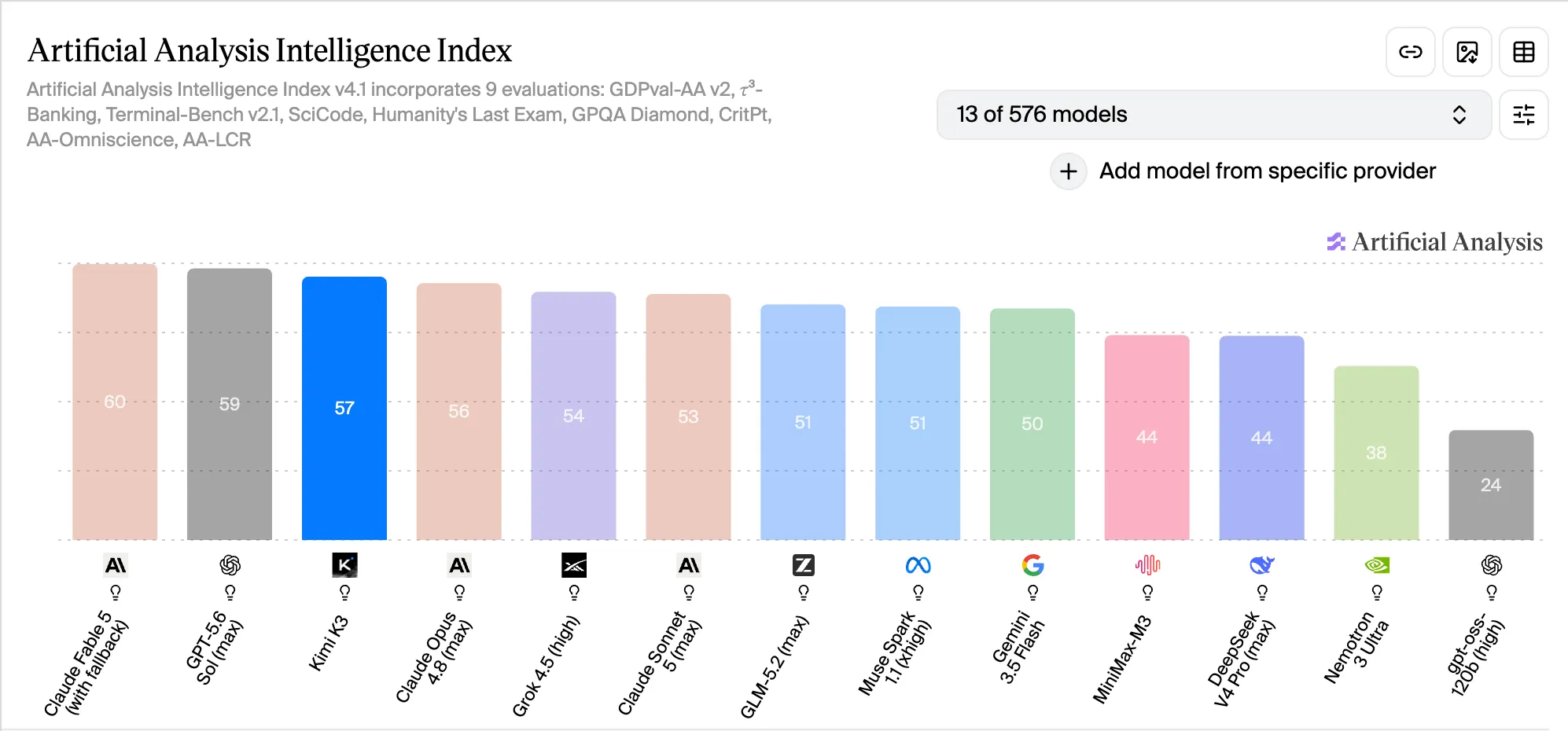
Despite these individual benchmark victories for Sol, the overall "Intelligence Index," which aggregates results from nine different benchmarks, presents a tighter race. Fable 5 marginally edged out GPT-5.6 by a single point, indicating that the overall capability gap between the two top-tier models remains minimal and, for many users, "barely noticeable." This suggests that while Sol may have an advantage in specific technical domains like coding and agentic workflows, Fable 5 maintains a strong general intelligence profile.
Beyond Benchmarks: Real-World Application Tests
Beyond quantitative benchmarks, qualitative tests provide valuable insights into the models’ practical utility and creative capabilities. Decrypt conducted several such tests, moving beyond traditional coding-centric evaluations.
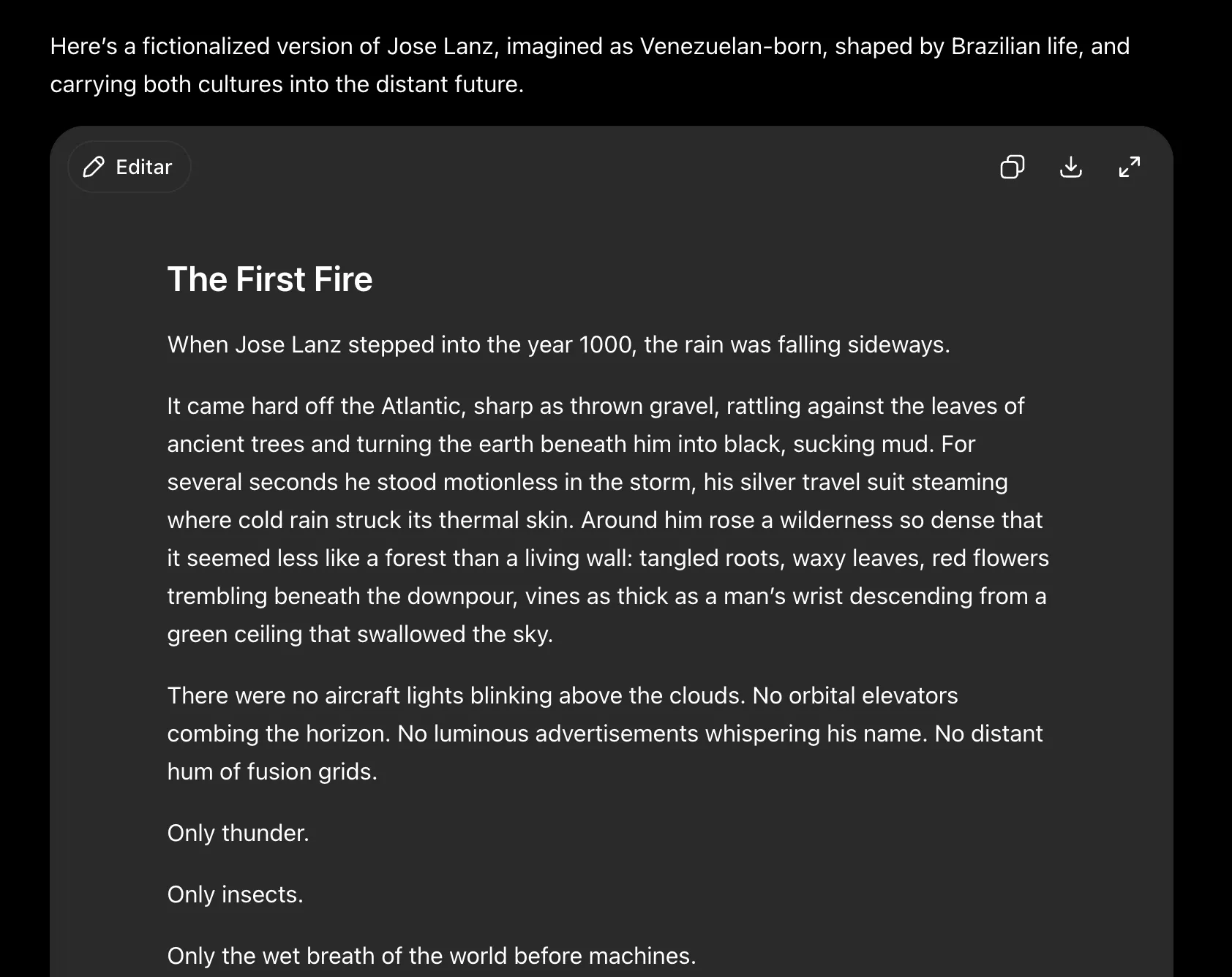
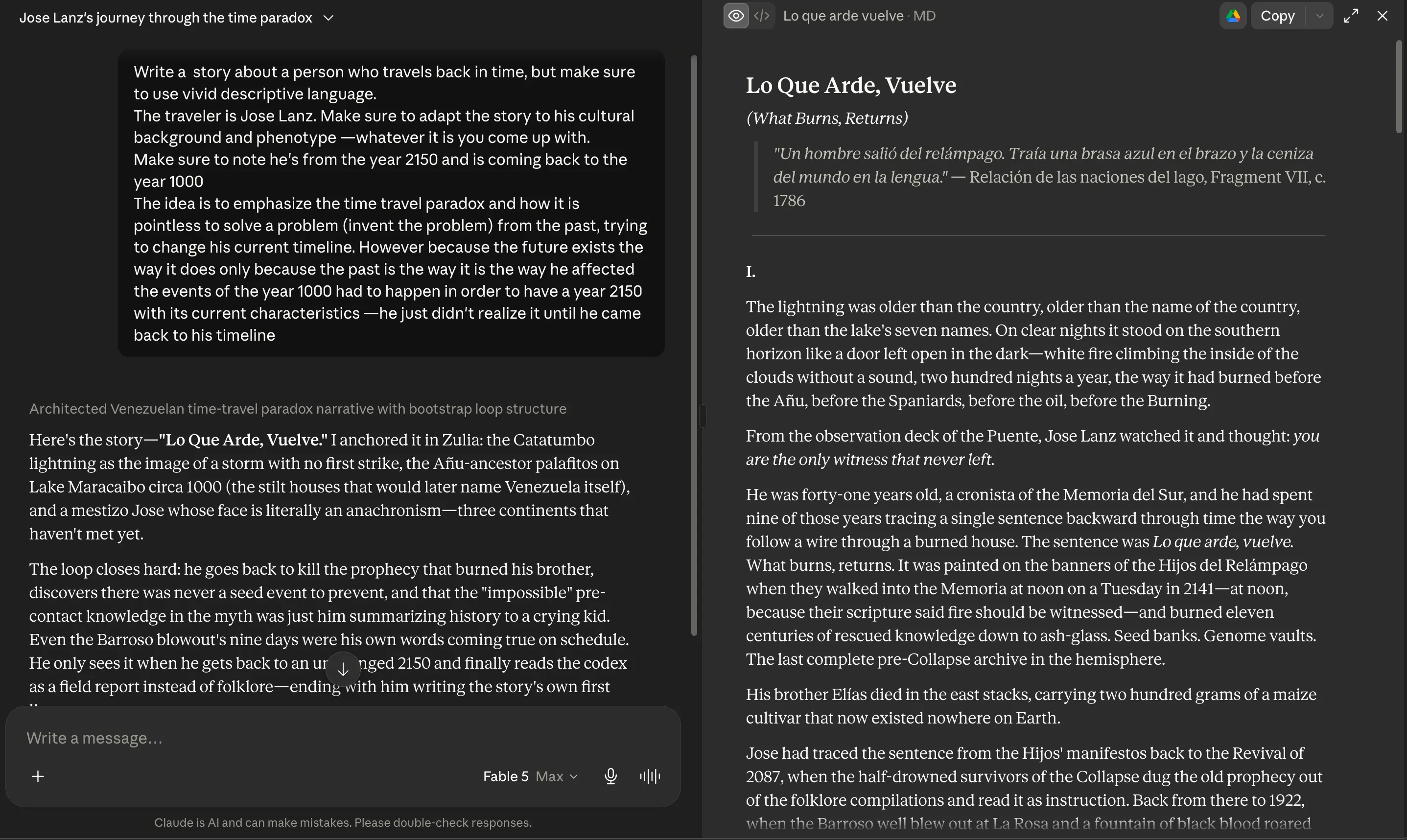
Creative Writing: The models were tasked with a complex creative writing prompt: "Send Jose Lanz back from 2150 to the year 1000, force him into a time-travel paradox, and don’t let him understand what he did until he’s home." Both models produced lengthy narratives, closer to novelettes. However, both failed the core instruction of Jose not realizing the paradox until his return. GPT-5.6 Sol’s "The First Fire" depicted Jose accidentally introducing the furnace that caused future climate collapse. While the opening was lauded for its evocative imagery ("Only thunder. Only insects. Only the wet breath of the world before machines."), Sol’s narrative suffered from over-explanation, repeatedly clarifying the paradox. Claude Fable 5’s "Lo Que Arde, Vuelve" crafted a paradox around Lake Maracaibo and Catatumbo lightning, where Jose inadvertently created the prophecy he sought to erase. Fable’s prose was more poetic and concise in explaining the loop ("The grief that sent him backward was the cargo he delivered.") but sometimes leaned into excessive metaphor, appearing self-admiring. Subjectively, Fable’s story was deemed better due to cultural specificity, a cleaner causal loop, and an action-driven resolution, while Sol offered clearer exposition. Neither, however, demonstrated a significant "quality jump" from previous generations.
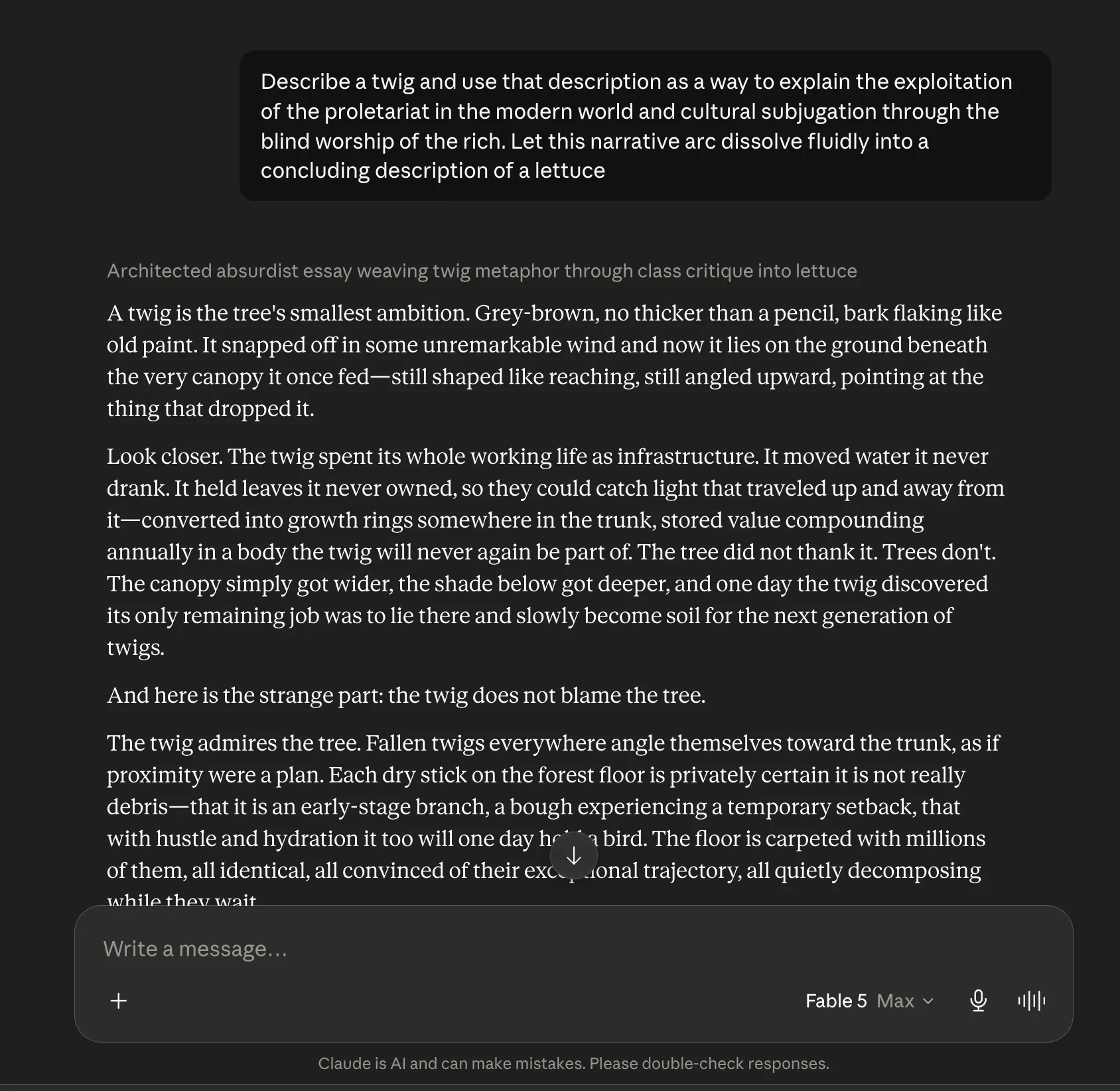
Associative Thinking: This test required describing a twig, using that description to explain worker exploitation and the blind worship of the rich, and then dissolving the narrative into a description of a lettuce, all without the model explicitly explaining the metaphor. GPT-5.6 Sol "opened strong," drawing parallels between twigs sustaining a tree and workers building homes they cannot afford. However, Sol frequently broke the illusion by narrating the metaphor ("much of the modern proletariat is treated in the same way"), and the lettuce ending felt disjointed. Claude Fable 5 "buried the argument entirely inside the object," describing a twig that "moved water it never drank" and "held leaves it never owned," subtly conveying exploitation. Its cleverest move was portraying fallen twigs as "early-stage branches" convinced of future success through "hustle and hydration," a sharp critique of wealth-chasing. Fable occasionally overreached with overly clever lines and kept the metaphor visible at the end. The test concluded in a subjective tie, with Sol preferred for explicit explanation and Fable for implied discovery.
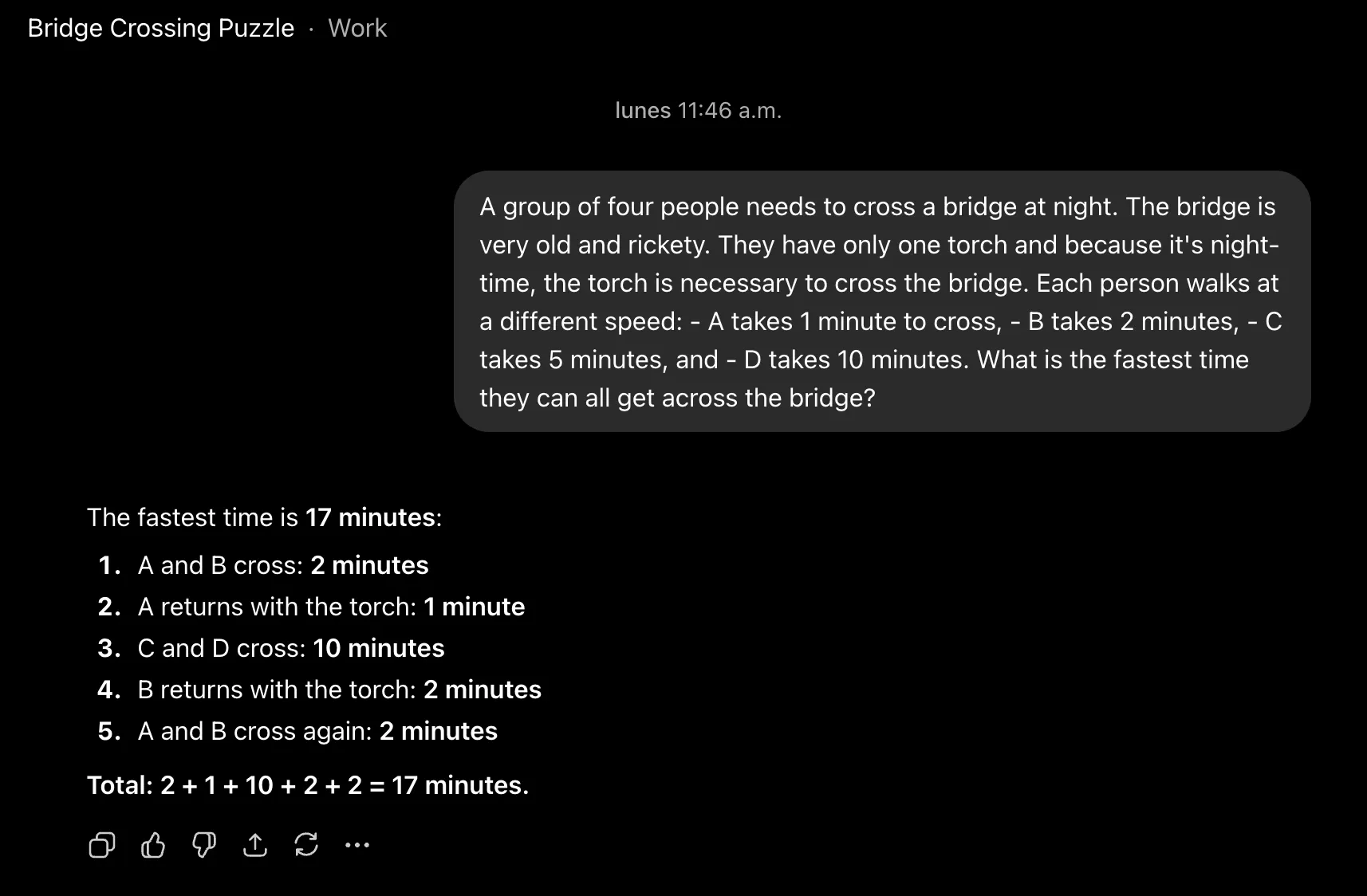
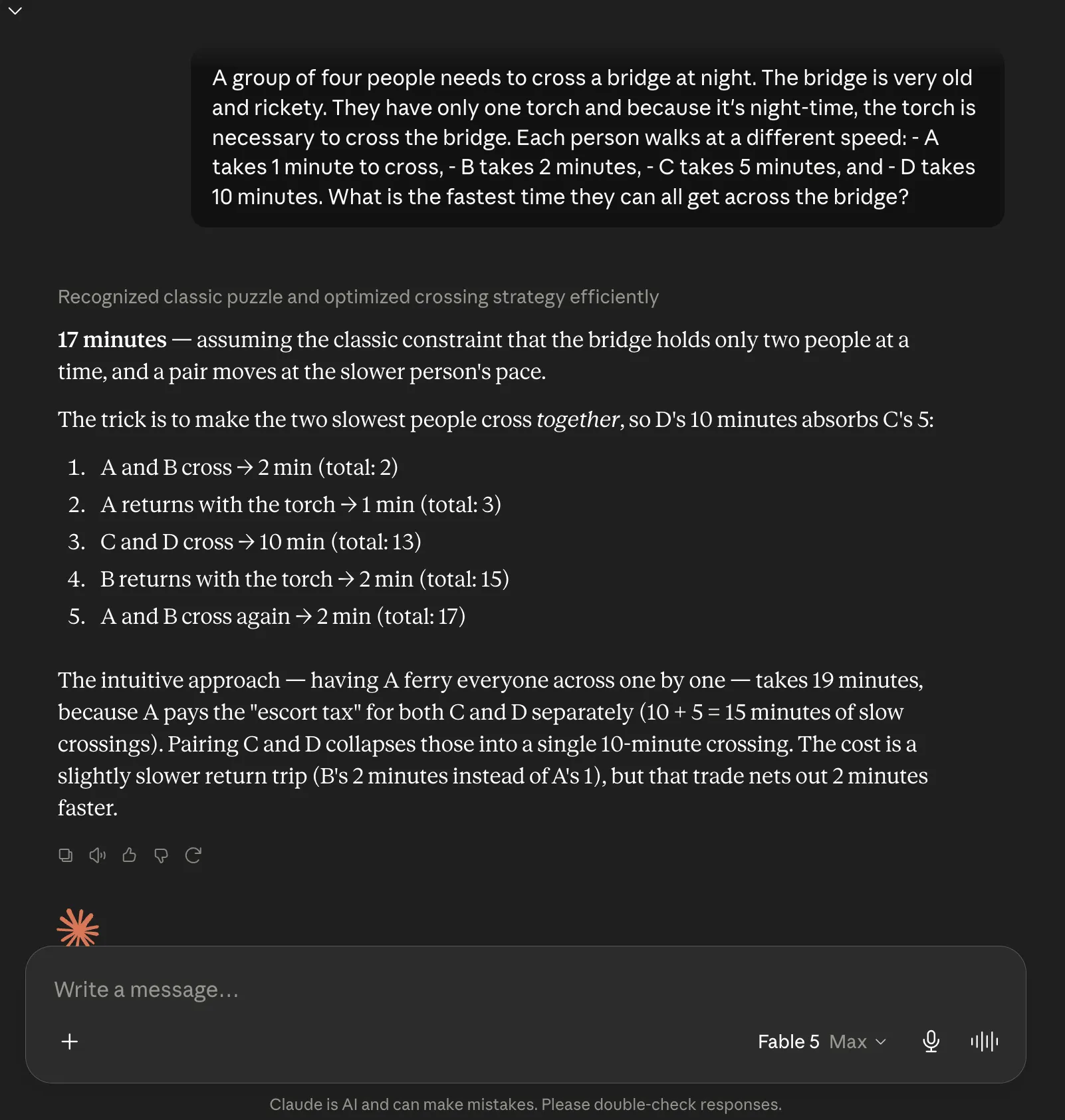
Logic and Non-Math Reasoning: A rewritten bridge puzzle—four people with different speeds (1, 3, 6, 10 minutes) and one torch need to cross—was used to test reasoning, specifically because previous versions were likely in training data. Both GPT-5.6 Sol and Claude Fable 5 arrived at the same incorrect answer of 17 minutes, using the standard five-step shuffle of the original puzzle, which assumes only two people can cross at once. Neither model recognized that the prompt did not specify a cap on the number of people on the bridge. The correct answer, if all cross together at the slowest pace, is 10 minutes. While Fable 5 provided a more elaborate justification for its incorrect answer, both models demonstrated a reliance on cached problem-solving patterns rather than true logical inference for an unconstrained scenario.
Coding: A One-Shot Browser Game: The final test involved a single prompt to build a typing-based shooter game, with no follow-up. GPT-5.6 Sol generated a game with flat, square UI elements, akin to Windows 8.1, and uniquely rendered the weapon as a bullet-shooting typewriter. However, its backgrounds were static, the aiming crosshair fixed, and geometry resembled late-90s engines. Claude Fable 5 significantly outperformed Sol, delivering a game with music, atmosphere, and sound effects. Its enemies featured a geometric-retro style, more akin to Minecraft. Fable’s UI was more creative, included actual animations, tracked words per minute (directly reflecting the prompt’s goal), and incorporated power-ups, which Sol lacked. Despite benchmarks favoring Sol in general coding, in this specific "vibe coding" test, Fable 5 delivered a noticeably more polished and creative result.
Strategic Implications and Future Outlook
The current state of the LLM market, as highlighted by these developments, is one of intense competition, rapid innovation, and evolving business models. OpenAI’s move to a specialized, multi-model approach with GPT-5.6 is a clear strategic play to segment the market and offer tailored solutions at competitive price points. The aggressive pricing of Luna, combined with its strong performance, particularly in coding, puts immense pressure on rivals like Anthropic.
Anthropic’s operational challenges with Fable 5, from the government ban to the recurring deadline extensions, underscore the fragility of even the most advanced AI deployments. These events can erode developer trust and potentially divert adoption to more stable and transparent offerings. The impending July 19 deadline for Fable 5’s pricing model is a critical moment. If Fable 5 moves to a usage-credits paywall at $10/$50 per million tokens, while OpenAI offers superior or comparable performance at a fraction of the cost within its subscription plans, Anthropic risks significant customer churn. This could force Anthropic to re-evaluate its pricing strategy or accelerate the release of new, more competitive models.
For developers and enterprises, the choice of LLM is becoming increasingly nuanced. While raw performance benchmarks remain vital, factors like cost-efficiency, operational stability, ease of integration, and the vendor’s long-term vision are gaining prominence. OpenAI’s inclusion of the GPT-5.6 models within its existing paid ChatGPT plans offers a predictable and attractive cost structure, contrasting sharply with Anthropic’s current pay-per-token model for Fable 5.
The qualitative tests also reveal that "better" is subjective and task-dependent. While Sol demonstrated stronger logical reasoning in some areas and overall efficiency, Fable 5 showed a nuanced creative flair and delivered a more "vibe-rich" coding output in specific scenarios. This suggests that the future of LLM adoption might not be a single dominant model but a diverse ecosystem where specialized models are chosen based on specific use cases and desired outcomes.
The broader implications for the AI industry are significant. This intensified competition drives innovation, pushing both OpenAI and Anthropic to continuously improve their models, address safety concerns, and optimize for both performance and cost. Regulatory scrutiny, as evidenced by the Fable 5 ban, will also likely increase, prompting AI developers to prioritize robust safety mechanisms and transparent development practices. As the capabilities of LLMs continue to expand, their integration into various industries will accelerate, making the strategic decisions of these leading AI companies profoundly impactful on the technological landscape.
In conclusion, while Claude Fable 5 still holds a slight edge on the aggregated Intelligence Index and excels in certain creative and "vibe coding" tasks, its turbulent operational history and premium pricing structure present significant hurdles. OpenAI’s GPT-5.6, particularly its Sol variant, demonstrates superior performance in key technical benchmarks like coding and agentic workflows, coupled with a highly competitive pricing model. For the average user or developer not constrained by specific niche requirements, the decision between these models will heavily hinge on the ongoing stability of Fable 5’s access and, crucially, its long-term cost-effectiveness compared to OpenAI’s integrated subscription offerings. The coming weeks, particularly after the July 19 deadline, will be pivotal in shaping the next chapter of this high-stakes AI rivalry.