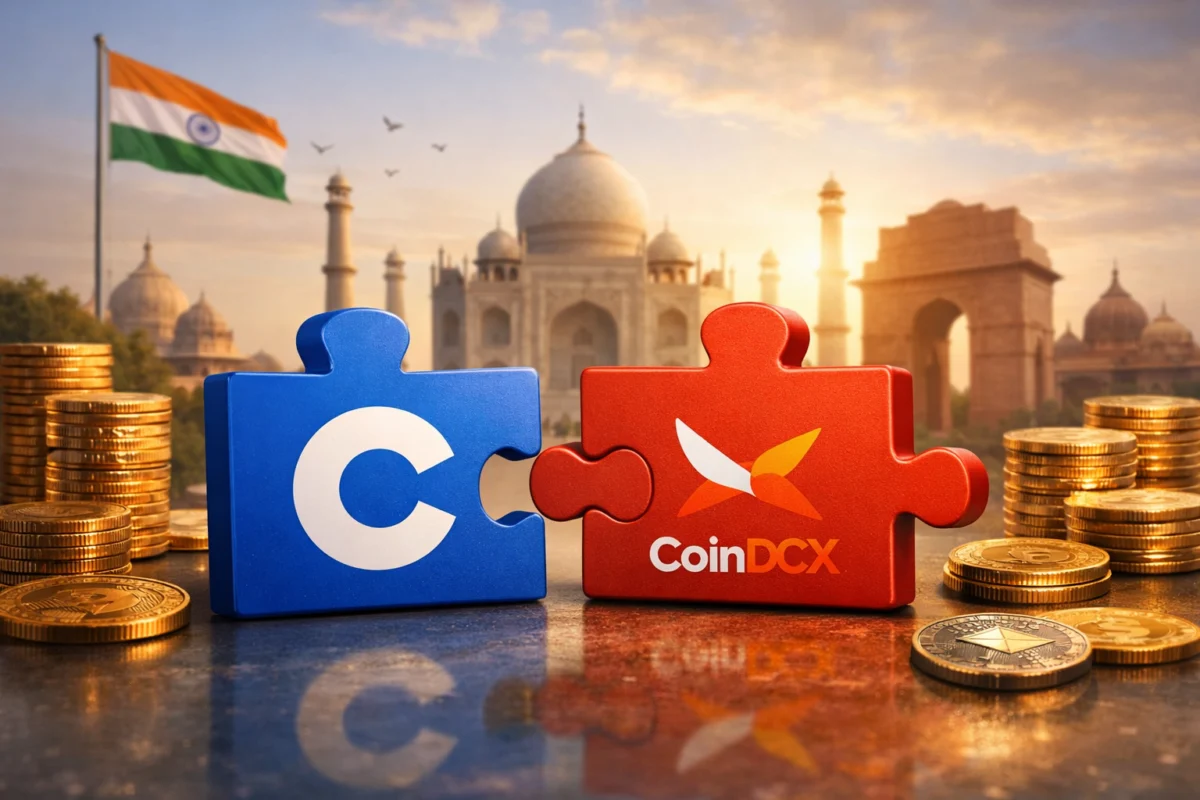
The Competition Commission of India (CCI) has formally granted approval for Coinbase Global Inc. to acquire a minority shareholding in DCX Global Limited, the parent entity of the prominent Indian cryptocurrency exchange CoinDCX. This regulatory clearance marks a watershed moment for the digital asset landscape in South Asia, signaling a renewed appetite for foreign direct investment in a sector that has faced significant regulatory and fiscal headwinds over the last three years. The approval, announced via an official disclosure on the social media platform X, confirms that the proposed combination does not pose a threat to market competition and aligns with India’s evolving framework for overseeing high-growth technology sectors.
For Coinbase, the largest cryptocurrency exchange in the United States by trading volume, this deal represents a calculated re-entry into the Indian market. The move comes at a time when the San Francisco-based firm is seeking to diversify its geographical footprint amidst ongoing legal and regulatory battles with the Securities and Exchange Commission (SEC) in its home jurisdiction. By deepening its ties with CoinDCX, an established local player with a robust user base and localized infrastructure, Coinbase is positioning itself to capture a share of the world’s most populous nation and one of the fastest-growing digital economies.
The Evolution of the Coinbase-CoinDCX Partnership
The relationship between Coinbase and CoinDCX is not a new development. The two entities have been associated since at least 2022, when Coinbase Ventures participated in CoinDCX’s Series D funding round, which valued the Indian exchange at over $2 billion. That investment occurred during a period of global exuberance for digital assets. However, the subsequent years brought a "crypto winter" characterized by plummeting asset prices, the collapse of major global entities like FTX, and a tightening of the regulatory noose in India.
The latest transaction, which was initially disclosed in mid-October 2024, involved an additional capital infusion by Coinbase. Due to the scale of the investment and the market position of both companies, the deal required a formal review by the CCI to ensure it complied with the Competition Act of 2002. The CCI’s mandate is to prevent practices that have an appreciable adverse effect on competition within India. By clearing the deal, the regulator has effectively signaled that the partnership between a global giant and a local leader is permissible, provided it remains within the bounds of minority shareholding and oversight.
A Strategic Pivot: Coinbase’s Indian Timeline
The CCI approval is part of a broader, more aggressive strategy by Coinbase to reclaim its standing in India. The company’s journey in the country has been marked by volatility and strategic shifts:
- April 2022: The Initial Launch and Immediate Setback: Coinbase launched its trading services in India with much fanfare, even hosting a high-profile event in Bengaluru attended by CEO Brian Armstrong. However, the launch was immediately derailed when the National Payments Corporation of India (NPCI) clarified that it did not recognize the use of the Unified Payments Interface (UPI) for cryptocurrency transactions. This led to a swift suspension of payment services for Coinbase users.
- 2023: Retrenchment and Scaling Back: Faced with the inability to provide seamless rupee (INR) on-ramps and a harsh new tax regime introduced by the Indian government, Coinbase scaled back its local operations significantly, focusing instead on internal engineering hubs in India rather than consumer-facing services.
- December 2024: The Resumption of Onboarding: Just days before the CCI clearance, Coinbase reopened user registrations for Indian residents. Currently, the platform allows for crypto-to-crypto trading and token swaps. This "soft launch" is intended to test the waters and ensure compliance with the Financial Intelligence Unit (FIU-IND) standards.
- 2026: The Rupee Roadmap: Coinbase has communicated a long-term roadmap that includes the re-introduction of a rupee on-ramp by 2026. This phased approach suggests that the company is taking a more cautious, compliance-first route than it did in 2022, working behind the scenes to secure the necessary banking partnerships and regulatory nods.
Navigating the Indian Regulatory and Fiscal Labyrinth
India remains one of the most challenging jurisdictions for cryptocurrency firms, yet its potential is too large for global players to ignore. According to data from Chainalysis, India has consistently ranked in the top three globally for grassroots crypto adoption. However, the government’s stance has been characterized by a "wait and watch" approach, prioritizing financial stability and the prevention of money laundering over industry growth.
The primary hurdle for market participants is the 2022 Finance Act, which introduced a 30% tax on income from virtual digital assets (VDAs) with no provision to offset losses against other income. Furthermore, a 1% Tax Deducted at Source (TDS) on every transaction has significantly dampened high-frequency trading volumes on local exchanges. These measures were intended to discourage speculative trading and track the flow of funds, but they also drove a significant portion of Indian trading volume to offshore, non-compliant exchanges.
By investing in CoinDCX, Coinbase is essentially betting on the formalization of the Indian market. CoinDCX was the first Indian exchange to register with the FIU-IND and has been a vocal advocate for clear, predictable regulations. Through this minority stake, Coinbase gains indirect exposure to the Indian retail market while utilizing CoinDCX’s localized expertise in navigating tax compliance and domestic banking relationships.
Security Context and Market Resilience
The timing of the CCI approval is also notable given the security challenges faced by the Indian exchange sector in 2024. In July, the industry was rocked by reports of a security breach involving CoinDCX. The exchange disclosed a $44.2 million security incident involving one of its wallets. While the company was quick to reassure users that customer funds were not impacted and that the loss would be covered by its internal treasury and insurance protocols, the event underscored the inherent risks of the digital asset industry.
Furthermore, the broader Indian market was shaken by a massive $230 million hack of WazirX, another major local exchange, earlier in the year. These incidents have put the spotlight on the need for institutional-grade security and robust custody solutions. Coinbase’s increased involvement in CoinDCX could potentially lead to a transfer of technical expertise in security and cold-storage management, as Coinbase is widely regarded as having some of the most sophisticated security protocols in the global industry.
Broader Economic and Geopolitical Implications
The CCI’s decision to allow a major US firm to deepen its stake in a critical piece of India’s digital infrastructure carries broader economic implications. It reflects a maturing view within the Indian bureaucracy that digital assets and blockchain technology are distinct from the "private cryptocurrencies" that the Reserve Bank of India (RBI) has previously suggested should be banned.
From a geopolitical perspective, the move aligns with the G20 roadmap for crypto-asset regulation, which was established during India’s presidency in 2023. The roadmap emphasizes the need for international cooperation and a comprehensive regulatory framework rather than outright bans. Coinbase’s investment serves as a signal to other global financial technology firms that India is open for structured investment, provided that companies are willing to operate within the scrutiny of the CCI and the Ministry of Finance.
Analysis: Why Minority Stakes are the New Norm
The choice of a minority stake rather than a full acquisition is a strategic masterstroke for Coinbase in the current environment. A full acquisition would make Coinbase directly liable for every local regulatory hurdle and potential legal dispute in India. By remaining a minority shareholder, Coinbase:
- Maintains "Arm’s Length" Distance: It can benefit from the growth of the Indian market without being the primary target of regulatory ire if policies shift abruptly.
- Leverages Local Leadership: It allows the founders of CoinDCX to continue leading the company with their deep understanding of Indian consumer behavior and political nuances.
- Facilitates Technology Exchange: It creates a pipeline for integrating Coinbase’s advanced trading features and Web3 tools into the CoinDCX ecosystem.
Conclusion and Future Outlook
The clearance by the Competition Commission of India is more than just a bureaucratic green light; it is a validation of the long-term viability of the Indian crypto sector. As Coinbase prepares for its 2026 milestone of re-enabling rupee transactions, the focus will likely shift toward building a sustainable, compliant ecosystem that can withstand the rigors of Indian fiscal policy.
For Indian investors, the deal promises a more robust and technologically advanced market. As global giants like Coinbase provide the capital and infrastructure and local leaders like CoinDCX provide the access and compliance, the Indian crypto market is transitioning from a period of "shadow operation" to one of institutionalized growth. While the road to 2026 remains fraught with potential regulatory shifts, the partnership between these two industry leaders suggests that the future of digital assets in India will be defined by collaboration rather than isolation.