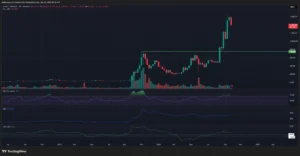
Chainlink’s governance token, LINK, is increasingly being adopted as a strategic hedging instrument by influential figures within the Bitcoin trading community. This evolving market dynamic suggests a sophisticated approach to managing risk, particularly as traders anticipate potential downturns in the dominant cryptocurrency, Bitcoin. One notable trader has publicly declared their intention to utilize LINK as a countermeasure against Bitcoin price declines, employing a strategy that aims to preserve capital while capitalizing on market fluctuations. This development underscores the growing maturity and complexity of cryptocurrency trading strategies, moving beyond simple long-only positions to embrace more intricate risk-management techniques.
The core of this strategy involves a proactive stance on potential Bitcoin topping patterns, especially when BTC approaches or surpasses significant psychological and technical levels, such as $13,000. In such scenarios, traders holding Bitcoin may seek to offset potential losses by taking opposing positions in other assets. Chainlink’s LINK token, which has demonstrated remarkable year-to-date performance, soaring over 560%, has emerged as a primary candidate for this hedging role. A pseudonymous trader, known for their insightful market commentary, recently articulated this approach in an early Wednesday tweet, signaling an intent to initiate a high-reward, high-risk short hedge against a perceived imminent Bitcoin peak.
A Nuanced Hedging Strategy in the Digital Asset Landscape
The concept of a short hedge typically involves establishing a short position in an asset that an investor already holds a long position in. However, in this context, the strategy appears to be adapted, with one asset being used to hedge against another, rather than hedging a long position in the same asset. This implies a deliberate diversification of risk across different cryptocurrencies with distinct market behaviors.
This tactical allocation reflects a dual conviction among some traders: a persistent long-term bullish outlook on Bitcoin, bolstered by its increasing integration into mainstream financial systems and corporate portfolios. Major entities like PayPal, DBS Bank, and Square have embraced Bitcoin, signaling a growing institutional acceptance that fuels optimism for its future value. Furthermore, the anticipation of significant fiscal stimulus packages, such as the projected $2 trillion from the U.S. Congress following the November 3rd presidential election, is seen as a potent catalyst for broader market growth, potentially benefiting Bitcoin.
This trend is visually represented by the rise in Bitcoin Market Dominance, a metric that quantifies Bitcoin’s market capitalization relative to the total cryptocurrency market. Between August 31st and the time of writing, Bitcoin Dominance surged from 57.21% to 63.2%, indicating a capital inflow into Bitcoin at the expense of altcoins. This suggests that capital is consolidating around Bitcoin, a phenomenon that can precede periods of altcoin underperformance or consolidation. It is precisely this capital reallocation dynamic that sophisticated traders aim to leverage.
The trader in question, by shorting Chainlink, is effectively betting on a divergence in performance between Bitcoin and LINK, anticipating that LINK might experience a correction or underperform Bitcoin during a potential Bitcoin surge or subsequent consolidation. This strategy allows them to maintain their Bitcoin holdings, which they believe will appreciate in the long run, while simultaneously protecting against downside risk should Bitcoin fail to meet expectations or experience a sharp reversal. While the specific short target for LINK was not disclosed, the trader later updated their position, indicating a successful closure of their short LINK trade with a 1.5% profit. This suggests a short-term tactical play rather than a long-term bearish stance on Chainlink itself. The trader’s subsequent remark, "Bitcoin is going to teleport up," reinforces their underlying bullish conviction in Bitcoin while acknowledging the success of their short-term hedging maneuver.

Chainlink’s Fundamental Strengths and Market Position
Despite its use as a hedging asset, Chainlink’s fundamental value proposition remains robust. The project is widely recognized as a leader in the decentralized finance (DeFi) space, particularly for its role in providing reliable and secure oracle services. Messari, a prominent crypto research firm, has highlighted Chainlink’s pioneering work in the oracle sector, stating that the project "is writing the playbook for the oracle sector."
The sustained growth and adoption of Chainlink’s technology are evidenced by its impressive integration and partnership metrics. In 2020 alone, Chainlink announced integrations with 112 new partners, adding to its existing network of approximately 200 firms since its mainnet launch. This widespread adoption is not merely theoretical; Chainlink has a functional product with nearly 30 projects actively utilizing its data feed solutions. This tangible utility directly translates into increased demand for its native LINK token, underpinning its value and market resilience.
The demand for LINK is further amplified by its utility within the burgeoning DeFi ecosystem. As decentralized applications increasingly rely on external data to execute smart contracts, the demand for accurate and tamper-proof data feeds provided by Chainlink naturally escalates. This creates a positive feedback loop: more DeFi applications lead to greater demand for Chainlink’s services, which in turn drives demand for the LINK token.
Background and Context: The Evolving Crypto Market
The cryptocurrency market has matured significantly since its inception. Early trading strategies often revolved around simple buy-and-hold (HODLing) or speculative short-term plays. However, as the market has grown in size and complexity, with the introduction of derivatives, futures, and a wider array of digital assets, traders have developed more sophisticated approaches to navigate its inherent volatility.
The current market environment, characterized by a confluence of institutional interest, regulatory developments, and macroeconomic factors, presents both opportunities and risks. Bitcoin, as the flagship cryptocurrency, often dictates broader market sentiment. However, the increasing interconnectedness of the crypto ecosystem means that the performance of individual altcoins, like Chainlink, can also influence or be influenced by Bitcoin’s trajectory.
Chainlink’s role as an oracle is critical for the functionality of many DeFi applications. Oracles act as bridges between blockchains and the real world, providing smart contracts with the data they need to execute. Without reliable oracles, many of the innovative applications being built on blockchain technology would not be possible. This foundational role gives Chainlink a unique position in the market, making its token a valuable asset in its own right, but also subject to market forces.
Implications and Broader Market Impact
The adoption of LINK as a hedging asset by prominent traders has several implications:

- Increased Sophistication of Crypto Trading: It signals a move towards more complex and risk-aware trading strategies within the cryptocurrency space, mirroring practices seen in traditional financial markets.
- Interdependence of Major Cryptocurrencies: While Bitcoin often leads the market, the strategic use of altcoins like LINK for hedging highlights the growing interdependence and complex relationships between different digital assets.
- Validation of Chainlink’s Utility: The use of LINK as a hedge, rather than simply a speculative asset, indirectly validates its perceived stability and utility as a crucial component of the DeFi infrastructure. Even when used for shorting, it implies a certain level of market understanding and perceived value.
- Potential for Increased Volatility: The introduction of hedging strategies can, in some instances, amplify market movements. If many traders employ similar hedging tactics, it could lead to more pronounced price swings in both the hedged asset and the hedging asset.
The ability to implement such sophisticated hedging strategies is also facilitated by the increasing availability of derivatives and lending/borrowing platforms within the cryptocurrency ecosystem. These tools allow traders to take short positions, borrow assets to sell, and manage complex portfolios more effectively.
Official Responses and Industry Sentiment
While specific official responses from Chainlink itself regarding its token’s use as a hedging asset are unlikely, the broader sentiment within the DeFi community generally supports the development of robust trading tools and strategies. Projects like Chainlink are often focused on building out their technological infrastructure and fostering adoption, with market dynamics being a natural consequence of their success and integration into the broader financial landscape.
Industry analysts generally view the adoption of hedging strategies as a sign of market maturity. It suggests that the cryptocurrency market is evolving beyond a purely speculative arena and is beginning to offer the tools and instruments necessary for professional risk management. This maturation is crucial for attracting further institutional capital and solidifying the long-term viability of digital assets.
Looking Ahead: The Future of Hedging in Crypto
The trend of utilizing established altcoins like Chainlink for hedging purposes is likely to continue as the cryptocurrency market matures. As more sophisticated financial instruments become available and as traders gain a deeper understanding of market correlations and divergences, we can expect to see even more complex and nuanced strategies emerge.
The success of this particular hedge, though short-lived and yielding a modest profit, demonstrates the potential of such tactical maneuvers. It also underscores the importance of understanding the underlying fundamentals of assets like Chainlink, even when employing them in a short-term speculative capacity. Chainlink’s continued development, its expanding ecosystem, and its critical role in powering DeFi applications position it as a key player in the cryptocurrency space, whose market behavior will continue to be closely watched by traders and investors alike. The ongoing interplay between Bitcoin’s dominance and the performance of high-utility altcoins like LINK will remain a central theme in the narrative of the evolving digital asset market.