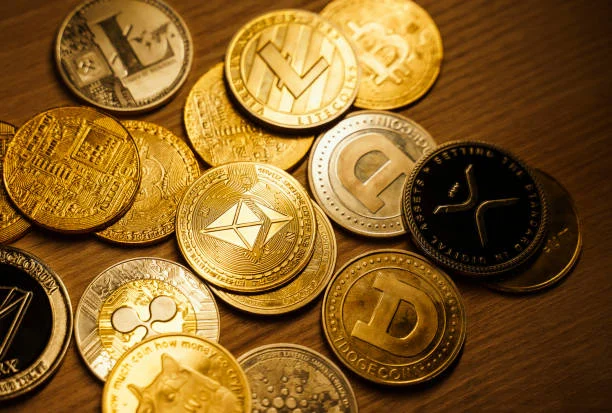
The cryptocurrency market is currently witnessing a significant phenomenon in the altcoin sector, with recent data from blockchain analytics firm CryptoQuant indicating that alternative cryptocurrencies are enduring their most profound period of spot market sell pressure since 2020. This prolonged phase of net selling underscores a notable shift in investor sentiment and capital allocation within the broader digital asset ecosystem, signaling a defensive posture among market participants and a weakening bid for non-Bitcoin and non-Ethereum assets. The cumulative buy/sell volume difference across this extended period of selling has reached an estimated $209 billion, a staggering figure that highlights the magnitude of capital outflow from the altcoin market. This metric, derived from tracking direct exchange flows and on-chain movements, serves as a critical indicator of whether traders are actively accumulating assets or reducing their exposure, offering a stark insight into the prevailing market psychology.
Unpacking the CryptoQuant Data: A Historical Perspective
The revelation of a $209 billion cumulative net sell volume since 2020 is not merely a statistical anomaly but a deeply rooted symptom of evolving market dynamics. CryptoQuant’s methodology for tracking spot flows involves analyzing the net position changes of various altcoins across centralized exchanges, identifying whether more assets are being moved onto exchanges for sale or off exchanges for long-term holding. A consistent net outflow indicates accumulation, while sustained net inflow, as observed currently, points to persistent selling pressure. The last time the altcoin market experienced such a sustained and significant level of spot selling was in early 2020, a period that largely preceded the explosive bull run later that year and into 2021. Back then, the market was recovering from the initial shock of the COVID-19 pandemic, and Bitcoin was beginning to gather momentum before its parabolic rise, eventually pulling many altcoins along. The current environment, however, presents a different set of challenges and opportunities, suggesting that the path to recovery for altcoins may not mirror previous cycles. The sheer scale of the current selling pressure implies that a substantial portion of the altcoin market capitalization has been subject to liquidation or rotation, diminishing liquidity and making price recovery more arduous.
The Anatomy of Altcoin Weakness: Structural Shifts and Competition
The enduring sell pressure on altcoins is not an isolated event but rather a consequence of several converging factors that have reshaped the competitive landscape of the crypto market. For much of the current cycle, altcoins have struggled to carve out a distinct value proposition that can compete with more established or structurally robust alternatives.
Bitcoin’s Institutional Magnetism: The approval of spot Bitcoin Exchange-Traded Funds (ETFs) in the United States has fundamentally altered capital flows. These ETFs have opened the floodgates for institutional investors, traditional finance players, and conservative capital seeking exposure to digital assets without the complexities of direct ownership. Bitcoin, often dubbed "digital gold," has absorbed a significant portion of this institutional demand, consolidating its position as the premier crypto asset. This institutional influx has provided Bitcoin with unparalleled liquidity and a robust demand floor, making it a safer and more obvious choice for large-scale investment compared to the more volatile and often less liquid altcoin market.
Ethereum’s Evolving Utility: Ethereum, the second-largest cryptocurrency by market capitalization, has also maintained a strong gravitational pull, drawing attention and capital through its continuous technological advancements and expanding ecosystem. Key upgrades such as EIP-1559, the Merge (transition to Proof-of-Stake), and more recently, the Dencun upgrade, have enhanced its scalability, efficiency, and appeal. The burgeoning narrative around Ethereum staking, decentralized finance (DeFi), and the tokenization of real-world assets (RWAs) on its blockchain has cemented its utility and investment case. For investors seeking exposure to smart contract platforms or high-yield opportunities, Ethereum often presents a more compelling and less risky option than smaller, nascent altcoins.
The Rise of Stablecoins and Yield Products: In a volatile market environment, stablecoins have become an indispensable tool for traders looking to preserve capital and maintain liquidity without exiting the crypto ecosystem entirely. Products offering yield on stablecoins further enhance their appeal, providing a relatively low-risk avenue to generate returns. For many investors, rotating out of speculative altcoins into stablecoins or yield-generating platforms offers a sanctuary from price depreciation and an opportunity to capitalize on future market dips, effectively bypassing the inherent risks associated with small-cap altcoins.
The "Middle Ground" Dilemma: This confluence of factors leaves many altcoins in a precarious "middle ground." They are often perceived as too risky for conservative institutional capital, which prefers the established liquidity and narrative of Bitcoin and Ethereum. Simultaneously, in a market devoid of widespread retail euphoria, many altcoins lack the explosive volatility and speculative momentum required to attract aggressive short-term traders. When retail demand, which historically fuels altcoin rallies, wanes, liquidity dries up rapidly. This creates a vicious cycle where each minor price bounce is met by existing holders looking to exit their positions, and new buyers demand deeper discounts, further exacerbating the selling pressure. The consequence is prolonged periods of consolidation or decline, characterized by shallow order books and heightened price sensitivity.
A Chronology of Pressure: From Euphoria to Apathy
The current wave of altcoin selling pressure did not emerge overnight but rather intensified following a period of market readjustment. Following the initial excitement surrounding the Bitcoin spot ETF approvals in January 2024, which briefly lifted the entire crypto market, many altcoins failed to sustain upward momentum. While Bitcoin continued its ascent to new all-time highs, propelled by institutional demand, and Ethereum showed resilience ahead of its own potential ETF discussions, the broader altcoin market began to lag.
The chronology can be traced back to:
- Late 2023: A period of cautious optimism, with some altcoins seeing modest gains in anticipation of a broader market recovery, largely driven by Bitcoin’s pre-ETF rally.
- Early 2024 (Post-ETF Approval): A brief, generalized market uplift, but quickly followed by a divergence. Bitcoin sustained its rally, while many altcoins, after an initial bump, started to show signs of weakness, failing to hold crucial support levels.
- Q1 and Q2 2024: The sustained period of net selling became increasingly evident. As Bitcoin dominance rose, and macroeconomic factors such as persistent inflation concerns and high interest rates continued to weigh on risk assets globally, capital flowed out of more speculative assets. The narrative shifted from broad-based crypto enthusiasm to a more selective, risk-averse approach, concentrating capital in Bitcoin and Ethereum. This period saw many altcoins retesting or breaking below previous accumulation zones, triggering stop losses and further accelerating the sell-off. The lack of fresh retail capital entering the market to absorb this selling pressure has been a defining characteristic of this phase.
Expert Perspectives and Market Sentiment
Market analysts and industry experts largely concur with the findings from CryptoQuant, offering insights into the underlying sentiment.
Dr. Anya Sharma, Head of Crypto Research at Global Insights, commented, "The CryptoQuant data paints a clear picture of a market undergoing a significant structural re-evaluation. Investors are no longer blindly diversifying into a broad basket of altcoins. Instead, we’re seeing a flight to quality and utility. Bitcoin offers a store of value and macro hedge narrative, while Ethereum provides a robust platform for innovation. Many altcoins, particularly those without clear differentiation or strong developer activity, are struggling to justify their valuations in this more discerning environment."
Mr. David Chen, Portfolio Manager at Quantum Capital, added, "This prolonged selling pressure suggests a substantial capitulation among weaker hands. While painful for current holders, it’s a necessary cleansing process. The market needs to shed projects with weak fundamentals or unsustainable tokenomics. Until we see a definitive shift from net selling to sustained accumulation, particularly from long-term holders, any rallies in the altcoin space are likely to be short-lived and driven by short-term speculation rather than genuine demand."
The prevailing sentiment among market participants is one of caution and selectivity. Many investors are adopting a "wait and see" approach, holding stablecoins or larger-cap assets, and looking for clear catalysts or a significant improvement in macroeconomic conditions before re-engaging with the broader altcoin market.
The Contrarian Lens: Is a Bottom Nearing?
While the current data paints a bearish picture, extreme selling pressure can, paradoxically, become a contrarian signal. The theory posits that if most "weak hands" – investors prone to panic selling – have already exited their positions, the market becomes less susceptible to further downward pressure. In such a scenario, even a modest influx of new demand could lead to a significant price rebound due to reduced selling overhead.
The concept of market stress reaching an inflection point is central to this contrarian argument. When positioning becomes overwhelmingly one-sided, with a vast majority of participants bearish, the potential for a reversal increases. This is where altcoin-season gauges become relevant. These indices track the relative performance of altcoins against Bitcoin, indicating periods of altcoin outperformance ("altseason") or underperformance. Current readings in the mid-range – rather than deeply euphoric or completely capitulated territory – suggest that the market is not yet crowded with speculative altcoin enthusiasm. This "skepticism" could be a fertile ground for the next broad altcoin move, should it materialize, as it would likely begin from a position of undervaluation rather than overhyped expectations. The absence of widespread retail frenzy implies that there’s still room for organic growth and genuine accumulation once the conditions become more favorable.
Navigating the Uncertainty: Risks and Prerequisites for Recovery
Despite the contrarian argument, it is crucial to avoid reading exhaustion as confirmation of a bottom. Altcoins can remain weak for extended periods, defying expectations, particularly when Bitcoin dominance remains high or when broader macroeconomic conditions keep global liquidity tight. A deep sell-pressure reading primarily tells us that the market is stressed and out of favor; it does not inherently prove that buyers are ready to take decisive control.
Key Risks:
- Prolonged Weakness: The absence of a clear catalyst or a significant shift in market sentiment could see altcoins continue to drift lower or consolidate sideways for many more months.
- Bitcoin Dominance: If Bitcoin continues to outperform significantly, it will likely continue to absorb capital that might otherwise flow into altcoins, perpetuating their underperformance.
- Macroeconomic Headwinds: Persistent inflation, high interest rates, and geopolitical instability can reduce overall risk appetite, disproportionately affecting speculative assets like altcoins.
- "Falling Knife" Scenario: Attempting to catch a bottom prematurely in a market with significant selling pressure can lead to further losses.
Prerequisites for a Clean Bottom and Sustainable Recovery:
- Shift to Sustained Spot Accumulation: The most definitive bullish signal would be a clear and sustained reversal from net selling to net buying on spot markets across a broad range of altcoins. This would indicate genuine investor confidence returning.
- Improving Breadth Across Major Altcoin Sectors: A healthy altcoin recovery would not be limited to one or two narratives but would show strength across various sectors, including DeFi, NFTs, gaming, and layer-2 solutions.
- Return of Retail Demand: Historically, significant altcoin rallies have been fueled by renewed retail investor interest. A resurgence of retail participation, driven by positive sentiment and perceived opportunities, would be a strong indicator of recovery.
- Favorable Macro Conditions: A global economic environment characterized by lower inflation, potential interest rate cuts, and increased liquidity would significantly bolster risk assets, including altcoins.
Until these conditions coalesce, the current CryptoQuant data serves as a critical pressure gauge. It unequivocally states that altcoins are deeply out of favor with many investors. Whether this profound disfavor transforms into a significant buying opportunity or merely another failed bounce will ultimately depend on the genuine and sustained return of demand across the altcoin ecosystem. Investors are advised to remain vigilant, conduct thorough due diligence, and await clearer signals of a market reversal before committing substantial capital to this highly scrutinized sector.