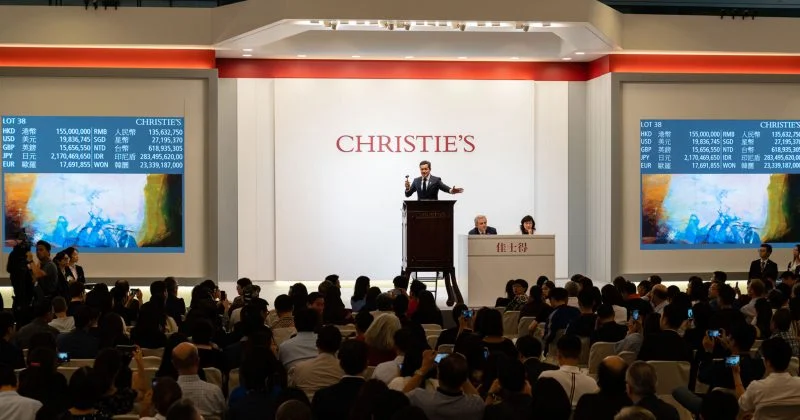
Christie’s has officially closed its dedicated digital art department, a move that marks a significant pivot for the venerable auction house as it integrates its blockchain-based sales into broader, traditional art categories. This structural reorganization, which resulted in the departure of key personnel including Vice President Nicole Sales Giles at the end of August, represents the latest chapter in the tumultuous evolution of the non-fungible token (NFT) and digital art market. The decision, first reported by Now Media, comes as the global appetite for speculative digital assets has cooled significantly from the record-breaking valuations seen during the 2021 market peak.
The transition arrives under the leadership of Bonnie Brennan, who assumed the role of CEO in February. By absorbing digital art into the 20th and 21st Century Art division, Christie’s is signaling a strategic shift: moving away from treating digital art as a siloed, experimental asset class and toward treating it as a component of the contemporary art mainstream.
A Chronology of the NFT Boom and Bust
To understand the weight of this decision, one must look at the meteoric rise and subsequent correction of the digital art market over the last three years. In March 2021, Christie’s made global headlines by auctioning Beeple’s "Everydays: The First 5000 Days," a digital collage that sold for $69.3 million. This landmark sale was widely viewed as the catalyst for the NFT mainstream adoption, effectively bridging the gap between Silicon Valley’s crypto-enthusiasts and the traditional art world establishment.
Following this success, Christie’s leaned heavily into the trend. In 2022, the auction house launched "Christie’s 3.0," a bespoke, on-chain auction platform designed to facilitate the sale of digital assets directly on the blockchain. The platform was marketed as a sophisticated, secure ecosystem for high-end digital art collectors, aiming to provide a curated experience that maintained the prestige associated with the Christie’s brand.
However, the market environment shifted drastically in 2023 and 2024. As interest rates rose and the broader crypto market faced significant regulatory scrutiny and liquidity crunches, the speculative fervor surrounding NFTs evaporated. According to data from DappRadar and various NFT market trackers, the total volume of NFT transactions has plummeted by over 90% from its 2021-2022 highs. Floor prices for prominent collections have collapsed, and auction houses found themselves struggling to maintain the same level of enthusiasm from institutional and high-net-worth buyers.
Strategic Realignment Under New Leadership
The appointment of Bonnie Brennan as CEO provided the catalyst for a top-down review of the firm’s operational expenses and strategic focus. With the digital art department previously operating as a specialized vertical, the overhead costs associated with maintaining a dedicated team for a struggling sector likely became unsustainable.
By folding these sales into the 20th and 21st Century Art category, Christie’s is effectively hedging its bets. The move suggests that while the auction house believes in the long-term viability of digital art as a medium, it no longer views it as an independent engine for growth that warrants its own specialized infrastructure.
Industry analysts suggest that this integration could serve to normalize digital art in the eyes of traditional collectors. By placing digital works alongside physical paintings, sculptures, and installations, Christie’s may be attempting to de-stigmatize the medium, stripping away the "crypto" label that has often alienated older, more conservative segments of the art market.
Supporting Data and Market Realities
The contraction in the digital art sector is not unique to Christie’s. The broader art market has experienced a general downturn, but digital-native assets have been hit disproportionately hard. In 2021, the NFT market volume peaked at over $24 billion annually. By mid-2024, monthly trading volumes for the sector often struggled to exceed a few hundred million dollars across all major platforms combined.
Furthermore, the "blue-chip" digital art market—works by artists like Beeple, Pak, and Tyler Hobbs—has seen a marked decrease in auction participation. While top-tier works still fetch significant sums, the "middle class" of the digital art market has all but disappeared. Auction houses rely on high transaction volume and premium prices to cover the costs of curation, marketing, and the technical complexities of blockchain authentication. When those metrics decline, the business case for a standalone department weakens.
Official Responses and Internal Shifts
While Christie’s has confirmed the structural change, the auction house has not released an extensive manifesto regarding the future of Christie’s 3.0. A spokesperson for the firm indicated that the decision was part of an ongoing effort to align the company’s organizational structure with the current demands of the art market.
The exit of Nicole Sales Giles, who was instrumental in building the department and spearheading the house’s foray into the metaverse and NFT space, marks the end of an era for the firm. Her departure is viewed by industry insiders as a sign that the "experimental phase" of Christie’s digital strategy has concluded. The auction house is now focusing on what it calls "a more integrated approach" to digital art, where the medium is treated as a secondary feature of an artist’s portfolio rather than the defining characteristic of the sale.
Broader Implications for the Art World
The closure of the digital art department raises fundamental questions about the role of legacy institutions in the digital age. Did the auction houses move too quickly to capitalize on a speculative bubble, or was this a necessary growing pain for the adoption of blockchain technology in fine art?
For many, the move is a validation of the "integration theory." Critics of the NFT boom often argued that the separation of digital art from traditional art created an "us versus them" mentality that hindered long-term artistic legitimacy. By forcing digital art to compete on the same stage as traditional media, Christie’s may be facilitating a more rigorous evaluation process. Art that holds value because of its aesthetic and conceptual merit, rather than just its scarcity on the blockchain, is more likely to survive this transition.
However, there is also the risk of marginalization. By burying digital art within massive 20th and 21st-century auctions, the unique technical requirements of digital works—such as smart contract management, provenance tracking, and digital display considerations—may be relegated to the background. Collectors who specifically sought out the expertise of the digital department may find that the level of technical support and curation diminishes.
The Future of Christie’s 3.0
The uncertainty surrounding the Christie’s 3.0 platform remains a point of interest for the tech-art community. While the platform currently remains functional, its long-term roadmap is unclear. If the platform is not actively promoted or updated with the same vigor as before, it risks becoming a legacy project rather than an active marketplace.
This shift mirrors a broader trend across the technology and finance sectors, where companies are retreating from the "Web3" branding that dominated 2021 and 2022. The focus has moved from "crypto-first" to "blockchain-enabled," where the underlying technology is used for efficiency rather than as a marketing gimmick.
Ultimately, Christie’s decision is a pragmatic acknowledgment of the current economic reality. The auction house is adjusting its sails to weather a quieter market, betting that the future of digital art lies in its mainstream acceptance rather than its status as a radical, standalone alternative. Whether this strategy will successfully preserve the market for digital art or merely accelerate its decline remains to be seen, but the era of the high-flying, standalone NFT department at the world’s most prestigious auction house has officially come to a close.