OpenSea, long regarded as the foundational marketplace for non-fungible tokens (NFTs), has initiated a comprehensive strategic pivot designed to fortify its market dominance and revitalize user engagement. The company formally announced a tripartite roadmap today, encompassing the launch of a sophisticated mobile application, a significant capital allocation into a proprietary NFT collection, and the final phase of its highly anticipated pre-Token Generation Event (TGE) rewards program. These moves arrive at a critical juncture for the digital asset sector, as platforms compete for liquidity and user retention in an increasingly fragmented multi-chain environment.
The centerpiece of this announcement is the introduction of OpenSea Mobile. By integrating AI-powered trading tools and cross-platform portfolio management, the marketplace is attempting to lower the barrier to entry for retail participants. As the NFT space matures, the complexity of navigating multiple blockchain ecosystems—ranging from Ethereum and its Layer 2 scaling solutions to various EVM-compatible chains—has become a significant friction point for casual users. OpenSea’s new interface aims to aggregate disparate wallet activities, token balances, and NFT holdings into a singular, cohesive dashboard.
The Evolution of the NFT Market Landscape
To understand the weight of these announcements, one must consider the broader context of the NFT market. Since the peak of the 2021-2022 market cycle, the sector has undergone a profound transformation. Trading volumes, once driven by speculative fervor, have transitioned toward a focus on utility, digital identity, and brand loyalty. During this period, OpenSea faced stiff competition from specialized platforms like Blur, which utilized aggressive airdrop incentives and professional-grade trading features to capture significant market share from advanced traders.
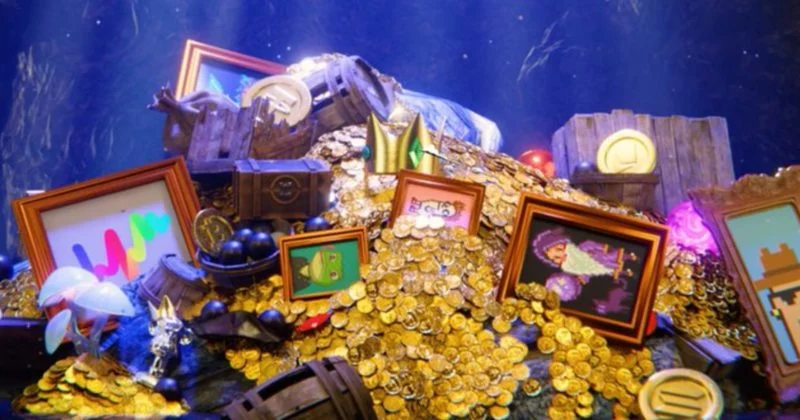
OpenSea’s strategy today appears to be a dual-pronged response: appealing to the everyday collector through mobile accessibility while simultaneously rewarding high-frequency traders with a structured incentive program. By launching the "Flagship Collection," the company is also signaling a commitment to the cultural preservation of digital art. The initial $1 million investment, beginning with the acquisition of CryptoPunk #5273, serves as both a treasury asset and a statement of intent regarding the platform’s role in curating the digital art canon.
Chronology of the Pre-TGE Roadmap
The countdown to the $SEA token launch has been a focal point for the community for several months. The timeline leading up to the current phase has been marked by iterative testing and ecosystem development:
- Q2 2024: OpenSea began signaling a shift in its reward structure, moving away from passive usage metrics toward more active, gamified engagement strategies.
- August 2024: Initial whispers regarding a mobile-first overhaul surfaced, alongside rumors of an impending governance token.
- September 15, 2024: The official commencement of the final pre-TGE rewards phase, characterized by the allocation of 50% of platform fees to a dedicated incentive pool.
- October 2024 (Projected): The OpenSea Foundation is slated to release comprehensive documentation and technical specifications for the $SEA TGE.
This structured rollout is designed to mitigate the "mercenary capital" problem often associated with token launches, where users engage with a platform solely for the purpose of receiving an airdrop and then immediately exit. By requiring participation in "Voyages" and leveling up "Starter Treasure Chests," OpenSea is incentivizing long-term interaction with its infrastructure.
Technical Analysis: The Reward Vault and Ecosystem Incentives
The financial mechanics behind the current rewards phase are significant. By committing 1% of NFT trading fees and 0.85% of token trading fees to the reward vault, OpenSea is creating a self-sustaining cycle of value distribution. The inclusion of $1 million in $OP (Optimism) and $ARB (Arbitrum) tokens provides immediate liquidity for users, signaling that the platform is prioritizing its cross-chain strategy.
The gamification of this experience—leveraging 22 distinct chains—suggests that OpenSea is attempting to become the "universal interface" for on-chain assets. In a market where users often struggle to track assets across Ethereum, Polygon, Base, and beyond, a unified mobile experience could theoretically reduce the overhead of cross-chain asset management. Data from the last twelve months indicates that users who interact with multiple chains are significantly more likely to remain active over a 90-day period, supporting the company’s decision to incentivize cross-chain behavior.
Official Responses and Strategic Intent
Adam Hollander, Chief Marketing Officer at OpenSea, has emphasized that the $SEA token is not merely a vehicle for speculation but a functional component of the platform’s future governance and utility. "SEA is being engineered with thoughtful mechanics, clear reasons to hold, and long-term sustainability baked in from the start," Hollander noted in a recent briefing. This messaging aligns with a growing industry trend of "tokenomics 2.0," where projects move away from inflationary models toward mechanisms that reward loyalty and long-term ecosystem participation.
The decision to appoint a committee of internal staff and external digital art advisors to manage the Flagship Collection is also a calculated move to enhance credibility. By incorporating third-party expertise, OpenSea seeks to avoid the pitfalls of centralized curation, positioning itself as a steward of the broader NFT ecosystem rather than just a commercial middleman.
Market Implications and Future Outlook
The broader impact of these initiatives remains to be seen, but the implications for the competitive landscape are clear. OpenSea is effectively attempting to reclaim the "mindshare" of the retail user while simultaneously building a moat around its professional user base through the rewards program.
Key areas of impact include:
- Platform Loyalty: By tying rewards to "daily Voyages," OpenSea is actively attempting to shift user behavior from intermittent, high-value trading to daily, low-value interactions. This increases the "stickiness" of the platform.
- Cross-Chain Hegemony: The integration of 22 chains into a single interface positions OpenSea as a necessary layer for the average user, potentially reducing the need for users to switch between specialized, single-chain marketplaces.
- Institutional Perception: The establishment of a curated NFT collection and a professionalized foundation suggests that OpenSea is preparing for a future where NFTs are integrated into broader institutional portfolios, requiring a higher standard of asset management and provenance tracking.
However, challenges remain. The NFT market continues to face macroeconomic headwinds, including regulatory scrutiny regarding whether certain tokens may be classified as securities. Furthermore, the reliance on an airdrop-driven reward system carries the inherent risk of market volatility once the $SEA token hits the public market. The platform must successfully navigate the transition from a private, fee-driven enterprise to a decentralized, governance-heavy ecosystem without alienating its core user base.
Conclusion
OpenSea’s latest roadmap represents a maturation of its business model. By combining mobile-first accessibility with a sophisticated, gamified rewards structure and an investment in the cultural value of digital assets, the platform is attempting to bridge the gap between early-adopter enthusiasm and mass-market utility. As the industry approaches the $SEA token generation event in October, all eyes will be on whether these initiatives can successfully reverse the trend of declining volumes and restore OpenSea’s position as the primary gateway to the digital ownership economy. The success of this transition will likely serve as a litmus test for whether legacy NFT marketplaces can evolve alongside the rapidly changing demands of the blockchain sector.
Disclosure: This article was edited by Vivian Nguyen. For more information on how we create and review content, see our Editorial Policy.