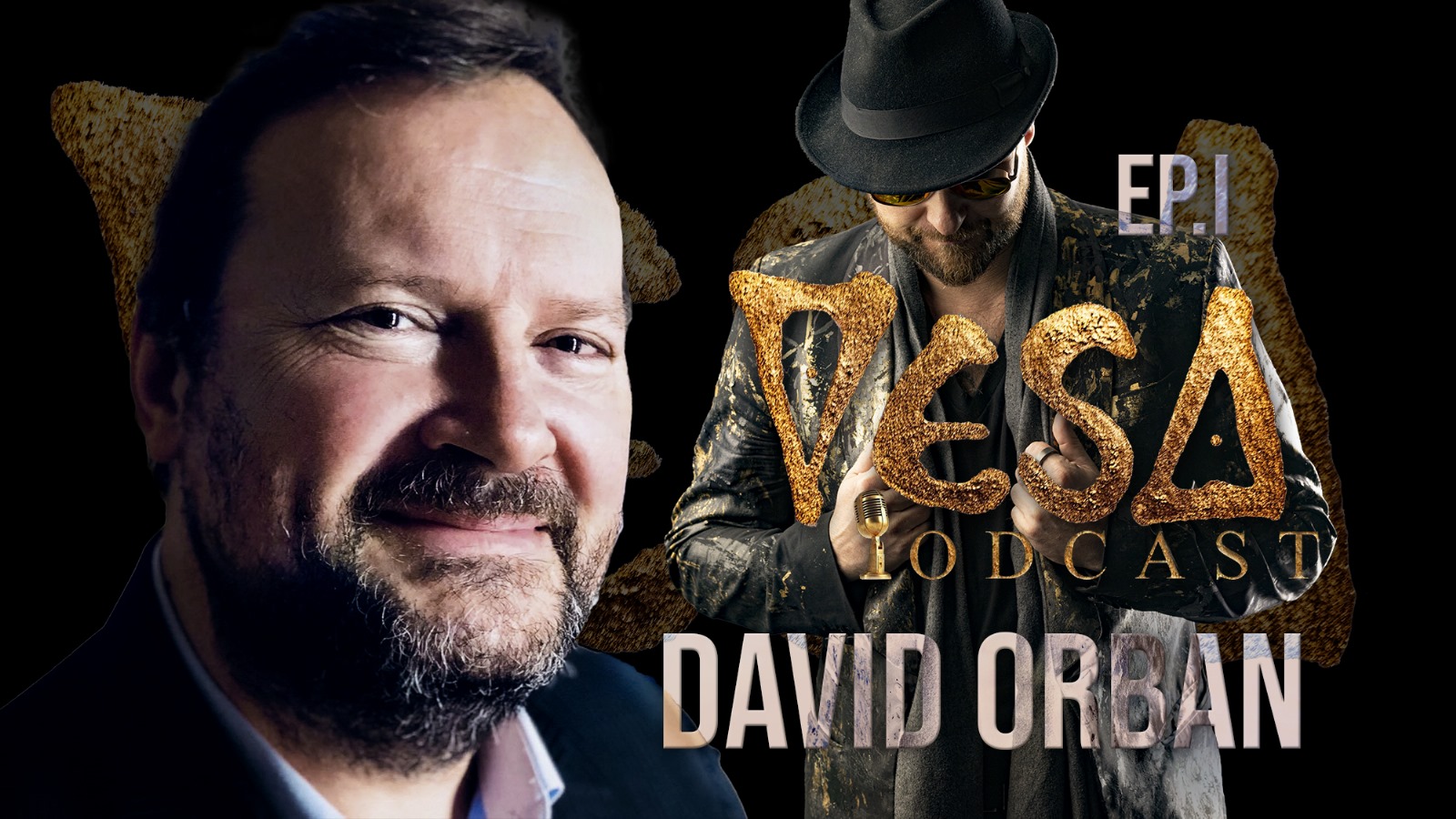
The debut episode of the newly rebranded VESA Podcast has officially launched, marking a significant milestone for the digital media platform originally established in 2017. Following an earlier iteration that featured prominent industry figures such as Bitcoin pioneer Charlie Lee, the podcast has undergone a comprehensive strategic rebrand to better connect with leading innovators, thinkers, and builders navigating the rapidly evolving technological landscape. For its inaugural episode, host VESA welcomed global technology thought leader, investor, and keynote speaker David Orban for an extensive, wide-ranging discussion covering digital transformation, artificial intelligence, mental discipline, and the structural evolution of societal institutions.
Main Facts and Background Context
The conversation between VESA and Orban originated from an initial encounter in Dubai, where VESA was exhibiting his artwork at the Dubai Mall. That preliminary dialogue laid the intellectual groundwork for the podcast appearance, spanning complex topics including the accelerating trajectory of artificial intelligence, entrepreneurial strategy, the intersection of technology and ethics, and predictions for the future of human civilization.

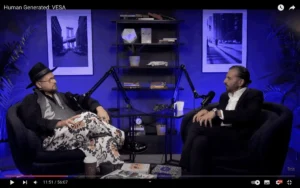
David Orban brings more than two decades of entrepreneurial and investment experience to the discourse. As a veteran of the global technology sector and a former faculty member at Singularity University, Orban’s career has been defined by founding and scaling multiple technology ventures while forecasting macro-trends across digital infrastructure. The podcast recording, conducted remotely via Zoom from Orban’s residence in Northern Italy, required modern technological intervention when the initial recording defaulted to a low-resolution 360p format. Production teams successfully utilized advanced artificial intelligence upscaling tools to transform the lower-quality archive into a crisp, high-definition 4K visual standard for broadcast across Spotify and YouTube.
Chronology of the Discussion: From Silent Retreats to Total Technological Integration

The podcast discussion followed a deliberate trajectory, moving from internal psychological discipline to external macro-sociological developments. The interview opened with an examination of Orban’s personal experience with Vipassana—a demanding, silent meditation retreat requiring complete withdrawal from electronics, books, media, and interpersonal eye contact.
For a prominent technologist heavily embedded in digital acceleration, the decision to undergo a strictly analog, silent retreat might appear counterintuitive. However, Orban credited the self-administered discipline with providing profound clarity and mental resilience. He noted that while standard post-retreat recommendations encourage one to two hours of daily meditation, maintaining such a routine amidst a demanding professional schedule remains a continuous challenge.

Shifting from the complete absence of technology to the opposite extreme, the dialogue addressed the progressive integration of human biology and machine intelligence. The conversation questioned the threshold of human-computer symbiosis, raising the philosophical inquiry of whether humanity has already integrated digital dependency into its daily existence to a degree that renders physical microchips redundant. Orban analyzed these phenomena through an objective-subjective axis, emphasizing that technology inherently shapes human socialization, behavioral patterns, and required skill sets across specific temporal and spatial contexts.
The Evolution of Belief Systems and the Simulation Hypothesis

A central theme of the episode focused on the sociological evolution of religious and spiritual frameworks in a post-secular society. VESA introduced a theoretical concept comparing the future of religion to Mixed Martial Arts (MMA)—a synthesized amalgamation drawing traditions and ethics from diverse faiths to address a contemporary spiritual vacuum.
Orban responded by advocating for a balanced intellectual posture, urging individuals to remain "immodest, but humble" when connecting disparate fields of knowledge and authority. Drawing parallels to the socio-political shifts observed following the historical collapse of the Berlin Wall, Orban noted that human beings retain a fundamental psychological need for transcendental and community-oriented experiences. He suggested that as traditional institutional paradigms struggle to resonate with modern populations—often requiring a psychological regression to archaic architectural and ritualistic norms—a bridge for spiritual evolution is actively forming.

This discussion intersected with the pervasive contemporary cultural hypothesis regarding simulation theory. Both speakers analyzed how the rapid advancement of artificial intelligence, paired with simulation-based worldviews, risks fostering a pathologically secular society devoid of traditional philosophical and spiritual grounding. This paradox highlights the defining contradiction of the modern era: humanity possesses unprecedented non-biological computational power while simultaneously grappling with an existential crisis regarding human identity and purpose.
Navigating the Culture Wars and the Democratization of Art

The conversation subsequently transitioned into cultural commentary, examining the shifting boundaries of political and social labels within media and public discourse. VESA referenced his digital art series, "Juxtaposers," which explores the polarization between establishment and anti-establishment figures by juxtaposing ideological opposites such as Andrew Tate, Ben Shapiro, and Alexandria Ocasio-Cortez. Orban and VESA dissected how modern narrative labeling often undergoes sudden inversions, citing examples where public figures advocating anti-establishment sentiments find themselves abruptly reclassified across the traditional political spectrum.
Addressing the disruption caused by generative artificial intelligence within creative industries, the dialogue contrasted historical guild systems—which historically restricted artistic expression and trade execution—with the current technological paradigm. Orban emphasized that generative AI acts as a dam about to burst, democratizing artistic creation and opening the definition of an "artist" to the general public.

To illustrate this shift, VESA shared his experience commissioning an AI-generated rap soundtrack specifically tailored to accompany his live painting sessions in his studio—a level of personalized artistic production historically unavailable even to historical monarchs. Orban argued that this democratization necessitates the development of entirely new metrics for evaluating artistic value and cultural contribution.
Actioneer and the New Paradigm of Entrepreneurship

The final segment of the podcast focused on Orban’s venture, Actioneer, and the changing demands placed upon modern creators and independent professionals. VESA highlighted the common dilemma faced by contemporary artists and specialized experts who possess mastery over their craft but lack the administrative and structural support traditionally managed by corporate chief executive officers or chief operating officers.
Orban explained that Actioneer is designed to address the compounding complexity of the modern professional landscape. As traditional linear life trajectories—characterized by formal education, stable corporate employment, and eventual retirement—face structural disruption, artificial intelligence and specialized incubation tools provide unprecedented support to independent founders.

According to Orban, entrepreneurial agility is no longer exclusive to venture-backed startups but must become a core competency for independent creators across all disciplines. He projected that entrepreneurial support tools and artificial intelligence platforms will soon achieve a level of global market saturation comparable to baseline internet connectivity, permanently altering how individuals organize their economic and creative lives.
Broader Impact and Implications

The inaugural episode of the rebranded VESA Podcast offers critical insights into the intersection of emerging technology, philosophy, and human agency. By examining the dual forces of hyper-technological acceleration and deep-seated human psychology, discussions between industry leaders like David Orban and cultural creators like VESA underscore the necessity of proactive adaptation.
The implications of these trends suggest that as artificial intelligence and decentralized tools continue to lower barriers to entry across creative and economic sectors, traditional institutional gatekeepers will continue to lose influence. For artists, entrepreneurs, and technologists alike, the emerging paradigm demands a synthesis of technical literacy, philosophical grounding, and entrepreneurial self-reliance. As the VESA Podcast continues its new iteration, subsequent episodes are expected to further decode these structural transformations, providing audiences with expert analysis on the trajectory of the global digital economy.