The Anatomy of an Investment Collapse
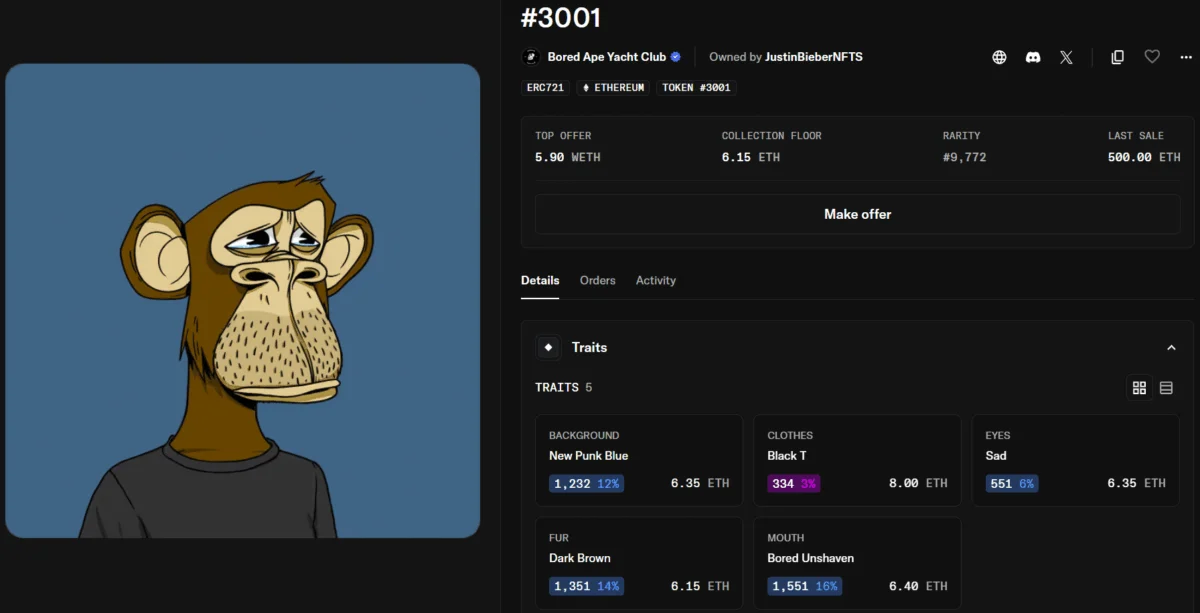
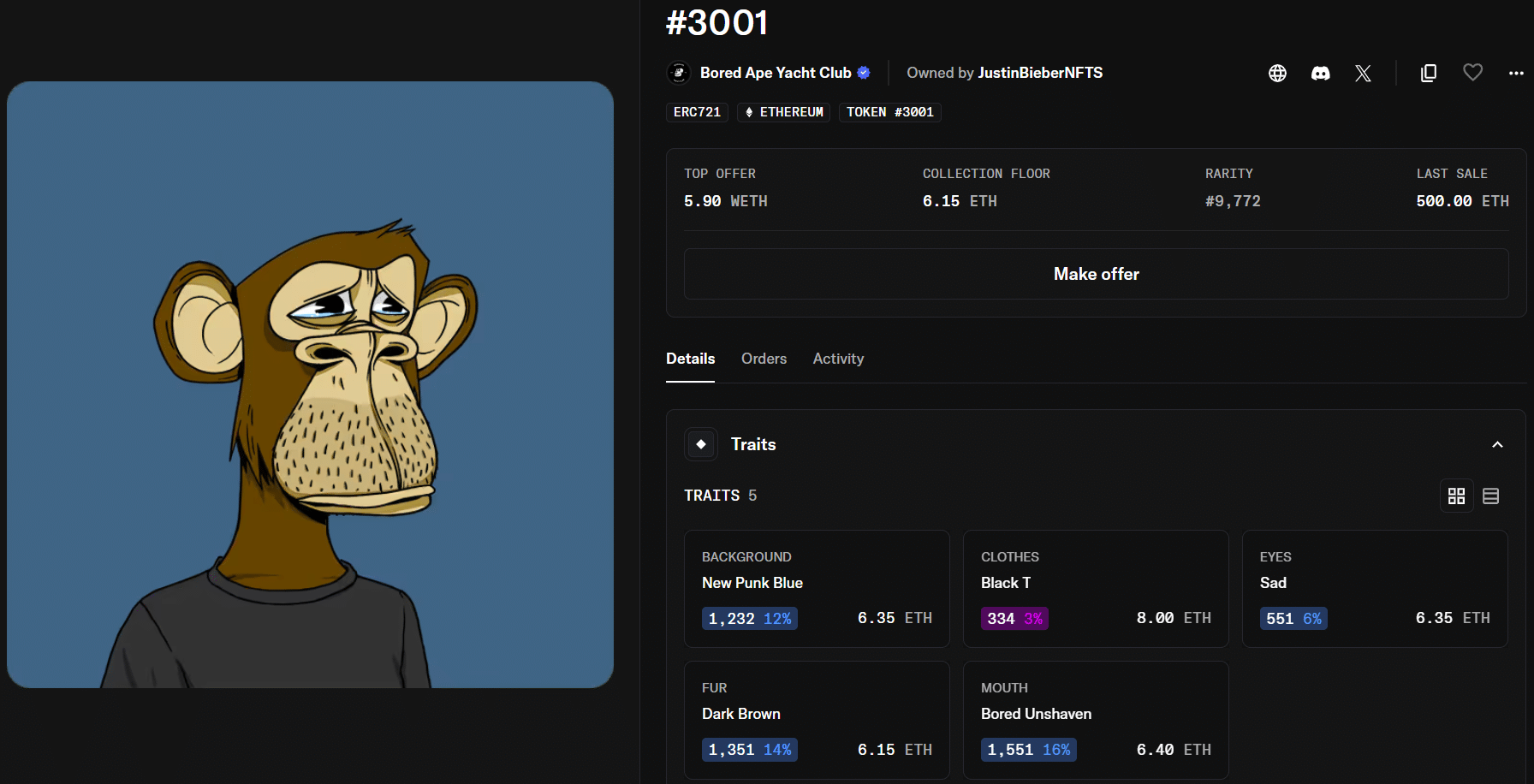
In early 2022, when the NFT market was reaching its absolute zenith, Justin Bieber acquired Bored Ape #3001 for 500 ETH. At the time of the transaction, the expenditure amounted to approximately $1.3 million. Today, that same asset is valued at roughly $12,000, representing a near-total erosion of capital. This drastic devaluation is not an isolated incident but rather a microcosm of the systemic repricing of speculative digital assets that characterized the post-pandemic economic environment.
Bieber’s purchase was heavily scrutinized at the time by industry analysts. Market data from that period suggests that the prevailing floor price for comparable Bored Apes was significantly lower, typically trading between $200,000 and $300,000. By paying 500 ETH, Bieber effectively paid a massive premium, likely influenced by the prevailing "Fear Of Missing Out" (FOMO) that gripped both retail investors and high-net-worth individuals during the bull run. The current floor price for the Bored Ape Yacht Club collection now hovers near 6.15 ETH, with secondary market bids struggling to exceed 5.9 ETH. When calculated against the current value of Ethereum, which trades near the $2,000 threshold, the losses for those who entered the market during the 2022 peak are both severe and largely unrealized.
Chronology of the Bored Ape Phenomenon
The trajectory of the Bored Ape Yacht Club provides a definitive case study in speculative market cycles. Created by Yuga Labs, the collection debuted in April 2021. In its initial launch phase, the 10,000-piece generative art series was priced at a mint cost of 0.08 ETH per unit, selling out in a matter of hours. The project was initially marketed as a digital social club, offering exclusive access to an online community and private Discord servers.
As the months progressed, the project garnered unprecedented mainstream media attention. By May 2022, the "floor price"—the minimum amount required to purchase the least expensive asset in the collection—skyrocketed to between 128 and 145 ETH. At the exchange rates of the time, this equated to an asset value of $350,000 to $420,000. During this period, the collection became a status symbol for celebrities, including Jimmy Fallon, Paris Hilton, and Eminem, which further accelerated the price inflation.
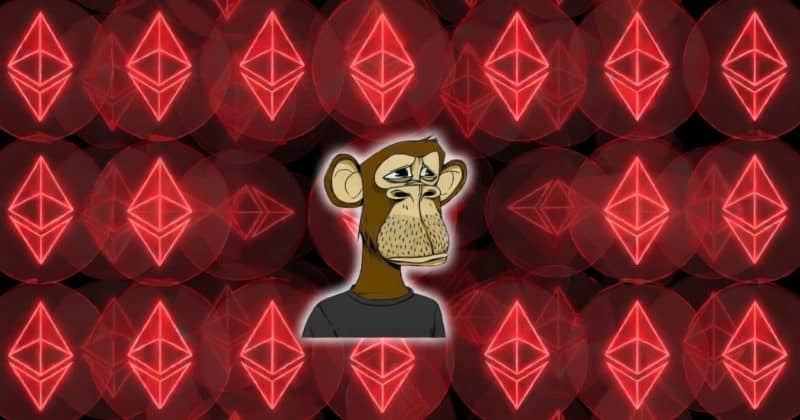
Bieber’s exposure to the sector extended beyond a single asset. In addition to #3001, the singer acquired Bored Ape #3850 for roughly $470,000 shortly after his initial purchase. These acquisitions, documented through public blockchain ledgers, provided a transparent view into the financial risk assumed by participants during the height of the speculative bubble.
The Shift from Speculation to Utility
The bursting of the NFT bubble was not a singular event but a prolonged contraction fueled by macroeconomic headwinds, including rising interest rates and a general retreat from risk-on assets. As the speculative fervor subsided, trading volumes plummeted, and the floor prices of blue-chip NFT collections saw double-digit percentage drops on a monthly basis. However, industry observers note that the collapse of trading prices does not signify the end of the underlying technology.
Instead, the sector has transitioned from a focus on speculative "profile picture" (PFP) art toward utility-focused applications. Developers and project founders are increasingly concentrating on integrating NFTs into functional ecosystems. Current trends indicate a pivot toward:
- In-game Assets: Using NFTs as verifiable ownership units for items, characters, or land within blockchain-based gaming environments.
- Access and Identity: Utilizing NFTs as digital keys for gated communities, software platforms, or professional networking events.
- Tokenized Real-World Items: Linking physical goods—such as luxury watches, real estate, or fine art—to digital tokens to ensure provenance and facilitate easier transfer of ownership.
Competitive Dynamics and Market Infrastructure
While Ethereum remains the primary hub for high-value NFT transactions due to its deep liquidity and established smart contract infrastructure, the broader market has become increasingly fragmented. Competing blockchains, specifically Solana and Polygon, have successfully captured a significant share of the market by offering lower transaction fees and higher scalability. These attributes are essential for projects that require high-frequency interactions, such as gaming or social media integration, where the high gas fees associated with Ethereum often prove prohibitive for the average user.
Furthermore, the introduction of Layer 2 scaling solutions on Ethereum, such as Arbitrum and Optimism, has attempted to mitigate these costs, though the competition between chains remains intense. The current market environment prioritizes cost-efficiency and utility over the sheer speculative valuation that defined the 2021-2022 period.
Implications and Future Outlook
The devaluation of high-profile assets like those held by Bieber serves as a cautionary tale for the digital asset industry. Analysts argue that the correction has effectively purged the market of unsustainable liquidity and short-term "flippers." For the remaining stakeholders, the focus has shifted toward building sustainable business models that provide tangible value rather than relying on the hope of price appreciation.
While institutional interest remains present, it has become significantly more selective. Financial institutions and established brands are moving away from the "collectible" model and toward using blockchain technology for back-end operations, supply chain verification, and loyalty programs. This institutional maturation is expected to provide a more stable foundation for the industry, even as retail interest in speculative NFT trading remains muted.
From a regulatory perspective, the cooling of the market has also provided authorities with more breathing room to evaluate the asset class. The transition from a "wild west" atmosphere to a more structured, utility-oriented market may facilitate clearer guidelines regarding the classification and taxation of digital collectibles.
Conclusion
The precipitous drop in the valuation of Justin Bieber’s Bored Ape collection is a stark reminder of the volatility inherent in nascent digital markets. It highlights the dangers of asset valuation based on cultural hype rather than underlying utility or cash flow. As the sector matures, the focus is expected to remain on the integration of blockchain technology into broader technological frameworks, potentially stripping away the speculative excess that characterized the initial NFT boom. For investors and developers alike, the current "chill" in the market represents a necessary phase of professionalization, where the value of a digital asset is increasingly tied to its functional application rather than its viral potential. The era of blind speculative acquisition appears to have ended, replaced by a more pragmatic and rigorous approach to digital property.