Decentralized finance (DeFi) giant Lido has officially launched its highly anticipated automatic LDO token buyback initiative, named the Network Economic Support Token (NEST) program. First proposed to the community last year, the activation marks a major milestone for the liquid staking protocol, introducing a programmatic mechanism designed to dynamically absorb LDO tokens from the open market based on real-time platform performance and incoming revenue streams.
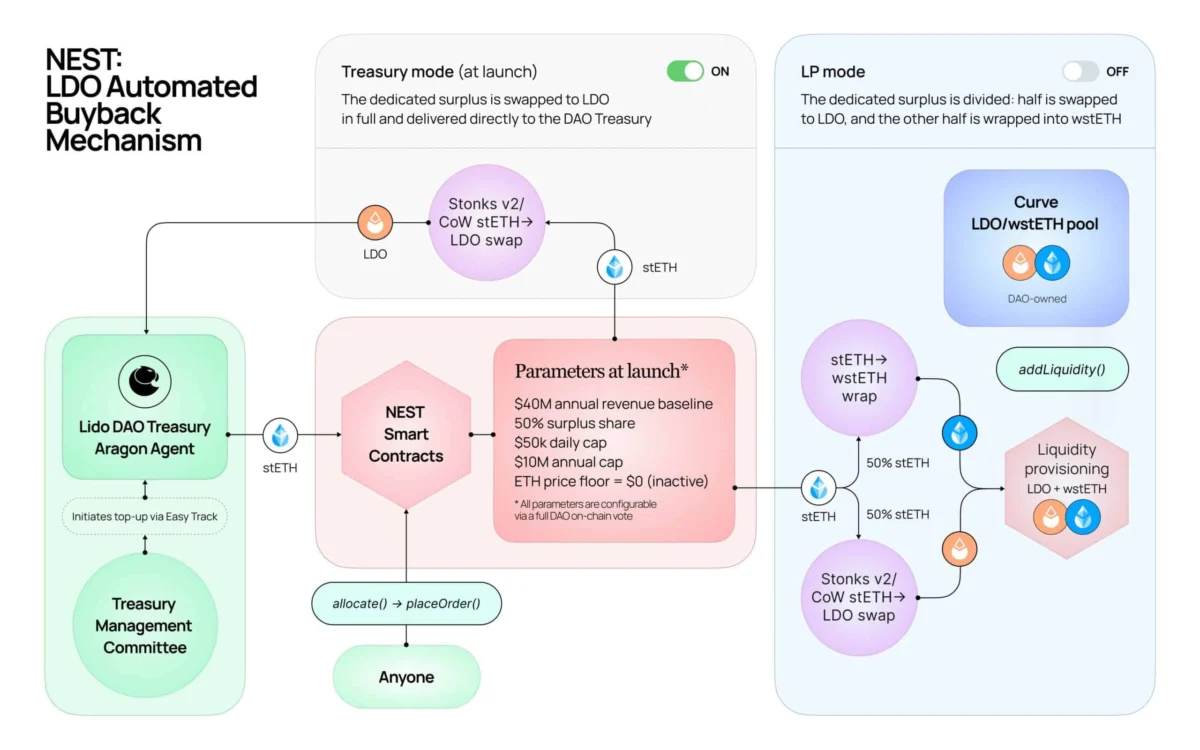
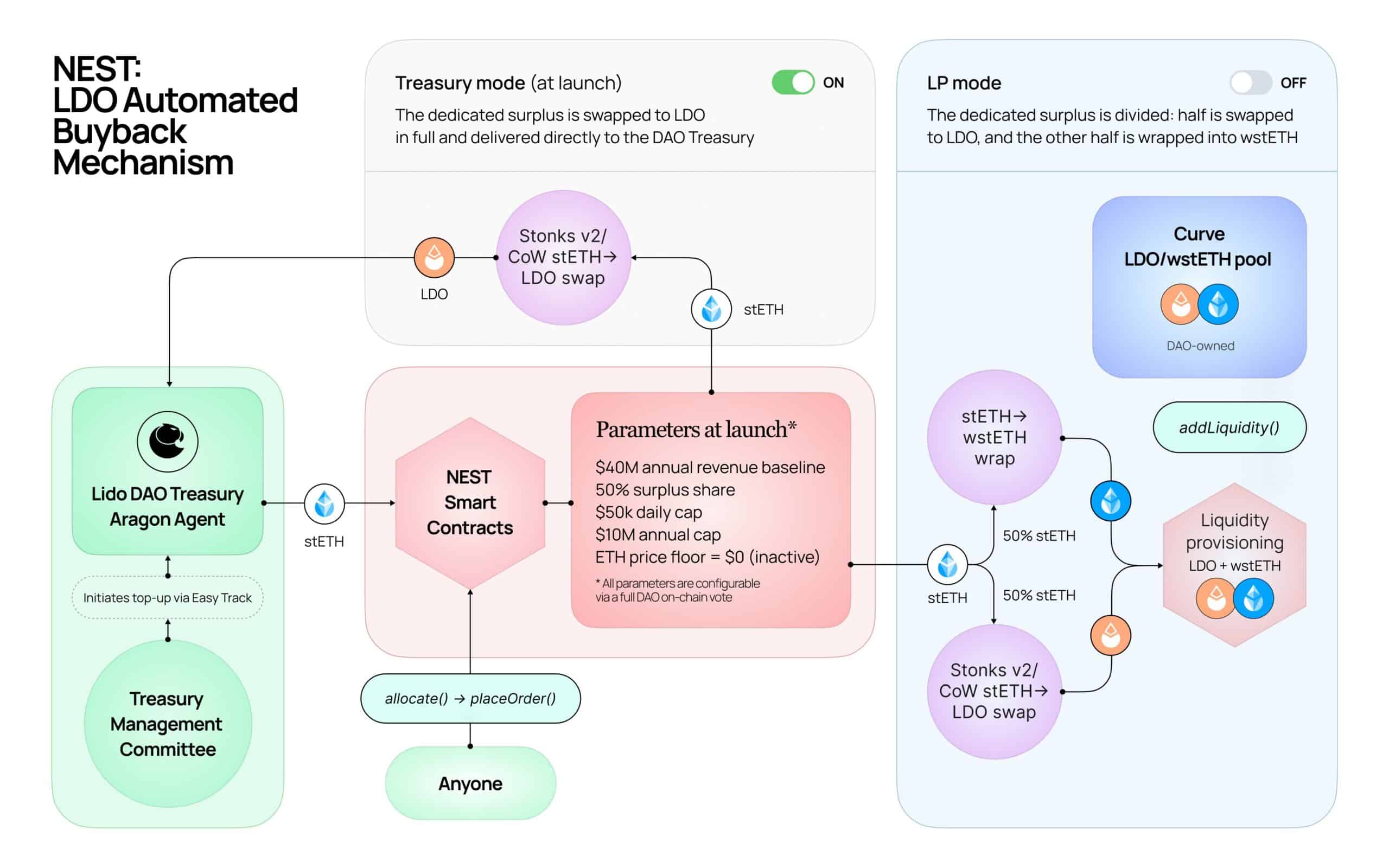
According to technical specifications released by the project, the NEST program is fully live on the mainnet, featuring strict guardrails to manage treasury allocation. The mechanism is bounded by a daily purchase limit of $50,000 and an aggregate annual cap of $10 million. Rather than functioning as a standard, fixed-schedule acquisition plan, NEST is engineered to respond directly to prevailing market conditions and protocol earnings, aligning treasury deployment with the actual financial health of the decentralized autonomous organization (DAO).
Under the programmatic design parameters, the smart contracts do not allocate all incoming revenue toward token purchases. Instead, the initiative dictates that precisely 50% of any daily staking revenue exceeding a baseline threshold of $109,000 will be automatically funneled into the buyback pool. This configuration establishes an annualized revenue baseline of approximately $40 million. Consequently, if daily protocol revenues fall below the $109,000 benchmark, the buyback mechanism remains inactive, preserving core treasury capital during leaner market cycles.
Furthermore, tokens accumulated through the NEST program are handled uniquely compared to deflationary burn models adopted by other digital assets. Instead of being permanently removed from circulation via a burn address, all acquired LDO tokens are retained within the official DAO treasury. This approach grants the collective governance body greater flexibility regarding future capital allocation, ecosystem grants, or liquidity provisioning, while simultaneously reducing immediate circulating supply pressures on centralized and decentralized exchanges.
Chronology and Background of the NEST Initiative
The conceptualization of the NEST program did not occur in a vacuum; it emerged from months of rigorous debate within the Lido governance forums regarding sustainable tokenomics and value accrual for tokenholders. As the dominant liquid staking provider for Ethereum and other proof-of-stake networks, Lido historically focused its efforts on scaling total value locked (TVL) and expanding validator network integrations rather than direct market interventions for its governance token.

However, as the broader decentralized finance landscape matured through successive market cycles, community members increasingly demanded mechanisms that could better align protocol revenue generation with the long-term economic prospects of the LDO token. Proposals concerning treasury diversification and buybacks began circulating widely throughout the previous year. Following extensive community feedback, risk assessments, and smart contract audits, governance participants voted to approve the architecture of the NEST program.
The successful mainnet deployment this month represents the culmination of that lengthy governance lifecycle, transitioning the community’s theoretical tokenomic models into an active, automated on-chain reality. Nevertheless, the rollout coincides with a challenging macro environment for protocol earnings, creating an immediate test of the program’s activation thresholds.
Current Revenue Realities and Activation Hurdles
Despite the high-profile activation of the NEST smart contracts, broader market conditions have temporarily sidelined the automated purchases. On-chain data compiled by DeFiLlama indicates that Lido’s protocol revenue throughout the month of August has hovered around an average of $75,000 per daily epoch.
Because this figure sits below the mandatory $109,000 daily threshold required to trigger the dynamic buyback mechanism, the program has experienced a quiet debut. Historical data reveals that Lido last sustained daily revenues above the $109,000 mark back in April, driven by a broader second-quarter recovery phase across the digital asset market. Analysts note that for NEST to initiate its first live token purchases, the protocol will require a notable resurgence in overall network staking activity, higher transactional demand on underlying layer-1 blockchains, or a general appreciation in asset valuations that naturally inflate fee generation.
Comparative Analysis: Scaling Up or Lagging Behind?
The launch of Lido’s $10 million annual buyback cap has sparked considerable debate across crypto-economic circles, particularly regarding the program’s scale relative to competing decentralized protocols. Critics and market observers have frequently pointed out that Lido’s allocation is relatively conservative when juxtaposed with similar initiatives launched by other prominent Web3 entities.
For instance, prominent derivatives platform Hyperliquid has maintained an aggressive buyback schedule approaching $100 million in annual outlays. Similarly, decentralized exchange Uniswap and lending protocol Aster operate dedicated buyback programs targeting roughly $40 million annually, while emerging ecosystems like PUMP have structured initiatives nearing $35 million. When measured against these figures, Lido’s $10 million annual ceiling is approximately three to ten times smaller than comparable ongoing programs across the sector.
Proponents of Lido’s conservative structure, however, argue that the protocol’s cautious approach is a prudent risk-management strategy. By tying acquisitions strictly to revenue surpluses above a $40 million annual baseline, the DAO safeguards its operational runway against prolonged crypto winters, ensuring that core development, security audits, and contributor compensation remain fully funded regardless of market volatility.
Industry Reactions and the Broader Buyback Debate
Token buybacks remain a polarizing topic within the digital asset ecosystem. While traditional equity markets view share buybacks as a standard and tax-efficient method to return value to shareholders, the decentralized finance space harbors divergent philosophies regarding treasury management.
Skeptics of token buybacks often argue that allocating treasury capital toward purchasing governance tokens represents a suboptimal use of resources, particularly during market downturns when those funds could be more effectively deployed toward crucial ecosystem research, developer grants, and technological innovation. Citing these concerns, several high-profile projects—such as decentralized wireless network Helium—have previously chosen to scale back or entirely decommission their respective token repurchase schemes.
Conversely, prominent legal and economic analysts in the blockchain space have praised Lido’s structural design for mitigating the pitfalls associated with poorly planned market interventions. Gabriel Shapiro, a well-known attorney specializing in cryptocurrency regulations and DAO governance, publicly endorsed the framework on social media shortly after deployment, succinctly characterizing the mechanism by stating, "How buybacks should be." Industry commentators highlighted Shapiro’s remark as validation of the program’s programmatic discipline, noting that the requirement for organic revenue surpluses prevents the treasury from artificially propping up token prices using borrowed or non-sustainable capital.
Price Action and Technical Market Outlook
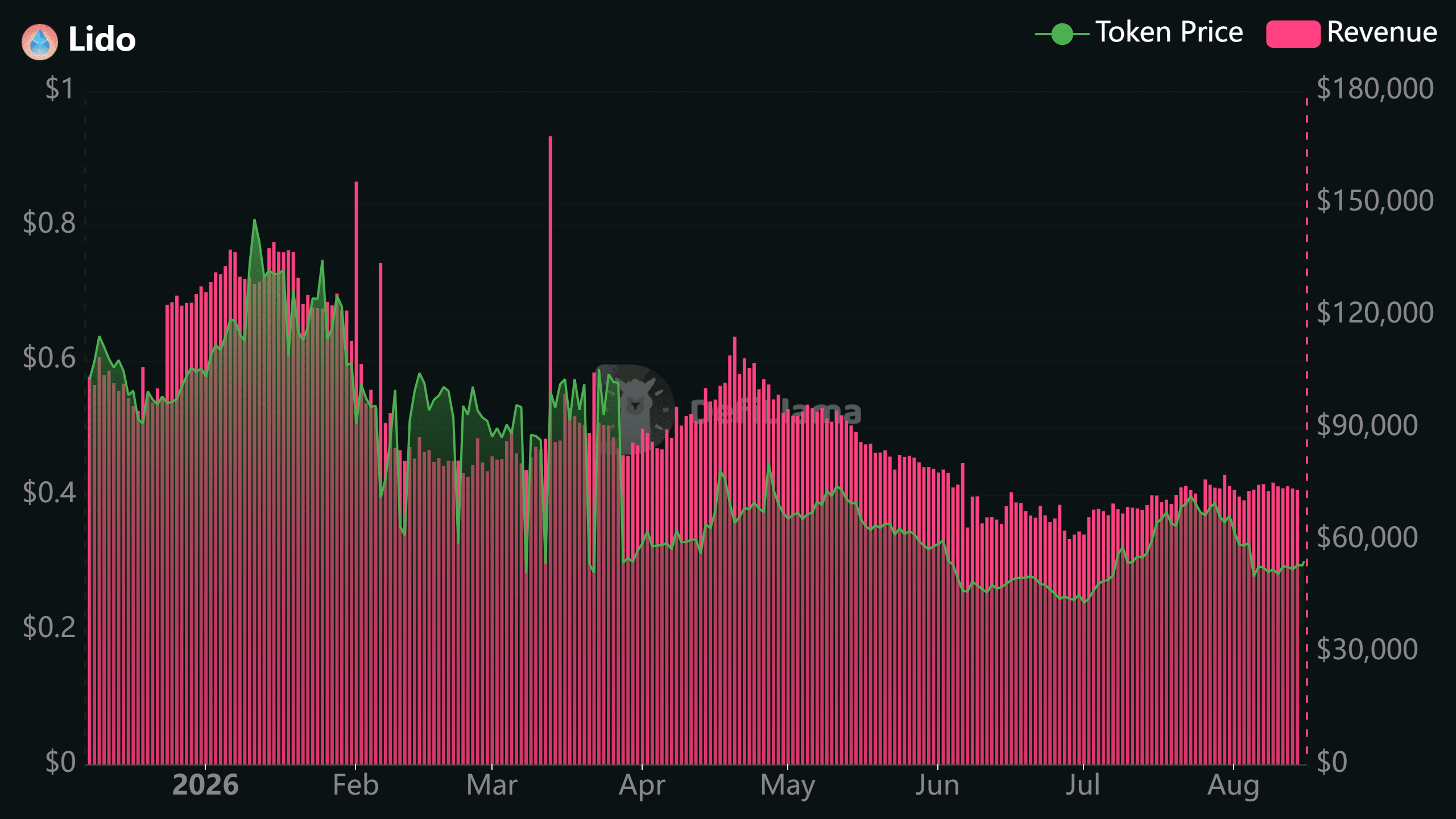
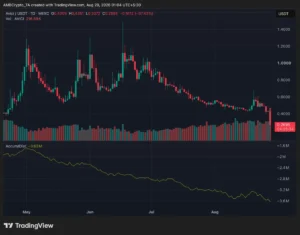
Against the backdrop of the NEST activation, the LDO token has demonstrated relative resilience on spot exchanges, successfully defending the critical $0.28 support level throughout the month of August. This defense effectively arrested a sharp downward correction that plagued the asset through July.
Despite establishing a technical floor near $0.28, a decisive bullish recovery has yet to materialize. Technical indicators on daily timeframe charts show that LDO price action continues to trade below major structural moving averages, including the 50-day Exponential Moving Average (EMA) and the 200-day Simple Moving Average (SMA).
Chart analysts suggest that while the establishment of the NEST program provides a supportive fundamental narrative, sustained upside momentum will likely require broader macroeconomic tailwinds and a confirmed breakout above immediate overhead resistance zones. Specifically, market strategists note that a convincing bullish continuation pattern will only be validated if the token successfully reclaims its key moving averages as established support levels, pushing decisively past the $0.33 threshold.
Implications for Governance and the Future of Liquid Staking
As the NEST program monitors incoming protocol revenues on a daily basis, its long-term impact on token velocity, market depth, and holder sentiment remains a central point of interest for decentralized finance analysts. While the immediate absence of daily buybacks due to sub-$109,000 revenue metrics highlights the sensitivity of the model, it simultaneously demonstrates the structural integrity of the DAO’s risk parameters.
Ultimately, Lido’s transition into programmatic token acquisition reflects a maturing sector where decentralized protocols are increasingly expected to institutionalize financial discipline. Whether the $10 million cap will be expanded in future governance votes or whether changing market conditions will soon push protocol revenues above the activation threshold will determine the immediate efficacy of the NEST framework as the year progresses.