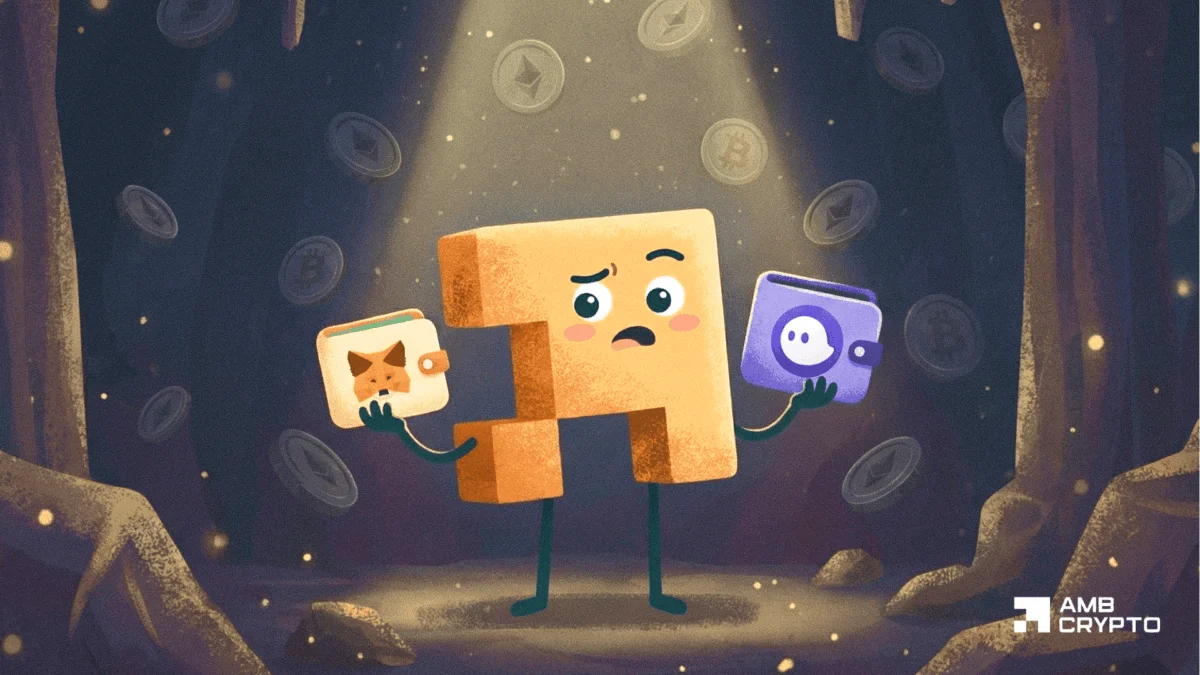
The landscape of Web3 infrastructure is undergoing a seismic shift as the competition for dominance in the digital wallet sector intensifies. For years, the crypto wallet market was synonymous with a single name: MetaMask. Serving as the primary gateway to the Ethereum ecosystem, MetaMask defined the user experience for early adopters and developers alike. However, as the broader blockchain industry matures and user demographics shift toward retail participants seeking speed and cost-efficiency, the narrative is changing. Phantom, originally built as the native wallet for the Solana network, has emerged as a formidable challenger, effectively transforming the "wallet wars" into a race between legacy dominance and high-performance user experience.
The Evolution of the Wallet Ecosystem
To understand the current tension, one must look back at the origins of these platforms. MetaMask, developed by Consensys, launched in 2016 as a browser extension. It was instrumental in the proliferation of Decentralized Finance (DeFi) and the Non-Fungible Token (NFT) boom of 2020-2021. By prioritizing Ethereum Virtual Machine (EVM) compatibility, it became the standard infrastructure for dApps. Its longevity has granted it a massive, entrenched user base, boasting approximately 30 million funded accounts today.
In contrast, Phantom entered the market in 2021, strategically capitalizing on the rise of Solana. Solana’s architecture—designed for high throughput and sub-second finality—required a wallet that could handle rapid-fire transactions without the bottlenecking often experienced on older chains. By providing an intuitive interface that simplified complex blockchain interactions, Phantom gained rapid traction. As of early 2026, Phantom has scaled to over 16 million funded accounts. While MetaMask maintains a lead in absolute numbers, the growth trajectory of Phantom suggests that the gap is closing at an unprecedented rate, challenging the perception that Ethereum-based tools are the default for all crypto participants.
Chronology of Competitive Expansion
The rivalry has intensified as both wallets moved away from their "chain-specific" origins to adopt a multi-chain strategy.

- 2016–2020 (The Ethereum Era): MetaMask establishes itself as the primary interface for the Ethereum ecosystem. Its ability to support custom RPC (Remote Procedure Call) networks allowed users to interact with emerging Layer-2 solutions and sidechains like Polygon.
- 2021 (The Rise of Alt-L1s): Phantom launches as a Solana-native wallet, setting a new benchmark for UI/UX in crypto. It gains favor for its built-in NFT galleries and seamless token swapping.
- 2023–2024 (Cross-Chain Integration): Recognizing the threat, MetaMask introduces "Snaps," an extensibility feature allowing developers to build features that connect to non-EVM chains. Simultaneously, Phantom begins its expansion beyond Solana, incorporating Ethereum, Polygon, and Bitcoin support.
- 2025–2026 (The Battle for Mainstream Onboarding): Both wallets pivot toward Real World Assets (RWAs) and traditional fintech features. MetaMask leans into institutional-grade services and tokenized stocks, while Phantom focuses on "Phantom Connect" and "Terminal" to capture the active trader demographic.
Supporting Data and Market Dynamics
The competition is no longer just about network support; it is about user retention and onboarding efficiency. Industry data indicates that while MetaMask holds the lead in total volume due to its deep integration with the Ethereum DeFi stack, Phantom leads in user engagement metrics per capita.
A critical factor in this shift is the cost of operation. During periods of high network congestion on Ethereum, gas fees often render the network prohibitive for retail users. Conversely, the Solana network’s low-fee environment has allowed Phantom users to experiment, trade, and collect NFTs with minimal friction. This "frictionless" experience acts as a powerful onboarding funnel for new users entering the ecosystem for the first time.
Furthermore, the comparison to traditional fintech giants provides necessary context. With 16 million and 30 million users respectively, both wallets have outpaced the user growth of several established digital banking platforms like Wise, SoFi, and Chime. This highlights that crypto wallets are evolving from niche technical tools into comprehensive financial hubs.
Strategic Divergence: MetaMask vs. Phantom
MetaMask’s strategy remains rooted in its status as a "Swiss Army knife." By supporting a vast array of chains and allowing for granular control over transaction parameters, it appeals to power users and developers. Its recent move into the RWA sector—offering access to US stocks and ETFs—signals an intent to become a bridge between traditional finance and the decentralized world. However, critics often point to the wallet’s UI as being cluttered or "too technical" for the average person.
Phantom, conversely, has leaned into a "consumer-first" philosophy. Its design language mimics the simplicity of a mobile banking app. By reducing the number of clicks required to sign a transaction or view an NFT, Phantom has captured the demographic that values convenience over deep-chain customization. The introduction of "Phantom Terminal" demonstrates a targeted effort to retain high-frequency traders who previously might have used more complex tools.

Institutional and Industry Perspectives
While official statements from developers at Consensys and the Phantom team often emphasize the "growth of the entire ecosystem," the underlying competitive pressure is palpable. Industry analysts note that the battle is essentially a test of whether "user-centric design" (Phantom) can overcome "first-mover advantage" (MetaMask).
Some market observers suggest that the market is moving toward a bifurcated future. In this scenario, MetaMask continues to serve as the infrastructure layer for institutional and heavy-duty DeFi applications, while Phantom positions itself as the "Super App" for retail users, social media-integrated payments, and gaming.
Broader Implications for Web3
The shift toward Solana-favoring wallet dynamics has significant implications for the future of blockchain development. If the user experience is increasingly dictated by wallets that favor high-speed networks, developers may be incentivized to prioritize building dApps on chains that integrate seamlessly with those wallets. This could lead to a decline in the dominance of EVM-exclusive development.
Furthermore, the integration of Bitcoin and Tron into both wallets suggests that the industry is moving away from chain-maximalism. The "winning" wallet will be the one that provides the most abstracted experience—where the user does not need to know which blockchain they are utilizing, only that their transaction is secure, cheap, and instantaneous.
Conclusion
The competition between MetaMask and Phantom is a microcosm of the maturation of the cryptocurrency sector. While MetaMask continues to benefit from its historical legacy and deep integration within the Ethereum ecosystem, it is facing the realities of a market that now demands simplicity and high-performance throughput. Phantom’s rapid growth is a testament to the fact that in the current era of Web3, technical superiority is only half the battle; the other half is won through the interface. As both platforms continue to innovate—incorporating everything from AI-driven security features to cross-chain liquidity aggregation—the ultimate beneficiary will be the end-user, who now enjoys a level of choice and functionality that was unimaginable only a few years ago. The wallet wars are far from over, but the theater of combat has undeniably shifted.