The South Korean government appears to be orchestrating a significant pivot in its approach to the digital asset sector, with emerging reports suggesting a potential lifting of the ban on Initial Coin Offerings (ICOs). This development marks a noteworthy departure from the aggressive regulatory stance that characterized the nation’s crypto-policy throughout 2017. As one of the most active markets for digital assets globally, South Korea’s shifting regulatory landscape holds profound implications for both domestic investors and the broader international blockchain ecosystem.
A Chronology of Regulatory Tension
To understand the current shift, one must analyze the tumultuous timeline of South Korea’s relationship with cryptocurrency. Throughout 2017, the country experienced an unprecedented surge in speculative trading, with domestic exchanges like Bithumb and Upbit becoming global hubs for retail investment.
By late 2017, the South Korean government, concerned by the lack of investor protection and the potential for money laundering, began to signal a crackdown. In September 2017, the Financial Services Commission (FSC) issued a sweeping ban on all forms of ICOs, citing concerns over fraud and the lack of regulatory frameworks. This was followed by a series of high-profile announcements from various government ministries threatening to shutter domestic exchanges entirely.
These threats, compounded by the broader volatility of the market and high-profile security breaches at exchanges like Coincheck, contributed to a significant market correction in early 2018. Bitcoin and various altcoins witnessed sharp declines in value as investor sentiment turned bearish, fueled by fears that the world’s third-largest crypto market was effectively closing its doors.
However, the dawn of 2018 brought a subtle shift in rhetoric. Public pressure, evidenced by a petition signed by over 200,000 citizens urging the government to reconsider its restrictive policies, began to resonate within the National Assembly. Recent reports from The Korea Times indicate that financial authorities have initiated internal dialogues with the tax agency and the Ministry of Justice to establish a legal framework that would permit ICOs under strictly defined conditions.
Official Stances and Regulatory Ambiguity
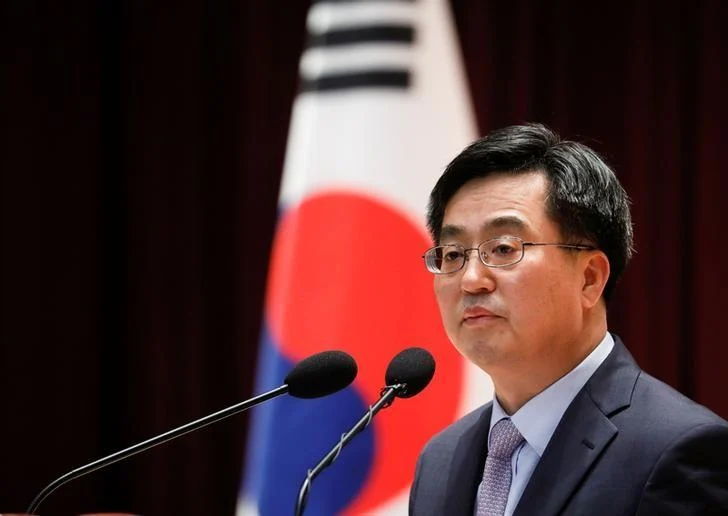
The current state of South Korean cryptocurrency policy remains a delicate balance between oversight and innovation. Kang Young-soo, a key figure overseeing cryptocurrency trading policies at the FSC, has clarified that there is currently no comprehensive legislation explicitly criminalizing all ICOs. Instead, the government is moving toward a model where only those projects that explicitly violate existing financial laws are targeted, while legitimate, compliant projects may eventually find a pathway to legal operation.
"There are many speculating about the possibility of allowing ICOs," Kang noted during a recent industry forum at the National Assembly. "The FSC has acknowledged a third-party view regarding the issue, but there is nothing that we can say officially at the moment."
This ambiguity reflects a broader government strategy: to distinguish between the speculative "noise" of the crypto-market and the underlying utility of blockchain technology. The administration has explicitly stated that while it intends to regulate trading, it is equally committed to fostering the advancement of blockchain-related technologies. This dual-track approach aims to mitigate the risks associated with volatile asset classes while positioning South Korea as a leader in the underlying infrastructure of the digital economy.
Supporting Data and Market Context
South Korea’s influence on the global cryptocurrency market cannot be overstated. During the peak of the 2017 bull market, the "Kimchi Premium"—a phenomenon where Bitcoin traded at a significantly higher price on South Korean exchanges compared to international markets—highlighted the sheer volume of domestic demand. At times, this premium reached as high as 30 to 40 percent.
The government’s concerns were largely driven by data regarding illicit capital flows. Anti-Money Laundering (AML) and Know-Your-Customer (KYC) protocols were largely absent in the nascent stages of the market. Since the initial crackdown, however, the government has mandated that all crypto-exchanges implement real-name bank account systems, effectively linking digital wallets to verified individual identities. These measures have brought a level of transparency to the market that was previously absent, serving as the foundational prerequisite for any potential legalization of new token offerings.
Implications of a Regulatory Pivot
The potential reversal of the ICO ban carries substantial implications for both the Korean financial sector and global blockchain startups.
- Institutional Legitimacy: By moving from a total ban to a conditional regulatory framework, South Korea would provide a "gold standard" of legitimacy for projects that can meet the government’s rigorous security and compliance requirements. This would likely attract high-quality blockchain developers to the region.
- Economic Growth and Employment: The government has recognized that blockchain is a cornerstone of the Fourth Industrial Revolution. By allowing a controlled environment for ICOs, the administration hopes to stimulate job creation in the technology sector and retain domestic talent that might otherwise migrate to crypto-friendly jurisdictions like Switzerland or Singapore.
- Investor Protection: The shift signifies a transition from "prohibition" to "supervision." By setting clear standards—such as minimum capital requirements, disclosure norms, and security auditing—the government can provide a safer environment for retail investors, reducing the prevalence of fraudulent exit scams that plagued the 2017 cycle.
- The Persistence of AML Laws: Despite the easing of restrictions on ICOs, it is critical to note that the government remains steadfast on AML/KYC enforcement. Foreigners will likely remain barred from participating in domestic South Korean cryptocurrency markets for the foreseeable future. This restriction is intended to prevent the nation from becoming a conduit for international money laundering and capital flight.
The Broader Blockchain Vision
The South Korean government’s interest in blockchain technology extends far beyond the realm of speculative currency. From digital identity management to supply chain transparency, the technology is being viewed as a vital tool for upgrading national infrastructure.
During his address at the National Assembly, Kang emphasized the separation of these two agendas: "Yes, we have to have plans on how to advance blockchain-related technologies and effectively regulate crypto-trading. This is a separate issue."
This distinction is crucial. It suggests that while the era of unregulated "wild west" crypto-trading in South Korea is effectively over, the era of government-sanctioned blockchain development is just beginning. By formalizing the status of ICOs, the government is not necessarily endorsing speculative trading, but rather creating a regulatory "sandbox" where technological innovation can occur without compromising the integrity of the national financial system.
Conclusion: A Measured Future
As South Korea navigates this transition, the eyes of the global financial community remain fixed on Seoul. The movement toward allowing ICOs under "certain conditions" represents a pragmatic evolution. The government has learned that total prohibition is difficult to enforce and may stifle technological progress.
In the coming months, the financial community expects to see the release of concrete regulatory guidelines that will dictate how companies can raise capital through blockchain-based tokens. If successful, this framework could serve as a blueprint for other nations struggling to balance the risks of digital asset speculation with the undeniable economic potential of distributed ledger technology.
For the time being, the market is in a state of cautious optimism. The transition from a climate of fear to one of regulatory clarity is a long process, but the current signals suggest that South Korea is moving away from the binary choice of "ban or allow" and toward a sophisticated, multi-layered regulatory regime. Whether this will lead to a new wave of growth for the Korean crypto-market depends largely on the strictness of the conditions yet to be defined by the FSC and its partner ministries. What is certain, however, is that the nation’s policy evolution remains one of the most critical barometers for the health and maturity of the global digital asset ecosystem.