The harsh reality of modern cryptocurrency mining for retail participants was laid bare recently when a Reddit user, operating under the pseudonym "nstran541," shared his sobering experience on a popular cryptocurrency subreddit. After dedicating four days of computational power and electricity to mining, the user reported a total profit of just $1.07. While the specific digital asset mined was not disclosed, the user utilized WinMiner, a software application designed to simplify the mining process for desktop users. This modest return highlights a significant shift in the crypto-asset landscape: the transition from an era where hobbyist mining was a viable side-hustle to a professionalized, capital-intensive industry dominated by industrial-scale operations.
The Shift from Hobbyist to Industrial Mining
The disclosure by "nstran541" sparked a wave of responses from the community, many of whom have abandoned the practice entirely. The common consensus among former hobbyists is that the escalating cost of electricity, combined with the depreciation of hardware, renders small-scale mining financially non-viable.
One notable response came from a user named "MagniGames," who shared a cautionary tale regarding his venture into Ravencoin mining. Despite the token’s subsequent appreciation in market value and its rise to a top-50 asset on major exchanges like Binance, the user noted that he still had not achieved a break-even point. When factoring in the wear and tear on his graphics processing units (GPUs) and the sustained cost of electricity, the net result was a loss. This anecdote serves as a microcosm for the broader challenges facing home miners who are unable to compete with the economies of scale enjoyed by massive, warehouse-sized mining farms.
Chronology of the Mining Decline
To understand why a user might net only $1.07 over four days, one must look at the historical trajectory of mining difficulty. In the early years of Bitcoin (2009–2012), a standard home computer could generate significant rewards. However, as the network matured, the introduction of Application-Specific Integrated Circuits (ASICs) fundamentally changed the landscape.
- 2009–2013: The "Golden Era" of CPU and early GPU mining. Difficulty remained low, and hardware requirements were minimal.
- 2014–2017: The rise of specialized ASIC miners and the birth of large-scale mining pools. This period saw the start of the migration toward regions with subsidized or low-cost electricity.
- 2018–2020: The "Great Consolidation." As electricity costs in Western nations rose and regulatory scrutiny intensified, many home miners exited the market.
- 2021–Present: The era of institutional mining. Mining operations are now often publicly traded companies with dedicated infrastructure, sophisticated cooling systems, and long-term energy contracts.
Economic Factors and Regional Disparities
The profitability of mining is dictated by a simple equation: the cost of electricity per kilowatt-hour (kWh) versus the hash rate produced by the hardware. While residential electricity rates in many Western countries hover between $0.10 and $0.15 per kWh, industrial-scale miners in regions with cheap energy often pay significantly less.
China, for many years, served as the global epicenter for mining due to its vast supply of hydroelectric power and lower energy costs, which often averaged around $0.08 per kWh. This allowed Chinese firms, such as the industry giant Bitmain, to command a dominant share of the global hash rate. At its peak, research suggested that Chinese operations accounted for more than 50% of the world’s Bitcoin mining. However, this dominance has been challenged by recent shifts in global policy. As governments worldwide have implemented strict regulations—ranging from temporary bans in municipalities like Plattsburgh and Ephrata, Washington, to total prohibitions elsewhere—miners have been forced to relocate their operations to regions with more favorable legislative climates, such as the United States, Kazakhstan, and parts of the Middle East.
Regulatory Challenges and Environmental Concerns
The environmental impact of cryptocurrency mining has become a focal point of public policy. Critics point to the high energy consumption of Proof-of-Work (PoW) consensus mechanisms as a detriment to climate goals. In response, some regions have taken a hardline stance.
For instance, the city of Plattsburgh, New York, implemented a temporary ban on mining operations to protect local power grids and prevent electricity price hikes for residents. Similarly, Ephrata, Washington, enacted a one-year moratorium on new mining facilities. These localized bans underscore a broader tension between local utility providers and the digital asset industry.
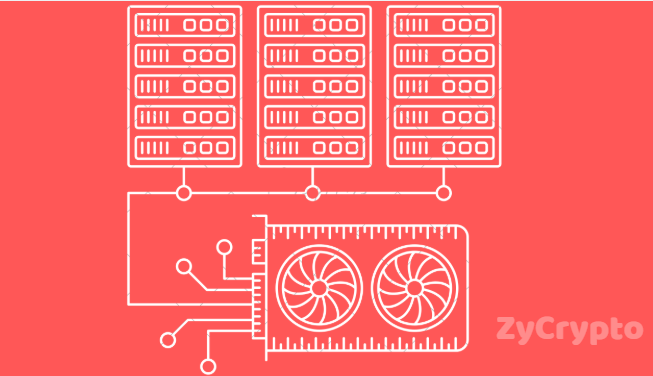
Conversely, some nations are attempting to pivot. Iceland, once a prime destination for miners due to its cold climate (which reduces cooling costs) and abundant geothermal energy, has begun to shift its strategic focus. Rather than catering solely to mining, the nation is increasingly positioning itself as a hub for broader blockchain research and development, seeking to attract businesses that prioritize sustainable infrastructure over pure computational output.
Fact-Based Analysis of Mining Profitability
For an individual user, the decision to mine today is rarely about immediate profit and more about an investment in the long-term price of a speculative asset. When "nstran541" reports earning $1.07, he is likely mining an altcoin with lower difficulty. However, the overhead costs remain static.
An analysis of current mining hardware reveals that high-end GPUs can consume between 200 and 300 watts per hour. At an average residential rate of $0.12 per kWh, a single high-performance card can cost upwards of $0.70 to $0.90 per day just in electricity. If the miner earns less than that in revenue, the operation is effectively burning money. Even when the price of the mined coin appreciates, the "cost basis" of the coins mined during the process is often higher than the current market price, making it more efficient for the average user to simply purchase the asset directly on an exchange rather than mining it.
The Professionalization of the Industry
The era of the "bedroom miner" has largely reached its conclusion. Mining is now a capital-intensive utility business. Companies like Bitmain, Marathon Digital Holdings, and Riot Platforms operate thousands of machines in climate-controlled environments, utilizing advanced energy hedging strategies to mitigate the volatility of the crypto market.
For the average retail investor, the barrier to entry has shifted from "buying a graphics card" to "understanding market cycles and capital allocation." The Reddit thread featuring "nstran541" serves as a poignant reminder that for those outside of specialized, industrial-scale operations, the risks—both financial and technical—far outweigh the nominal rewards.
Broader Implications for the Blockchain Ecosystem
The consolidation of mining into large, centralized farms raises questions about the decentralization ethos of the original Bitcoin whitepaper. If the majority of the network’s hash rate is concentrated in the hands of a few major corporations, the security and governance of the network could be perceived as more vulnerable to regulatory pressure or corporate influence.
However, advocates argue that the professionalization of mining has brought a much-needed level of stability to the network. Large, publicly traded mining companies are subject to financial audits, transparency requirements, and investor scrutiny, which can contribute to the overall legitimacy of the digital asset industry.
Ultimately, the story of the $1.07 profit is a reflection of a maturing market. As cryptocurrency transitions from an experimental niche to a global financial asset class, the infrastructure supporting it is undergoing a necessary evolution. While individual hobbyists may feel the sting of being priced out of the mining game, the industry itself continues to grow, driven by economies of scale that prioritize efficiency, sustainable energy usage, and long-term viability over the short-term, speculative gains of the past. For those still interested in participating in the crypto economy, the advice from the community remains consistent: for the vast majority, investing in the assets themselves is a far more prudent path than attempting to compete with the industrial giants that now power the network.