The Mechanics of Blockchain Verification
At its core, Bitcoin mining is the backbone of the decentralized financial network. It serves a dual purpose: it validates pending transactions and secures the blockchain from malicious actors. When a transaction is initiated, it enters a pool of unconfirmed data. Miners compete to group these transactions into "blocks." To successfully add a block to the chain, a miner must solve a computationally intensive cryptographic puzzle known as Proof-of-Work (PoW).
This mechanism requires miners to find a specific hash—a digital signature—that meets the network’s current difficulty target. Once a miner successfully calculates this hash, the block is broadcast to the network’s nodes, verified, and permanently etched into the blockchain. As a reward for their expenditure of electricity and computational effort, miners receive newly minted bitcoin, along with the transaction fees paid by users.
The Evolution of Mining Hardware
The technological trajectory of Bitcoin mining has shifted dramatically since the network’s inception in 2009. In the early days, Satoshi Nakamoto and early adopters could mine thousands of bitcoins using standard consumer-grade Central Processing Units (CPUs). As the network grew and the difficulty of the cryptographic puzzles increased, CPUs became obsolete due to their limited hash rate capacity.
Following the CPU era, miners pivoted to Graphics Processing Units (GPUs), which offered superior parallel processing capabilities. This transition was eventually superseded by Field-Programmable Gate Arrays (FPGAs) and, ultimately, the current industry standard: Application-Specific Integrated Circuits (ASICs).
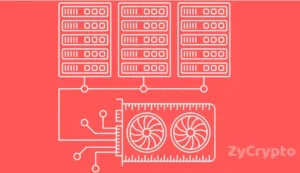
ASIC hardware is custom-engineered for a single task—calculating SHA-256 hashes—making them roughly 100 times more efficient than legacy systems. Today, mining is a capital-intensive industry dominated by massive, purpose-built server farms. For the average individual, mining with a home PC is no longer economically viable due to the high energy costs and the overwhelming hash power deployed by professional mining pools.
The Rise of Cloud Mining and Pooling
Recognizing that individual participation is increasingly difficult, the industry has seen the rise of cloud mining and mining pools. Cloud mining allows investors to lease hashing power from large-scale data centers. By purchasing a cloud mining contract, an individual pays a service provider to manage the hardware, electricity, and maintenance, in exchange for a portion of the mined rewards. While this lowers the barrier to entry, it requires careful due diligence regarding contract terms and the provider’s operational integrity.
Mining pools represent the second major shift in participation. By aggregating the computing power of thousands of individual miners, pools create a collective entity that is more likely to solve blocks consistently. When the pool earns a reward, it is distributed among the participants based on the amount of hash power they contributed. This model provides a steady, albeit smaller, stream of income compared to the "winner-take-all" nature of independent mining.
Chronology of Mining Difficulty and Halving Events
To understand the current mining landscape, one must consider the programmed scarcity of Bitcoin. The protocol dictates that the block reward is cut in half every 210,000 blocks, an event known as the "halving."
- 2009: Bitcoin launched with a block reward of 50 BTC.
- 2012: The first halving reduced the reward to 25 BTC.
- 2016: The second halving reduced the reward to 12.5 BTC.
- 2020: The third halving brought the reward to 6.25 BTC.
- 2024: The most recent halving reduced the reward to 3.125 BTC.
Each halving event forces a market correction. Less efficient miners, who cannot afford the electricity costs to operate with a reduced reward, are forced to disconnect their machines. This leads to a decline in network hash rate, which in turn triggers a downward adjustment in mining difficulty, making it easier for remaining, more efficient miners to solve puzzles. This self-regulating cycle ensures the network remains secure even as the total supply approaches its 21-million limit.
Economic and Environmental Implications
The professionalization of mining has sparked significant debate regarding energy consumption. Because miners compete for rewards by performing calculations, the network consumes significant electricity. Proponents argue that this energy consumption is a necessary cost for maintaining the world’s most secure, decentralized, and censorship-resistant financial ledger. Furthermore, many mining operations are increasingly relocating to regions with abundant renewable energy sources, such as hydroelectric or geothermal power, to lower operational costs and improve their environmental, social, and governance (ESG) profiles.
From an economic perspective, mining acts as the primary mechanism for the distribution of new currency. As the block subsidy continues to decrease over the coming decades, the security of the Bitcoin network will eventually rely more heavily on transaction fees than on the issuance of new coins. This transition is expected to make the network more sustainable in the long term, provided that transaction volume on the network remains high enough to provide sufficient revenue for miners.
Practical Considerations for Prospective Miners
For those considering entry into the mining space, several factors must be weighed:
- Hardware Investment: Initial capital expenditure for high-end ASIC miners is substantial. Newer models offer better power-to-hash ratios but come at a premium price.
- Electricity Costs: This is the single most important variable. Miners must secure access to low-cost electricity, typically measured in kilowatt-hours (kWh). In many regions, residential electricity rates make profitable mining impossible.
- Security and Custody: Mining results in the accumulation of digital assets. Proper security protocols, such as using cold storage wallets (offline hardware wallets) and multi-signature authentication, are mandatory to protect assets from theft or unauthorized access.
- Operational Risk: Hardware failure, cooling issues, and network difficulty fluctuations represent constant risks. Professional miners often employ sophisticated thermal management and redundant electrical systems to mitigate these hazards.
The Future of the Network
As the remaining 4 million bitcoins enter circulation, the mining industry will likely continue to consolidate. Small-scale operations will continue to be absorbed by or integrated into larger, institutional-grade mining facilities. These larger entities are better positioned to negotiate energy prices, utilize waste heat for secondary purposes, and weather the volatility inherent in the cryptocurrency markets.
Despite the hurdles, the fundamental principles of Bitcoin mining remain unchanged. It is a competitive, transparent, and algorithmic process that prevents double-spending and ensures the integrity of the blockchain. As technology advances, it is probable that mining hardware will become even more specialized and efficient, further distancing the industry from its humble origins on consumer-grade CPUs.
For participants in the crypto economy, understanding the mining process is essential. It provides insight into the scarcity, security, and decentralized nature of the Bitcoin network. Whether one participates directly through hardware investment or indirectly through infrastructure companies, the mining industry remains the engine driving the global shift toward decentralized finance. As we approach the final stages of Bitcoin issuance, the role of the miner as the custodian of the network’s security becomes more vital than ever, cementing their place as the essential architects of the digital age.