The landscape of digital assets is undergoing a seismic shift, with regulatory bodies worldwide increasingly focusing on the unique characteristics of privacy coins. What was once a niche segment of the cryptocurrency market, celebrated for its commitment to transactional anonymity, is now at the forefront of a global regulatory crackdown. This intensified scrutiny, spearheaded by the United States under the leadership of President Donald Trump and his designated crypto czar David Sacks, is poised to fundamentally alter the operational capacity and investor appeal of these privacy-focused cryptocurrencies. The implications extend beyond the immediate price depreciation of coins like Zcash (ZEC) and Monero (XMR), potentially reshaping the broader cryptocurrency ecosystem and its relationship with traditional financial systems.
The current regulatory climate reflects a growing concern among governments about the potential for illicit activities facilitated by the inherent anonymity of certain digital assets. This concern is not new, but the coordinated and assertive approach being adopted by major economies signifies a departure from previous, more piecemeal efforts. The move towards stricter compliance, encompassing Anti-Money Laundering (AML) and Know Your Customer (KYC) protocols, directly challenges the core value proposition of privacy coins. For years, these assets have attracted a segment of the market seeking to safeguard their financial privacy from prying eyes, whether governmental or corporate. However, the mandate to implement robust identification and transaction monitoring systems forces these coins to confront a critical dilemma: compromise their anonymity to remain compliant, or risk becoming increasingly ostracized and inaccessible.

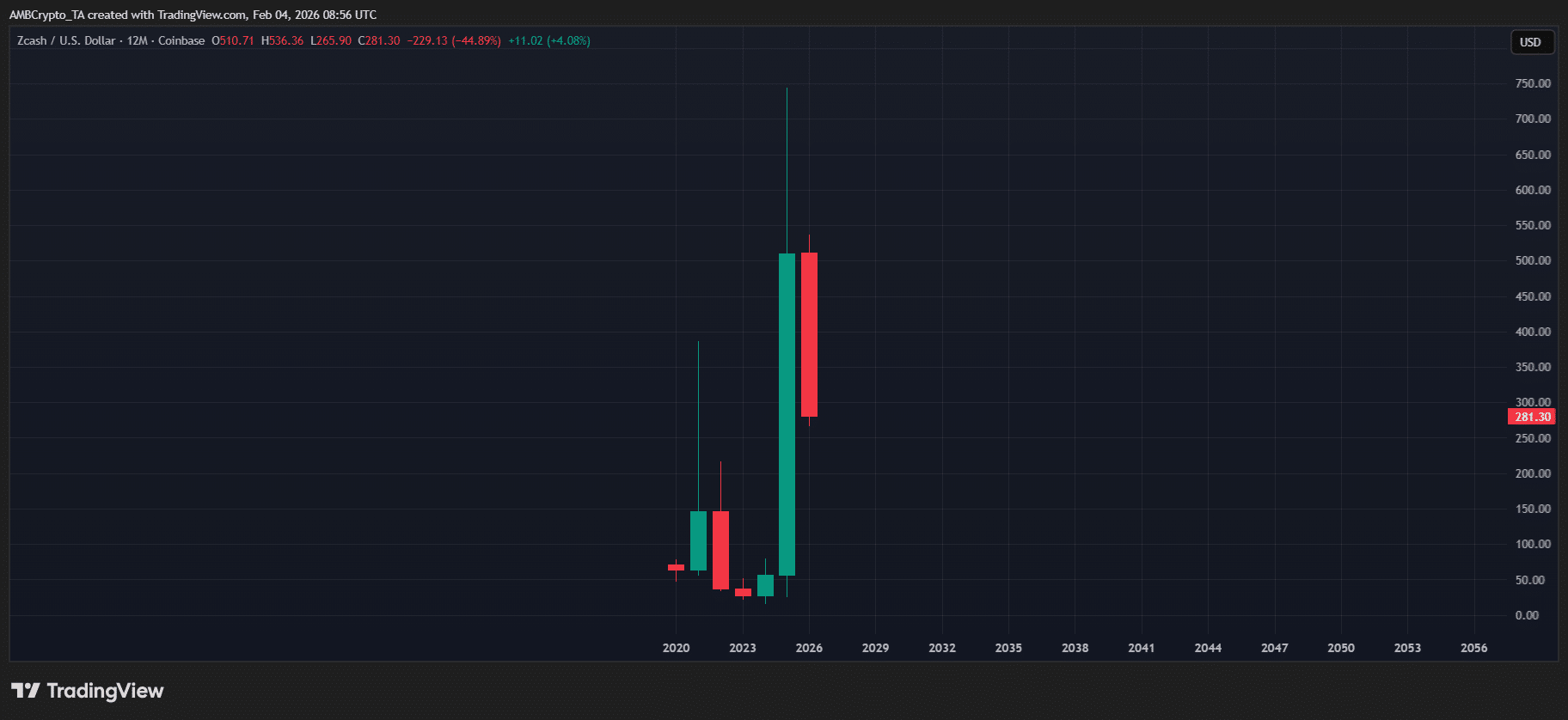
The recent performance of privacy coins offers a stark indicator of the market’s reaction to this evolving regulatory environment. Zcash, a prominent privacy coin that experienced a remarkable 800% surge in value during the 2025 market cycle, has seen a significant downturn. Reports indicate that ZEC has fallen by approximately 45% from its recent highs, a substantial correction that underscores investor apprehension. This downward trend is not isolated. Monero (XMR), another leading privacy coin by market capitalization, has reportedly lost over $1 billion in value within a single week, reverting to levels not seen since the fourth quarter of the previous year. This sharp decline suggests that traders and investors are reassessing their positions, likely factoring in the increased regulatory risks and the potential for further delistings by exchanges.
The ripple effect of this regulatory pressure is already evident on a global scale. Exchanges in India, for instance, have begun delisting Zcash and other privacy-focused cryptocurrencies. This move, driven by the imperative to adhere to evolving national regulatory frameworks, sets a precedent that other jurisdictions may follow. The delisting of these assets from major trading platforms significantly curtails their liquidity and accessibility, making it more challenging for users to buy, sell, or trade them. Such actions can create a cascading effect, further depressing prices and reinforcing the perception of heightened risk associated with privacy coins.
The underlying tension arises from the fundamental conflict between the privacy coin ethos and the regulatory demand for transparency and accountability. Privacy coins achieve their anonymity through various cryptographic techniques, such as zero-knowledge proofs (in the case of Zcash) or ring signatures and stealth addresses (in the case of Monero). These methods obscure transaction details, making it exceedingly difficult to trace the origin, destination, or amount of a transaction on the public ledger. While this feature is attractive to individuals and entities prioritizing financial privacy, it also presents a significant challenge for regulators seeking to combat financial crime, including money laundering, terrorist financing, and tax evasion.

The U.S. administration’s stance, particularly with the appointment of David Sacks as a key advisor on cryptocurrency matters, signals a clear intent to bring the digital asset space into closer alignment with traditional financial regulations. Sacks, a prominent venture capitalist with significant investments in the crypto industry, has previously expressed views that suggest a pragmatic approach to regulation, acknowledging the need for robust oversight while potentially seeking to foster innovation within defined boundaries. However, the focus on privacy coins indicates that certain aspects of the crypto market are being viewed through a lens of potential misuse, prompting a more stringent response.
The implications of these regulatory developments are far-reaching. For privacy coin developers and proponents, the challenge lies in finding ways to navigate the new compliance landscape without sacrificing the core tenets of their projects. This could involve exploring new technological solutions that offer a degree of privacy while still allowing for selective transparency or auditability when required by law enforcement. However, such compromises may not satisfy the original user base, who are drawn to these assets precisely because of their strong privacy guarantees.
For exchanges and financial institutions that handle privacy coins, the increased regulatory burden translates into higher operational costs and potential legal liabilities. The need to implement sophisticated AML/KYC procedures, potentially requiring specialized tools and expertise to analyze privacy coin transactions, adds complexity to their operations. This increased cost and risk may lead more exchanges to follow the path of delisting, further shrinking the market for these assets.

The broader cryptocurrency market may also experience indirect effects. The perceived crackdown on privacy coins could cast a shadow over the entire digital asset space, potentially deterring institutional investment or leading to more widespread regulatory proposals across different types of cryptocurrencies. Conversely, a successful integration of privacy coins into a compliant framework could, in the long term, demonstrate that digital assets can coexist with robust regulatory oversight, potentially paving the way for greater mainstream adoption.
The current situation can be contextualized within the historical trajectory of financial innovation and regulation. Throughout history, new technologies that offer greater autonomy or privacy have often faced resistance from established authorities seeking to maintain control and enforce existing legal frameworks. The cryptocurrency space is no exception. The tension between decentralization and control, anonymity and transparency, is a recurring theme, and the current regulatory focus on privacy coins represents a critical juncture in this ongoing evolution.
The narrative surrounding stablecoin rewards, which recently faced significant regulatory headwinds and reportedly caused concern among industry leaders like Circle’s CEO, serves as a precursor to the current situation with privacy coins. The swift market reaction and the expressed disquiet highlight the sensitivity of the crypto market to regulatory interventions. The impact on stablecoins, which are crucial for liquidity and trading within the crypto ecosystem, demonstrated how policy changes can have immediate and significant market consequences. The current pressure on privacy coins suggests a similar, if not more profound, level of impact due to the direct challenge to their fundamental utility.
Looking ahead, the trajectory for privacy coins remains uncertain. The possibility of a de facto or even explicit "ban" on certain privacy coins cannot be entirely dismissed, especially if regulatory bodies perceive a persistent inability or unwillingness of these assets to comply with AML/KYC mandates. This would represent a significant victory for regulators and a substantial setback for the privacy-centric segment of the cryptocurrency market.
However, the resilience of innovation in the digital asset space suggests that developers will continue to explore methods of enhancing privacy while addressing regulatory concerns. The outcome will likely depend on a delicate balance between technological advancements, market demand for privacy, and the evolving regulatory priorities of governments worldwide. The current regulatory storm signifies a pivotal moment, forcing a re-evaluation of what privacy truly means in the digital age and how it can be reconciled with the demands of an increasingly regulated global financial system. The coming months and years will be crucial in determining whether privacy coins can adapt and survive, or if they will become a cautionary tale in the annals of cryptocurrency history.