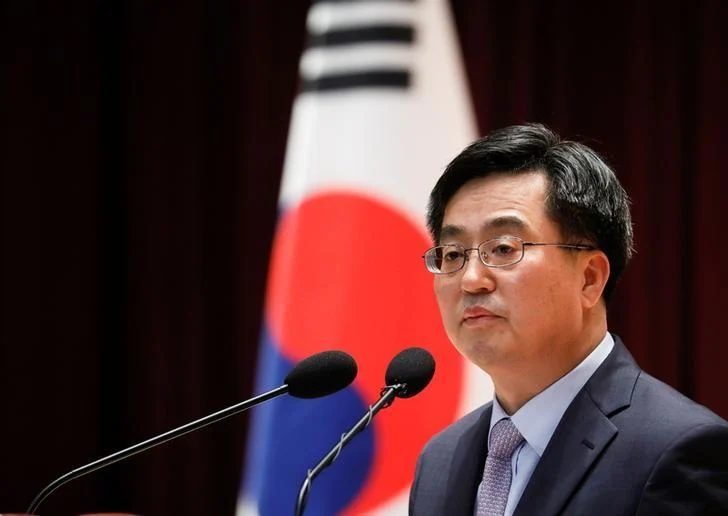
The South Korean government is reportedly preparing to pivot its regulatory stance on Initial Coin Offerings (ICOs), signaling a potential end to the blanket prohibition that has characterized the nation’s cryptocurrency sector since late 2017. According to reports from The Korea Times and internal government sources, financial authorities have initiated high-level discussions with the country’s tax agency, the Ministry of Justice, and other relevant departments to establish a framework that would allow ICOs to operate within the country under strictly defined conditions. This development marks a significant departure from the hardline approach previously adopted by the Moon Jae-in administration and suggests a growing recognition of the economic potential inherent in blockchain-based fundraising.
The shift in policy comes at a critical juncture for the South Korean economy, which remains one of the world’s most active hubs for digital asset trading. While the government remains cautious about the risks of money laundering and speculative bubbles, the Financial Services Commission (FSC) has signaled that it is open to a more nuanced regulatory environment. Kang Young-soo, the official overseeing cryptocurrency trading policies at the FSC, recently noted that while there is no official change to the government’s stance at this exact moment, the commission is acknowledging a "third-party view" regarding the necessity of allowing regulated ICOs. This indicates that the absolute ban, which many industry experts argued stifled domestic innovation, is currently under intense scrutiny.
The 2017 Crackdown and Its Aftermath
To understand the gravity of this potential policy reversal, one must look back at the tumultuous regulatory environment of 2017. In September of that year, the South Korean government issued a comprehensive ban on all forms of ICOs, citing concerns over financial fraud, "Ponzi schemes," and the high risk of investor losses. This decision was part of a broader crackdown led by the Ministry of Justice, which at one point even suggested the total closure of domestic cryptocurrency exchanges.
During this period, South Korea occupied a disproportionately large share of the global cryptocurrency market. The "Kimchi Premium"—a phenomenon where Bitcoin and other assets traded at significantly higher prices on South Korean exchanges compared to international markets—became a symbol of the country’s retail trading frenzy. However, the government’s aggressive rhetoric, combined with high-profile security breaches at exchanges such as Coincheck in Japan and domestic platforms like Youbit, contributed to a massive market correction. The uncertainty stemming from Seoul’s regulatory volatility was a primary driver of the "crypto winter" that saw Bitcoin and altcoin prices plummet globally.
The 2017 ban forced many South Korean blockchain startups to seek refuge in more hospitable jurisdictions, such as Singapore, Switzerland, and Gibraltar. This "brain drain" of technological talent and capital began to weigh heavily on South Korean lawmakers, who feared the country was losing its competitive edge in the "Fourth Industrial Revolution," a term frequently used by the government to describe the current era of technological convergence.
Chronology of the Regulatory Pivot
The transition from a total ban to the current state of "conditional allowance" has been gradual. Following the initial crackdown in late 2017, the early months of 2018 saw a softening of the government’s tone.
- September 2017: The FSC announces a total ban on domestic ICOs, regardless of the project’s technical merit or compliance.
- January 2018: The Ministry of Justice sparks panic by suggesting a bill to shut down exchanges. This is met with immediate backlash from the public and other ministries.
- February 2018: Over 200,000 South Korean citizens sign a petition to the Blue House (the presidential office), demanding that the government stop its "unjust" regulation of virtual currencies. The government is legally required to respond to petitions exceeding this threshold.
- March 2018: The government officially responds to the petition, stating that while it will not ban trading, it will focus on transparency and the prevention of illegal activities.
- Present (Late March 2018): Reports emerge that the FSC is coordinating with the National Tax Service and the Justice Ministry to draft a roadmap for legalizing ICOs under a "conditional" framework.
This timeline illustrates a shift from reactionary prohibition to a more deliberative, multi-agency approach aimed at balancing investor protection with industrial growth.
The Role of Anti-Money Laundering (AML) and KYC Protocols
While the potential lifting of the ICO ban is seen as a victory for the crypto community, it does not imply a "wild west" environment. The South Korean government has emphasized that any legalization will be contingent upon rigorous compliance with Anti-Money Laundering (AML) and Know Your Customer (KYC) standards.
Currently, South Korea enforces a real-name trading system, which requires cryptocurrency traders to link their exchange accounts to verified bank accounts. This system effectively ended anonymous trading in the country. Furthermore, the ban on foreign nationals trading on domestic exchanges remains in place. These measures are designed to curb capital flight and prevent the country’s financial system from being used as a conduit for illicit funds.
The "certain conditions" mentioned by government sources likely include mandatory audits, minimum capital requirements for project founders, and the submission of detailed whitepapers to the FSC for review. By establishing these hurdles, the government hopes to filter out fraudulent "scam" projects while allowing legitimate blockchain enterprises to raise capital within the country’s borders.
Blockchain Technology vs. Cryptocurrency Speculation
A key component of the FSC’s current strategy is the separation of blockchain technology from cryptocurrency speculation. Kang Young-soo’s statements at a recent industry forum at the National Assembly highlighted this distinction. The South Korean government is highly interested in the utility of blockchain for logistics, voting, healthcare, and public administration.
"We have to have plans on how to advance blockchain-related technologies and effectively regulate crypto-trading. This is a separate issue," Kang stated. This dual-track approach seeks to foster the underlying technology as a national infrastructure project while keeping a tight leash on the volatile financial assets associated with it. The government has already allocated significant portions of its national budget to blockchain research and development, viewing it as a cornerstone of future economic stability.
Market Implications and Global Context
The potential re-entry of South Korea into the ICO market has significant implications for the global digital asset ecosystem. South Korea has historically served as a liquidity engine for the Asian markets. If domestic startups are allowed to conduct ICOs locally, it could lead to a surge in demand for Ethereum and other platform-based tokens used for fundraising.
Furthermore, South Korea’s move could influence other regional regulators. In Asia, the regulatory landscape is currently fragmented: Japan has embraced a licensing system for exchanges and is exploring regulated ICOs; China remains steadfast in its total ban; and Singapore has positioned itself as a global hub for token offerings. A shift by South Korea toward a regulated "middle ground" could provide a blueprint for other G20 nations struggling to categorize and govern digital assets.
Economic analysts suggest that the FSC’s pivot is also a response to tax considerations. By legalizing and regulating ICOs, the South Korean government can more effectively track transactions and apply capital gains or corporate taxes to the sector. The National Tax Service has been actively seeking ways to bring the "shadow economy" of crypto into the formal tax net, and a regulated ICO framework provides the necessary visibility to achieve this.
Challenges and Investor Protection
Despite the optimistic outlook, significant challenges remain. The South Korean financial authorities are deeply concerned about the lack of international standards for ICOs. Without a global consensus on what constitutes a "security" versus a "utility" token, South Korea must navigate a complex legal minefield.
Investor protection remains the paramount concern for the FSC. The memory of the 2017 "bubble" is still fresh in the minds of policymakers. Any new framework will likely include strict disclosures regarding the use of funds and the technical progress of projects. There is also discussion regarding the "cooling-off" period for investors and limits on the amount retail investors can contribute to a single project, similar to existing crowdfunding regulations.
Conclusion and Future Outlook
The reports indicating a potential lifting of the ICO ban suggest that South Korea is moving toward a more mature phase of its digital economy. By transitioning from a policy of total prohibition to one of conditional regulation, the government is attempting to reclaim its position as a global leader in technological innovation without sacrificing financial stability.
The coming months will be crucial as the FSC, the Ministry of Justice, and the National Tax Service work to finalize the "certain conditions" required for domestic token offerings. For the South Korean blockchain industry, this news represents a long-awaited "green light" to begin building within their home country once again. For the global market, it is a signal that one of the world’s most influential crypto-economies is ready to re-engage with the future of decentralized finance, albeit with a much more cautious and structured approach than before. As the government continues to refine its policy, the focus will remain on whether these new regulations can truly protect the average investor while providing the flexibility needed for the next generation of tech giants to flourish.