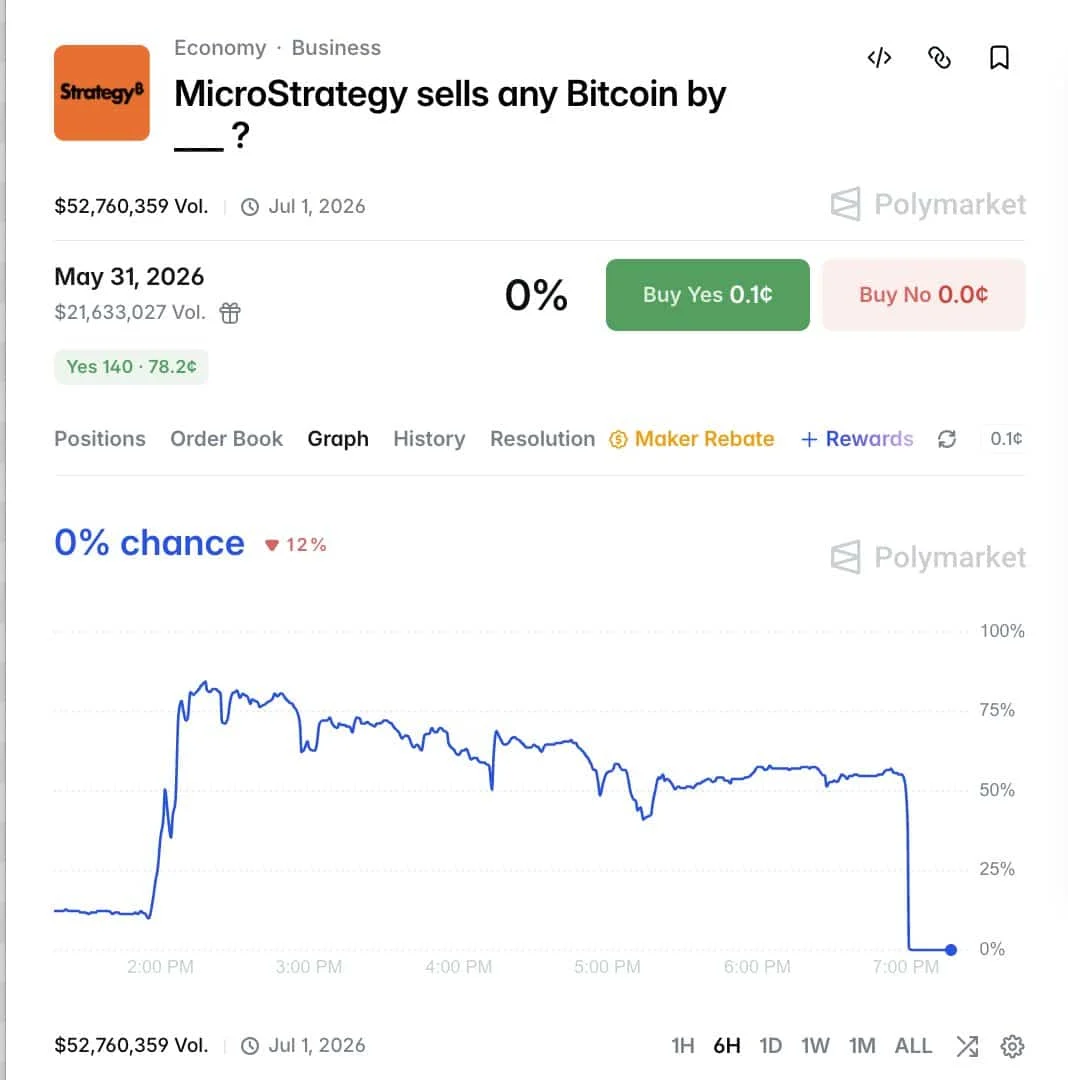
A significant dispute unfolding on the decentralized prediction market platform Polymarket, involving over $80 million in traded volume, has reached its critical final review stage. The controversy centers on a market that posed the question: "Will MicroStrategy sell Bitcoin by May 31?" Polymarket’s proposed resolution is "No," despite evidence suggesting that MicroStrategy executed a Bitcoin sale within the market’s specified timeframe. This situation has ignited a fierce debate about the precision of resolution criteria, the integrity of decentralized governance, and the potential impact on participant capital.
The crux of the disagreement lies in Polymarket’s interpretation of the resolution conditions. The market was designed to settle based on whether MicroStrategy, a prominent corporate holder of Bitcoin, conducted any Bitcoin sales by May 31. Evidence presented indicates that the company sold approximately 32 Bitcoin, valued at around $2.5 million, between May 26 and May 31. However, MicroStrategy officially disclosed this transaction in a regulatory filing with the U.S. Securities and Exchange Commission (SEC) on June 1. Polymarket’s stance is that because no official confirmation of the sale existed before the May 31 deadline, the sale did not qualify for a "Yes" resolution. This interpretation has left many participants questioning the clarity and fairness of the market’s design and its dispute resolution process.
This dispute is not merely an isolated incident for Polymarket; it represents at least the second time this specific market’s resolution has been formally challenged, making it one of the platform’s most contentious markets on record. The implications of this final ruling are far-reaching, affecting not only the participants who hold "Yes" shares, for whom the stakes are concrete and immediate, but also the platform itself and its decentralized governance infrastructure.
The Mechanics of Decentralized Dispute Resolution
Polymarket utilizes the UMA optimistic oracle, a decentralized protocol that powers the settlement of its prediction markets. The process typically involves the platform submitting a proposed resolution. This resolution stands as final unless challenged by other participants within a specified timeframe. If a challenge is successful, the dispute is escalated to a broader group of tokenholders, in this case, UMA tokenholders, who then vote on the correct interpretation of the market’s outcome.
The current dispute has undergone an unusual sequence of challenges. Two separate proposed resolutions were disputed before reaching this final review stage. This frequency of challenges on a single market is a scenario that UMA’s governance design, while robust, was not specifically optimized to handle with such regularity. The unusual nature of these repeated escalations highlights potential stress points in the system’s ability to manage complex disputes efficiently and without undue delay.

A Question of Confirmation vs. Occurrence
Polymarket’s justification for its proposed "No" resolution hinges on a clarifying note that was reportedly added to the market’s page after the dispute began to emerge. This clarification stated that confirmations released outside the market’s defined timeframe would not be considered valid for resolution purposes. Furthermore, it asserted that no on-chain data, public filing, or credible reporting confirmed a Bitcoin sale prior to the expiration of the May 31 deadline.
This post-hoc clarification has drawn significant criticism from many participants. They argue that it effectively "moved the goalposts" after a substantial portion of the $80 million in trading volume had already been allocated based on different understandings of the resolution criteria. MicroStrategy’s June 1 SEC filing, which detailed the 32 BTC sale as part of its preferred stock program, marked the company’s first reported disposal of Bitcoin since December 2022. This fact underscores the interpretive weight now placed on a mere 24-hour gap between the actual transaction and its official disclosure.
Participant Reactions and the "Truth vs. Technicalities" Debate
Objectors to the "No" resolution have framed their arguments around the fundamental distinction between the occurrence of an event and its public verifiability. On the market’s discussion page, one participant articulated this sentiment by stating that Polymarket should "trade truth, not technicalities." Others have expressed disbelief and concern, with some reporting that the outcome has eroded their confidence in the platform’s ability to deliver fair and transparent resolutions.
The sentiment is that while the sale might not have been officially confirmed by the deadline, the event itself undeniably occurred within the specified window. This highlights a critical tension in prediction markets: balancing the need for verifiable data with the possibility that real-world events may not always be immediately and publicly documented. The $80 million figure underscores the substantial financial implications of this interpretive nuance.
The Role of UMA Tokenholders and Future Implications
The ultimate decision on the market’s resolution now rests with the UMA tokenholders. They are tasked with casting their votes to issue a final ruling by 12:00 a.m. UTC on Wednesday. Should they fail to reach a consensus or if the order book is cleared without a definitive ruling, the market could potentially be invalidated or settled in an unfavorable manner for many participants.
This dispute transcends the immediate financial outcomes for individual traders. It serves as a crucial test case for the robustness and adaptability of decentralized governance models, particularly those powering large-scale prediction markets. The precision of resolution criteria, the mechanisms for handling ambiguity, and the transparency of the dispute process are all under intense scrutiny. A resolution that is perceived as arbitrary or unfair could have a chilling effect on participation in future markets, impacting Polymarket’s reputation and the broader adoption of decentralized prediction platforms.
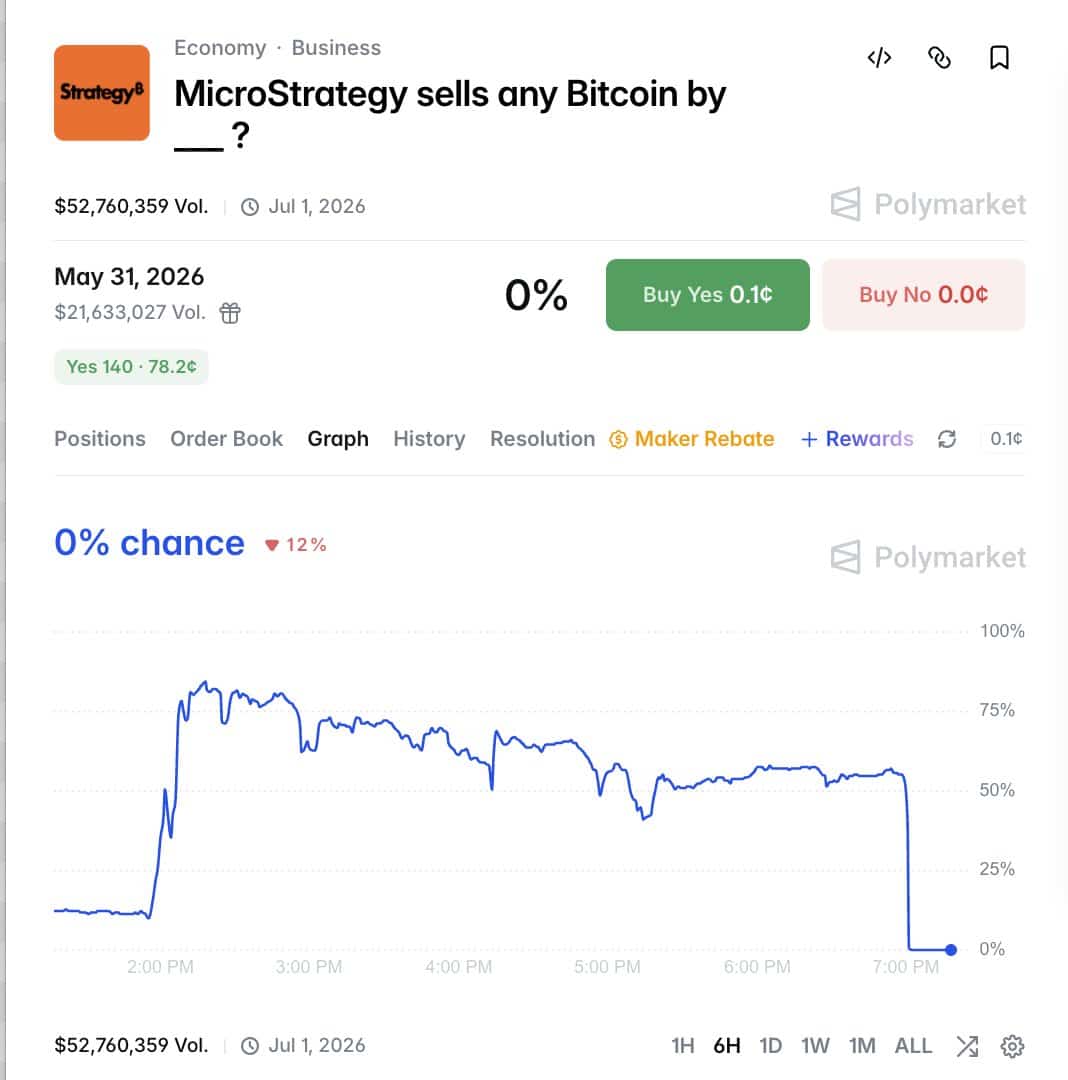
As of the latest available data, market pricing indicated approximately 99.9% odds attached to the "No" outcome. This figure primarily reflects the capital allocation based on the current resolution trajectory and the perceived probability of UMA tokenholders upholding Polymarket’s initial proposal, rather than necessarily a consensus on the merits of the underlying dispute itself.
Broader Implications for Decentralized Prediction Markets
The Polymarket dispute highlights several key challenges facing the nascent field of decentralized prediction markets:
- Clarity of Resolution Criteria: The success of any prediction market hinges on unambiguous and precisely defined resolution criteria. Ambiguities can lead to disputes, especially when dealing with events that involve a lag between occurrence and official reporting. This case underscores the need for predictive markets to account for the nuances of real-world information dissemination.
- Decentralized Governance and Dispute Resolution: While decentralized governance offers transparency and community involvement, it can also be susceptible to challenges that test its efficiency and fairness. The UMA tokenholder voting mechanism, while designed to be democratic, can become a bottleneck or a point of contention if not managed effectively or if the stakes are exceptionally high. The unusual frequency of challenges in this specific market points to the need for continuous refinement of these governance structures.
- The Oracle Problem: The reliance on oracles, like UMA, to provide off-chain data to on-chain smart contracts is a fundamental aspect of decentralized finance. However, the interpretation and verification of this data, especially when there are delays or conflicting information, remain complex issues. Polymarket’s reliance on the oracle’s interpretation of the timing of confirmation versus the timing of the event itself is a prime example of this challenge.
- Participant Trust and Platform Reputation: In a trustless environment, the perceived fairness and transparency of platform operations are paramount. Disputes like this, especially those involving large sums of money and potentially contentious interpretations, can significantly impact user trust and the long-term viability of the platform. Participants need to feel confident that their capital is managed according to clear, pre-defined rules, not subject to retrospective adjustments or interpretations that undermine the initial premise of the market.
The outcome of this dispute will undoubtedly serve as a valuable lesson for Polymarket, UMA, and the broader decentralized prediction market ecosystem. It raises critical questions about how to ensure that the "truth" of an event, rather than its formal, delayed verification, is the ultimate arbiter in decentralized markets, especially when significant financial stakes are involved. The decision by UMA tokenholders will set a precedent for how similar situations are handled in the future, influencing the evolution of decentralized governance and market integrity.
The initial market was launched with the premise of assessing a concrete corporate action. The subsequent dispute has transformed it into a significant case study on the complexities of decentralized decision-making and the challenges of aligning real-world events with the rigid timelines and verification protocols of blockchain-based platforms. As the final decision looms, the entire Web3 community will be watching to see how this high-stakes arbitration unfolds and what it signifies for the future of decentralized prediction markets.