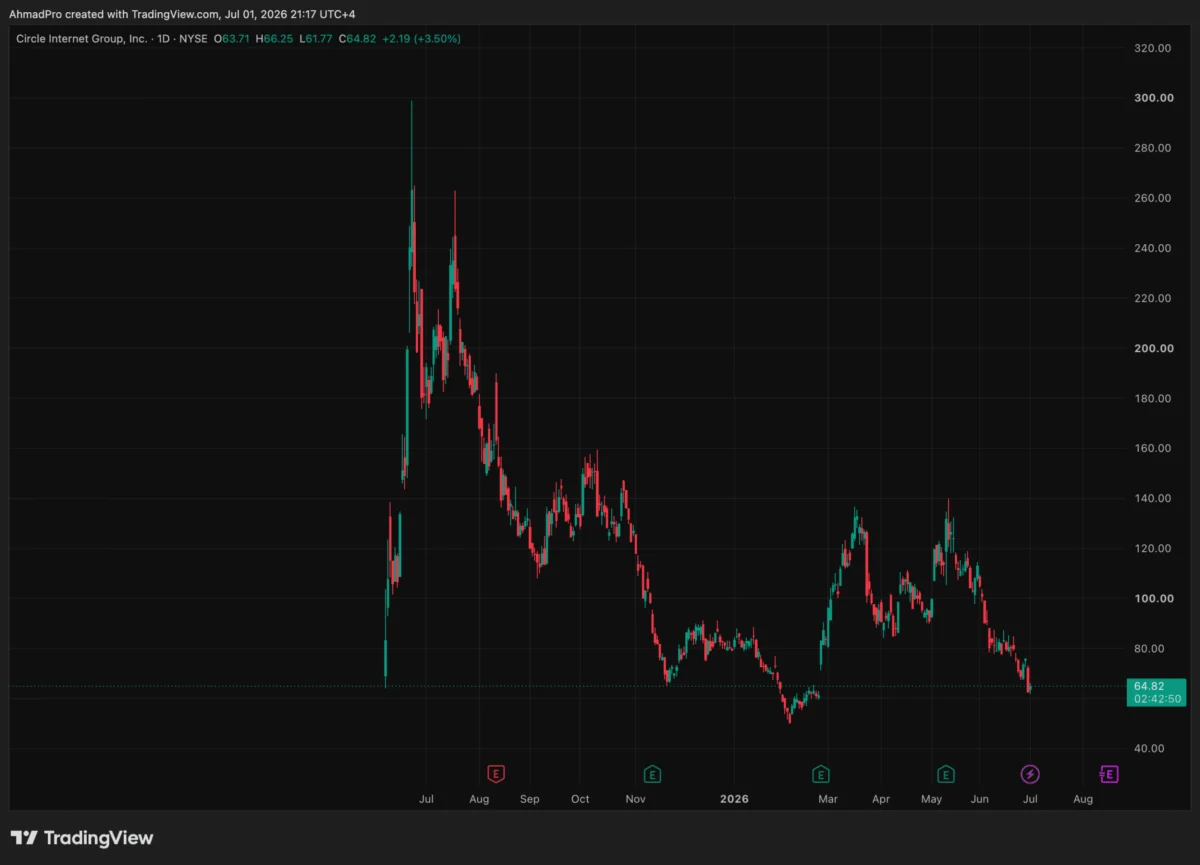
The path to Senate passage for the CLARITY Act, a pivotal piece of proposed U.S. legislation designed to delineate regulatory authority over digital assets between the Securities and Exchange Commission (SEC) and the Commodity Futures Trading Commission (CFTC), has become increasingly compressed and uncertain. Analysts at Jefferies, led by Andrew Moss, published a report on June 30, 2026, highlighting a significant downturn in market sentiment regarding the bill’s enactment. Polymarket, a prediction market platform, indicated that the odds for the CLARITY Act’s passage by the end of 2026 have fallen to 48%, a sharp decline from the 70% recorded in mid-May. This shift in probability coincides with a shrinking legislative calendar, with approximately only 20 remaining legislative days before the Senate’s August recess.
This precarious legislative situation is not merely a matter of scheduling; it represents a critical inflection point for the institutional adoption of cryptocurrency infrastructure. The distinction is stark: passage of the CLARITY Act would establish a durable statutory framework, providing much-needed legal certainty. Conversely, failure to enact the bill risks perpetuating a fragmented regulatory landscape governed by agency guidance, which is inherently susceptible to reversal by future administrations. Such instability could significantly hinder the growth and integration of digital asset markets into the mainstream financial system.
The Narrowing Senate Timeline: A Central Risk to Regulatory Clarity
The CLARITY Act has navigated a complex legislative journey thus far. It successfully cleared the House of Representatives on July 17, 2025, by a substantial margin of 294 to 134 votes. The bill then garnered bipartisan support in the Senate Banking Committee, passing on May 14, 2026, with a vote of 15 to 9. Subsequently, it was placed on the Senate floor calendar on June 1, 2026, a crucial step that allows for potential debate and a vote by the full chamber.
However, securing the 60 votes necessary for full Senate passage presents a significant hurdle. This threshold necessitates the support of at least seven Democratic senators, a requirement complicated by several persistent legislative disputes. Key among these are unresolved disagreements over ethics provisions, the language pertaining to illicit finance, and, perhaps most contentiously, the question of whether stablecoin issuers should be permitted to offer yield on dollar-pegged tokens. These sticking points have already caused delays, including one instance where floor scheduling was postponed, and the remaining legislative days offer little room for further setbacks.
The implications of these delays are profound. Moss and his Jefferies team cautioned that a failure to advance the bill before the August recess could push its potential enactment into 2027 or even later, particularly if the Democratic party were to regain control of the Senate in the November mid-term elections. This sentiment was echoed by JPMorgan, which issued a similar warning earlier in June, characterizing the congressional calendar as increasingly tight and the stablecoin yield debate as remaining a significant impediment. Industry observers and research firms are also recalibrating their expectations; Galaxy Research, for instance, has reduced its probability estimate for the bill’s passage to approximately 50-55%.
The Dichotomy of Passage vs. Delay: Unlocking Potential or Forfeiting Opportunity
The potential ramifications of the CLARITY Act’s passage are far-reaching, particularly for institutional players in the financial sector. According to Jefferies’ analysis, successful enactment would grant banks, asset managers, and exchanges the explicit statutory authority they require to expand their tokenization services, custody arrangements, staking operations, and lending products. This legislative backing would provide a level of legal clarity and permanence that current guidance from the SEC, CFTC, and the Office of the Comptroller of the Currency (OCC) only approximates, but does not definitively replicate.
A cornerstone of the CLARITY Act is its proposed "decentralization test." This mechanism is designed to define the transition point at which a network token shifts from being considered a security under the SEC’s jurisdiction to a commodity overseen by the CFTC. Legal experts, including those advising on the structure of Exchange Traded Funds (ETFs), have argued that this clear legal architecture is essential for expanding spot crypto ETF approvals beyond Bitcoin and Ether to include other large-cap tokens such as Solana (SOL) and Avalanche (AVAX). The rapid pace of product development, exemplified by BlackRock’s recent expansion of Bitcoin-linked ETF structures, underscores how swiftly innovation can occur once a clear regulatory pathway is established.
Furthermore, Jefferies identifies the CLARITY Act as a prerequisite for revitalizing the crypto initial public offering (IPO) pipeline. The bill proposes a bespoke disclosure regime for ancillary asset originators, which would be less onerous than full securities registration. This would enable compliant token fundraising and secondary trading on CFTC-registered digital commodity exchanges, contingent upon meeting specific decentralization thresholds. In the absence of such a framework, prospective issuers would continue to face the uncertainty and potential scrutiny of case-by-case SEC reviews, a scenario that could stifle capital formation and market development.
In the event of a legislative delay or failure, regulated financial institutions would remain dependent on the more precarious and reversible actions of regulatory agencies. Jefferies characterizes this dynamic as a significant drag on blockchain initiatives. Compliance teams would be forced to continually reassess legal risks under an enforcement-driven rather than a statute-based regulatory regime. This pattern, as framed by JPMorgan, has largely characterized the U.S. crypto market structure since approximately 2020, fostering an environment of uncertainty that can inhibit long-term investment and strategic planning.

Equities in Focus: Circle, Coinbase, and Bullish Flagged for Potential Volatility
The legislative process surrounding the CLARITY Act is anticipated to be a significant driver of volatility for crypto-linked equities. Jefferies has specifically flagged Circle (CRCL), Coinbase (COIN), and CoinDesk’s parent company, Bullish (BLSH), as primary listed entities likely to experience market fluctuations directly tied to the bill’s progression.
For Circle, the implications of the current bill are viewed as mixed. The proposed legislation aims to close a loophole that currently allows third-party platforms, such as Coinbase, to offer rewards on U.S. dollar coin (USDC) holdings. This could potentially constrain USDC’s near-term growth. However, a delay in the bill’s passage would grant Circle additional time to diversify its revenue streams and further expand its payments network, potentially mitigating some of the immediate impacts.
Looking beyond the immediate legislative landscape, Jefferies identifies intensifying competition from bank-issued stablecoins as a more significant long-term structural risk for Circle. This competitive pressure is not directly created or resolved by the CLARITY Act itself, but the regulatory clarity provided by the bill could influence the competitive dynamics within the stablecoin market.
The firm’s analysis suggests that the market may not have fully priced the asymmetry between the two primary scenarios: passage or prolonged delay. While prediction market odds now hover around a 50/50 proposition, the valuations of publicly traded companies in the crypto sector have not yet repriced commensurately to reflect the base case of a potentially extended regulatory vacuum. The upcoming July text release and the Senate vote timeline are thus expected to serve as crucial indicators, providing concrete signals that will determine whether the current market valuation gap closes on the upside or the downside.
Official Stances and Market Reactions
While the legislative process unfolds, official commentary from key figures offers glimpses into the ongoing dynamics. SEC Commissioner Hester Peirce, often referred to as "Crypto Mom" for her more industry-friendly stance, expressed optimism regarding the bill’s prospects. In a statement on July 1, 2026, she indicated, "I’m still optimistic it will get done this summer. I expect that we’ll see it pass soon." Such endorsements, while not directly influencing legislative votes, can shape market perceptions and provide a degree of reassurance to industry participants.
The broader market reaction has been a mix of cautious optimism and growing concern. The decline in Polymarket odds reflects a tangible shift in sentiment among those actively engaged in the digital asset space. Analysts and investors are closely monitoring every development, from committee hearings to floor debates, recognizing that the CLARITY Act represents a foundational piece of legislation for the future of digital assets in the United States.
Broader Impact and Implications for Institutional Adoption
The successful passage of the CLARITY Act would represent a significant maturation of the U.S. regulatory framework for digital assets. It would move the industry away from a reactive, enforcement-led approach towards a more proactive, statute-based system. This shift is crucial for fostering innovation, attracting substantial institutional capital, and ensuring the U.S. remains competitive in the global digital asset landscape.
For financial institutions, the clarity provided by a statutory framework would reduce legal and operational risks associated with digital asset activities. This would enable them to allocate resources more confidently to developing new products and services, such as tokenized securities, decentralized finance (DeFi) applications, and digital asset custody solutions. The ability to scale these offerings under a defined regulatory umbrella is essential for their long-term viability and widespread adoption.
Conversely, a protracted period of regulatory uncertainty could lead to a continued exodus of talent and investment to jurisdictions with more established and predictable regulatory environments. This would not only hinder domestic innovation but also cede leadership in the burgeoning digital asset economy to international competitors. The upcoming legislative deadlines are therefore critical not just for the crypto industry, but for the broader economic implications of technological advancement and financial innovation in the United States.
Disclaimer: Coinspeaker is committed to providing unbiased and transparent reporting. This article aims to deliver accurate and timely information but should not be taken as financial or investment advice. Since market conditions can change rapidly, we encourage you to verify information on your own and consult with a professional before making any decisions based on this content.