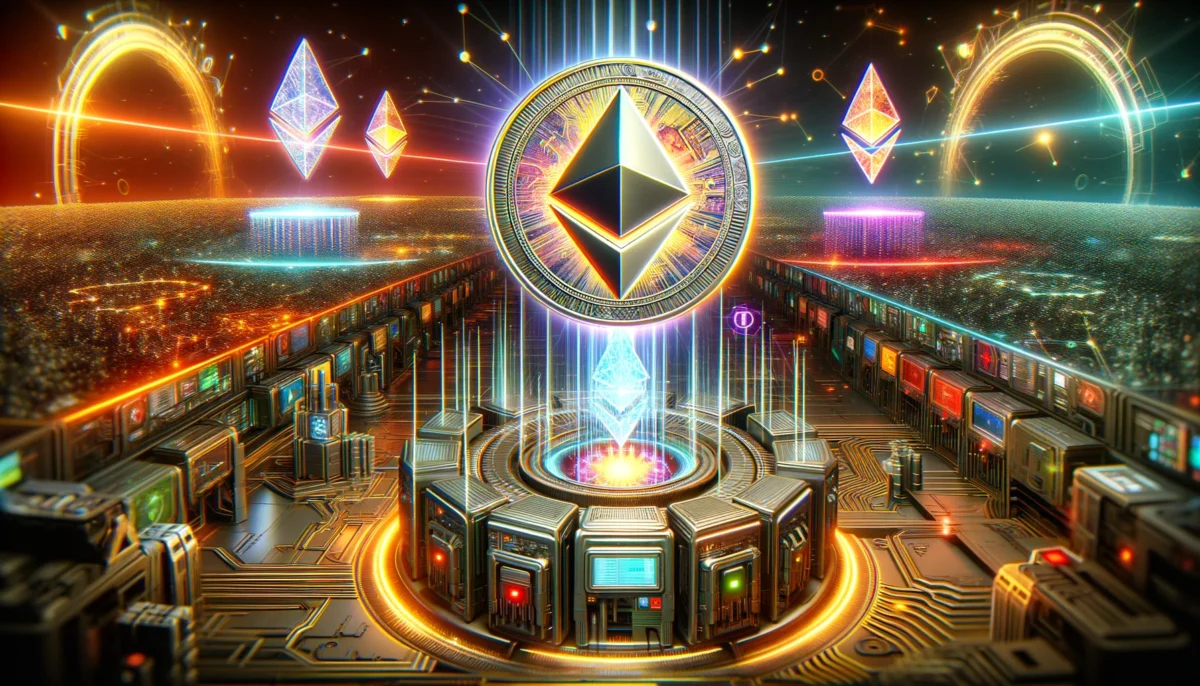
The burgeoning landscape of digital assets has witnessed an unprecedented surge in interest surrounding Non-Fungible Tokens (NFTs) and BRC-20 tokens. For creators, artists, and innovators, the ability to forge unique digital identities and monetize their work through NFTs presents a compelling new frontier. This guide delves into the intricate process of creating an NFT on the Ethereum network, utilizing the prominent OpenSea marketplace as a practical example, while also exploring the broader context, implications, and underlying technologies that define this transformative sector.
The allure of creating one’s own NFTs and BRC-20 tokens is undeniable. For artists, the prospect of owning and monetizing their digital creations through NFTs offers a novel level of control and the potential for significant financial reward. Beyond the realm of visual art, NFTs can serve as powerful tools for fostering passionate communities, granting exclusive access to events, and even acting as innovative fundraising mechanisms. The underlying principle is the tokenization of unique digital or physical assets, assigning verifiable ownership and scarcity in the digital domain. This shift has profound implications for intellectual property, digital rights management, and the very definition of value in the online world.
However, venturing into the world of token creation is not without its complexities. It demands a foundational understanding of blockchain technology, particularly smart contracts, alongside a judicious assessment of financial risks and potential regulatory considerations. Before embarking on this journey, it is imperative to clearly define one’s objectives, evaluate available resources, and determine one’s risk tolerance. While the possibilities are vast and inherently exciting, responsible and well-informed action is paramount to successfully navigating this rapidly evolving and often unpredictable digital ecosystem.
NFTs, or Non-Fungible Tokens, are distinct digital assets that represent ownership or provide proof of authenticity for unique items or content. Unlike fungible cryptocurrencies such as Bitcoin or Ethereum, where each unit is interchangeable, NFTs cannot be exchanged on a one-to-one basis due to their inherent uniqueness. This fundamental difference underpins their utility in representing ownership of scarce digital goods.
Typically, NFTs are created and traded on blockchain platforms, with Ethereum being one of the most prominent. Other networks like Binance Smart Chain are also popular. Decentralized marketplaces, such as OpenSea, serve as central hubs where users can buy, sell, and discover a wide array of digital assets. These platforms leverage smart contracts – self-executing contracts with the terms of the agreement directly written into code – to establish ownership and facilitate transparent, immutable transactions for NFTs. The metadata associated with an NFT describes the item it represents and includes a unique identifier, distinguishing it from all other NFTs.

The Genesis of NFTs: A Brief Timeline
The conceptualization of NFTs can be traced back to early blockchain experiments. While the term "NFT" gained widespread recognition around 2017 with the emergence of projects like CryptoKitties on the Ethereum blockchain, the underlying technology and ideas have been developing for years.
- 2012-2014: Colored Coins: Early experiments explored embedding metadata onto Bitcoin transactions to represent real-world assets, laying some groundwork for tokenization.
- 2017: CryptoKitties: This popular Ethereum-based game, which allowed users to buy, sell, and breed unique digital cats, is widely considered the catalyst for mainstream NFT awareness. It demonstrated the potential of NFTs for digital collectibles and highlighted the scalability challenges of certain blockchains.
- 2018-2020: Pre-Pandemic Growth: The NFT market continued to grow, with more platforms and use cases emerging, though still largely within niche communities. Art and gaming began to show significant promise.
- 2021: The NFT Boom: Fueled by increasing mainstream adoption, celebrity endorsements, and the broader cryptocurrency bull run, NFTs exploded into popular culture. Major auction houses began selling digital art as NFTs, and record-breaking sales propelled the market into the spotlight. Beeple’s "Everydays: The First 5000 Days" sold for $69 million at Christie’s, a watershed moment.
- 2022-Present: Maturation and Diversification: Following the initial frenzy, the NFT market has entered a phase of maturation. While speculative trading has cooled, the focus has shifted towards utility, community building, and innovative applications across various industries, including music, fashion, and ticketing. The development of BRC-20 tokens on the Bitcoin network, beginning in early 2023, represents another significant evolution in the tokenization of digital assets, albeit on a different blockchain architecture.
Creating Your First NFT on the Ethereum Network via OpenSea
The primary stage in the creation of an NFT involves identifying the content you wish to associate with your digital token. This could be anything from a piece of digital artwork, a musical composition, a video clip, a virtual land parcel, or a unique collectible. The specific representation you desire for your NFT should be carefully considered, aligning with your creative vision and potential market appeal.
In this comprehensive guide, we will utilize illustrations from OpenSea to provide a step-by-step walkthrough of the NFT creation process. OpenSea stands as a leading decentralized marketplace built on the Ethereum blockchain, specifically designed for NFTs. It provides a robust ecosystem where users can engage in the buying, selling, and discovery of an extensive array of digital assets, encompassing artwork, virtual real estate, collectibles, and much more.
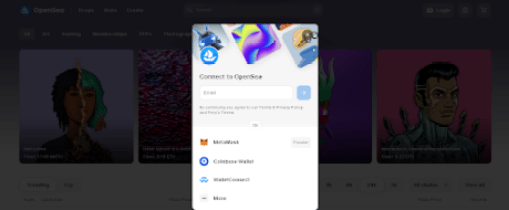
OpenSea offers a user-friendly interface, showcasing a vast selection of NFT listings curated from diverse creators and projects. Through its platform, users gain the ability to explore the vibrant NFT community, participate in auctions, and securely manage their digital assets. With a commitment to fostering the expansion and accessibility of the NFT market, OpenSea endeavors to ensure a seamless experience for both seasoned enthusiasts and newcomers alike.
This detailed guide will cover how to create an NFT collection and mint directly to your connected wallet.
Step 1: Connecting Your Wallet
Begin by navigating to the official OpenSea website. On the homepage, locate and click the "Login" button, typically found in the top-right corner of the interface. You will then be prompted to connect your preferred cryptocurrency wallet. For those operating within the Ethereum network, popular and secure wallet options include MetaMask, Coinbase Wallet, and WalletConnect-compatible wallets. Choosing the right wallet is crucial for managing your digital assets securely. For guidance on selecting the best wallet for the Ethereum network, resources offering comparisons of top DeFi and Web3 wallets can be invaluable.
Step 2: Accessing the Creator Studio
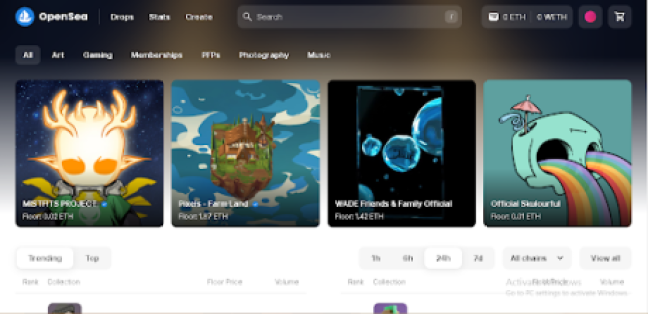
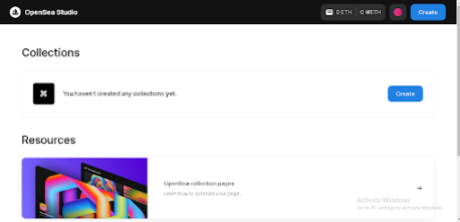
After successfully connecting your wallet, click on your "Profile Icon," also located in the top-right corner of the OpenSea interface. From the dropdown menu that appears, select "Studio." This will take you to the creator dashboard, where you can manage your collections and mint new NFTs.
Step 3: Initiating NFT Creation
To begin the process of creating a new NFT, click the "Create" button, prominently displayed at the top right of your OpenSea interface.
Step 4: Choosing Your Creation Path
Upon clicking "Create," you will be presented with several options. You can either "Drop a collection" or "Create/Mint an NFT." For the purpose of this guide, we will select "Create an NFT." This option allows you to mint an NFT directly into your connected wallet without the immediate need to establish a separate collection, though creating a collection is often a prerequisite for more organized NFT management.
Step 5: Creating a New Collection
When you proceed to the "Create an NFT" screen, if you are using OpenSea Studio tools for the first time or wish to organize your NFTs into thematic groups, it is advisable to select "Create a new collection." This action initiates the deployment of a smart contract. While you can add one NFT to this collection initially, the flexibility to include more NFTs within the same collection at a later stage is a key advantage.
Step 6: Deploying Your Smart Contract
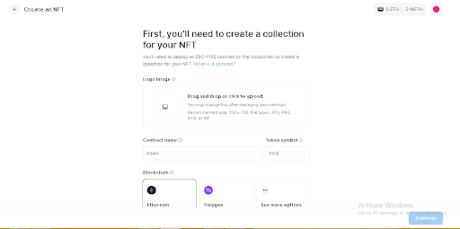
After selecting "Create a new collection," you will be guided through the on-screen steps to deploy a smart contract. This crucial step establishes the foundation for your NFTs on the blockchain. To customize your contract, you will need to:
- Add a Logo Image: Upload a representative image for your collection.
- Choose a Contract Name: Select a clear and descriptive name for your smart contract.
- Designate a Token Symbol: Assign a unique ticker symbol for your collection.
- Select an EVM Blockchain: Choose the specific Ethereum Virtual Machine (EVM) compatible blockchain on which your smart contract will be deployed. Common choices include Ethereum Mainnet, Polygon, or Arbitrum, each with different transaction fees and speeds. It is important to note that deploying a smart contract incurs gas fees – the cost of performing transactions on a blockchain. The estimated fees for each blockchain will be displayed. If the fees are higher than anticipated, you can revisit the process at a later time, as gas prices are subject to fluctuation based on network activity.
Step 7: Confirming the Smart Contract Deployment
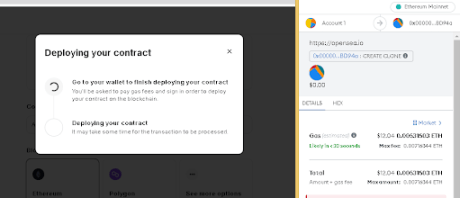
Once you have configured the details of your smart contract, proceed by clicking "Continue." This action will trigger a transaction signature request within your connected wallet. This transaction requires gas fees to be paid, which will be deducted from your wallet balance. Carefully review the transaction details and approve it to finalize the deployment of your smart contract.
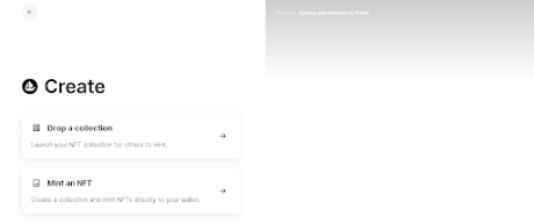
Step 8: Awaiting Confirmation and Proceeding
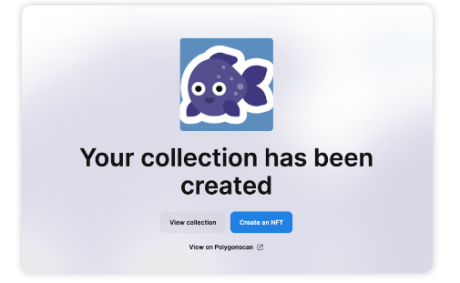
Upon successful finalization of the smart contract deployment, you will receive a confirmation message. You can then proceed to the next critical step by selecting "Create an NFT."
Step 9: Minting Your NFT
Having successfully created a smart contract, you are now prepared to generate your actual NFT. It is crucial to understand that once an item is minted, further editing becomes impossible, as it permanently resides on the blockchain. In this scenario, you will be creating an ERC-1155 NFT. The ERC-1155 token standard is particularly versatile, allowing for the creation of multiple copies of the same item within a single contract, which is beneficial for limited edition releases or for projects requiring fungible and non-fungible tokens within the same contract.
To begin this phase:
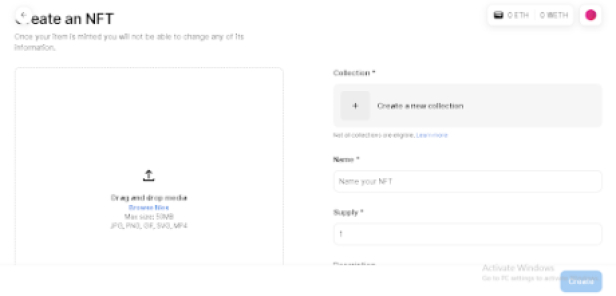
- Upload Media: Upload the media file for your NFT. This could be an image, video, audio file, or 3D model that visually represents your digital asset.
- Select Collection: Choose the collection you created earlier in which you wish to mint your NFT.
- Provide Name: Assign a unique and descriptive name to your NFT.
- Set Item Supply: Specify the desired item supply. This determines the number of copies you wish to mint for this specific NFT. If you set the supply to "1," the item will be a unique, one-of-one edition. For limited editions, you can set a higher supply.
Step 10: Finalizing the Minting Process
Once you have uploaded your media, selected your collection, provided a name, and set the item supply, click on the "Create" button, typically located at the bottom right of the screen. A loading message will appear as the item is being minted. To proceed with the minting process, you will need to approve the transaction using your wallet, which will again require gas fees.
Congratulations! You have successfully minted your very first NFT.
The Broader Landscape: NFTs and BRC-20 Tokens
While NFTs and BRC-20 tokens operate on distinct blockchains and serve different primary functions, they both contribute significantly to the burgeoning realm of blockchain-based digital assets. NFTs have captured widespread interest due to their unique nature and their capacity to represent verifiable ownership of digital assets. This has opened up new avenues for creators, collectors, and investors.
BRC-20 tokens, on the other hand, represent an experimental fungible token standard built on the Bitcoin network using the Ordinals protocol. This innovation allows for the creation of interchangeable tokens directly on Bitcoin, leveraging its robust security and decentralization. Projects like Ordify, UniSat, and others are actively developing infrastructure and marketplaces for BRC-20 tokens, mirroring the early development stages of the NFT ecosystem on Ethereum. The advent of BRC-20 tokens signifies a new wave of innovation on the Bitcoin blockchain, expanding its utility beyond a simple store of value or medium of exchange.
Data and Analysis: The NFT Market in Context
The global NFT market has experienced dramatic growth and volatility. Following its peak in 2021, the market has seen fluctuations, with trading volumes and floor prices adjusting. However, underlying trends suggest continued development and diversification.
- Market Cap and Trading Volume: While peak figures from 2021 have not been consistently replicated, significant trading volumes persist, particularly for established NFT collections and projects with strong utility or community backing. Data from analytics platforms like CryptoSlam and DappRadar provide real-time insights into market activity.
- Key Blockchain Dominance: Ethereum remains the dominant blockchain for NFT creation and trading, accounting for a substantial majority of market share. However, other blockchains like Solana, Polygon, and Flow have also emerged as significant players, offering lower transaction fees and faster speeds.
- Use Case Expansion: The utility of NFTs is expanding beyond digital art. Use cases are emerging in gaming (in-game assets), music (royalty distribution), ticketing (event access), fashion (digital wearables), and loyalty programs.
- Regulatory Scrutiny: As the NFT market matures, regulatory bodies worldwide are paying closer attention. Concerns surrounding intellectual property rights, consumer protection, and potential money laundering activities are leading to increased discussions and potential regulatory frameworks.
Expert Perspectives and Industry Reactions
Industry experts acknowledge the transformative potential of NFTs while also highlighting the need for caution and due diligence.
"NFTs represent a fundamental shift in how we can own and interact with digital content," commented a lead analyst at a prominent blockchain research firm. "However, the market is still young and susceptible to speculation. Projects with genuine utility, strong community engagement, and clear value propositions are more likely to endure in the long term."
The development of BRC-20 tokens has also garnered significant attention. Some view it as a natural evolution of Bitcoin’s capabilities, while others express caution regarding its experimental nature and potential impact on network congestion and fees.
"The innovation around Ordinals and BRC-20 tokens is fascinating, pushing the boundaries of what’s possible on Bitcoin," stated a developer in the Bitcoin ecosystem. "It’s crucial to approach these developments with a balanced perspective, understanding both the opportunities and the inherent risks involved."
Broader Impact and Implications
The rise of NFTs and the emergence of new token standards like BRC-20 have profound implications across various sectors:
- Creator Economy Empowerment: NFTs provide creators with unprecedented control over their digital works, enabling direct monetization and fostering stronger connections with their audience.
- Digital Ownership Revolution: The concept of verifiable digital ownership is being redefined, impacting everything from digital art and collectibles to virtual real estate and in-game assets.
- New Business Models: The tokenization of assets is paving the way for innovative business models, including decentralized autonomous organizations (DAOs), play-to-earn gaming, and fractional ownership of high-value assets.
- Blockchain Interoperability: As different blockchains develop unique token standards, the importance of interoperability and cross-chain solutions will become increasingly critical for a seamless digital asset ecosystem.
- Financial Inclusion: For individuals in regions with limited access to traditional financial systems, cryptocurrencies and tokenized assets can offer new avenues for participation in the global economy.
Conclusion
The journey into the world of NFTs and BRC-20 tokens is one of innovation, opportunity, and careful navigation. As demonstrated by the step-by-step guide to minting an NFT on OpenSea, the technical process is becoming increasingly accessible. However, understanding the underlying technology, the market dynamics, and the associated risks is paramount for success. The continued evolution of blockchain technology promises to unlock even more sophisticated applications and redefine the boundaries of digital ownership and value creation for years to come. Whether you are an artist looking to monetize your creations or an investor exploring new digital frontiers, the world of tokenized assets offers a compelling glimpse into the future of the internet and the global economy.