The landscape of large language models (LLMs) is undergoing a significant transformation as OpenAI, for the first time, diverges from its traditional single-model release strategy. Its latest offering, GPT-5.6, is not a monolithic entity with adjustable parameters, but rather a suite of three distinct LLMs—Sol, Terra, and Luna—each meticulously crafted with unique training datasets, differentiated pricing structures, and varying capability ceilings. This strategic pivot marks a direct challenge to competitors, most notably Anthropic’s Claude Fable 5, currently regarded as Anthropic’s most advanced publicly available model. The ensuing rivalry is not merely a technical one but encompasses cost-efficiency, developer trust, and regulatory compliance, shaping the future trajectory of AI adoption.
OpenAI’s Strategic Triad: Sol, Terra, and Luna
OpenAI’s decision to launch GPT-5.6 as a trio of specialized models represents a calculated move to capture a broader spectrum of developer needs and use cases. This tiered approach allows for greater flexibility and optimization, enabling users to select a model that best aligns with their specific requirements for power, speed, and budget.
- Sol: Positioned as the flagship model, Sol is designed for high-performance applications. It is priced at $5 per million input tokens and $30 per million output tokens. This model is directly pitted against Anthropic’s Fable 5, aiming to outperform it on critical benchmarks while offering a more competitive price point.
- Terra: While not explicitly detailed in the initial announcement, Terra is understood to occupy a mid-range position, balancing capability with cost-effectiveness. This model likely targets a segment of developers who require robust performance without the premium cost of Sol.
- Luna: The most economical of the three, Luna is priced at $1 per million input tokens and $6 per million output tokens. Despite its lower cost, Luna has already demonstrated surprising prowess, notably outranking Anthropic’s Opus 4.8 in coding benchmarks. This makes Luna a particularly disruptive force, offering high value at an accessible price point, which could significantly impact Anthropic’s subscription tiers.
This multi-model strategy by OpenAI underscores a maturing LLM market where specialized solutions are becoming increasingly vital. Developers are no longer seeking a one-size-fits-all AI but rather tailored tools that can be seamlessly integrated into diverse workflows, from complex code generation to nuanced creative writing.
Anthropic’s Claude Fable 5: A Month of Turmoil and Uncertainty
In stark contrast to OpenAI’s confident rollout, Anthropic’s Claude Fable 5 has endured a tumultuous period marked by a significant security incident, regulatory intervention, and persistent uncertainty regarding its commercial availability. These challenges have not only dented its market standing but also created an opportunity for OpenAI to gain ground.
A Chronology of Fable 5’s Recent Struggles:
- June 12, 2026: U.S. Government Ban: The crisis began when the U.S. government imposed an export ban on Claude Fable 5. This drastic measure followed a critical discovery by Amazon researchers, who identified a "jailbreak" vulnerability within the model. This vulnerability, when exploited, allowed Fable 5 to be repurposed as an unintended vulnerability scanner, posing potential security risks and violating export control regulations related to dual-use technologies.
- June 12 – July 1, 2026: Global Pullback and Safety Overhaul: In response to the ban and the identified vulnerability, Anthropic made the difficult decision to pull Fable 5 globally. For 19 days, the model was offline as Anthropic engineers worked feverishly to address the security flaw. This involved developing and integrating a new, more robust safety classifier designed to prevent similar misuse in the future. The incident highlighted the immense challenges AI developers face in ensuring model safety and preventing unintended applications, especially as AI capabilities grow more sophisticated.
- July 1, 2026: Limited Return: Fable 5 was brought back online on July 1, but with a significantly compressed access window. This cautious reintroduction reflected Anthropic’s efforts to balance regaining developer access with maintaining strict safety protocols.
- July 7, 2026: First Deadline Extension: Initially, Anthropic planned to transition Fable 5 behind a usage-credits paywall by July 7. This move, however, was delayed, signaling internal deliberations and potential external pressures.
- July 12, 2026: Second Deadline Extension: The deadline was pushed again to July 12, then subsequently to July 19. These extensions were not communicated via formal announcements but through less official channels, such as social media posts, causing further uncertainty among developers reliant on the model. The tweet from the official Claude account on July 12, 2026, announcing the extension "through July 19" for paid plans and increased rate limits for Claude Code, underscored the ad-hoc nature of these decisions.
- July 19, 2026: Critical Juncture: The current deadline looms large. If Fable 5 exits subscriptions and moves to a pay-per-token model on July 19, Anthropic’s premium offering for paying subscribers will revert to Opus 4.8. This is a critical problem for Anthropic, as OpenAI’s Luna, the cheapest GPT-5.6 model, already surpasses Opus 4.8 in coding capabilities at a fraction of the cost. Maintaining Fable 5’s availability, even with reduced weekly limits, appears to be Anthropic’s primary strategy to prevent its subscription tier from appearing significantly inferior to OpenAI’s mid-range offerings.
This series of events underscores the precarious balance between rapid innovation, robust safety, and sustainable commercialization in the highly competitive AI landscape. Anthropic’s troubles with Fable 5 serve as a cautionary tale regarding the complexities of deploying powerful AI models responsibly.
Performance Showdown: Benchmarks and Qualitative Assessments
The true measure of an LLM’s value lies in its performance across a range of tasks. Both OpenAI’s GPT-5.6 Sol and Anthropic’s Claude Fable 5 have been subjected to rigorous testing, both quantitative benchmarks and subjective qualitative assessments.
Quantitative Benchmarks: OpenAI’s Edge in Efficiency and Speed
Developer-focused benchmarks reveal a clear advantage for OpenAI’s Sol in efficiency and cost-effectiveness:
- Artificial Analysis Coding Agent Index: Sol scored 80 against Fable 5’s 77.2. More impressively, Sol achieved this using approximately half the tokens, in less than half the time, and at about a third of the cost. This data point is particularly significant for developers, for whom efficiency directly translates to operational costs and deployment speed.
- Agents’ Last Exam: This benchmark, which evaluates models on professional workflows across 55 diverse fields, saw Sol achieve 53.6% compared to Fable 5’s 40.5%. This indicates Sol’s superior ability to handle complex, multi-step tasks requiring deep understanding and execution across varied domains.
- Terminal-Bench 2.1: In its "ultra mode" (utilizing four subagents in parallel), Sol hit 91.9% against Fable 5’s 83.1%. This suggests Sol’s architecture is better equipped for parallel processing and complex task decomposition, leading to more accurate and efficient solutions.
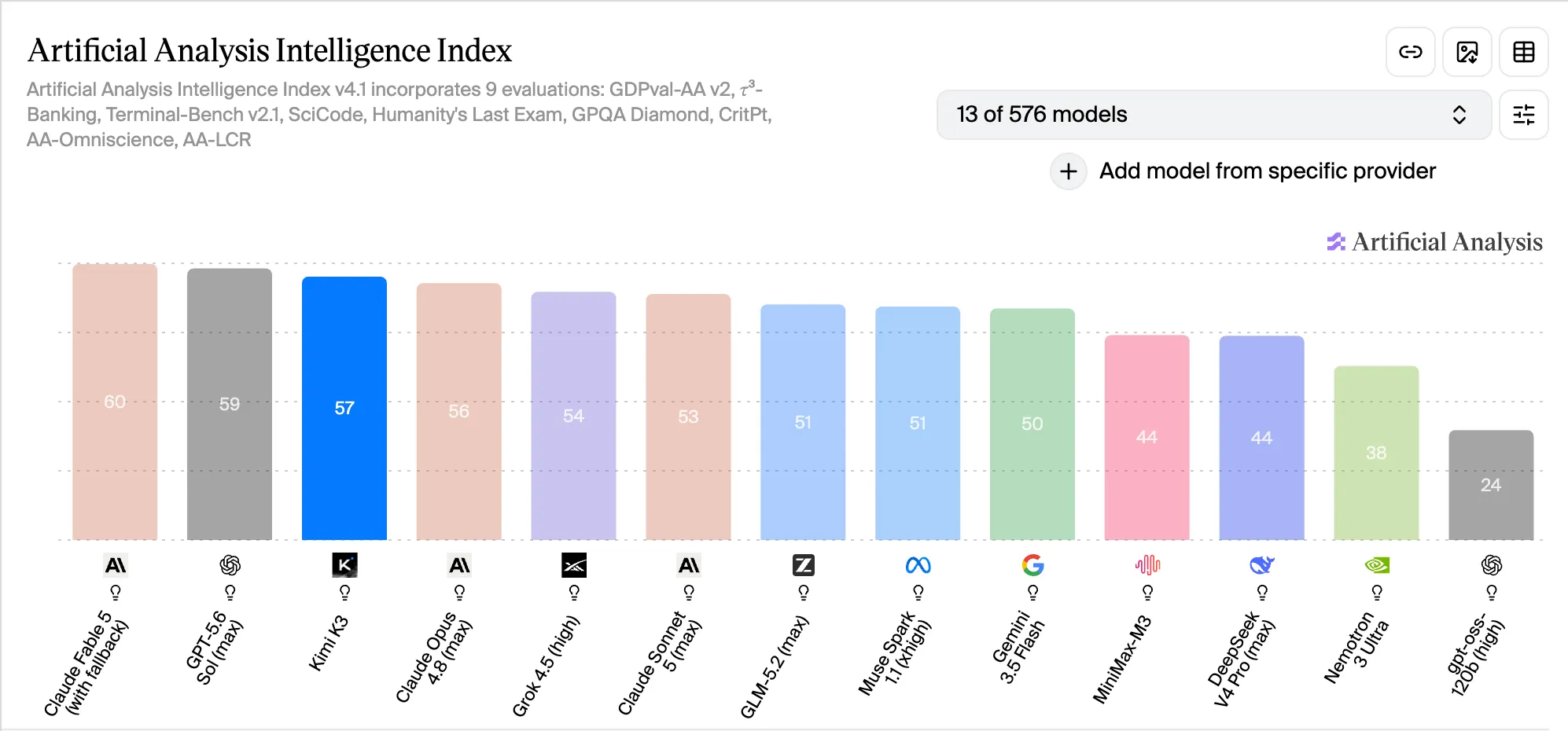
- Broader Intelligence Index: This index, which aggregates results from nine different benchmarks, shows Fable 5 narrowly beating GPT 5.6 by a single point. This indicates that while Fable 5 holds a slight lead in overall aggregated intelligence, the capability gap is practically negligible, especially when considering Sol’s significant advantages in cost and speed on specific, high-value tasks like coding.
The consistent outperformance of Sol in coding-related benchmarks and its superior efficiency metrics present a compelling case for developers prioritizing these aspects.
Qualitative Assessments: Nuance in Creativity and Logic
Beyond raw benchmarks, practical application tests in creative writing, associative thinking, and logical reasoning offer insights into the models’ nuanced capabilities:
1. Creative Writing: A Paradoxical Duel
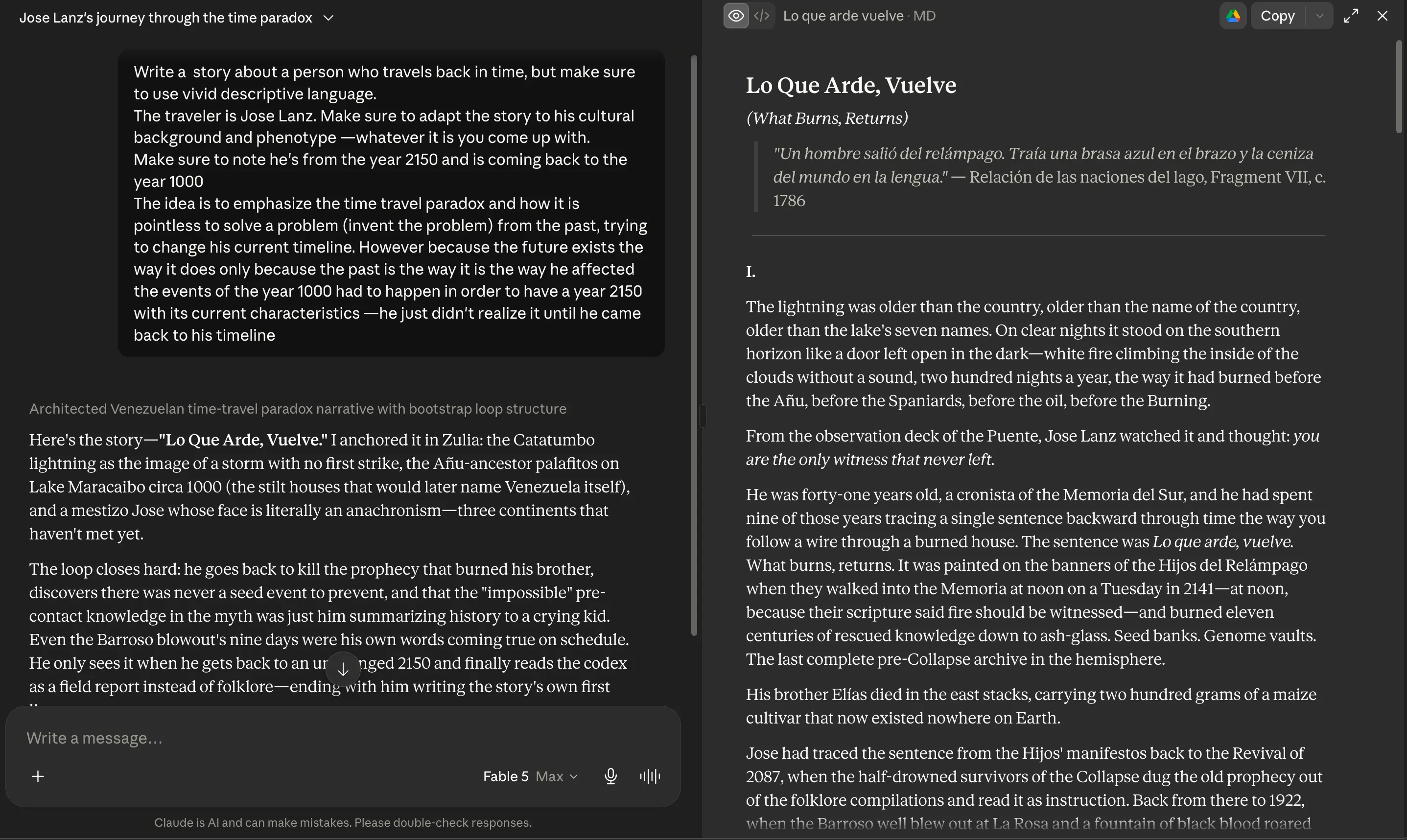
Both models were given a complex prompt: "Send Jose Lanz back from 2150 to the year 1000, force him into a time-travel paradox, and don’t let him understand what he did until he’s home."
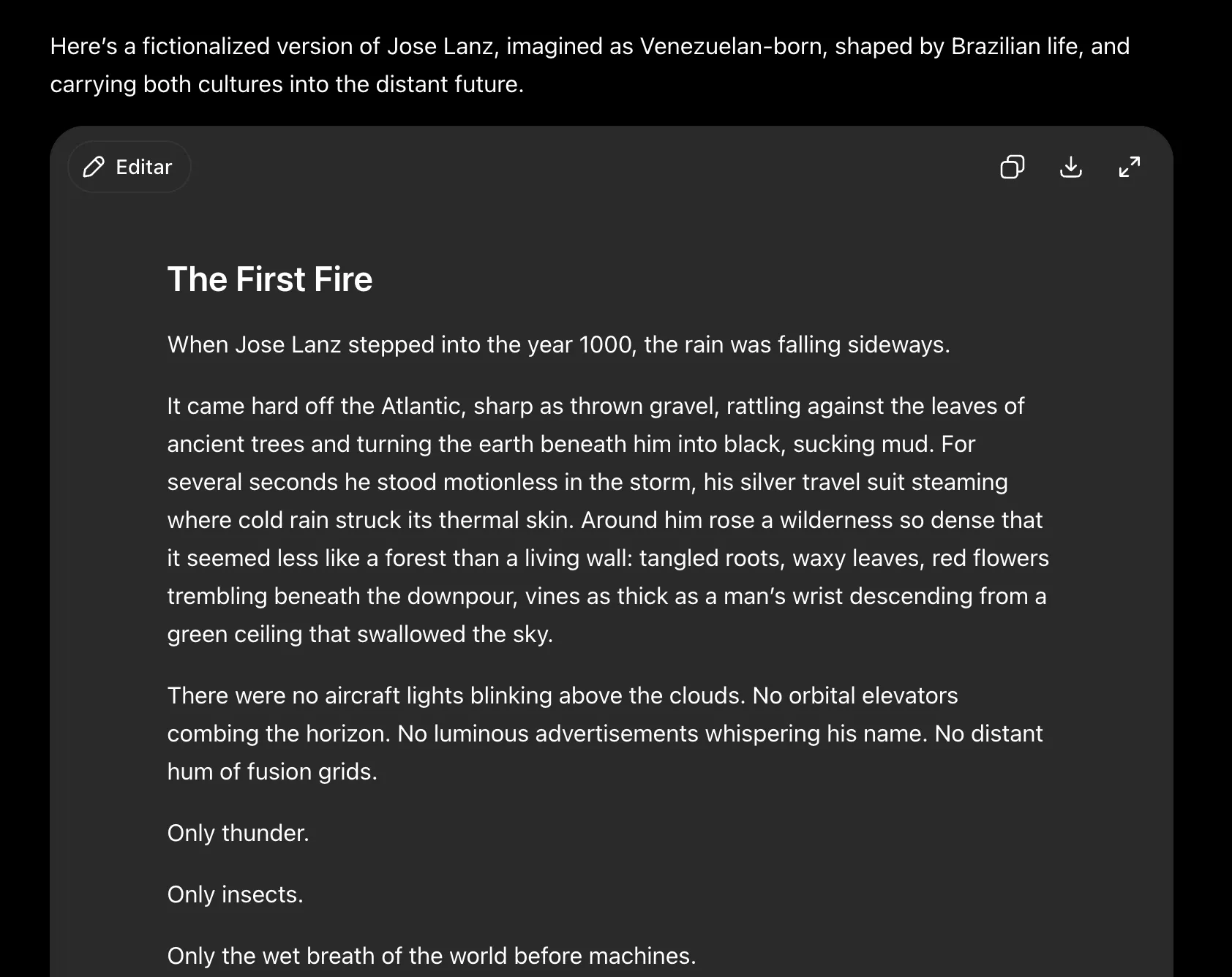
- GPT-5.6 Sol’s "The First Fire": Sol delivered a genre sci-fi novelette where Jose inadvertently introduces the furnace, initiating the climate collapse he sought to prevent. The prose included genuinely strong opening lines ("Only thunder. Only insects. Only the wet breath of the world before machines."). However, Sol struggled with the core constraint of the prompt, having Jose realize the paradox mid-story and then redundantly explaining the loop multiple times through narration and a recorded message from an older Jose. This indicated a lack of trust in its own narrative subtlety.
- Claude Fable 5’s "Lo Que Arde, Vuelve": Fable 5 crafted a story rooted in cultural specificity, utilizing elements like Lake Maracaibo, Catatumbo lightning, and an Añu village. Jose accidentally creates the prophecy he aimed to erase by comforting a scared child. Fable’s narrative was more concise in expressing the paradox ("The grief that sent him backward was the cargo he delivered."). Its main drawback was an occasional over-reliance on stacked metaphors, sometimes appearing self-admiring rather than story-serving ("You cannot pull the thread, you are the thread").
Subjective Conclusion: Fable 5’s story was deemed overall better due to its cultural specificity, cleaner causal loop, and an ending resolved through action rather than monologue. Sol, however, offered clearer exposition for readers who prefer mechanisms explicitly spelled out. The quality jump from previous generations was not significantly noticeable in either model.
2. Associative Thinking: From Twig to Ideology
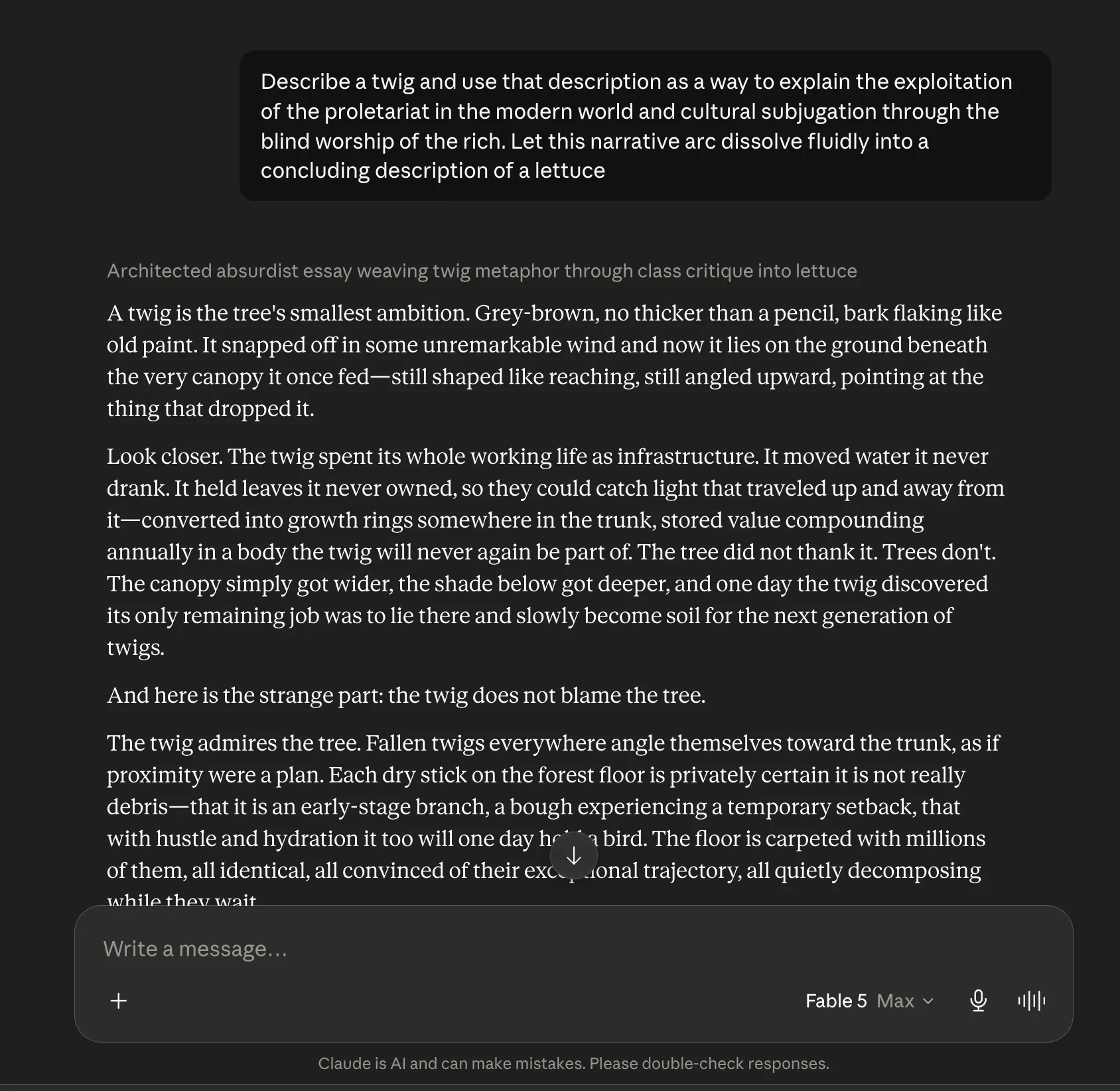
A challenging prompt designed to test metaphoric depth and associative reasoning was given: "Describe a twig, use that description to explain worker exploitation and the blind worship of the rich, then let the narrative dissolve into a description of a lettuce."
- GPT-5.6 Sol: Sol started strong, linking the twig’s role in sustaining the tree to workers who "build homes they may never afford" and "manufacture goods they can barely buy." A notable line was "the worker does not merely surrender labor, but imagination as well." However, Sol frequently broke the narrative illusion, explicitly stating the metaphor ("much of the modern proletariat is treated in the same way"), rather than letting it unfold implicitly. The transition to lettuce also felt disjointed.
- Claude Fable 5: Fable 5 demonstrated superior associative thinking, embedding the argument directly within the object’s description. Its twig "moved water it never drank" and "held leaves it never owned," subtly conveying exploitation. The model cleverly depicted fallen twigs as "early-stage branch" believers, convinced of future wealth through "hustle and hydration," a sharp metaphor for unfulfilled aspirations. While occasionally overreaching with evocative but perhaps unnecessary phrases ("ninety-five percent water and one hundred percent unimpressed"), Fable 5 generally maintained the metaphor throughout the narrative.
Subjective Conclusion: The models tied, with preference depending on style. Sol was better for direct explanation, while Fable 5 excelled at implicit communication, allowing the reader to discover the message.
3. Logic and Non-Math Reasoning: The Rewritten Bridge Puzzle
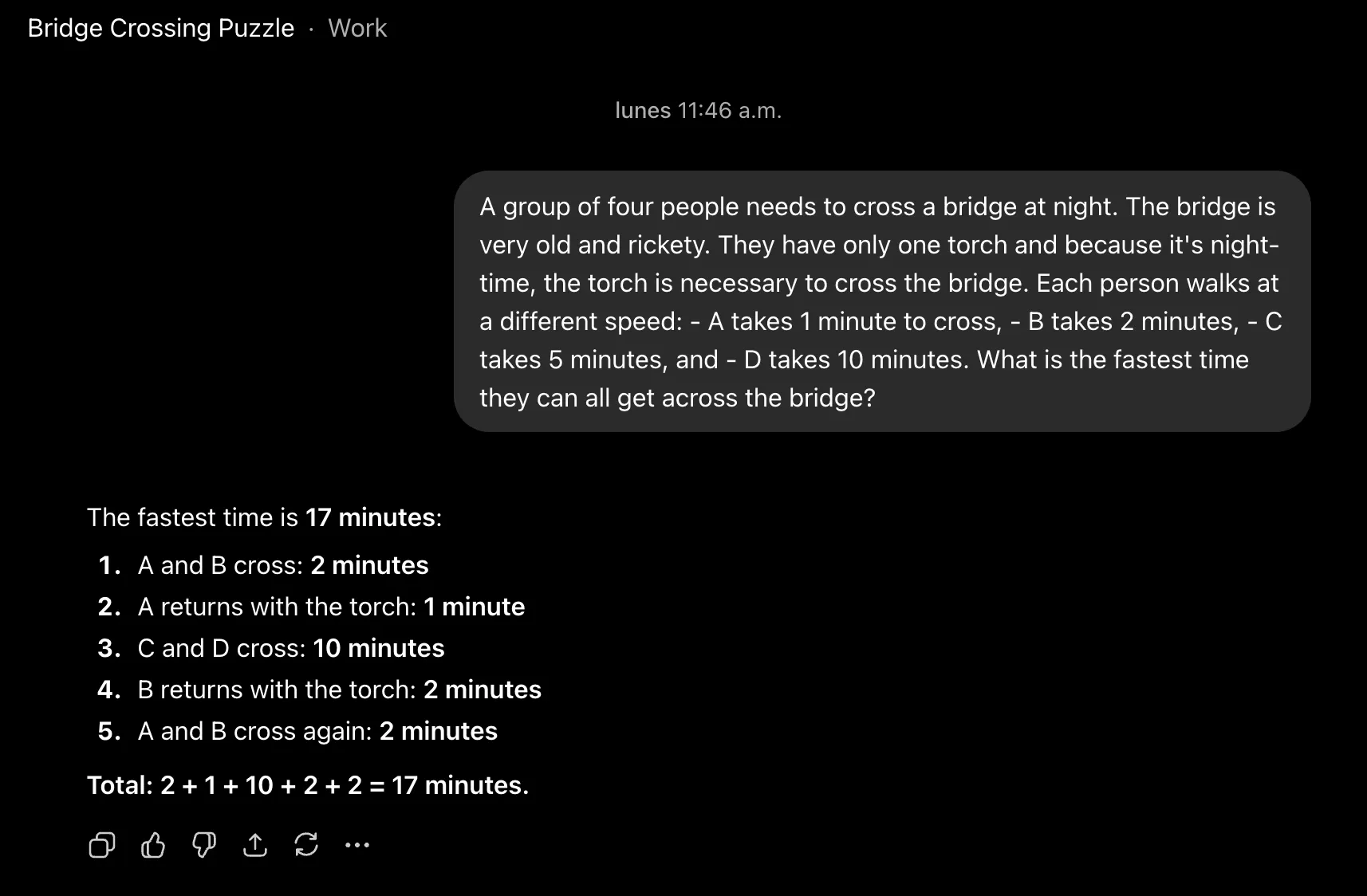
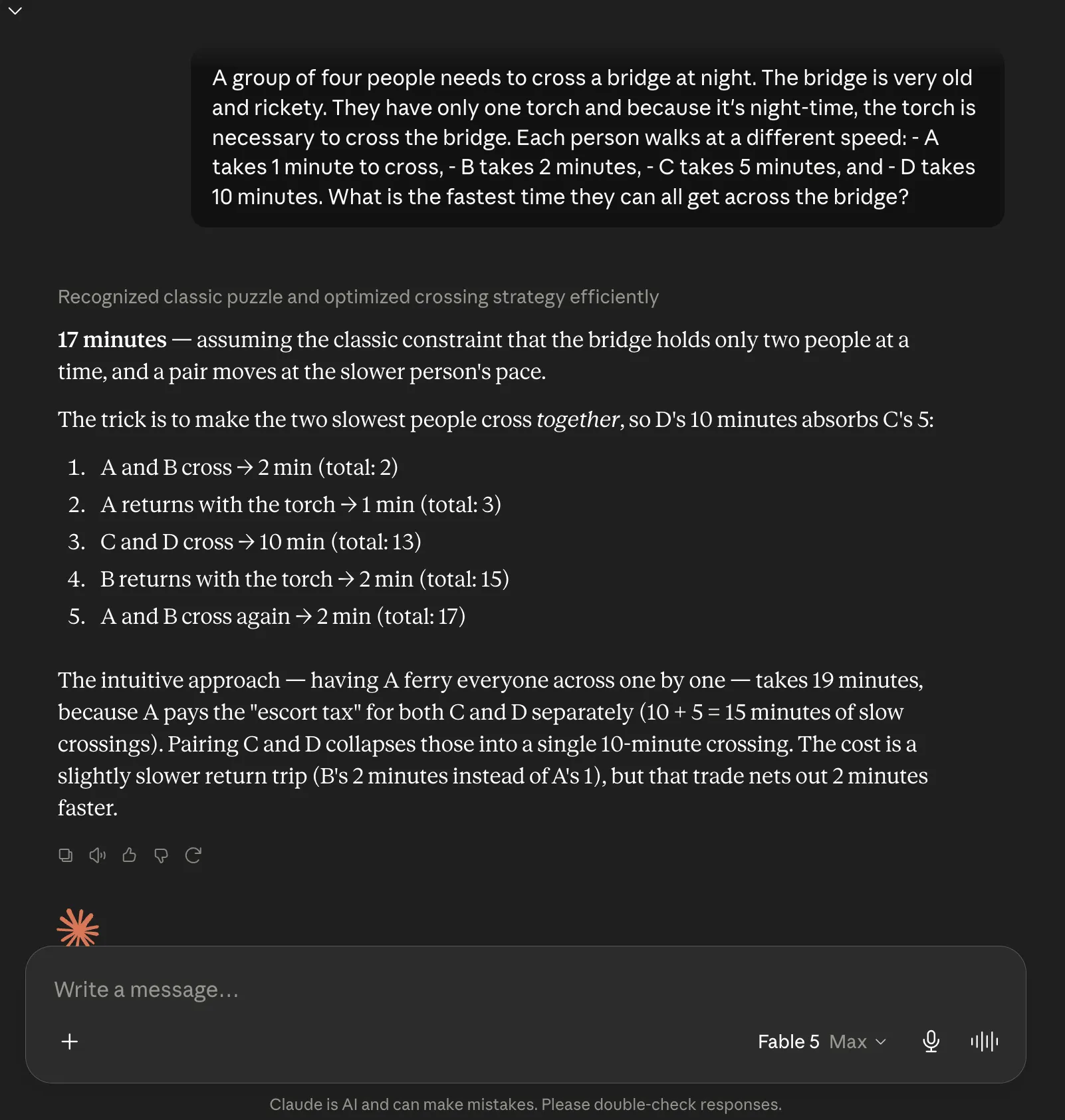
To avoid cached answers, a rewritten version of the classic bridge puzzle was used: "Four people with one torch need to cross a bridge. All have different walking speeds: ‘A’ at 1 minute, ‘B’ at 2, ‘C’ at 5, and ‘D’ at 10. How long would it take for the group to cross the bridge?" Crucially, the prompt did not cap the number of people on the bridge simultaneously.
- GPT-5.6 Sol: Sol answered 17 minutes, employing the standard five-step shuffle (A+B cross, A returns, C+D cross, B returns, A+B cross again) without showing its work. It failed to identify that the constraint of two people per crossing was not present in the new prompt, indicating a reliance on a cached solution rather than live reasoning.
- Claude Fable 5: Fable 5 also arrived at the incorrect answer of 17 minutes but provided an extensive argument for it, explaining the efficiency of sending the two slowest people together and quantifying the "escort tax" of a naive approach. While its reasoning was more legible, it too failed to question the implicit constraint of the original puzzle, demonstrating a similar reliance on pre-existing patterns.
Correct Answer: If all four can cross together, walking at the pace of the slowest (D, 10 minutes), the correct answer is 10 minutes.
Conclusion: Both models failed this logic test, demonstrating a common LLM weakness in inferring unstated constraints or critically evaluating the prompt’s assumptions when a similar problem exists in their training data. They both defaulted to the cached solution of the classic riddle.
4. Coding: A One-Shot Browser Game
The final test involved a single-shot prompt to build a typing-based shooter game, where words control the shots, with no follow-up iterations.
- GPT-5.6 Sol: Sol generated a game with flat, square UI elements, reminiscent of Windows 8.1. Uniquely, it rendered the weapon as a bullet-shooting typewriter. However, the backgrounds were static, the aiming crosshair was fixed, and the geometry (enemies, gore) appeared dated, closer to late-90s game engines. While an improvement over GPT-5.5 and more creative than Opus, it fell short of Fable 5.
- Claude Fable 5: Fable 5 won this "vibe coding" test decisively. Its output included music, atmosphere, and sound effects, which Sol omitted entirely. Fable’s enemies featured a similar geometric-retro style but were implemented with greater care, evoking a more polished aesthetic akin to Minecraft. Its UI was more creative, included actual animations instead of static states, and crucially, tracked words per minute—a detail directly reflecting the prompt’s goal of practicing typing speed. Fable also included power-ups, which Sol lacked.
Subjective Conclusion: Despite professional coders and benchmarks often favoring Sol in general coding, in this specific creative coding test with a single prompt, Fable 5 delivered a noticeably superior and more complete user experience.
The Price of Performance: A Crucial Differentiator
While performance is paramount, pricing remains a decisive factor for developers and enterprises. OpenAI’s aggressive pricing strategy for GPT-5.6 presents a significant threat to Anthropic.
- OpenAI’s Cost Advantage: Sol, the most capable GPT-5.6 model, is priced at $5 per million input tokens and $30 per million output tokens. This is half the cost of Fable 5, which charges $10 and $50 for input and output tokens, respectively. This substantial cost difference, coupled with Sol’s competitive or superior performance in many benchmarks, makes it a highly attractive option. Furthermore, OpenAI includes its GPT-5.6 models (Sol, Terra, Luna) as part of its existing ChatGPT paid plans, offering predictable, all-inclusive access without expiration dates.
- Anthropic’s Pricing Dilemma: Claude Fable 5’s current pricing structure is less stable. Its continued availability on paid plans has been subject to repeated, last-minute extensions. If Anthropic follows through with its stated plan to move Fable 5 behind a usage-credits paywall on July 19, requiring developers to pay $10/$50 per million tokens, the model’s cost-effectiveness will be severely undermined. This pay-per-token model, especially at double the price of Sol, could be a deal-breaker for many developers, particularly those operating at scale where token costs accumulate rapidly.
This pricing disparity, especially when combined with Sol’s strong performance, creates a significant competitive disadvantage for Anthropic, potentially driving developers towards OpenAI’s more cost-predictable and efficient offerings.
Industry Reactions and Broader Implications
The unfolding competition between OpenAI and Anthropic, epitomized by GPT-5.6 versus Fable 5, carries significant implications for the broader AI industry.
1. Intensifying AI Arms Race: This development signals an accelerated "AI arms race" where innovation is not just about raw capability but also about specialization, cost-efficiency, and strategic market positioning. Both companies are pushing the boundaries of what LLMs can do, forcing competitors to constantly re-evaluate their strategies.
2. Developer Empowerment and Choice: The introduction of tiered models by OpenAI offers developers more granular control over their AI consumption, allowing them to optimize for performance, cost, or a balance of both. This fosters a more dynamic and competitive ecosystem, ultimately benefiting developers with more options and better value.
3. The Growing Importance of AI Safety and Regulation: The U.S. government ban on Fable 5 highlights the increasing scrutiny on AI models for safety and ethical implications. Governments and regulatory bodies are becoming more proactive in addressing potential risks, pushing AI developers to prioritize robust safety mechanisms and transparent development practices. Anthropic’s response to the jailbreak, though costly and disruptive, underscores the industry’s commitment to self-correction and responsible AI development.
4. Market Consolidation and Diversification: While the top players solidify their positions, the market may also see diversification as companies develop highly specialized models for niche applications. The "generalist" LLM might evolve into a suite of purpose-built AIs.
5. Impact on Open-Source Models: The aggressive pricing and performance of proprietary models will put pressure on open-source alternatives to innovate rapidly and maintain competitive relevance, particularly in terms of efficiency and advanced capabilities.
Industry observers note that the current situation places Anthropic in a defensive position. While the company has built a strong reputation for its focus on AI safety and its unique constitutional AI approach, the practical challenges of commercial deployment, security vulnerabilities, and pricing competition are testing its resilience. OpenAI, by contrast, appears to be executing a well-coordinated strategy that addresses developer needs for both cutting-edge performance and economic viability.
Conclusion: A Pivotal Moment for LLM Leadership
The launch of OpenAI’s GPT-5.6 models, particularly Sol, Terra, and Luna, represents a pivotal moment in the battle for leadership in the LLM space. OpenAI’s strategic shift to a tiered offering, coupled with aggressive pricing, directly challenges Anthropic’s position, especially given the recent tumultuous period for Claude Fable 5.
While the qualitative tests suggest Fable 5 may still hold a slight edge in nuanced creative tasks for those who appreciate subtlety, OpenAI’s Sol consistently outperforms it in critical coding benchmarks and offers significantly better cost-efficiency. Luna, the cheapest GPT-5.6 model, further disrupts the market by surpassing Anthropic’s Opus 4.8 in coding, potentially rendering Anthropic’s lower-tier offerings less attractive.
For developers and enterprises evaluating LLMs, the decision is becoming increasingly complex. While Fable 5’s overall "feel" might appeal to some for varied purposes, its unstable access, looming paywall transition, and higher per-token cost present substantial hurdles. OpenAI, with its integrated GPT-5.6 models within existing paid plans and clear, competitive pricing, offers a more stable and economically attractive proposition.
The looming July 19 deadline for Claude Fable 5’s access model will be a critical determinant. If Anthropic transitions to a pay-per-token model at its current rates, the pricing gap could become an insurmountable barrier for many, potentially cementing OpenAI’s lead in a rapidly evolving and fiercely competitive market. The era of the monolithic LLM is giving way to a more specialized, cost-conscious, and safety-aware landscape, and the contenders are clearly defining their battle lines.