

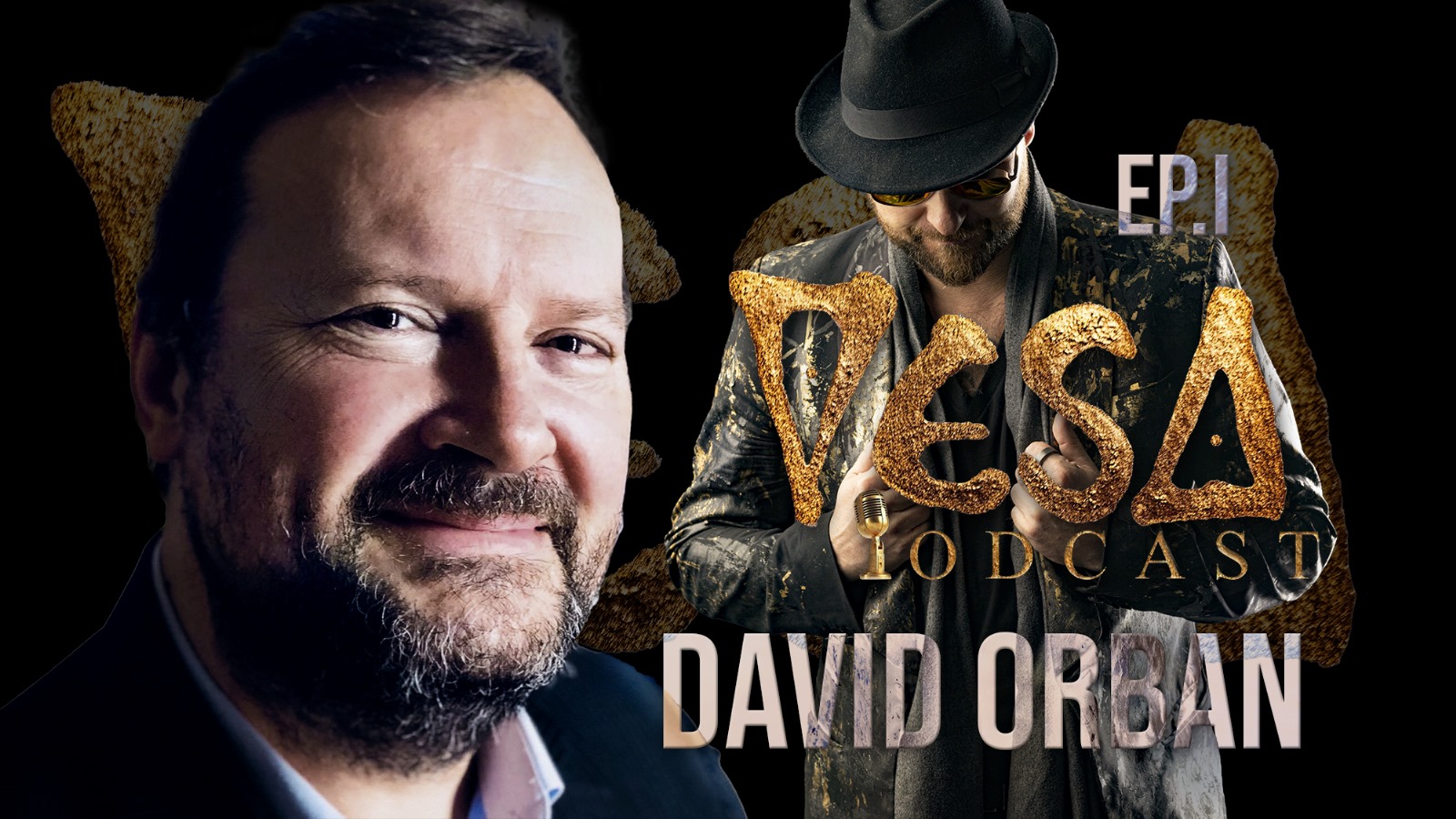
The launch of the newly rebranded VESA Podcast marks a significant milestone in digital media, bridging the gap between cutting-edge technology, philosophy, and modern artistic expression. For its premiere episode, host VESA welcomed global technology thought leader, investor, and entrepreneur David Orban. The conversation traversed a vast landscape of contemporary issues, examining the intersection of artificial intelligence, human consciousness, silent meditation retreats, the evolution of spiritual frameworks, and the democratization of artistic enterprise through decentralized tooling.
The revival of the podcast follows an earlier iteration that originally launched in 2017, which featured prominent figures in the cryptocurrency and blockchain space, including Litecoin creator Charlie Lee. Following a strategic hiatus and a comprehensive rebranding initiative, the podcast has returned with a renewed focus on deep-dive conversations with pioneers shaping the modern technological era. The premiere episode with Orban sets a high intellectual bar, exploring how exponential technological advancements continue to redefine what it means to be human, an artist, and an entrepreneur in the twenty-first century.
A Meeting of Minds: Background and Context
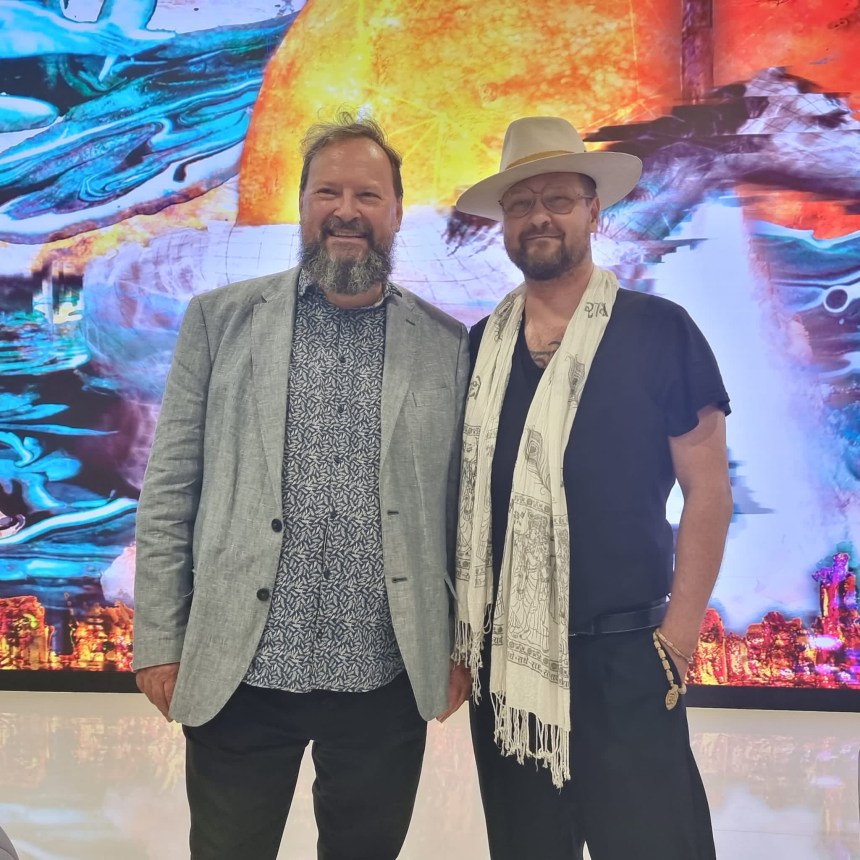
The professional relationship between VESA and David Orban originated in Dubai during a high-profile art exhibition hosted at the Dubai Mall. Their initial discourse, which spanned several hours, laid the groundwork for a continued dialogue regarding the rapid transformation of global industries. Orban, whose entrepreneurial career spans more than two decades, brings a wealth of experience as a founder, author, and keynote speaker. Having served in key leadership capacities within organizations such as Singularity University, Orban has consistently positioned himself at the forefront of discussions surrounding technological convergence, artificial intelligence ethics, and exponential growth models.
In the premiere podcast episode, recorded remotely between VESA’s studio and Orban’s residence in Northern Italy, the dialogue immediately challenged conventional paradigms. Rather than confining the conversation strictly to market trends or technical specifications, the discussion pivoted toward the psychological and philosophical ramifications of living in a hyper-connected society.

The Paradox of Technology and the Discipline of Silence
One of the most striking segments of the podcast explored Orban’s participation in a Vipassana silent retreat. For a prominent technologist heavily invested in the acceleration of artificial intelligence and digital connectivity, undertaking a multi-day retreat devoid of electronics, books, writing materials, and eye contact presents a profound paradox.
Orban reflected candidly on the rigorous self-discipline required to withdraw entirely from the digital ecosystem. He noted that while the modern individual is constantly stimulated by notifications, news feeds, and algorithmic feedback loops, true cognitive clarity demands periods of radical detachment. Despite the challenges of maintaining a daily post-retreat meditation practice amidst a demanding professional schedule, Orban emphasized that the foundational lessons of the retreat remain vital for navigating an increasingly noisy digital world.
This juxtaposition between hyper-digital integration and analog introspection led the speakers to evaluate the degree to which humanity is already fused with technology. Orban noted that human beings have effectively outsourced significant portions of their memory, navigation, social coordination, and decision-making processes to digital infrastructure. The discussion raised critical questions regarding agency: whether biological humans are merely transitioning into a cyborg-like symbiosis with machines, and whether society would even recognize the threshold of total technological integration if it has already been crossed.
The Evolution of Religion and the Quest for Transcendence
Venturing into sociological philosophy, VESA introduced a provocative hypothesis concerning the evolution of organized religion in a post-secular era. Characterizing the potential future of faith as an amalgamation of various historical traditions—jokingly termed a "Mixed Martial Arts (MMA) of religion"—the host questioned how modern populations seek spiritual fulfillment in the absence of traditional institutional structures.
Orban responded by advocating for a balance of intellectual boldness and humility, encouraging individuals to synthesize insights across disparate domains of knowledge. Drawing parallels to the socio-political shifts observed following the collapse of the Berlin Wall, Orban observed that human beings retain an intrinsic need for transcendent experiences and existential meaning. When traditional religious paradigms fail to resonate with contemporary lifestyles—often appearing antiquated or disconnected from modern realities—individuals naturally seek alternative frameworks to answer fundamental questions of purpose.
However, both speakers expressed concern that the convergence of dogmatic simulation theories and rapidly advancing artificial intelligence risks fostering a pathologically godless society. Such a culture, devoid of spiritual nourishment and philosophical depth, risks reducing human existence to mere data processing, heightening the urgency for new cultural and philosophical syntheses.
Democratizing Art and Enterprise through Artificial Intelligence

The conversation subsequently shifted toward the creative arts and the disruptive impact of generative artificial intelligence on traditional industry guilds. Historically, artistic expression and professional execution were tightly regulated by gatekeepers and professional guilds that controlled access to distribution, recognition, and commercial viability.
Orban and VESA agreed that the current technological landscape represents a dam about to burst. Generative AI tools are lowering the barriers to entry across nearly every creative medium, effectively opening the label of "artist" to anyone willing to engage with the technology. VESA shared practical examples from his own workflow, including the commissioning of a custom AI-generated rap soundtrack specifically tailored to accompany his painting sessions in the studio—a level of personalized artistic production previously unavailable even to historical monarchs.
Addressing the skepticism surrounding AI within the creative community, Orban argued that the proliferation of advanced tools does not diminish human creativity; rather, it forces a redefinition of value metrics. As technical execution becomes commoditized, the unique perspective, curatorial vision, and authentic intent of the creator emerge as the primary determinants of value.
Empowering Creators Through Actioneer
To navigate this complex economic and technological transition, modern artists and independent creators can no longer rely solely on craft; they must adopt an entrepreneurial mindset. VESA highlighted his own operational challenges in balancing artistic creation with the business administration typically managed by chief executive or operating officers.
This operational bottleneck is precisely what Orban aims to address through his company, Actioneer. Designed to support startup founders and independent creators, Actioneer leverages artificial intelligence to decode complex operational questions and democratize access to high-level business mentorship. Historically, such strategic incubation was restricted to a select few venture-backed enterprises. By integrating AI-driven tools into daily workflows, Actioneer seeks to provide scalable administrative and strategic support to a broader population of independent innovators.
Orban forecasted that tools like Actioneer will eventually achieve the same level of ubiquity as internet access, becoming an indispensable layer of modern professional life. As the traditional linear trajectory of education, employment, retirement, and mortality continues to fracture, entrepreneurial adaptability is no longer optional. VESA summarized the sentiment succinctly: in the modern creative economy, creators who fail to embrace an entrepreneurial framework risk professional obsolescence.
Implications and Future Outlook
The premiere episode of the VESA Podcast establishes a foundational framework for ongoing discourse within the technology and art sectors. By bridging philosophical inquiry with practical technological application, the conversation underscores the necessity of ethical oversight, psychological resilience, and proactive adaptation.

As artificial intelligence continues to reshape labor markets, artistic expression, and institutional structures, the insights provided by thought leaders like David Orban offer valuable guidance for navigating an uncertain future. The integration of advanced AI tools into daily enterprise—typified by platforms such as Actioneer—signals a structural shift toward a more decentralized, entrepreneurial global economy where human agency remains paramount.

