The blockchain landscape has undergone a significant shift in market leadership as the Tron network officially surpassed the 4 million daily active user (DAU) milestone. This achievement marks a pivotal moment for the ecosystem, as it successfully leapfrogs Solana to secure the top position among major layer-one blockchain networks. Unlike many of its contemporaries, which often rely on the cyclical volatility of decentralized finance (DeFi) speculation, memecoin trading, or non-fungible token (NFT) minting to drive engagement, Tron’s growth is fundamentally anchored in the pragmatic utility of stablecoin transactions—specifically the movement of Tether’s USDT.
A Steady Ascent: The Growth Trajectory
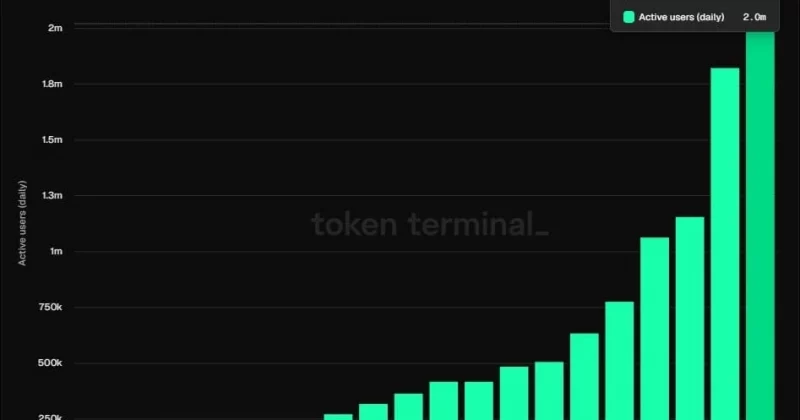
The climb to the 4 million DAU threshold was not an overnight anomaly but rather the culmination of a consistent, aggressive growth trend observed over the past eighteen months. During the fourth quarter of 2025, Tron maintained a robust average of 2.8 million daily active users, trailing slightly behind Solana, which at the time reported approximately 2.9 million DAUs.
The momentum shifted in early 2026. By February, Tron’s network activity had expanded to reach 3.2 million daily active users, signaling a growing preference among users for the network’s high-throughput, low-fee architecture. By surpassing the 4 million mark, Tron has effectively solidified its status as the primary infrastructure for global stablecoin settlements, distancing itself from competitors that primarily cater to retail speculative activity. This shift highlights a maturing market where utility-driven demand—specifically for remittances and cross-border trade—is becoming the dominant force in blockchain adoption.
The Tether Engine: Utility Over Speculation
At the core of Tron’s ecosystem performance is its relationship with Tether (USDT). The network currently functions as the global backbone for USDT, with transfer volumes frequently exceeding $20 billion in a single 24-hour window. This is not merely a statistical outlier; it represents a structural integration of the blockchain into the global financial plumbing.
As of May 2025, the circulating supply of USDT on the Tron network surpassed the $75 billion mark. This volume represents more than 50% of Tether’s total global circulating supply, underscoring the extent to which Tron has become the de facto home for the world’s most widely used stablecoin. With the network processing over 8 million daily transactions and boasting a total user account count exceeding 306 million, the sheer scale of the operation is unprecedented in the history of decentralized ledgers.
The dominance of USDT on Tron is rooted in the network’s original architectural vision. Founded by Justin Sun in 2017 and launching its mainnet in 2018, Tron was engineered with a specific focus on high transaction throughput and minimal costs. While other networks pivoted toward complex smart contract functionalities or experimental consensus mechanisms, Tron prioritized the creation of a high-speed environment conducive to high-frequency, low-value peer-to-peer transfers. This early strategic decision proved fortuitous as the global demand for dollar-pegged digital assets exploded in emerging markets, where traditional banking systems often prove inefficient or prohibitively expensive for cross-border commerce.
Chronology of Market Leadership
The transition from a speculative-led market to a utility-led market can be mapped through the evolution of Tron’s metrics over the last few years:
- 2018–2020: The foundational years of the Tron mainnet, characterized by the migration of various DApps and the establishment of its governance structure.
- 2021–2023: The integration of TRC-20 tokens, specifically USDT, began to accelerate. During this period, users in Southeast Asia, Latin America, and Africa increasingly adopted the Tron network as a medium for domestic and international value transfer.
- Q4 2025: Tron records 2.8 million DAUs, establishing a close competitive rivalry with Solana.
- February 2026: Tron breaks through to 3.2 million DAUs, signaling a divergence from broader crypto market trends.
- Present Day: Tron clears 4 million DAUs, effectively claiming the top spot in daily network participation across the industry.
The Structural Implications for TRX
For investors and market observers, the implications of this growth are twofold. On one hand, the Tron network has developed a reliable, non-cyclical baseline for revenue generation. Because the native token, TRX, is required to pay for transaction fees and serves as the primary mechanism for network governance, sustained transaction volume provides a fundamental demand floor for the asset. Unlike protocols that rely on hype cycles, Tron’s revenue is tied to the real-world utility of global remittance flows and business-to-business commerce.
However, this reliance on a single asset creates a unique risk profile often referred to as "concentration risk." Because the vast majority of Tron’s activity is predicated on USDT, the network’s health is inextricably linked to the stability and regulatory status of Tether.
Analysts have noted that if Tether were to face significant regulatory headwinds—such as intensified oversight from the U.S. Department of Justice or the SEC—or if major competitors like Circle’s USDC were to gain significant traction within the Tron ecosystem at the expense of USDT, the network could see a rapid decline in its user base. The current reliance on one primary stablecoin is both the network’s greatest strength and its most significant point of potential failure.
Perspectives on Institutional Utility
While official statements from the Tron Foundation often emphasize the network’s commitment to "decentralizing the internet," the broader industry view is that Tron has successfully captured the "unbanked" demographic. Institutional analysts have noted that the migration of value from legacy financial systems to the Tron blockchain is largely invisible to Western retail investors, yet it represents the largest shift in digital payment behavior to date.
The growth has not gone unnoticed by liquidity providers and centralized exchanges, which have prioritized support for TRC-20 USDT over other iterations of the asset due to lower withdrawal fees and higher network speed. This creates a "network effect" that is difficult for competing layer-one chains to disrupt. For a user in an emerging economy, the decision to use Tron is not based on blockchain ideology but on the objective reality of immediate, low-cost liquidity.
Future Outlook: Sustainability vs. Volatility
As the industry moves through 2026, the question for the Tron network is sustainability. Can the network continue to expand its user base beyond the current 4 million threshold?
To maintain this lead, developers are likely to focus on further enhancing the network’s integration with traditional financial institutions and expanding the utility of the TRC-20 standard beyond simple USDT transfers. Recent developments in cross-chain interoperability and institutional-grade custody solutions suggest that Tron is positioning itself to become a permanent fixture in the global financial architecture.
However, the threat of market volatility remains. While stablecoin users are generally less sensitive to price fluctuations than traders of volatile assets, a sustained, multi-year shift in global stablecoin policy could dampen the growth that Tron has enjoyed. Furthermore, as competing blockchains like Solana continue to improve their own scalability and fee structures, the competitive gap in terms of network throughput may narrow, forcing Tron to differentiate itself through even higher degrees of efficiency or specialized financial services.
Ultimately, Tron’s rise to the top of the blockchain hierarchy serves as a case study in the power of utility. By identifying a specific, high-demand use case—global value transfer—and optimizing its infrastructure to serve that use case exclusively, Tron has achieved a level of sustained daily engagement that many other networks have struggled to replicate. As it looks to the future, the challenge for the network will be to manage the risks of its own success, ensuring that its infrastructure remains resilient, compliant, and accessible as it continues to process billions of dollars in daily global transactions.