
Washington D.C. – June 30, 2026 – A critical piece of legislation designed to define the regulatory landscape for digital assets in the United States, the CLARITY Act, is confronting a significantly compressed and increasingly uncertain timeline for passage in the Senate, according to a new report from Jefferies analysts led by Andrew Moss. The report, published today, highlights a notable decline in the perceived likelihood of the bill’s enactment by year-end, as reflected by a significant drop in odds on the prediction market platform Polymarket.
The CLARITY Act, a proposed bill that aims to draw clear jurisdictional lines between the Securities and Exchange Commission (SEC) and the Commodity Futures Trading Commission (CFTC) regarding digital assets, has been a focal point for the cryptocurrency industry and institutional finance for over a year. Its passage is widely seen as a prerequisite for the widespread adoption of robust crypto infrastructure by traditional financial institutions, offering a stark contrast to the current environment of evolving agency guidance that can be subject to reversal by future administrations.
As of June 30, 2026, Polymarket odds for the CLARITY Act’s enactment by the end of 2026 have fallen to 48%, a substantial decrease from approximately 70% observed in mid-May. This decline in confidence coincides with a dwindling legislative calendar, with roughly only 20 remaining legislative days before the Senate’s August recess. The implications of this potential delay extend beyond mere scheduling difficulties, representing a "structural inflection point for institutional adoption of crypto infrastructure," according to the Jefferies analysis. The absence of a durable statutory framework could force the industry to continue operating under a patchwork of regulatory interpretations, creating a climate of uncertainty that hampers innovation and investment.
The Senate Timeline: A Tightening Squeeze on Legislative Progress
The journey of the CLARITY Act to its current precarious position on the Senate floor has been marked by bipartisan support in earlier stages, but the final hurdle presents significant challenges. The bill initially cleared the House of Representatives on July 17, 2025, with a decisive vote of 294 in favor to 134 against. Subsequently, it navigated the Senate Banking Committee on May 14, 2026, securing bipartisan approval with a vote of 15-9. Following this committee passage, the bill was placed on the Senate floor calendar on June 1, 2026, setting the stage for what many anticipated would be a smoother path to final approval.
However, securing the required 60 votes for full Senate passage presents a formidable obstacle. This threshold necessitates the support of at least seven Democratic senators crossing the aisle, a scenario complicated by several persistent disputes that have already stalled floor scheduling once. Key among these unresolved issues are debates surrounding ethics provisions, the language pertaining to illicit finance, and, most persistently, the contentious question of whether stablecoin issuers should be permitted to offer yield on dollar-pegged tokens. These sticking points have proven to be significant roadblocks, and the limited legislative days remaining before the August recess leave little room for further delays.
The Jefferies report underscores the gravity of this timeline constraint. Moss and his team cautioned that a failure to advance the CLARITY Act before the August break could push its consideration to 2027 or even beyond, particularly if the Democratic party were to regain control of the Senate in the upcoming November mid-term elections. This sentiment is echoed by other financial institutions; JPMorgan issued a parallel warning earlier in June, characterizing the congressional calendar as increasingly restrictive and highlighting the ongoing stalemate over the stablecoin yield debate. Galaxy Research has also adjusted its probability estimates, trimming its outlook for passage to approximately 50%-55%.
Passage vs. Delay: Unlocking Potential or Forfeiting Opportunity
The potential ramifications of the CLARITY Act’s passage or failure to pass are significant for the future of the digital asset ecosystem. According to Jefferies, enactment would provide banks, asset managers, and exchanges with the explicit statutory authority they require to scale critical services. This includes the tokenization of traditional assets, the establishment of robust custody arrangements for digital assets, and the development of staking and lending products. Such legislative clarity would move beyond the current landscape, where existing guidance from the SEC, CFTC, and the Office of the Comptroller of the Currency (OCC) offers only an approximation of the necessary authorization, rather than a definitive legal foundation.
A cornerstone of the CLARITY Act is its proposed "decentralization test." This test is designed to determine when a network token transitions from being classified as a security under SEC jurisdiction to a commodity under CFTC oversight. Legal experts, including those advising on the development of exchange-traded funds (ETFs), have argued that this legal architecture is essential for extending spot crypto ETF approvals beyond Bitcoin and Ether to include other large-cap tokens such as Solana (SOL) and Avalanche (AVAX). The rapid product development observed in the wake of established regulatory lanes is exemplified by BlackRock’s recent expansion of Bitcoin-linked ETF structures, demonstrating how quickly market innovation can accelerate once regulatory clarity is achieved.
Beyond ETFs, Jefferies identifies the CLARITY Act as a crucial prerequisite for revitalizing the crypto initial public offering (IPO) pipeline. The bill proposes a bespoke disclosure regime for ancillary asset originators, intended to be less burdensome than full securities registration. This framework would enable compliant token fundraising and facilitate secondary trading on CFTC-registered digital commodity exchanges, provided that decentralization thresholds are met. In the absence of such legislation, prospective issuers remain vulnerable to case-by-case scrutiny from the SEC, a process that can be protracted, unpredictable, and costly.
In a scenario where the CLARITY Act is delayed or fails to pass, regulated financial institutions would continue to rely on potentially reversible agency actions and interpretations. Jefferies characterizes this dynamic as a significant drag on blockchain initiatives. Compliance teams would be compelled to continuously reassess legal risks within an enforcement-driven rather than statute-based regime. This pattern, which has largely defined the U.S. crypto market structure since approximately 2020, according to JPMorgan’s analysis, stifles long-term planning and investment.
Equities in Focus: Market Volatility Expected for Key Crypto-Linked Companies
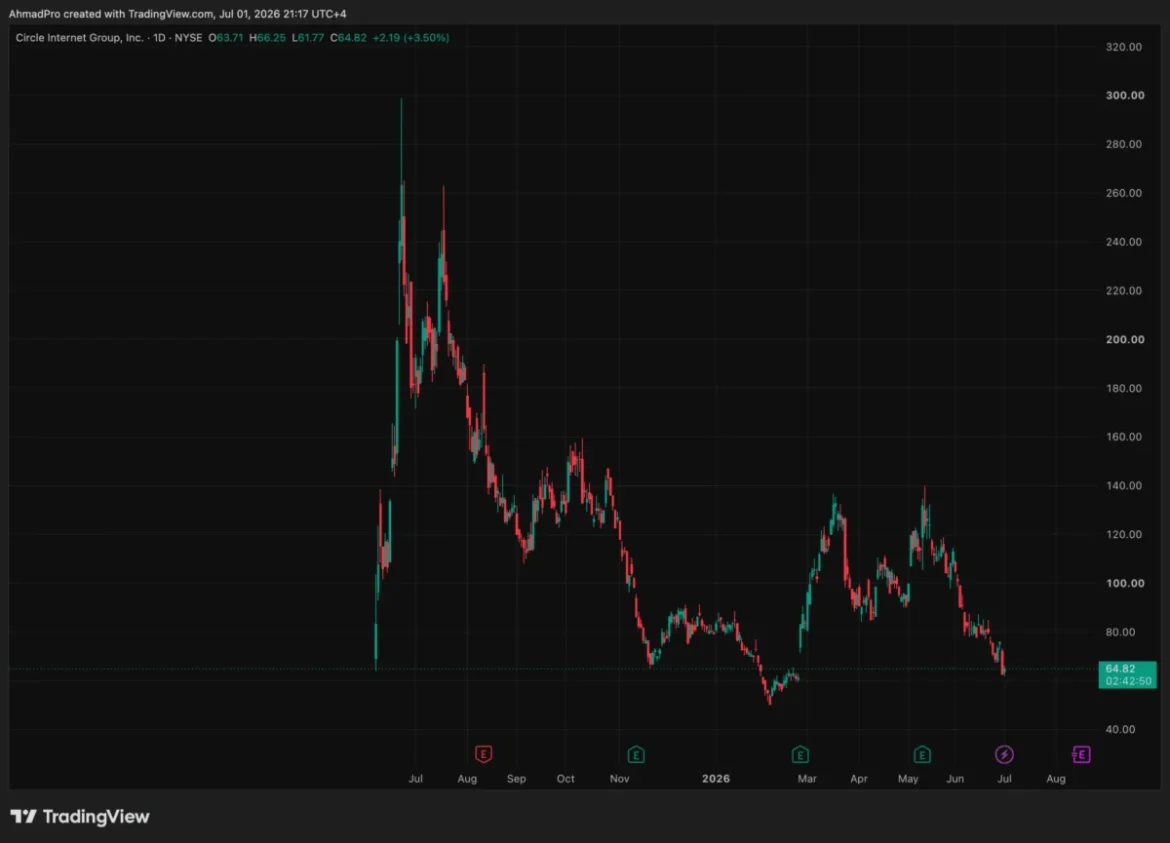
The ongoing legislative process surrounding the CLARITY Act is expected to generate considerable volatility in the stock prices of publicly traded companies with significant exposure to the cryptocurrency market. Jefferies has specifically flagged Circle (CRCL), Coinbase (COIN), and CoinDesk’s parent company, Bullish (BLSH), as primary listed names that investors should monitor closely.
For Circle, the issuer of the USD Coin (USDC) stablecoin, the Jefferies analysis suggests a mixed impact depending on the legislative outcome. The current iteration of the CLARITY Act, if passed, would effectively close a loophole that currently allows third parties, such as Coinbase, to offer rewards or interest on USDC holdings. This could potentially constrain USDC’s growth in the near term. Conversely, a delay in the bill’s passage would grant Circle additional time to diversify its revenue streams and further expand its payments network, potentially mitigating some of the competitive pressures it faces.
Looking further ahead, Jefferies identifies intensifying competition from bank-issued stablecoins as a more significant structural risk for Circle. This is a challenge that the CLARITY Act, regardless of its passage or delay, neither creates nor resolves. The report implies that the market may not have fully priced the asymmetry between the two potential legislative outcomes. This is evidenced by the prediction market odds hovering near a coin-flip probability, while the equities of companies in the sector have not yet repriced to fully reflect the implications of a prolonged regulatory vacuum. The upcoming release of the July text and the subsequent Senate vote timeline are anticipated to serve as the next concrete signals that will determine whether this valuation gap narrows on the upside or the downside.
The debate over the CLARITY Act underscores a broader challenge facing the digital asset industry: the need for a clear and stable regulatory framework to foster innovation, attract institutional capital, and protect investors. The current uncertainty, exacerbated by the tightening legislative calendar, highlights the delicate balance between regulatory oversight and the promotion of growth in a rapidly evolving technological landscape. The coming weeks will be critical in determining whether the United States will establish a foundational legal structure for digital assets or continue to navigate a complex and unpredictable regulatory environment.
Background and Broader Context
The CLARITY Act (short for "Clarity and Innovation for the Digital Asset Economy Act") emerged as a response to the growing ambiguity surrounding the regulatory treatment of digital assets in the United States. For years, the industry has grappled with conflicting interpretations from various federal agencies, primarily the SEC and the CFTC, regarding whether specific cryptocurrencies and digital tokens should be classified as securities or commodities. This jurisdictional ambiguity has created significant compliance challenges for businesses operating in the space and has deterred many traditional financial institutions from fully engaging with blockchain technology and digital assets.

The genesis of the CLARITY Act can be traced back to efforts to provide a more defined and predictable regulatory environment. The bill’s core objective is to clearly delineate the responsibilities of the SEC and the CFTC, assigning oversight of different types of digital assets to the appropriate regulator. This division is intended to reduce regulatory arbitrage, enhance market integrity, and provide a clearer path for legitimate innovation.
The inclusion of a "decentralization test" is a novel aspect of the proposed legislation. This test aims to establish objective criteria for determining when a digital asset has evolved beyond the characteristics of a security and should be regulated as a commodity. Such a test is crucial for assets that may begin as initial offerings resembling securities but, as their networks mature and become more decentralized, transition into a different regulatory category. This is particularly relevant for the development of a broader range of crypto ETFs, as the SEC has historically been hesitant to approve ETFs for digital assets other than Bitcoin and Ether due to concerns about market manipulation and investor protection under existing securities laws.
The debate over stablecoins, especially the provision allowing issuers to pay yield, reflects the ongoing tension between fostering innovation in stablecoin technology and concerns about financial stability and consumer protection. Regulators are wary of stablecoins becoming too intertwined with traditional banking systems without adequate safeguards.
The political landscape surrounding the CLARITY Act is also a significant factor. Bipartisan support in earlier legislative stages is a positive indicator, but the need for broad consensus on the Senate floor, especially in an election year, presents a substantial challenge. The outcome of the November mid-term elections could fundamentally alter the legislative calculus, potentially leading to a prolonged period of uncertainty if control of the Senate shifts.
Official Responses and Expert Commentary
While the Jefferies report paints a cautious picture, some voices within the regulatory community remain optimistic. SEC Commissioner Hester Peirce, often referred to as "Crypto Mom" for her generally more supportive stance on digital assets, expressed her continued optimism about the CLARITY Act’s prospects. In a statement on July 1, 2026, she indicated, "I’m still optimistic it will get done this summer," and added, "I expect that we’ll see it pass soon." Such statements, while encouraging, do not negate the significant legislative hurdles that remain.
The varying predictions from financial institutions like JPMorgan, Galaxy Research, and Jefferies highlight the inherent difficulty in forecasting legislative outcomes. These analyses are based on available data, historical legislative patterns, and expert judgment, but the dynamic nature of politics means that unforeseen events can always influence the trajectory of a bill.
The cryptocurrency industry itself has largely advocated for the passage of comprehensive legislation like the CLARITY Act. Industry leaders have repeatedly called for regulatory clarity to enable responsible growth and to ensure that the United States remains a competitive hub for digital asset innovation. The current environment of regulatory uncertainty is often cited as a reason why some companies have chosen to establish operations in jurisdictions with more defined legal frameworks.
Broader Impact and Implications
The passage or failure of the CLARITY Act will have far-reaching implications for the U.S. financial system and the global digital asset landscape.
For Institutional Adoption: A clear statutory framework would remove significant barriers to entry for traditional financial institutions looking to engage with digital assets. This could lead to increased investment in blockchain technology, tokenization services, and the development of new financial products and services. The ability to offer custody, trading, and lending services for a wider range of digital assets with legal certainty would be transformative.
For Innovation and Competition: A well-defined regulatory environment can foster innovation by providing certainty for entrepreneurs and developers. It can also level the playing field, preventing regulatory arbitrage and ensuring that all market participants operate under similar rules. Conversely, a prolonged period of regulatory uncertainty could stifle innovation and drive talent and capital to more crypto-friendly jurisdictions.
For Market Structure: The CLARITY Act’s potential to define the roles of the SEC and CFTC could lead to a more orderly and efficient market for digital assets. This could include the development of regulated exchanges for digital commodities, clearer rules for stablecoin issuance, and a more predictable process for the listing of crypto-related financial products.
For Investor Protection: While proponents argue that clarity enhances investor protection by providing a defined regulatory framework, opponents of certain provisions might argue that a more permissive approach could expose investors to greater risks. The debate over illicit finance provisions, for instance, centers on balancing the need for AML/KYC compliance with the pseudonymous nature of some blockchain transactions.
For Global Competitiveness: The United States has historically been a leader in financial innovation. The passage of comprehensive digital asset legislation could solidify its position, while a failure to act decisively could allow other nations to gain a competitive advantage in this burgeoning sector.
The upcoming legislative votes on the CLARITY Act represent a critical juncture. The market’s reaction, as indicated by Polymarket odds and the focus on key equities, underscores the significant financial stakes involved. The next few weeks will be crucial in determining whether the U.S. moves towards a more defined and supportive regulatory future for digital assets or remains mired in the complexities of agency guidance and legislative uncertainty.
Disclaimer: This article aims to provide accurate and timely information based on available reports and statements. However, it should not be construed as financial or investment advice. Market conditions and legislative processes are subject to rapid change. Readers are encouraged to conduct their own due diligence and consult with qualified professionals before making any investment decisions.
