
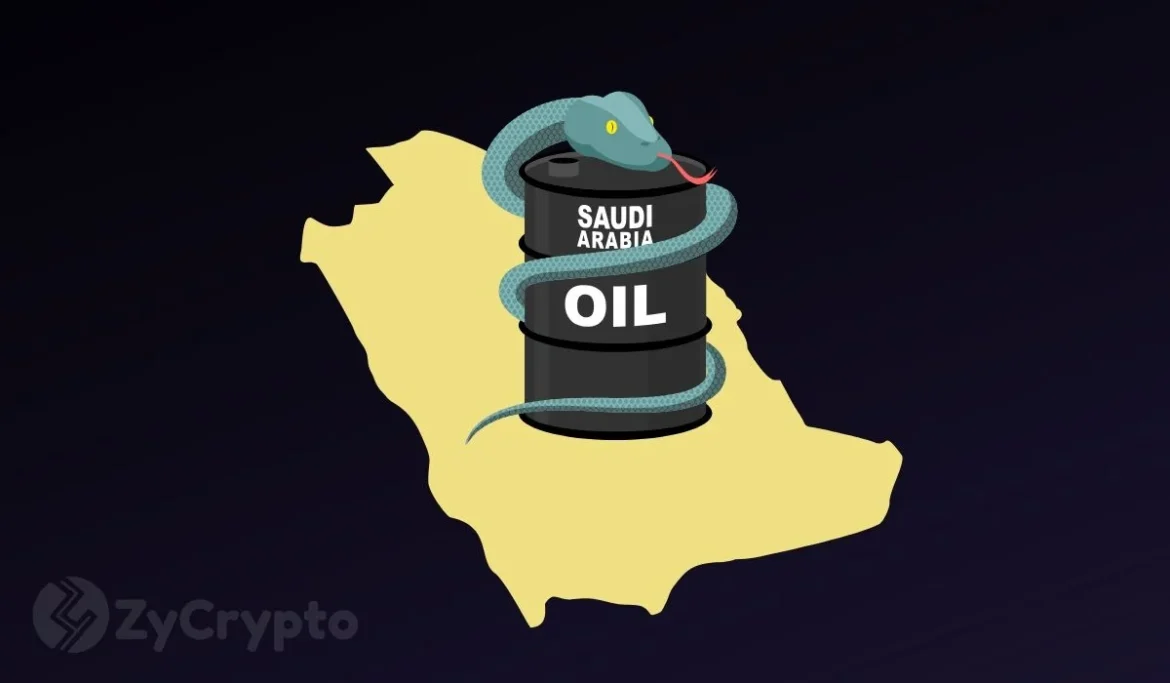
Saudi Arabia, a global heavyweight traditionally defined by its vast petroleum reserves and energy dominance, is steadily pivoting toward a future underpinned by advanced financial technology. In a landmark development for the Middle East, the Saudi Central Bank—formerly known as the Saudi Arabian Monetary Authority (SAMA)—officially announced via social media that blockchain technology had been successfully integrated into the nation’s domestic financial architecture. This strategic deployment marks a significant milestone in the Kingdom’s ongoing efforts to diversify its economy, reduce friction in financial transactions, and establish itself as a technological pioneer in the region.
The integration of distributed ledger technology (DLT) is not merely an isolated technological upgrade; it represents a calculated maneuver aligned with Saudi Arabia’s broader national transformation strategy. As global economic paradigms shift away from traditional resource dependency, the Kingdom is utilizing cutting-edge financial infrastructure to future-proof its economy. By embedding blockchain solutions directly into its banking and credit systems, Saudi Arabia is signaling to international markets that its modernization agenda extends far beyond real estate and tourism into the core of global fintech innovation.
The Economic Backdrop: Navigating Crises Through Innovation
The Kingdom’s aggressive push into financial technology occurs against a backdrop of unprecedented global and regional economic pressures. For decades, the Saudi economy has been inextricably linked to the fluctuations of the global oil market. However, the waning dominance of the traditional petrodollar system, coupled with structural shifts in global energy consumption, has forced oil-producing nations to rethink their long-term fiscal strategies.
Under the visionary leadership of Crown Prince Mohammed Bin Salman (MBS) and his sweeping Vision 2030 framework, Saudi Arabia has actively pursued economic diversification. Yet, the momentum of these ambitious reforms faced severe headwinds following the onset of the global COVID-19 pandemic. Compounded by a high-stakes price war with Russia over oil production quotas, the Saudi government found itself grappling with a dual shock: plummeting crude prices and widespread economic stagnation.
In times of crisis, the Saudi government has historically relied on state-directed spending to stimulate domestic markets and maintain financial stability. A comprehensive economic assessment published by KPMG in April highlighted the severe implications of the pandemic and the subsequent oil price crash on the Saudi Arabian economy. In response to these pressures, the government rolled out robust financial stimulus packages and targeted palliatives aimed at bolstering the banking and financial sectors. Within this ecosystem of fiscal rescue and restructuring, blockchain technology emerged as a critical instrument for efficiency, offering a transparent, secure, and low-cost mechanism to inject liquidity and streamline credit provision.
Strategic Deployment: Enhancing Credit Provision Through DLT
At the heart of SAMA’s recent announcement is the deployment of blockchain systems specifically designed to enhance credit provision and liquidity management within the banking sector. This implementation represents the first initiative of its kind within the Middle East, setting a new operational benchmark for regional central banks.
By utilizing a decentralized and immutable ledger, financial institutions can verify transactions, monitor credit risks, and process loans with unprecedented speed and accuracy. Traditional financial systems often suffer from bureaucratic delays, high administrative overheads, and vulnerability to intermediary friction. Blockchain mitigates these vulnerabilities by creating a single, shared source of truth accessible to authorized parties in real time.
The advantages of this deployment are manifold:
- Enhanced Transparency: Every transaction recorded on the ledger is immutable and traceable, significantly reducing opportunities for fraud and administrative error.
- Cost Efficiency: By eliminating unnecessary intermediaries and automating compliance through smart contracts, operational costs for commercial banks are drastically reduced.
- Security: Cryptographic protocols ensure that sensitive financial data remains protected against unauthorized access and cyber threats.
- Anti-Inflationary Potential: While not a direct currency mechanism in this phase, the structural integrity of DLT fosters greater monetary discipline and transparency.
These intrinsic benefits likely informed SAMA’s decision to move beyond theoretical pilot programs and integrate blockchain technology directly into the live financial system.
Chronology of SAMA’s Blockchain Journey
Saudi Arabia’s transition into blockchain technology did not happen overnight. It is the culmination of years of methodical research, sandbox testing, and international collaboration between central authorities and global technology providers.
- 2017–2018 (Laying the Groundwork): SAMA, alongside the United Arab Emirates Central Bank (UAECB), initiated exploratory discussions regarding cross-border digital currency and blockchain applications. This led to joint projects aimed at understanding how DLT could optimize interbank settlements.
- 2019 (Project Aber): One of the most notable milestones in regional fintech history was the launch of "Project Aber." SAMA and the UAECB successfully tested a dual-issued digital currency—backed by the Saudi Riyal and the UAE Dirham—using a distributed ledger. The project proved that a single digital currency could be used safely and efficiently for cross-border settlements between commercial banks in both nations, serving as a vital proof-of-concept.
- 2020 (Pandemic Response and Domestic Deployment): As the global health crisis disrupted traditional commerce, SAMA accelerated its digital infrastructure initiatives. The formal announcement regarding the deployment of blockchain technology within the domestic financial ecosystem marked the transition from cross-border experimentation to core national implementation, specifically targeting credit provision.
- 2021–Present (Expansion and CBDC Preparation): Building on the success of these early deployments, Saudi authorities have continued to refine their digital regulatory frameworks, laying the groundwork for more advanced financial products, including the potential issuance of a Central Bank Digital Currency (CBDC).
Official Responses and Regional Implications
While direct public statements from commercial banking executives in Saudi Arabia have emphasized cautious optimism, the overarching sentiment within the regional financial community is overwhelmingly positive. International financial bodies and fintech analysts have praised SAMA’s proactive stance, noting that regulatory clarity and institutional adoption are the two most critical drivers for blockchain maturation in the Middle East.
Industry observers point out that Saudi Arabia’s methodical approach—balancing stringent regulatory oversight with technological experimentation—positions the Kingdom as a stabilizing force in the regional fintech landscape. Neighboring nations, particularly the UAE and Bahrain, have also made significant strides in blockchain adoption; however, the sheer scale of the Saudi economy gives its financial technology initiatives profound regional weight.
By integrating blockchain into credit systems, Saudi Arabia is not only modernizing its internal banking operations but is also setting a precedent for other Gulf Cooperation Council (GCC) member states. The move encourages regional financial institutions to upgrade their own legacy systems to remain competitive in an increasingly digitized global economy.
Broader Impact and the Path Toward a Central Bank Digital Currency
The successful deployment of blockchain for credit provision serves as a critical watershed moment for Saudi Arabia. It bridges the gap between traditional fiat banking and decentralized technological innovation, proving that public sector institutions can successfully adopt disruptive technologies without sacrificing security or regulatory compliance.
Furthermore, this operational milestone is widely viewed by financial analysts as the direct precursor to the implementation of a Central Bank Digital Currency (CBDC). As central banks worldwide explore the viability of sovereign digital currencies to protect monetary sovereignty and improve payment efficiencies, Saudi Arabia’s foundational work with DLT places it in a prime position to issue a digital Riyal.
The introduction of a CBDC, combined with the current blockchain-based credit infrastructure, would create a cohesive, highly efficient digital economy. It would streamline international trade, reduce reliance on legacy correspondent banking networks, and cement Riyadh’s status as the preeminent financial and technological hub of the Middle East.
As Saudi Arabia continues to navigate the complexities of a post-oil global economy, its aggressive embrace of blockchain technology demonstrates a clear commitment to innovation. By leveraging decentralized systems to secure its financial future, the Kingdom is proving that its ambitions extend far beyond the oil wells that built its modern foundations, charting a confident course toward a digitally empowered tomorrow.

