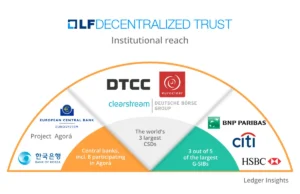
US-based broker Alpaca has announced a significant $135 million in venture funding, spearheaded by Peak XV, with contributions from Elefund, Opera Tech Ventures (the venture capital arm of BNP Paribas Group), and Unbound. This substantial injection of capital underscores the company’s strategic positioning within the rapidly evolving fintech landscape, particularly its role as an API-driven brokerage infrastructure provider for innovative financial technology firms. The funding round follows a $150 million Series D round in January, highlighting a period of accelerated growth and expansion for Alpaca.
Alpaca differentiates itself from traditional brokerage firms by offering a robust Application Programming Interface (API) that empowers fintech companies to build and scale their trading services atop Alpaca’s existing infrastructure. While the company has expressed ambitions in AI-driven investing, its current prominence is significantly bolstered by its critical role in supporting major issuers of synthetic tokenized stocks. These include prominent players like Backed (xStocks), Ondo Global Markets, and Robinhood, alongside the recently launched Binance bStocks. Alpaca currently holds custody of the underlying stocks that represent approximately $1.5 billion in tokenized assets, positioning it as a key custodian in this burgeoning market segment.
The latest funding round signifies a strategic push for Alpaca, following a period of significant expansion. In the wake of its January Series D funding, the company has actively pursued strategic acquisitions to broaden its geographical reach and service offerings. Notably, Alpaca acquired WealthKernel, a European provider of similar API brokerage services, and Zincmoney in India, signaling a commitment to establishing a global footprint in the API brokerage space. These acquisitions are designed to enhance Alpaca’s ability to serve a diverse international client base and capitalize on regional fintech growth opportunities.
Beyond the venture capital infusion, Alpaca has also secured $300 million in debt financing. This debt funding was primarily sourced from Payward, the parent company of Kraken, and BMO. The involvement of Payward is particularly noteworthy given its ownership of Backed, a significant issuer of tokenized stocks that relies on Alpaca’s infrastructure. This dual role as a key client and a major creditor grants Payward significant visibility into Alpaca’s operational and financial performance. Depending on the specific terms of the debt agreements, this creditor position could potentially evolve into an equity stake, further solidifying the strategic alignment between the two entities. The substantial debt financing raises questions about Alpaca’s immediate capital allocation priorities and its long-term strategic objectives.
Background and Context: The Rise of Tokenized Securities
The emergence of tokenized securities, particularly synthetic tokenized stocks, represents a significant paradigm shift in financial markets. These digital assets, built on blockchain technology, aim to provide greater accessibility, transparency, and efficiency compared to traditional equity trading. Synthetic tokenized stocks often derive their value from underlying traditional assets without directly holding them, offering a way to trade assets that might otherwise be inaccessible to certain investors or jurisdictions.
The development of this market has been influenced by several factors:
- Technological Advancements: The maturation of blockchain technology and the proliferation of smart contracts have made the creation and management of digital securities more feasible.
- Regulatory Scrutiny and Evolution: While regulatory frameworks for tokenized assets are still evolving globally, some jurisdictions have begun to provide clarity, fostering cautious optimism among market participants. The US Securities and Exchange Commission (SEC), for instance, has been developing taxonomies for tokenized securities, indicating a move towards formal recognition and regulation.
- Demand for Accessibility and Liquidity: Investors, particularly in emerging markets or those seeking exposure to specific asset classes, have shown a growing appetite for more accessible and liquid trading solutions. Tokenization offers the potential to fractionalize ownership, reduce settlement times, and enable trading on a 24/7 basis.
- Innovation by Fintech Companies: Startups and established financial institutions are actively exploring and investing in tokenization solutions, driving innovation and competition in the space.
Alpaca’s role as an API broker is crucial in this ecosystem. By providing the foundational infrastructure, it allows a multitude of fintechs to build user-friendly interfaces and specialized trading products on top of a regulated and compliant brokerage service. This "brokerage-as-a-service" model lowers the barrier to entry for new entrants and enables existing players to scale their operations rapidly.
Chronology of Alpaca’s Recent Growth
- January [Year – assume recent past]: Alpaca secures $150 million in Series D funding. This round signals strong investor confidence and provides capital for strategic expansion.
- [Following January]: Alpaca announces and completes the acquisition of WealthKernel, expanding its presence and service capabilities in the European market.
- [Following WealthKernel acquisition]: Alpaca acquires Zincmoney, further solidifying its position in the Indian market and its commitment to emerging economies.
- [Recent Past]: Alpaca announces a $135 million venture funding round led by Peak XV, with participation from Elefund, Opera Tech Ventures, and Unbound.
- [Simultaneously with venture funding announcement]: Alpaca reveals an additional $300 million in debt financing, primarily from Payward (Kraken’s parent company) and BMO.
This accelerated timeline of funding and acquisitions demonstrates Alpaca’s aggressive strategy to capture market share and solidify its infrastructure dominance in the API brokerage and tokenized asset sectors.
Supporting Data and Market Trends
The tokenized securities market, while still nascent, is projected for substantial growth. Industry reports indicate a significant increase in the value of tokenized assets under management. For instance, some analyses project the global tokenized asset market to reach trillions of dollars within the next decade. This growth is fueled by increasing institutional interest, the development of robust regulatory frameworks, and the perceived benefits of blockchain technology in financial services.
The $1.5 billion in tokens currently underpinned by stocks held in custody by Alpaca represents a substantial portion of the synthetic tokenized stock market. This figure highlights Alpaca’s critical role as a service provider to key players in this niche. The demand for such services is expected to rise as more companies explore tokenization as a means to democratize access to investments and create new trading opportunities.
The involvement of established financial institutions like BNP Paribas Group (through Opera Tech Ventures) and traditional banks like BMO in Alpaca’s funding rounds signals a growing acceptance and integration of tokenized assets and API-driven financial infrastructure within the mainstream financial ecosystem. This is a departure from the early days when such ventures were often seen as purely speculative or outside the purview of traditional finance.
Strategic Implications and Analyst Perspectives
The substantial funding raised by Alpaca is likely to be directed towards several key areas:
- Infrastructure Enhancement: Continued investment in its API technology, ensuring scalability, security, and the ability to support a wider range of financial products and trading strategies.
- Regulatory Compliance: Strengthening its compliance frameworks to navigate the complex and evolving regulatory landscape for digital assets and securities trading globally.
- Product Development: Expanding its offerings to include more sophisticated trading tools, AI-driven investment solutions, and potentially supporting the tokenization of a broader array of asset classes.
- Geographic Expansion: Further solidifying its presence in key international markets through organic growth and potential future acquisitions.
- Talent Acquisition: Attracting and retaining top talent in engineering, finance, and compliance to support its ambitious growth plans.
The dual nature of the funding—venture capital for growth and debt for operational capital—suggests a balanced approach to financial strategy. The debt financing, particularly from a related party like Payward, could provide Alpaca with greater financial flexibility and potentially lower its cost of capital, while also offering the lender enhanced insight and potential upside.
Industry observers will be watching closely to see how Alpaca leverages this capital to maintain its competitive edge. The company’s ability to navigate regulatory hurdles, attract and retain a diverse client base, and continue innovating in the rapidly evolving fintech space will be crucial for its long-term success. The increasing institutional involvement, as evidenced by the investors in this round, suggests that tokenized securities are moving beyond early adoption and becoming a more integrated part of the global financial system. Alpaca’s strategic positioning as a key enabler of this transition appears to be well-supported by this significant funding achievement.