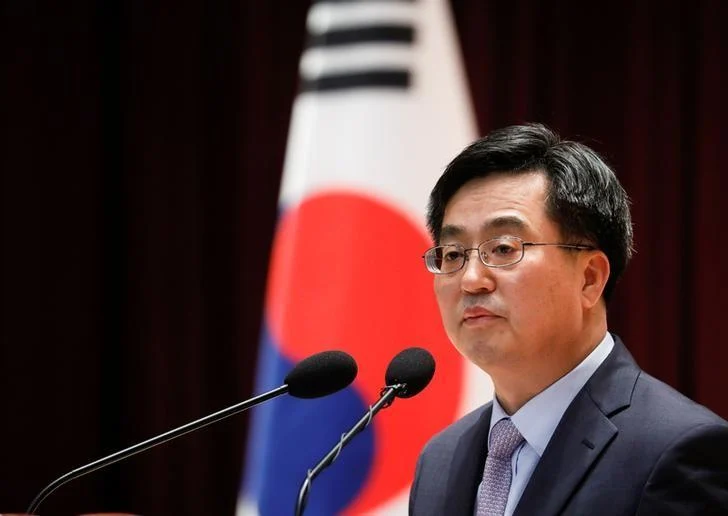
The South Korean government is signaling a significant shift in its regulatory stance regarding the cryptocurrency sector, specifically concerning the potential legalization of Initial Coin Offerings (ICOs). Reports emerging from the Financial Services Commission (FSC) and local media outlets suggest that authorities are actively deliberating a framework that would allow for regulated token sales, provided that specific compliance conditions are met. This pivot marks a noteworthy departure from the restrictive and often hostile environment that characterized the South Korean crypto market throughout 2017 and early 2018.
The Evolution of South Korea’s Crypto Regulatory Landscape
To understand the weight of this potential policy reversal, one must examine the volatility of the preceding year. Throughout 2017, South Korea emerged as a global epicenter for cryptocurrency trading, boasting some of the highest transaction volumes worldwide. However, the sheer speed of market growth triggered alarm within the South Korean government, which feared the risks of unchecked speculation, potential capital flight, and the prevalence of illicit activities such as money laundering.
In September 2017, the South Korean government issued a blanket ban on all forms of ICOs. This decision was framed as a necessary measure to protect retail investors from fraudulent schemes and the inherent risks associated with early-stage blockchain projects. The regulatory crackdown was further compounded by a series of high-profile security breaches at major international exchanges—most notably the Coincheck hack—which eroded investor confidence and led to a sharp contraction in global Bitcoin prices. At the time, the mere mention of regulatory intervention by Seoul was enough to trigger double-digit percentage drops in the valuation of major altcoins.
Chronology of the Shift
The transition from a prohibitive stance to a more pragmatic, regulatory-focused approach began to take shape in early 2018. The timeline of this progression is as follows:
- September 2017: The South Korean government officially bans ICOs, citing investor protection concerns and the need to curb speculative bubbles.
- December 2017: As crypto-mania reaches a fever pitch, regulators introduce emergency measures, including the requirement for real-name bank accounts for cryptocurrency trading and a ban on anonymous virtual accounts.
- January 2018: Reports surface suggesting the government is considering a full shutdown of cryptocurrency exchanges, sparking a national outcry and a petition signed by over 200,000 citizens.
- March 2018: Officials begin to soften their rhetoric. The Financial Services Commission (FSC) holds industry forums at the National Assembly, suggesting that blockchain technology development and crypto-asset regulation should be treated as separate, parallel objectives.
- Late Q1 2018: Anonymous sources within the government indicate that discussions are underway with the tax agency and the justice ministry to draft a roadmap for "conditional" ICO legalization.
Inside the Regulatory Deliberations
The current discussions surrounding the legalization of ICOs are rooted in the necessity for a balanced approach. According to reports from the Korea Times, the FSC is exploring a middle-ground strategy. Kang Young-soo, a key official overseeing cryptocurrency trading policies at the FSC, has clarified that there is currently no specific law explicitly criminalizing all ICOs. Consequently, projects that do not violate existing financial regulations may find themselves in a de facto legal space, awaiting a more formal, codified framework.
"There are many speculating about the possibility of allowing ICOs," Kang noted during a recent industry forum. "The FSC has acknowledged a third-party view regarding the issue, but there is nothing that we can say officially at the moment." This statement suggests that while the government is not yet ready to issue a blanket endorsement, it is moving away from the "total ban" narrative that previously dominated the public discourse.
Supporting Data and Market Context
The caution exercised by the South Korean government is largely driven by the sheer scale of the local market. South Korea consistently ranks among the top nations for cryptocurrency adoption per capita. This high level of engagement carries inherent risks. According to various financial analysts, the lack of robust Anti-Money Laundering (AML) and Know Your Customer (KYC) protocols in the early days of the crypto boom made the country a prime target for financial crimes.
Despite the softening of the government’s stance, the administration remains firm on its AML requirements. The existing framework, which restricts foreigners from accessing South Korean crypto exchanges, remains in full force. This restriction is viewed by the government as an essential tool to prevent capital flight and ensure that domestic digital asset flows remain transparent to the National Tax Service.
The Distinction Between Blockchain and Speculation
A critical component of the South Korean government’s evolving policy is the decoupling of "blockchain innovation" from "crypto-asset speculation." In statements made at the National Assembly, officials have emphasized that the government is highly interested in fostering the growth of blockchain as a foundational technology for industry, logistics, and public administration.
This dual-track approach—promoting the underlying technology while strictly regulating the speculative vehicle of ICOs—is becoming the hallmark of the current administration. By distinguishing between the utility of distributed ledger technology and the volatility of tokenized fundraising, the government hopes to maintain South Korea’s status as a leader in the global digital economy without sacrificing the integrity of its financial system.
Implications for the Global Crypto Industry
The potential legalization of ICOs in South Korea carries profound implications for the global digital asset market. As one of the world’s most influential economies in the crypto space, a positive shift in Seoul’s policy would likely act as a catalyst for other jurisdictions to reconsider their own prohibitive measures.
If South Korea successfully implements a "conditional" framework, it would provide a blueprint for how nations can embrace the capital-raising potential of blockchain without exposing their economies to systemic risk. Key features of such a framework would likely include:
- Mandatory Disclosures: Requiring ICO issuers to provide detailed whitepapers and financial audits to regulators.
- Investor Accreditation: Limiting participation in token sales to sophisticated or accredited investors to mitigate retail loss.
- Strict AML/KYC Compliance: Ensuring that every participant in an ICO is verified, thereby aligning token sales with traditional financial reporting standards.
Conclusion and Future Outlook
The transition from the hardline stance of 2017 to the measured deliberations of 2018 represents a maturing of the regulatory environment in South Korea. While the government remains cautious, the acknowledgment that total prohibition is neither sustainable nor necessarily beneficial indicates a pragmatic evolution.
For investors and blockchain entrepreneurs, the potential for a regulated ICO market in South Korea offers a path toward legitimacy. However, the path forward will undoubtedly remain tethered to rigorous oversight. As officials continue to consult with tax and justice authorities, the final policy, when announced, will likely be one of the most stringent and well-defined frameworks for digital asset fundraising in the world. For now, the crypto community awaits further official guidance, viewing the current climate as a tentative but positive step toward the institutionalization of the digital asset class in one of Asia’s most vital financial hubs.