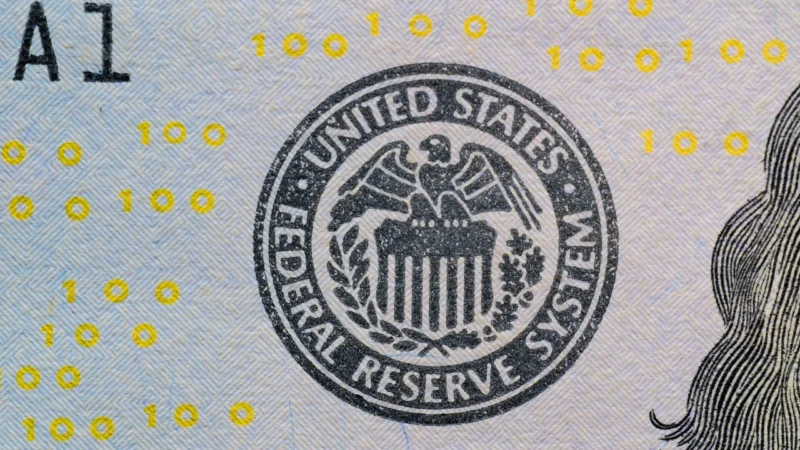
The high-stakes battle over the future architecture of the United States payment system has entered a decisive new phase, with senior monetary officials firmly planting their flag in the traditional banking sector rather than the decentralized digital asset ecosystem. In a series of recent policy addresses and media engagements, Federal Reserve Bank of Kansas City President Jeff Schmid forcefully articulated a vision of the future where instant, government-backed banking infrastructure—spearheaded by the Federal Reserve’s proprietary FedNow service—will decisively outperform stablecoins and alternative blockchain-based payment networks.
Schmid’s remarks, delivered most notably during an address at the influential Hoover Institution and subsequently reinforced in several high-level interviews, challenge the narrative that distributed ledger technology and privately issued digital tokens are poised to supplant legacy financial institutions. Instead, the central banker framed FedNow not as a radical disruption, but as a stable, highly scalable evolution of the existing multi-trillion-dollar commercial banking system. As the American financial apparatus races toward an era defined by instantaneous settlement, the central question facing policymakers, commercial lenders, and fintech innovators is whether public payment rails or private digital assets will capture the economic engine of the twenty-first century.
The debate arrives at a critical juncture for the domestic and global economy. With daily US payment flows projected to reach astronomical volumes between $5 trillion and $10 trillion—all demanding instantaneous clearing and settlement—the operational parameters of modern banking are undergoing a profound transformation. According to Schmid, this shift to real-time liquidity is no longer an optional premium feature for corporate and retail customers; it is rapidly becoming the foundational baseline of modern commerce.
The Strategic Vision of FedNow and Real-Time Settlement
To understand Schmid’s dismissal of stablecoins as the primary vehicle for future payments, one must examine the operational design and rapid trajectory of the FedNow service. Launched by the Federal Reserve in July 2023, FedNow was engineered to satisfy a long-standing demand from financial institutions, businesses, and consumers for a resilient, 24/7/365 instant payment infrastructure.
Unlike traditional automated clearing house (ACH) transfers or legacy wire systems that rely on batch processing and end-of-day netting, FedNow handles instant credit-push transfers where the sender initiates the transaction, and settlement occurs immediately in central bank funds. This architectural choice eliminates counterparty credit risk, ensuring that the recipient has definitive, spendable funds within seconds, regardless of weekends, holidays, or traditional banking hours.
Adoption figures underscore the quiet momentum behind the central bank’s initiative. By October 2026, participation in the FedNow network had expanded to 1,949 distinct financial institutions. Crucially, this cohort of participating banks and credit unions encompasses approximately half of all demand deposit accounts—the primary checking and savings accounts utilized by everyday American households and businesses—across the United States.
Transaction volumes have mirrored this broad institutional uptake. During the third quarter of 2026, the network successfully processed 6.38 million distinct transactions, representing an aggregate value of $370.9 billion. By late 2026, systemic usage indicators shattered previous records, signaling that the banking sector is moving past the experimental pilot phase and actively embedding real-time rails into everyday operational workflows.
The Regulatory Evolution and the Stablecoin Challenge
Schmid’s assertive stance on FedNow does not exist in a vacuum; it directly confronts a rapidly maturing digital asset landscape. For years, proponents of blockchain technology argued that stablecoins—cryptographic tokens pegged securely to fiat currencies like the US dollar—offered the only viable mechanism for overcoming the friction, delays, and high costs associated with traditional banking rails.
That argument gained substantial legislative tailwinds with the passage of the GENIUS Act of 2025. The landmark legislation established a comprehensive federal regulatory framework for payment stablecoins, providing issuers and corporate users with unprecedented legal clarity, reserve requirements, and compliance standards within the United States. Designed to foster innovation while safeguarding systemic financial stability, the GENIUS Act was widely expected to supercharge stablecoin adoption as a legitimate, competitive medium of exchange for domestic and cross-border commerce.
However, Schmid’s commentary signals that the Federal Reserve views its own public infrastructure as the superior, more natural home for foundational money movement. While regulated stablecoins may carve out specific niches within decentralized finance (DeFi) or specialized cross-border transactions, the central bank maintains that the ultimate stability, legal certainty, and consumer protection embedded within the regulated banking system make public rails the definitive choice for the broader economy.
Tokenized Deposits: The Commercial Bank Counteroffensive
Perhaps the most intriguing element of Schmid’s analysis is his focus on tokenized deposits—a hybrid financial instrument that many industry analysts view as the ultimate bridge between traditional banking and blockchain technology.
Tokenized deposits represent standard commercial bank liabilities, such as insured customer checking account balances, wrapped in a digital token format. By utilizing distributed ledger technology or programmable smart contracts, these tokens retain the safety, insurance, and regulatory compliance of traditional bank deposits while borrowing the programmability, composability, and instantaneous transfer capabilities that originally made cryptocurrencies attractive to fintech developers.
For traditional financial institutions, tokenized deposits offer a formidable strategic advantage. If commercial banks can successfully issue and circulate tokenized versions of their own insured deposits, they can effectively neutralize the value proposition of private stablecoins. Customers gain the programmatic benefits of digital tokens—such as automated conditional payments, supply chain execution, and instantaneous settlement—without ever having to exit the regulated banking perimeter or assume the reserve-management risks associated with non-bank stablecoin issuers.
Schmid’s endorsement of this conceptual framework suggests that monetary authorities are increasingly comfortable with commercial banks leveraging tokenization technology, provided the underlying money remains firmly anchored within insured, reserve-backed institutional accounts. This dynamic sets the stage for intense commercial rivalry between bank-issued tokenized deposits and privately managed stablecoins in the years ahead.
Operational Realities and Institutional Implications
The transition to a real-time payment economy demands far more than technological upgrades; it requires a wholesale reengineering of how commercial banks manage their daily balance sheets. Schmid highlighted that liquidity and duration management will soon become the central pillars of banking operations, eclipsing traditional back-office functions.
In a legacy payment environment, banks relied heavily on end-of-day netting processes to smooth out intraday cash flow imbalances and liquidity mismatches. With daily US payment flows projected to surge between $5 trillion and $10 trillion under a continuous, real-time settlement model, treasury management teams no longer have the luxury of time. Liquidity management has transformed into a round-the-clock, real-time operational discipline. Banks must maintain continuous buffers of high-quality liquid assets (HQLA) to ensure they can honor instant outflows at any hour of the day or night without triggering liquidity shortfalls or relying on costly emergency central bank lending facilities.
Furthermore, while the macro trajectory clearly favors instantaneous payment systems, important caveats remain regarding the speed of ultimate market saturation. Schmid represents a prominent, highly influential voice within the Federal Reserve System, but his public commentary outlines a directional trend in monetary policy and financial plumbing rather than an immutable, mandatory policy decree.
Although FedNow’s reach to approximately 50% of the nation’s demand deposit accounts is a remarkable milestone, universal coverage has not yet been achieved. Moreover, institutional onboarding by a bank or credit union does not automatically translate into heavy, ubiquitous transactional usage by everyday retail customers, many of whom remain comfortable with existing debit card, credit card, and ACH networks for routine purchases.
Broader Economic Impact and Future Outlook
The ideological and structural contest between FedNow and stablecoins carries profound implications for the future of monetary sovereignty, financial stability, and commercial banking profitability.
If public instant payment rails and bank-issued tokenized deposits successfully capture the vast majority of domestic transaction volume, the Federal Reserve will retain a high degree of visibility and control over the nation’s money supply and monetary policy transmission mechanisms. Conversely, a wholesale migration of everyday economic activity toward private stablecoins could fragment liquidity, introduce systemic runs on unregulated reserve assets, and diminish the central bank’s ability to manage economic cycles effectively.
As the financial sector digests Schmid’s directives, commercial lenders are accelerating their investments in real-time treasury infrastructure, API integration, and digital asset R&D. The debate over whether blockchain-native stablecoins or government-engineered instant rails will define the future of money is far from settled. Yet, one reality is now abundantly clear: the institutional establishment has mobilized its considerable resources to ensure that the evolution of money remains tethered to the traditional, regulated banking system.