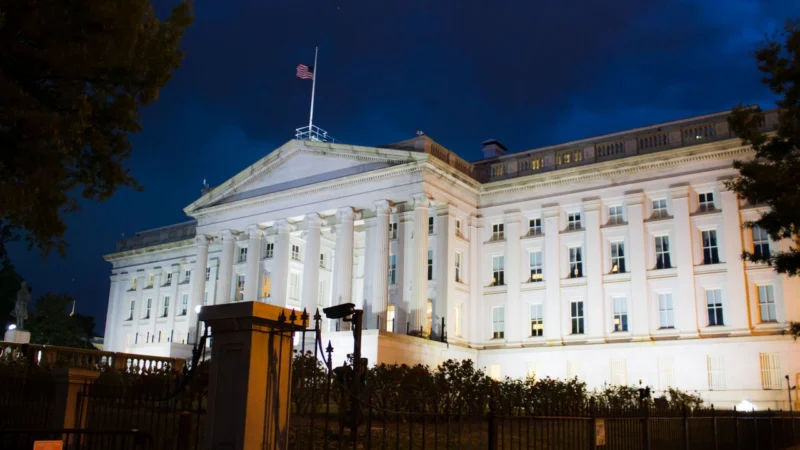
The United States Department of the Treasury has intensified its ongoing campaign against transnational organized crime and cyber-enabled financial fraud, launching its third major sanctions package against the Cambodia-based Prince Group and its sprawling international network. Announced on November 5, 2026, the latest enforcement action by the Office of Foreign Assets Control (OFAC) targets a total of 45 new assets, encompassing four individuals and 41 corporate entities. This aggressive expansion of Washington’s sanctions blacklist underscores the federal government’s deepening concern over the convergence of massive cryptocurrency investment schemes, institutional money laundering, and severe human rights abuses, including human trafficking tied to Southeast Asian scam compounds.
Alongside the sweeping measures directed at the Prince Group network, OFAC also levied sanctions against Chui Kok Wa, a Malaysian national accused of orchestrating an independent fraudulent operation out of Madagascar that utilized fake non-fungible token (NFT) platforms to defraud U.S. citizens. Together, these actions represent a significant escalation in the global regulatory and law enforcement crusade to sever cybercriminal organizations from access to the legitimate international financial system.
The Scope of the Third Tranche: Unraveling a Global Corporate Web
The newly designated individuals—identified by OFAC as Qiu Yong, Zhao Mengyao, He Yujing, and Visal Pang—are accused of playing pivotal operational and administrative roles within the Prince Group’s orbit. These individuals now join a growing roster of targeted actors whose personal assets have been frozen, and with whom U.S. persons and entities are strictly prohibited from conducting any transactions.
However, the core of the November 5 announcement lies in the designation of 41 corporate entities. Unlike localized criminal outfits, the Prince Group has historically relied on a sophisticated, multi-jurisdictional corporate architecture designed to obfuscate the origins and destinations of billions of dollars in illicit proceeds. The newly sanctioned corporate vehicles are strategically distributed across several key global financial hubs and offshore jurisdictions, including the British Virgin Islands, Hong Kong, Cambodia, Singapore, Mauritius, and Malaysia.
According to Treasury officials, these front companies and shell corporations serve as the financial plumbing for the network, functioning to launder funds generated through sophisticated digital asset investment frauds and romance scams—colloquially known in the cybercrime underground as "pig butchering." By blanketing these corporate layers with sanctions, Washington aims to systematically dismantle the infrastructure that allows illicit capital to move seamlessly between Southeast Asian operational bases and global banking channels.
Anatomy of a Cyber-Fraud Empire and Human Rights Abuses
The federal government classifies the Prince Group not merely as a loose collective of hackers, but as a sophisticated transnational criminal organization responsible for generating billions of dollars through fraudulent schemes. These operations typically lure victims via social media, dating applications, or unsolicited messaging platforms, convincing them to deploy capital into fraudulent digital asset investment platforms that display fabricated gains before cutting off access to funds.
Crucially, the Treasury Department’s enforcement narrative highlights a deeply sinister human trafficking dimension that runs parallel to the financial crimes. Investigations and intelligence reports indicate that many of the cyber-fraud operations managed by networks like the Prince Group are housed within heavily guarded, sprawling compounds located primarily in Cambodia, Myanmar, and Laos.
Within these compounds, thousands of foreign nationals—lured by false promises of legitimate employment—are reportedly held against their will, subjected to severe physical abuse, and coerced under threat of violence into executing digital scams against global victims. This dual-harm dynamic—where individuals are victimized twice over, first as forced labor inside the compounds and second as financial targets losing their life savings—has elevated these criminal networks to a top-tier national security and foreign policy priority for the United States.
A Divergent Operation: The Madagascar NFT Scam Case
In a parallel yet distinct enforcement action announced alongside the primary Prince Group designations, OFAC targeted Chui Kok Wa, a Malaysian national operating out of Madagascar. According to federal regulatory filings and corresponding Department of Justice documents, Chui allegedly spearheaded a specialized cyber-fraud syndicate that targeted investors in the United States using deceptive non-fungible token schemes.
The syndicate allegedly pitched high-yield digital collectibles and purported exclusive NFT investment opportunities to prospective buyers. Once victims connected their cryptocurrency wallets to the fraudulent platforms, malicious smart contracts drained their digital assets.
While OFAC’s public statements note that Chui’s Madagascar-based network defrauded American citizens of more than $400,000 in digital assets, related Department of Justice indictments paint a broader picture of the financial damage. Federal court filings reference approximately $516,695 stolen across 74 distinct cryptocurrency wallets belonging to roughly 800 individual victims. Legal experts note that such discrepancies between agency disclosures frequently arise from differing evidentiary thresholds, ongoing forensic accounting, or the specific subsets of victims incorporated into civil sanctions authorities versus criminal indictments.
Chronology of Escalation: The Path to the Third Tranche
The November 5, 2026, sanctions package marks the third distinct phase in the U.S. government’s methodical campaign to neutralize the Prince Group’s operational capacity. The chronology of federal enforcement reflects an escalating pressure campaign:
- October 2025: The United States Treasury Department issues its inaugural sanctions tranche against core leaders and primary corporate affiliates of the Prince Group, formally placing the organization on the international radar as a major transnational criminal threat.
- June 2026: Recognizing that the network had adapted by shifting personnel and establishing new shell companies, OFAC releases a second round of designations, expanding the dragnet to include secondary facilitators, logistical support hubs, and additional regional front companies.
- November 2026: Following months of continued intelligence gathering and cross-border law enforcement cooperation, OFAC deploys its third and largest tranche against the network, hitting 45 targets simultaneously while expanding the scope to include peripheral operations such as Chui Kok Wa’s Madagascar-based cell.
This iterative approach demonstrates the adaptability of modern cybercrime syndicates, which routinely spawn new corporate entities and relocate operational nodes faster than traditional regulatory frameworks can track, forcing enforcement agencies to adopt a continuous, rolling designation strategy.
Compliance and Industry Implications for the Cryptocurrency Sector
For the global cryptocurrency industry, the latest sanctions round delivers immediate, actionable mandates, placing a heavy compliance burden on digital asset exchanges, custodial service providers, decentralized finance (DeFi) analytics firms, and traditional international payment gateways. Compliance teams across the globe must instantly integrate the 45 newly listed entities and individuals—alongside Chui Kok Wa—into their automated screening software and wallet-monitoring protocols.
Institutions that handle capital flows traversing high-risk jurisdictions cited in the Treasury briefing—specifically Hong Kong, Singapore, Malaysia, and offshore secrecy jurisdictions like the British Virgin Islands and Mauritius—are expected to face intensified regulatory scrutiny. Compliance officers are being advised to conduct retrospective transaction reviews to identify potential exposure to the newly sanctioned addresses and corporate fronts.
Furthermore, the integration of fraudulent NFT schemes into federal enforcement priorities serves as a stark reminder of how cybercriminals exploit emerging technological trends. Because NFTs achieved widespread mainstream awareness without corresponding financial literacy among the general public, scammers successfully utilized digital collectibles as a veneer of legitimacy, capitalizing on consumer fear of missing out (FOMO) and a general inability to verify the authenticity of niche digital assets.
Broader Geopolitical and Economic Context
Beyond the immediate compliance hurdles for financial institutions, these coordinated sanctions reflect a broader strategic shift in how Washington combats cybercrime. By weaponizing the U.S. financial system—specifically the dollar’s dominance and the reach of secondary sanctions—the Treasury Department is attempting to make it economically untenable for regional banks, payment processors, and corporate service providers to do business with suspected criminal syndicates.
As international law enforcement agencies continue to pressure Southeast Asian governments to crack down on the physical scam compounds, experts suggest that criminal networks will likely attempt to fragment further, dispersing their operations into new geographic territories or pivoting toward increasingly obfuscated decentralized finance (DeFi) mixing protocols and privacy coins. However, with the U.S. government demonstrating a willingness to return to the well repeatedly—as evidenced by the three successive waves of Prince Group sanctions—the international net continues to tighten around perpetrators of high-tech transnational fraud.