A Chronology of the NFT Gold Rush and Subsequent Retreat
The trajectory of the Bored Ape Yacht Club reflects the broader narrative of the 2021-2022 digital asset bull market. Created by Yuga Labs, the collection of 10,000 unique generative avatars debuted in April 2021 with a modest mint price of 0.08 ETH. At the time, the project was a niche interest among crypto-natives, selling out within just twelve hours. However, as the concept of digital ownership captured the public imagination and celebrity endorsements began to pour in, the scarcity model inherent in the BAYC collection triggered a speculative frenzy.
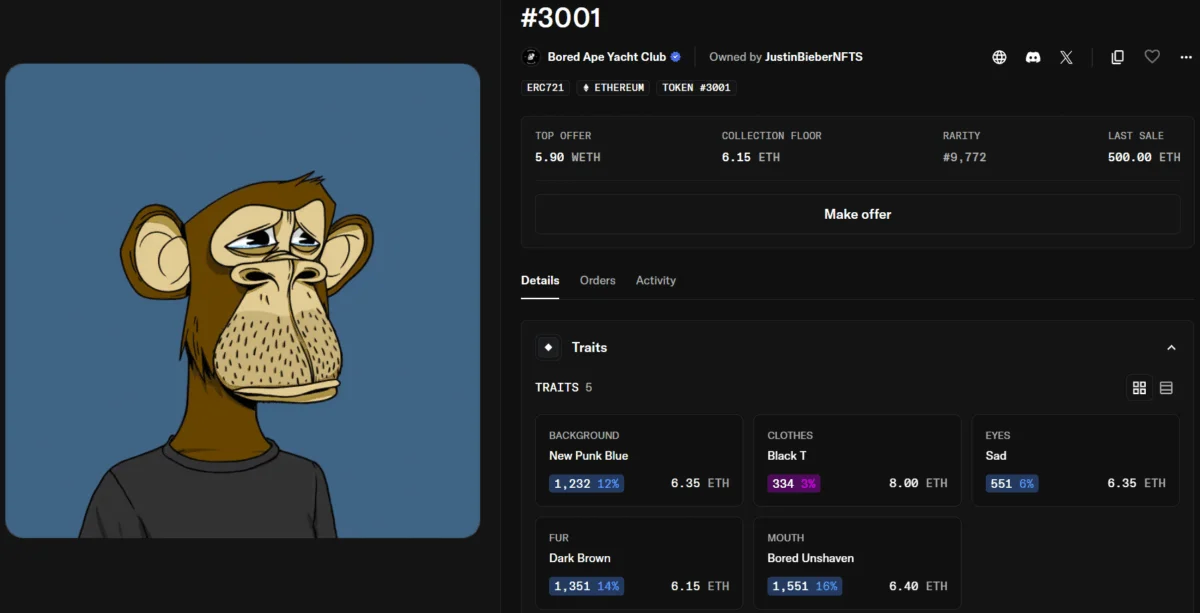
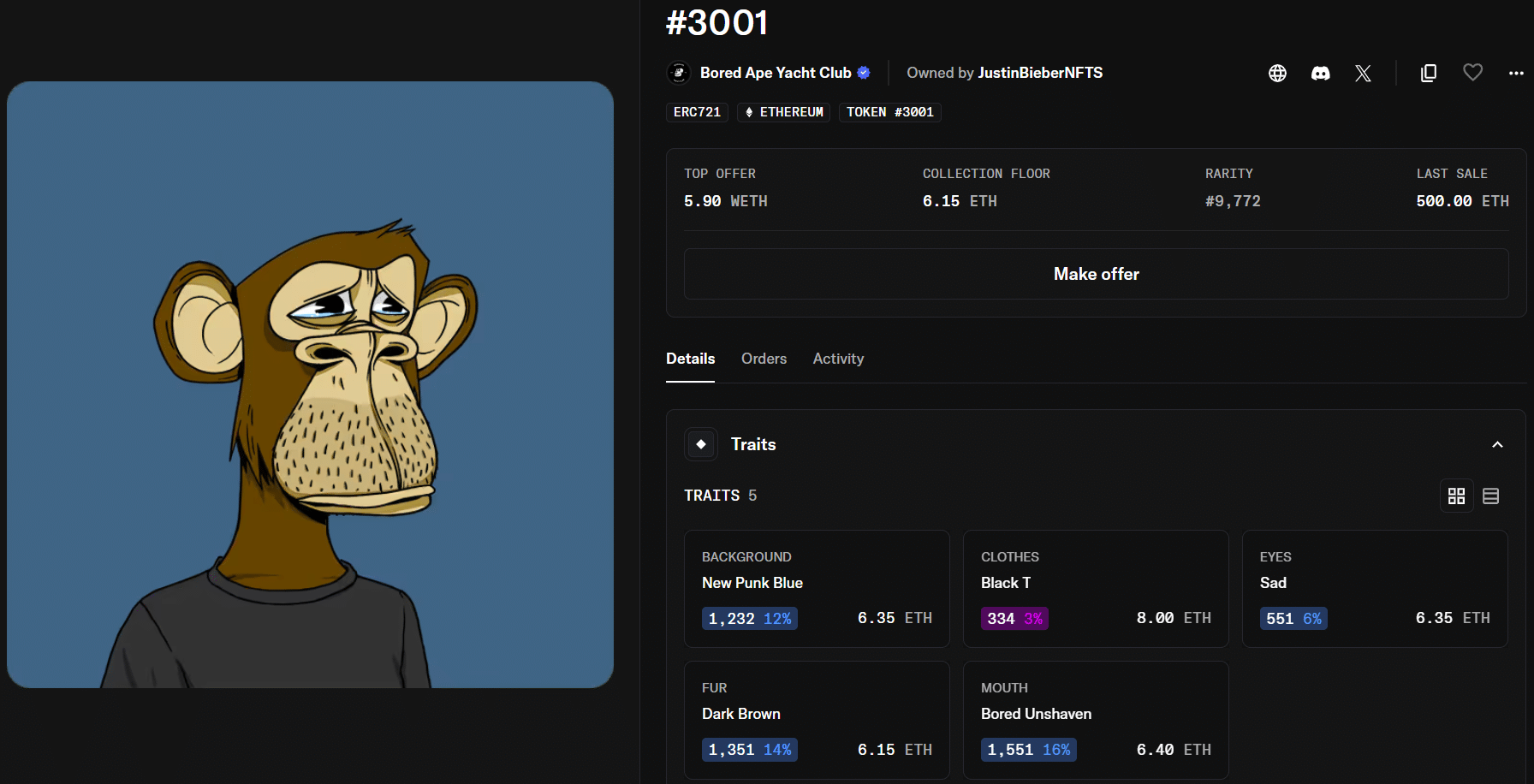
By May 2022, the floor price—the lowest price at which an item in a collection can be purchased—had soared to between 128 and 145 ETH. In dollar terms, this meant that a single entry-level Ape was commanding between $350,000 and $420,000. It was during this period of extreme optimism that Justin Bieber expanded his portfolio. Beyond the 500 ETH purchase of #3001, the singer also acquired Bored Ape #3850 for approximately $470,000. Market analysts at the time observed that Bieber’s purchase of #3001 was significantly above the prevailing market rate, as comparable assets were trading in the $200,000 to $300,000 range, suggesting that the "celebrity premium" and the fear of missing out (FOMO) played a substantial role in inflating the asset’s entry cost.
The subsequent decline was fueled by a confluence of macroeconomic factors, including the tightening of global monetary policy, the collapse of major crypto exchanges, and a fundamental shift in investor sentiment away from speculative JPEGs toward more tangible utility-based blockchain applications.
Analyzing the Valuation Collapse
The current valuation of Bieber’s holdings provides a stark metric for the broader NFT market’s contraction. With the highest bid for similar assets hovering near 5.9 ETH and the collection’s floor price stabilizing around 6.15 ETH, the contrast with the 2022 peaks is jarring. When adjusted for the current price of Ethereum—which has fluctuated near the $2,000 mark—the dollar-denominated losses for early entrants are catastrophic.
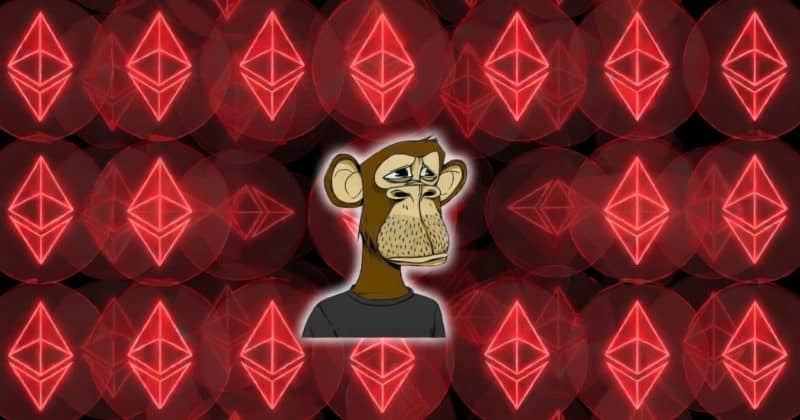
Investors who entered the market during the 2022 rally are now contending with an asset class that has experienced a liquidity crunch. Unlike traditional equities, where market makers provide constant liquidity, the NFT market is characterized by thin order books. When the speculative fervor cooled, the lack of buyers led to a "cascading sell-off" effect. Analysts note that while high-end "Blue Chip" NFTs like the Bored Ape Yacht Club maintain a degree of cultural capital, their financial utility has been severely diminished, leaving them as artifacts of a specific period of speculative excess rather than reliable stores of value.
Shifting Paradigms: From Speculation to Utility
Despite the headline-grabbing losses, industry participants argue that the NFT sector is not vanishing, but rather undergoing a necessary evolution. The "speculative bubble" phase, defined by rapid flipping and artificial scarcity, has largely been replaced by a focus on "Utility NFTs."
Current development in the space has migrated toward practical, real-world applications:
- In-Game Assets: Developers are increasingly using NFTs to represent ownership of items within digital gaming ecosystems, providing players with verifiable control over their virtual inventories.
- Access Passes: Brands and creators are utilizing NFTs as gated entry tokens, providing holders with exclusive access to digital or physical events, merchandise, and communities.
- Identity and Verification: Decentralized identity tools are leveraging NFT technology to provide immutable proof of credentials, degrees, or memberships.
- Tokenized Real-World Assets (RWA): The trend of "phygital" goods—where a physical product is tied to a digital token—is gaining traction, allowing for the authentication of luxury goods, real estate, and financial instruments.
This transition marks a departure from the "collectible-first" mentality toward a "function-first" approach. Investors are now more discerning, looking for projects that offer clear value propositions beyond the potential for secondary market price appreciation.
Ecosystem Fragmentation and Market Dominance
The infrastructure supporting NFTs has also become more specialized. Ethereum remains the primary hub for high-value, provenance-sensitive assets. Its network security and status as the home of the original NFT experiments make it the preferred choice for collectors of high-end digital art. However, the high gas fees associated with Ethereum have prompted a significant portion of the gaming and mass-market NFT volume to migrate to alternative chains.
Solana and Polygon have emerged as the primary beneficiaries of this migration. By offering lower transaction costs and superior scalability, these blockchains have enabled high-frequency trading and lower-barrier entry points for new users. Solana, in particular, has seen a surge in interest for its integrated NFT marketplaces and its ability to handle large volumes of transactions without the congestion issues that periodically plague the Ethereum mainnet. This competition is forcing the NFT ecosystem to become more efficient, pushing platforms to innovate on user experience and interoperability.
Institutional and Cultural Implications
The precipitous decline in values, exemplified by the losses incurred by high-profile figures like Justin Bieber, has had a chilling effect on mainstream adoption. For many, the association of NFTs with "crypto-bros" and speculative bubbles has created a reputational barrier that institutions are only now beginning to navigate.
However, the underlying technology—the ability to verify ownership and provenance on a public ledger—remains robust. Intellectual property (IP) law and digital rights management (DRM) experts are watching the sector closely, noting that as the market matures, NFTs could become the backbone of creator economies, allowing artists and musicians to receive royalties on secondary sales automatically through smart contracts.
The current "winter" in the NFT market is viewed by many venture capitalists and developers as a cleansing mechanism. The removal of "low-quality" projects and the focus on sustainable business models are seen as essential steps toward long-term viability. As the market stabilizes, the focus will likely shift from the price of a digital ape to the functionality of the blockchain protocol beneath it.
Ultimately, while the financial trauma of the 2022 bubble burst is significant, it serves as a foundational lesson in digital asset economics. The market has moved past the phase where celebrity status alone can sustain a valuation, forcing a new standard of due diligence. Whether the NFT sector can rebuild its reputation and establish itself as a pillar of the digital economy remains to be seen, but the era of unchecked speculative growth is definitively in the rearview mirror. For investors and developers alike, the focus has shifted from the fleeting highs of 2022 to the long-term utility of the blockchain infrastructure that remains.