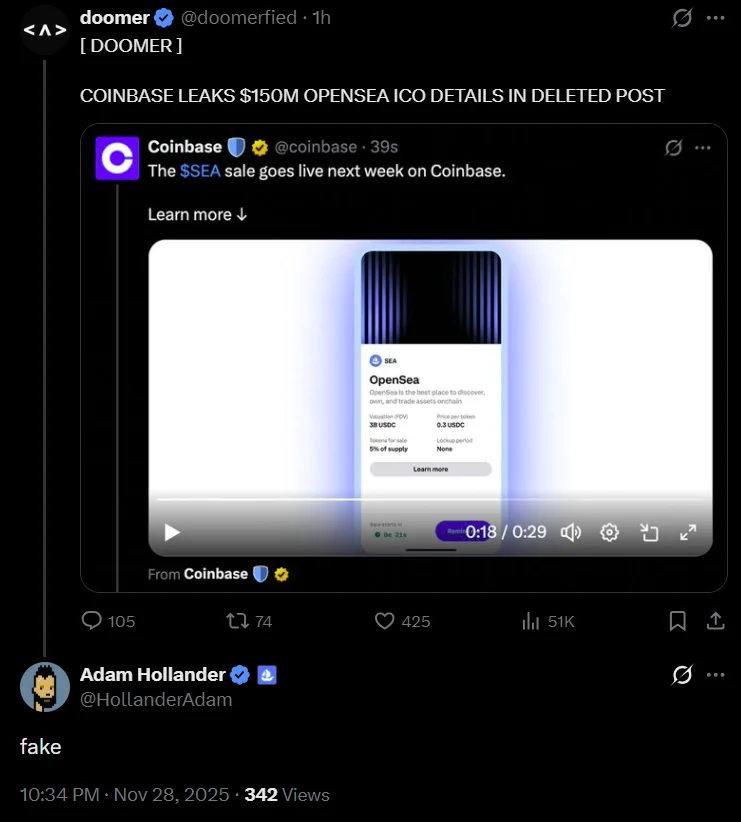
The landscape of the non-fungible token (NFT) sector was momentarily disrupted this week as a wave of misinformation regarding OpenSea’s highly anticipated native asset, the SEA token, permeated social media channels. Adam Hollander, the Chief Marketing Officer of the prominent NFT marketplace, issued a formal correction on X (formerly Twitter) to address a viral rumor suggesting that a 150 million dollar token sale was imminent on the Coinbase exchange. Hollander’s intervention effectively quelled market volatility spurred by parody accounts, clarifying that the circulating claims were entirely fabricated. While the excitement surrounding the upcoming launch of the SEA token is genuine, the specifics of its market debut remain firmly tied to the company’s official 2026 roadmap rather than the speculative figures currently circulating in decentralized finance forums.
Chronology of a Viral Misinformation Event
The confusion originated from a parody account on X, which fabricated a narrative claiming that Coinbase had briefly published—and subsequently deleted—an announcement regarding a 150 million dollar token sale for OpenSea’s SEA asset. This post, designed to mimic the aesthetic and tone of official exchange announcements, suggested that the offering was scheduled for the following week.
Due to the high-stakes nature of the NFT market and the long-standing community anticipation for an OpenSea governance token, the rumor gained immediate traction. Telegram groups and crypto-focused news aggregators amplified the claim, leading to a period of heightened market sensitivity. By the time the rumor had reached its peak velocity, the lack of official corroboration from either OpenSea or Coinbase prompted scrutiny from industry observers. Adam Hollander’s categorical denial served as the definitive conclusion to the brief but intense episode, reinforcing the platform’s commitment to transparent communication.
The Strategic Roadmap: Defining the SEA Token
While the rumor of an imminent 150 million dollar sale is false, the broader narrative of OpenSea’s evolution is anchored in concrete plans. According to official communications from OpenSea CEO Devin Finzer, the company is moving toward the launch of the SEA token in the first quarter of 2026. This launch is envisioned as a fundamental pillar of the platform’s "OpenSea 2.0" initiative, a broader strategy aimed at modernizing the marketplace experience in a post-NFT-boom environment.
The allocation model for the SEA token is designed to prioritize long-term ecosystem stability and user incentivization. Finzer has confirmed that 50% of the total token supply will be dedicated to community stakeholders. This distribution strategy is structured to reward historical users who contributed to the platform’s liquidity and growth during its formative years, as well as active participants in ongoing loyalty and rewards programs. By shifting the ownership structure toward the community, OpenSea aims to transition from a centralized marketplace model to a more participatory ecosystem where stakeholders have a vested interest in the platform’s long-term utility.
Economic Mechanisms and Token Utility
A critical component of the SEA token’s value proposition is its integration into the platform’s revenue model. To mitigate the volatility often associated with new asset launches, OpenSea has proposed a robust buyback mechanism. The company intends to allocate 50% of its platform revenue—generated through service fees on marketplace transactions—to buy back SEA tokens from the open market.
This mechanism serves two primary functions:
- Value Accrual: By consistently removing tokens from circulation using platform-generated fees, OpenSea seeks to create structural demand that balances supply-side inflationary pressures.
- Ecosystem Reinvestment: The buyback program is designed to align the financial success of the marketplace directly with the performance of the token, incentivizing holders to remain active within the ecosystem.
Beyond the buyback program, the SEA token is expected to serve as the governance backbone for the platform. Holders will likely participate in decentralized voting processes regarding protocol upgrades, fee structures, and the allocation of the community treasury. This shift toward decentralized governance is intended to position OpenSea as a more resilient entity capable of adapting to the rapid fluctuations of the digital asset market.
Contextualizing the NFT Market Environment
The current speculation surrounding OpenSea’s tokenization efforts reflects the broader challenges and opportunities facing the NFT industry. Following the dramatic correction of the NFT market in 2023 and 2024, legacy marketplaces have been forced to innovate to maintain their market share against emerging competitors and alternative trading platforms.
Data from industry analytics firms suggests that while NFT trading volumes have stabilized after the record-breaking heights of 2021, the user base has become increasingly sophisticated. Investors are no longer merely looking for speculative assets; they are seeking platforms that offer tangible utility, rewards, and a voice in the platform’s future. OpenSea’s pivot toward the SEA token is, in many respects, a strategic response to this shift. By formalizing a loyalty and governance framework, OpenSea is attempting to secure the retention of its most dedicated power users who may have otherwise migrated to competitors that had already implemented token-based incentive structures.
Analyzing the Implications for Coinbase and Market Trust
The involvement of Coinbase in the rumor—even as an unwitting party—highlights the precarious nature of information flow in the cryptocurrency space. Coinbase, as a publicly traded entity, maintains stringent disclosure requirements. The assumption that such a large sale would be conducted without formal regulatory filings or official press releases from both the issuer and the exchange was a significant oversight by the actors who propagated the rumor.
For the industry, this event serves as a case study in the necessity of verifying primary sources. In the absence of an official filing with the Securities and Exchange Commission (SEC) or a verified press release on the official channels of either company, major market-moving claims should be treated with skepticism. The promptness of Hollander’s denial, however, suggests that OpenSea is acutely aware of its public image and the potential for market manipulation to impact its brand equity ahead of its 2026 launch.
Broader Economic Impact and Future Outlook
As the industry looks toward the first quarter of 2026, the focus will likely shift from rumors to the technical implementation of the SEA token. The success of the launch will depend on several factors:
- Regulatory Compliance: Given the current regulatory environment in the United States and abroad, the structure of the token sale and the governance rights it confers will be subject to intense scrutiny.
- Community Sentiment: The "historical user" allocation model will be tested for fairness. The methods used to determine eligibility for initial claims will be critical in ensuring that the community remains supportive of the transition.
- Market Liquidity: The success of the 50% revenue buyback program will depend on the platform’s ability to sustain high trading volumes, which in turn relies on the continued relevance of NFTs as a digital asset class.
The broader implications for the NFT ecosystem are significant. If OpenSea successfully navigates the transition to a tokenized model, it could set a standard for other centralized marketplaces to follow, potentially ushering in a new era of "marketplace decentralization." Conversely, any failure to execute on the promises made regarding the SEA token could lead to a loss of institutional and retail trust, providing an opening for decentralized competitors to capture further market share.
Conclusion
The recent incident involving the false 150 million dollar SEA token sale serves as a reminder of the volatility and susceptibility to misinformation inherent in the crypto sector. While the rumor itself has been debunked by OpenSea leadership, the underlying story—the transition of a dominant NFT marketplace into a tokenized, community-governed entity—remains one of the most anticipated developments in the digital asset space.
As the industry waits for 2026, market participants should prioritize official communication channels and verified documentation over social media speculation. OpenSea’s commitment to utilizing revenue for token buybacks and distributing ownership to its user base represents a significant evolution in its business model. Whether this strategy will achieve the intended goal of stabilizing the platform and fostering a sustainable ecosystem remains to be seen, but the transparency with which the team addresses misinformation is a positive indicator of their commitment to the integrity of the project’s future. For now, stakeholders and enthusiasts alike must look beyond the noise and focus on the substantive, long-term roadmap that OpenSea has laid out for the next phase of its operations.