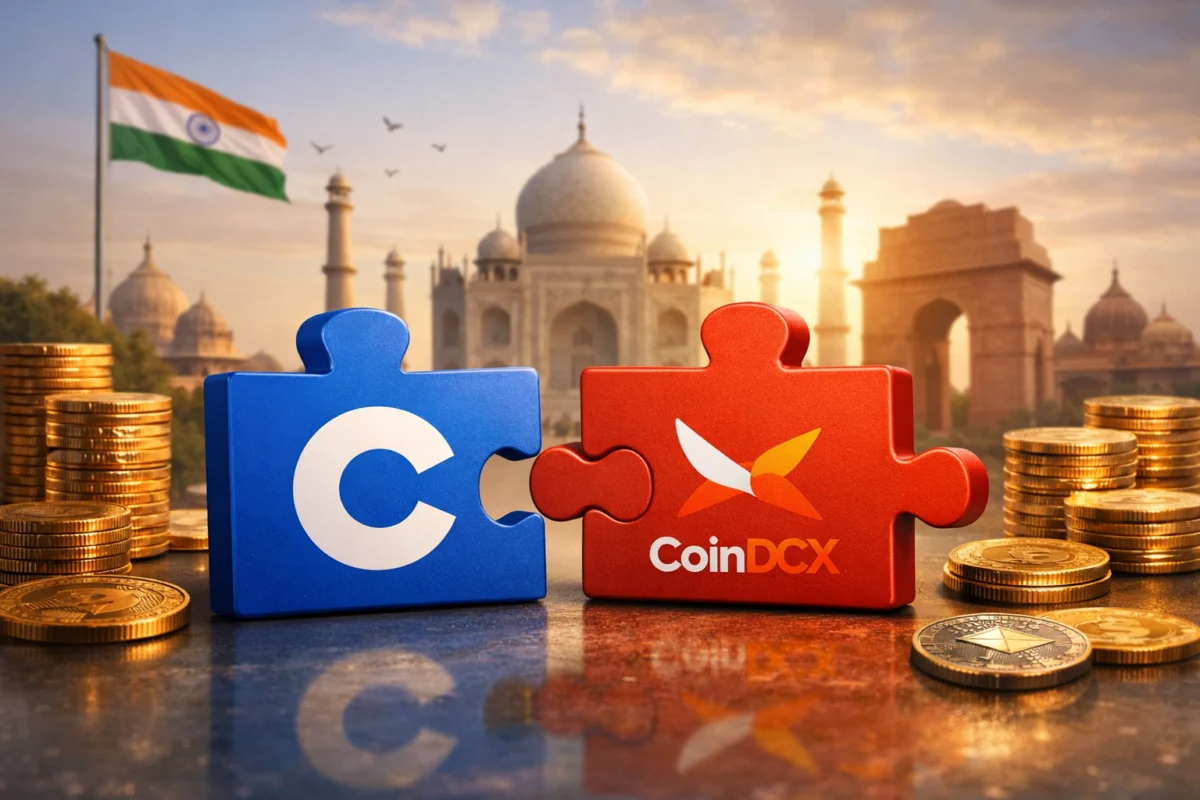
The global cryptocurrency landscape is undergoing a structural realignment as major international exchanges rethink their geographic footprints amidst shifting regulatory sands. In a landmark development for the South Asian digital asset ecosystem, India’s primary antitrust watchdog, the Competition Commission of India (CCI), has officially granted clearance to Coinbase Global Inc. to deepen its financial commitment to the domestic market. The approval paves the way for the United States-headquartered exchange to acquire a strategic minority stake in DCX Global Limited, the parent entity governing CoinDCX, one of India’s most prominent cryptocurrency trading platforms.
This regulatory green light arrives at a critical juncture for both the investor and the recipient. For Coinbase, the CCI’s approval validates a meticulous, compliance-first strategy designed to re-establish a physical and operational bridge into what remains one of the world’s largest, yet most heavily regulated, demographic pools for digital asset adoption. For CoinDCX, the backing of a globally recognized institutional titan serves as a significant vote of confidence following a volatile operational cycle marked by cybersecurity challenges and stringent domestic fiscal policies.
The decision underscores a subtle yet discernible shift in how Indian regulatory authorities view foreign direct investment within the nascent blockchain sector. While the nation’s tax apparatus and monetary authorities maintain a cautious stance toward decentralized finance, the explicit authorization of international capital participation under formal antitrust oversight signals a maturing framework. By leveraging minority equity investments rather than attempting direct, wholly owned subsidiary rollouts, global entities are discovering a viable blueprint to tap into India’s vast retail and institutional crypto appetite while insulating themselves from immediate, day-to-day regulatory frictions.
Chronology of Engagement: A Timeline of Coinbase and CoinDCX
The trajectory of Coinbase’s involvement in the Indian market has been characterized by strategic recalibration, regulatory hurdles, and a phased resumption of operations. Understanding the current CCI approval requires examining the multi-year timeline that has shaped the relationship between the American exchange and the Indian platform.
The partnership commenced in 2022 when Coinbase Ventures, the investment arm of Coinbase Global Inc., participated in a substantial funding round for CoinDCX. During this initial expansionary phase, India’s crypto market was experiencing unprecedented retail inflows, buoyed by global liquidity and a perception of impending regulatory normalization. Coinbase’s early financial backing of CoinDCX was intended to serve as a foundational stepping stone for a broader operational rollout within the country.
However, the macroeconomic and regulatory climate shifted dramatically in the latter half of 2022 and throughout 2023. The introduction of stringent taxation laws in India—specifically a 1% Tax Deducted at Source (TDS) on all crypto transactions, alongside a flat 30% tax on digital asset gains—precipitated a staggering volume outflow from domestic centralized exchanges to unregulated offshore platforms. Faced with these fiscal headwinds, combined with broader global macroeconomic retrenchment and tightening regulatory scrutiny from the U.S. Securities and Exchange Commission (SEC), Coinbase elected to scale back its direct consumer-facing ambitions in India in 2023, pivoting its resources toward more predictable regulatory jurisdictions.
Despite pausing its retail onboarding, Coinbase maintained its equity ties with CoinDCX, preserving a strategic window into the region. By mid-October of the previous year, Coinbase formally disclosed plans for an additional capital infusion into DCX Global Limited, triggering the mandatory antitrust review by the CCI.
The timeline accelerated in December, beginning when the CCI officially cleared the proposed transaction via an announcement on the social media platform X. Within days of the antitrust clearance, Coinbase took its most aggressive operational step in the region in years, officially reopening user registrations in India after a two-year hiatus. This carefully choreographed sequence of regulatory approval followed by user-facing deployment highlights a calculated, risk-mitigated approach to market re-entry.
The Mechanics of Coinbase’s Phased India Return Strategy
Coinbase’s strategy for re-entering the Indian market diverges sharply from its historical playbook of rapid, full-service launches. Instead, the exchange has adopted a deliberate, multi-phased roadmap that prioritizes regulatory compliance and infrastructure stability over aggressive customer acquisition.
In its initial phase, the newly resumed onboarding process for Indian users is strictly limited to crypto-to-crypto trading pairs. By omitting direct fiat on-ramps and off-ramps during this foundational rollout, Coinbase effectively bypasses immediate entanglements with local banking channels, which have historically maintained a hesitant relationship with digital asset platforms due to informal guidance from the Reserve Bank of India (RBI).
Looking ahead to 2026, the firm’s roadmap outlines the eventual integration of a rupee-denominated on-ramp mechanism, pending further clarity on local payment gateway integrations and banking partnerships. This measured timeline allows Coinbase to test its infrastructural readiness, gauge local demand, and ensure complete alignment with the evolving legal expectations of Indian financial watchdogs.
The decision to strengthen its minority shareholding in CoinDCX acts as a structural pillar of this return strategy. By operating as an institutional investor rather than an independent domestic operator, Coinbase gains indirect exposure to the surging transactional volumes of the Indian market. Simultaneously, this corporate firewall shields the parent company from the direct operational and legal liabilities associated with running a consumer-facing exchange inside India’s complex jurisdictional maze.
Navigating Market Turbulence: Security and Macroeconomic Pressures
The formalization of Coinbase’s investment coincides with a period of intense operational scrutiny for CoinDCX. The Indian exchange navigated a turbulent stretch, punctuated by a significant cybersecurity incident in July, which tested the resilience of its infrastructure and the trust of its user base.
During the summer security breach, CoinDCX disclosed that one of its hot wallets had been compromised, resulting in an unauthorized outflow valued at approximately $44.2 million. The incident sent shockwaves through the domestic ecosystem, raising acute concerns regarding the safety of user assets stored on centralized Indian platforms. However, CoinDCX moved swiftly to mitigate the fallout, issuing public assurances that all affected customer funds would be fully covered from company reserves, ensuring that no individual user bore a direct financial loss.
While the incident did not result in permanent operational paralysis, it added considerable pressure to an already cautious market environment. Indian crypto exchanges have continually struggled to retain liquidity and user engagement in the face of the aforementioned 1% TDS mandate, which disproportionately penalizes high-frequency traders and market makers, driving them toward decentralized alternatives or non-compliant global venues.
It is precisely against this backdrop of fiscal friction and security remediation that the CCI’s approval of the Coinbase-CoinDCX transaction assumes heightened significance. The endorsement by a premier Indian regulatory body serves as an institutional endorsement of CoinDCX’s structural integrity and governance standards, potentially reassuring wary retail and institutional participants alike.
Fact-Based Analysis of Broader Implications
The consolidation of ties between Coinbase and CoinDCX carries profound implications for the trajectory of the South Asian digital asset economy, offering several key takeaways for industry observers, regulators, and international competitors:
Validation of the Partnership Model for Foreign Entrants
For global exchanges seeking exposure to high-growth emerging economies, the Coinbase-CoinDCX precedent demonstrates the viability of indirect market penetration. Rather than engaging in costly, high-risk direct licensing battles in hostile or ambiguous jurisdictions, foreign enterprises may increasingly rely on strategic minority equity investments, joint ventures, and technological licensing agreements. This model allows international firms to share in the upside of emerging markets while delegating localized compliance and operational friction to native management teams.
Maturation of Indian Antitrust and Regulatory Oversight
The CCI’s expeditious review and subsequent clearance of the transaction reflect a nuanced approach by Indian competition authorities. While monetary and fiscal regulators (such as the RBI and the Ministry of Finance) maintain a restrictive stance toward cryptocurrencies as legal tender or payment mechanisms, the competition watchdog evaluates transactions strictly through the lens of market dominance, consumer welfare, and fair trade practices. This jurisdictional bifurcation indicates that while operating a crypto exchange in India remains legally complex, corporate mergers, acquisitions, and minority investments within the sector are subject to predictable, merit-based commercial reviews.
Implications for Domestic Market Consolidation
The injection of fresh capital and institutional backing from a global behemoth like Coinbase is likely to accelerate a broader trend of consolidation within the Indian crypto sector. Smaller, undercapitalized domestic exchanges that have struggled to absorb the compliance costs associated with mandatory security audits, know-your-customer (KYC) protocols, and the 1% TDS reporting burden may find it increasingly difficult to compete with well-funded market leaders. Consequently, strategic alliances with international venture capital and global exchanges could become a prerequisite for survival among Tier-1 and Tier-2 Indian digital asset platforms.
The Long-Term Outlook for Crypto Policy in India
While the Coinbase-CoinDCX development is undeniably bullish for the immediate stakeholders, it occurs within a broader vacuum of comprehensive statutory regulation. India has repeatedly delayed the introduction of a definitive, overarching cryptocurrency bill, leaving the sector to be governed by a patchwork of tax laws, anti-money laundering (AML) guidelines enforced by the Financial Intelligence Unit (FIU), and indirect banking restrictions. The willingness of authorities to approve high-profile foreign investments suggests that India has no intention of enacting an outright ban on the asset class; instead, the state appears committed to a policy of containment, taxation, and rigorous institutional oversight.
Conclusion
Coinbase’s renewed push into the Indian market, anchored by the CCI’s clearance of its strategic investment in CoinDCX, marks a defining chapter in the globalization of digital asset infrastructure. By combining a cautious, phased operational re-entry with institutional-grade equity partnerships, Coinbase is effectively hedging its bets against regulatory volatility while positioning itself to capture the immense long-term upside of the world’s most populous nation.
As CoinDCX works to rebuild absolute market confidence following its mid-year security challenges, the backing of a NASDAQ-listed exchange provides a formidable cushion. For the wider Indian cryptocurrency ecosystem, this development serves as a powerful reminder that despite domestic fiscal hurdles and policy ambiguities, the nation remains a vital, highly contested frontier in the global evolution of blockchain technology and digital finance.