The efficacy of dollar-cost averaging (DCA) as a foundational investment strategy for Bitcoin (BTC) has been a subject of intense scrutiny as the asset moves from a speculative niche to a recognized institutional reserve. Historically, the methodology of deploying a fixed amount of capital at regular intervals has served as a primary hedge against the extreme volatility inherent in cryptocurrency markets. By smoothing out purchase prices over time, investors have historically mitigated the risk of "buying the top," allowing for the accumulation of significant positions across various market cycles. However, as Bitcoin’s market capitalization matures and institutional inflows reach unprecedented levels, the dynamics of this strategy are shifting, prompting a broader conversation about timing, asset selection, and the role of emerging scaling solutions like Bitcoin Hyper (HYPER).
The Mechanics and Limitations of DCA in a Mature Market
At its core, DCA is a risk-mitigation strategy designed for long-term horizons. By automating purchases—whether daily, weekly, or monthly—the investor removes emotional decision-making from the process. When Bitcoin prices are high, the investor receives fewer units; when prices are low, the investor accumulates more. Over a long enough timeline, this creates a weighted average entry price that theoretically positions the investor for growth as the broader market trends upward.

Data from recent market cycles illustrate that the strategy remains fundamentally sound but requires a longer gestation period to yield the double-digit returns seen in earlier years. A case study of an investor deploying $5 per day into Bitcoin since August 2024 reveals a modest return of approximately 5% over a 12-month period. While this figure may appear underwhelming compared to the explosive bull runs of the early 2020s, it serves as a critical reminder: the "low-hanging fruit" of exponential growth is becoming harder to capture as the asset class reaches higher valuation plateaus. The compounding effect, while powerful, is sensitive to the entry point relative to the Bitcoin halving cycles and global liquidity conditions.
Institutional Benchmarking: The Strategy of Macro-Accumulation
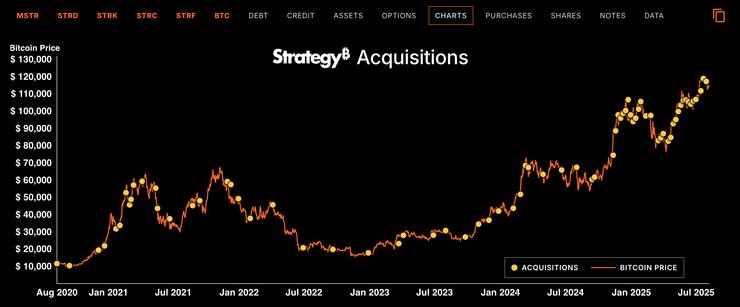
The approach taken by institutional giants like Strategy, which currently manages a portfolio of 628,791 BTC valued at approximately $72.1 billion, provides a macro-level perspective on this strategy. Their success is not merely a result of periodic buying but of massive, strategic accumulation initiated during the market lows of 2020 and the subsequent crypto-winter of 2022-2023. By securing large tranches of supply when the market was significantly undervalued, the firm established a cost basis that provides a buffer against current market fluctuations.
For the average retail investor, the discrepancy between their returns and those of institutional entities highlights a key reality: the "timing" of the initiation of a DCA strategy is as critical as the consistency of the execution. An investor who began their $5-a-day program in 2020 would have accumulated roughly 0.275 BTC, resulting in a return of approximately 245% given current price levels. Conversely, a one-time lump-sum investment in 2020 could have yielded returns exceeding 900%. These figures underscore the "early adopter advantage," where capital deployed during the infancy of a market cycle benefits from the subsequent expansion of the asset’s utility and scarcity.

The Search for High-Growth Alternatives
As the potential for massive, rapid appreciation in Bitcoin’s base layer becomes more challenging due to its trillion-dollar market cap, the investment community has begun shifting its focus toward high-growth ecosystems built on top of the Bitcoin blockchain. The primary objective is to capture the security of Bitcoin while gaining exposure to the scalability and throughput typically associated with faster networks like Solana. This demand has catalyzed the development of Layer 2 (L2) solutions, which aim to resolve the "scalability trilemma"—balancing security, decentralization, and speed.
One such project, Bitcoin Hyper (HYPER), has emerged as a significant player in this space. By integrating the Solana Virtual Machine (SVM) into the Bitcoin ecosystem, the project aims to bridge the gap between legacy blockchain security and modern performance requirements. The technical ambition here is to move beyond simple store-of-value functions and enable smart contract capabilities, decentralized finance (DeFi) applications, and tokenized assets that can operate at a fraction of the cost and time currently required by the mainnet.
Technological Convergence: Layer 2 and the Solana Virtual Machine
The technical framework of Bitcoin Hyper relies on a "canonical bridge" that allows for the secure locking of native BTC on the main chain, which is then represented by a wrapped or tokenized asset within the L2 environment. This structure ensures that while the assets are being utilized for rapid transactions, gaming, or DeFi protocols within the Hyper ecosystem, the underlying security remains anchored to the Bitcoin network.
The integration of the Solana Virtual Machine is particularly notable. While the Bitcoin network typically handles approximately 7 transactions per second (TPS), the SVM is capable of supporting thousands of transactions per second. This 1,000-fold increase in throughput addresses the primary bottleneck that has historically prevented Bitcoin from being used for high-frequency applications. For developers, this provides a familiar, robust environment to build dApps, while for investors, it represents an opportunity to engage with the next iteration of the Bitcoin economy.
Market Implications and Future Outlook
The current total market capitalization of Layer 2 solutions across various blockchain networks stands at approximately $14.9 billion, a figure that analysts expect to grow as institutional interest in modular blockchain architecture increases. The emergence of Bitcoin-native L2s is viewed by many as the next logical step in the evolution of digital assets. By creating a functional, programmable layer on top of the world’s most secure ledger, projects like Bitcoin Hyper are attempting to replicate the early-stage growth dynamics that characterized Bitcoin itself a decade ago.
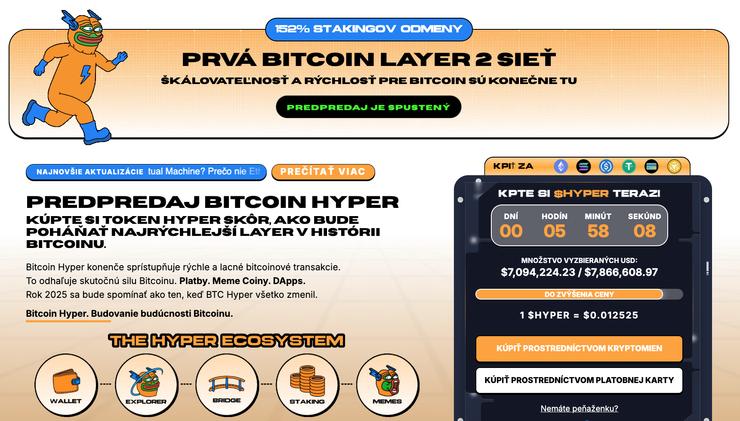
As of the current writing, the native token of this project, HYPER, is in its preliminary funding phase, with a price point of $0.012525. For participants, the decision to allocate capital at this stage involves a different risk profile than standard Bitcoin DCA. While BTC remains the "blue chip" asset, providing stability and institutional-grade security, projects like HYPER represent high-beta opportunities that aim to leverage the existing liquidity of the Bitcoin ecosystem to drive innovation.
Analytical Perspective: Navigating the Risk-Reward Landscape
A balanced portfolio strategy in the current climate involves careful consideration of both established assets and emerging technologies. The lesson of the last decade is that while consistency (DCA) is the safest route to wealth preservation, significant wealth creation often requires identifying the infrastructure layers that will support the next wave of adoption.
The shift toward L2 solutions on Bitcoin is not merely a trend; it is a fundamental requirement for the network’s long-term survival in an era where users demand instant, low-fee interactions. Whether through the methodical accumulation of BTC or through strategic participation in the development of its ecosystem, the focus remains on identifying value. As the industry matures, the intersection of Bitcoin’s security and the agility of Layer 2 protocols will likely dictate the next phase of the cryptocurrency market’s growth. Investors are encouraged to conduct thorough due diligence, monitor the progress of these technical bridges, and remain cognizant of the inherent risks associated with early-stage cryptographic assets, which, unlike the established Bitcoin, have yet to be battle-tested across multiple economic cycles.
In conclusion, the evolution of investment strategies from simple periodic buying to participation in complex, high-performance ecosystems like Bitcoin Hyper reflects the broader maturing of the crypto sector. While the days of easy, massive gains on base-layer Bitcoin may be tempered by its size, the innovation occurring at the protocol level suggests that the most compelling opportunities may lie in the layers that make Bitcoin a functional, programmable, and scalable global financial network. As always, the key to navigating this landscape remains a combination of prudent capital management, a long-term outlook, and a deep understanding of the technological shifts defining the next decade of finance.