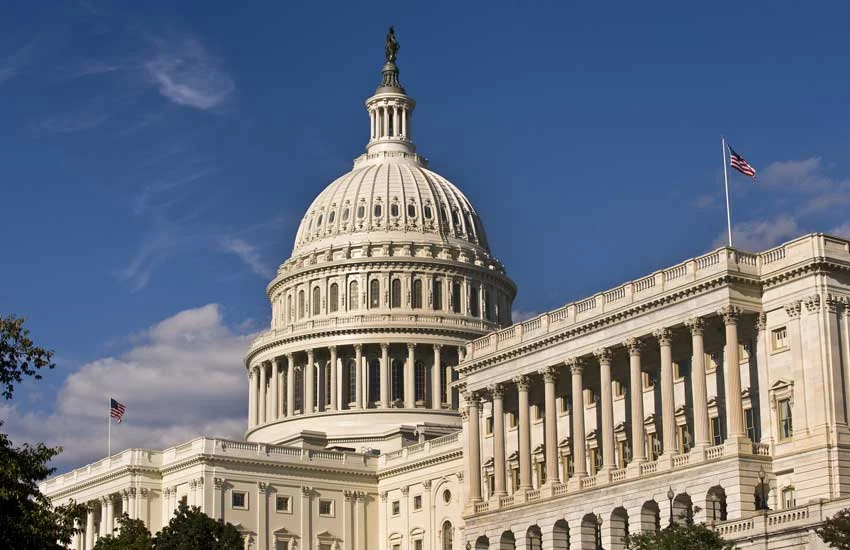
The United States Senate is scheduled to hold a crucial cloture vote this afternoon on the Clarity Act, a piece of legislation that has spent more than a year winding its way through intense bipartisan negotiations. To successfully advance past this legislative hurdle, the bill requires a minimum of 60 votes. Given the current composition of the Senate, passing this threshold necessitates securing at least seven votes from outside the Republican caucus, underscoring the precarious balance required to move the measure forward.
Ahead of this afternoon’s proceedings, lawmakers introduced a flurry of last-minute modifications to the text of the bill. These late-stage adjustments primarily target contentious ethics regulations and rules governing stablecoin interest provisions. While proponents argue that the updated framework establishes much-needed regulatory boundaries for the burgeoning digital asset sector, critics maintain that several ambiguities remain, particularly regarding how the legislation addresses potential conflicts of interest and the financial activities of high-profile political figures.
The Path to the Cloture Vote: Background and Legislative Chronology
The journey toward today’s cloture vote has been marked by prolonged deliberation, intense lobbying, and shifting political alliances. The Clarity Act was conceived out of an urgent recognition that existing financial regulations, largely drafted decades before the advent of blockchain technology, are ill-equipped to govern modern digital assets. Throughout the drafting process, the bill has undergone significant iterations.
According to congressional offices, more than 100 specific changes were requested by Democratic lawmakers over the past twelve months as they sought to address concerns ranging from consumer protection to systemic financial risk.
Republican Senator Cynthia Lummis, one of the primary architects of the legislation, has been a vocal proponent of moving the text to the floor. Speaking on the necessity of the vote, Senator Lummis emphasized the dangers of legislative inaction, arguing that an imperfect regulatory framework is vastly superior to the legal vacuum that has long characterized the U.S. cryptocurrency market.
“After over a year of bipartisan negotiations and over 100 changes requested by Democrats, it is time for the Senate to move this strong, bipartisan bill forward,” Senator Lummis stated.
Despite these assurances, the debate has exposed deep divisions within the Capitol. While industry participants largely welcome the prospect of regulatory clarity, watchdogs and opposing lawmakers have scrutinized the final-hour revisions, questioning whether the compromises made to secure bipartisan support have watered down critical accountability measures.

Scrutiny Over Ethics Provisions and Family Crypto Ventures
Among the most heavily debated aspects of the updated Clarity Act are its ethics provisions, which have faced intense examination regarding how they apply to the business dealings of prominent political families. Central to this debate is an assessment of whether the newly minted rules would have effectively barred or restricted high-profile crypto enterprises, such as those associated with the family of former President Donald Trump, from operating under previous or current structures.
A close review of the modified text indicates that the majority of these activities would still be permissible under the new rules, provided that certain operational hurdles and compliance measures are met. Specifically, the bill contains exemptions and structural allowances that permit family members of public officials to engage in commercial cryptocurrency activities through specialized mechanisms.
These loopholes primarily involve the use of blind trusts or operational safeguards ensuring that digital asset ventures do not automatically constitute the single largest source of a corporation’s overall revenue stream.
The practical implications of these provisions are already drawing focus. For instance, Donald Trump’s personal financial stake in his family’s decentralized finance (DeFi) firm is currently held within a trust managed by his son as the designated trustee. Under the updated provisions of the Clarity Act, this arrangement would no longer suffice in its current form. To maintain compliance, the stake would need to be formally converted into a qualified blind trust, managed by an independent third party with no familial or professional ties to the beneficiary.
While proponents argue that qualified blind trusts provide a sufficient firewall between political office and private commercial enterprise, ethics watchdogs contend that the inherent complexities of blockchain tracking and tokenomics make traditional blind trusts less effective in the digital asset space. Critics point out that even with an independent trustee, the public visibility of wallet addresses and token movements can still expose officials to potential conflicts of interest.
Stablecoin Interest and Financial Market Implications
Beyond the ethics debate, the Clarity Act introduces vital updates regarding stablecoin interest provisions, a topic of intense interest for both traditional banking institutions and the decentralized finance community. Stablecoins—digital tokens pegged to the value of fiat currencies like the U.S. dollar—have rapidly expanded in utility, serving as the primary liquidity bridge between traditional fiat banking and crypto-native markets.
The inclusion of specific rules governing stablecoin interest reflects a compromise between lawmakers who want to foster innovation and those concerned about the stability of the broader financial system. Under the revised framework, issuers of stablecoins must adhere to strict reserve requirements, ensuring that every token in circulation is backed one-to-one by high-quality liquid assets, such as U.S. Treasury bills and cash equivalents.
However, the debate over whether stablecoin issuers should be permitted to distribute yield or interest to token holders remains a flashpoint. Traditional financial institutions have argued that allowing unregulated or lightly regulated stablecoin platforms to offer high-yield products could siphon deposits away from commercial banks, potentially destabilizing the traditional banking sector during periods of economic stress. Conversely, crypto advocates contend that prohibiting interest-bearing stablecoins stifles competitiveness and harms retail consumers who stand to benefit from higher returns on their digital cash holdings.
The latest iteration of the bill attempts to thread this needle by establishing a clear regulatory taxonomy that distinguishes between payment stablecoins and other digital instruments, while subjecting issuers to federal oversight by regulatory bodies such as the Office of the Comptroller of the Currency (OCC) or the Federal Reserve, depending on the scale and nature of the institution.
Broader Economic and Legislative Impact
As the Senate prepares for this afternoon’s roll call, financial markets and tech sector lobbyists are closely monitoring the proceedings. The implications of the Clarity Act extend far beyond Capitol Hill, serving as a bellwether for how the United States intends to position itself in the global digital economy.
For years, industry leaders have complained of a "regulatory choke point," arguing that the Securities and Exchange Commission (SEC) and the Commodity Futures Trading Commission (CFTC) have relied on enforcement actions rather than clear rule-making to govern the industry—a strategy often referred to as regulation by enforcement. Proponents of the Clarity Act argue that establishing statutory definitions for digital commodities, securities, and payment stablecoins will provide the legal certainty required for institutional capital to flow safely into the market.
At the same time, economists and legal scholars remain divided on the potential long-term consequences of the bill. Some financial analysts suggest that rushing a complex piece of legislation through a cloture vote without fully resolving the loopholes in its ethics and stablecoin provisions could create unintended regulatory arbitrage opportunities. Others maintain that perfection should not be the enemy of progress, asserting that once the foundational framework is established through the Clarity Act, subsequent amendments can refine specific provisions as the technology and market structures continue to evolve.
Next Steps in the Legislative Process
Should the Clarity Act successfully secure the requisite 60 votes during this afternoon’s cloture session, it will clear a major procedural hurdle, limiting further debate and moving the Senate closer to a final floor vote on passage.
However, even if the bill passes the Senate, it will still need to be reconciled with any corresponding legislation or priorities emerging from the House of Representatives, setting the stage for further negotiations between the two chambers before any comprehensive digital asset framework can be presented to the President for signature.
As lawmakers take their seats for the afternoon vote, the outcome remains finely balanced. Whether the Senate can muster the bipartisan coalition required to push the Clarity Act across the finish line will depend heavily on last-minute negotiations and the willingness of legislators to accept the compromises embedded within the updated text.