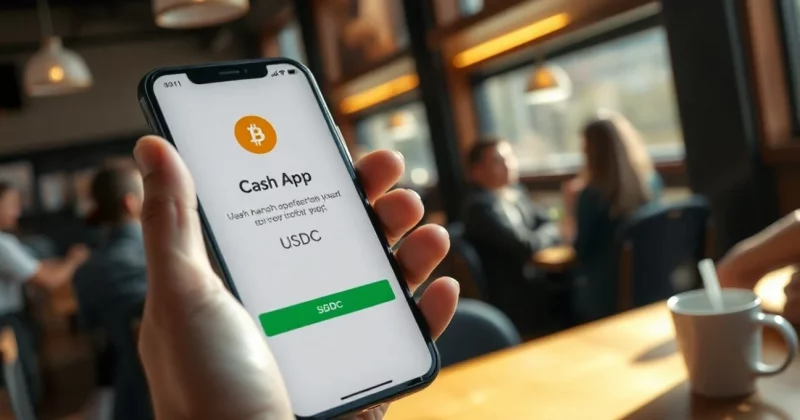
Cash App has officially commenced the rollout of USDC (USD Coin) send-and-receive functionality, signaling a transformative expansion for the fintech giant’s digital asset ecosystem. As of May 27, approximately 15 million users—representing 25% of the platform’s nearly 60 million monthly active users—gained the ability to transact using the dollar-pegged stablecoin. By utilizing the Solana blockchain as its settlement layer, Block, the parent company led by Jack Dorsey, is effectively bridging the gap between traditional fiat banking and the high-speed, low-cost world of decentralized finance. This deployment, which is expected to reach full capacity across the entire user base by the end of the week, represents one of the most significant mass-market adoptions of stablecoin technology to date.
The Technical Architecture of the Integration
The integration is designed to prioritize user experience, stripping away the technical complexities often associated with blockchain interaction. Every Cash App user is now assigned a unique blockchain deposit address, allowing them to receive USDC from any external source, whether it originates from a decentralized wallet, a competing exchange, or a traditional institutional platform.
Crucially, the conversion process is entirely abstracted from the user. When a user receives USDC, the platform automatically facilitates the conversion to a standard USD Cash balance within the application. This eliminates the need for users to navigate the complexities of managing private keys, understanding gas fees, or performing manual cross-chain bridging. By selecting Solana as the underlying infrastructure, Block has bypassed the network congestion and prohibitive transaction costs that have historically plagued the Ethereum mainnet. While Ethereum remains a dominant force in DeFi, its gas fees can often fluctuate into the double digits during peak usage, rendering small, peer-to-peer transfers economically impractical. In contrast, Solana’s sub-cent transaction costs and high throughput allow Cash App to facilitate micro-payments, making USDC a viable medium of exchange for daily commerce.
A Timeline of the Strategic Pivot
The move toward stablecoin integration has been a calculated, long-term objective for Block. The company’s trajectory toward this integration can be mapped across several key milestones:
- Pre-2025 Foundation: For years, Cash App established its reputation as a Bitcoin-forward platform, integrating Lightning Network payments and facilitating retail Bitcoin trading. This helped build user comfort with digital assets, though the volatility of Bitcoin limited its utility for everyday transactions.
- November 2025 Announcement: Block formally disclosed its intent to integrate stablecoin support on the Solana network. The announcement served as a signal to investors that the company was moving beyond its “Bitcoin-only” philosophy to encompass a broader digital asset suite.
- Early 2026 Roadmap: The company projected an early 2026 launch window for its stablecoin feature, aiming to align the release with broader improvements to its existing payment infrastructure.
- May 2027 Rollout: The current deployment represents the realization of that roadmap, moving from a 25% user cohort to a universal rollout within a matter of days.
Why USDC Over Bitcoin?
The strategic decision to adopt USDC is rooted in the distinct use cases of digital assets. While Bitcoin functions as a “digital gold” or a long-term store of value, its price volatility makes it inherently unsuitable for routine payments. When a user sends $50 in Bitcoin, the recipient may find that the value has shifted by the time the transaction is confirmed or the recipient accesses their account.
USDC, issued by Circle, maintains a 1:1 parity with the US dollar, backed by a reserve of cash and short-dated US Treasury bills. This stability makes it the ideal candidate for a payment rail. By integrating a stable, regulated asset, Cash App is effectively positioning itself to compete with legacy remittance services, such as Western Union or MoneyGram, which frequently impose high transaction fees and experience multi-day settlement delays.
Market Implications and Competitive Landscape
The entry of Cash App into the stablecoin space is a major development for the broader crypto ecosystem. Solana, in particular, stands to benefit from a substantial influx of transaction volume. As Cash App scales, the velocity of money moving through the Solana network is likely to see a corresponding increase, potentially solidifying its status as the preferred blockchain for high-frequency retail payments.
For Circle, the issuer of USDC, this partnership is a significant victory in the ongoing competition for stablecoin dominance. By gaining direct access to 60 million users, USDC strengthens its foothold against Tether (USDT), the incumbent market leader. Increased circulation and daily transaction volume are the primary metrics by which stablecoins are evaluated, and this integration provides a robust, real-world utility that could differentiate USDC in a crowded market.
From the perspective of Block, the integration opens new revenue streams. Beyond the potential for transaction fees, the company could monetize the service through currency conversion spreads. Furthermore, the reserves held in USDC—if managed through interest-bearing instruments—could provide additional yield-generation opportunities for the fintech firm.
The Regulatory Environment
Despite the technological efficiency of this rollout, the project operates within a complex regulatory framework. Stablecoin legislation in the United States remains in a state of flux. While proponents argue that stablecoins are a necessary evolution of the global payment system, regulators have expressed concerns regarding transparency, reserve requirements, and the potential for money laundering.
Any shift in federal oversight could force Block to adjust its operational model. However, by opting for a regulated, US-dollar-pegged stablecoin like USDC, Block is likely hedging against potential regulatory friction, as Circle has consistently engaged with US authorities to maintain compliance. The platform’s ability to navigate these legal hurdles will be critical as it seeks to scale its payment services internationally, where regulatory standards vary significantly.
Industry Context and the Future of Payments
Cash App is not acting in a vacuum. The industry is currently witnessing a massive consolidation of payment technology and blockchain rails. PayPal has already launched its own stablecoin, PYUSD, and Stripe recently acquired Bridge—a stablecoin payment infrastructure firm—for over $1 billion. These moves indicate a consensus among major fintech players: the future of digital payments lies in the hybridization of traditional banking and blockchain rails.
The success of the Cash App integration will likely serve as a litmus test for the viability of consumer-facing stablecoin products. If the transition is seamless for the average user, it could trigger a wider migration of capital from traditional, slow-moving banking networks to blockchain-native infrastructure.
For the millions of users who currently rely on Cash App, the update may appear as a minor UI change. However, beneath the surface, it represents a fundamental shift in how the platform manages liquidity and value transfer. By moving from a closed-loop system to an open-network architecture, Block is positioning itself at the center of a new digital economy. As the rollout completes by the end of the week, the focus for investors and analysts will shift toward tracking adoption rates and the impact of this feature on the company’s bottom line in the coming fiscal quarters. The integration of Solana and USDC into the Cash App ecosystem is more than a feature update; it is an infrastructure play that could redefine the standards for consumer fintech in the late 2020s.