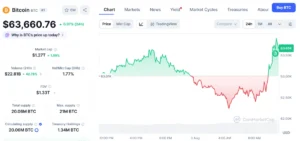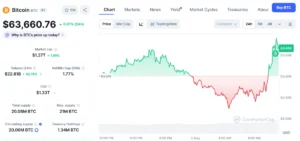
As of early 2026, the cryptocurrency market finds itself in a period of intense debate following Bitcoin’s peak in October 2025 at an all-time high of $126,080. The subsequent decline, which saw Bitcoin trading around $74,680, represents a substantial 40.8% drawdown from that peak. While some market participants interpreted recent upward movements as a sign of recovery, a deeper technical and on-chain analysis suggests that the market might be undergoing a protracted distribution and capitulation phase, mirroring structures observed in prior bear markets but with distinct contemporary characteristics.
Unpacking the Cyclical Framework: A Slower, More Controlled Downtrend
A compelling technical analysis, widely circulated on social media platforms, posits that Bitcoin’s current market structure is strikingly similar to those seen in previous bear phases, specifically 2018 and 2022. The core concept behind this analysis, articulated by crypto analyst BLADE on X (formerly Twitter), is that Bitcoin’s price movements consistently adhere to a defined emotional and structural framework across cycles. This framework typically involves a parabolic advance, followed by a period of distribution, a violent break lower, a misleading recovery, and finally, a grind into a capitulation phase.
The crucial distinction in the current cycle, according to this analysis, is its "slower tempo," "deeper institutional involvement," and a "more controlled trading environment." Unlike the more volatile, retail-driven corrections of the past, the current phase is characterized by a less frantic but potentially more prolonged unwinding of positions. The October 2025 high of $126,080 serves as the reference point for this cycle’s peak, from which the market has already corrected significantly. However, the analysis argues that the "downtrend is still not complete," implying that the market has yet to experience the full extent of the pain typically associated with cycle bottoms.
Historically, Bitcoin cycles have demonstrated remarkable consistency in their broader patterns. The 2017 bull run, which culminated in December 2017, was followed by the infamous 2018 "Crypto Winter," leading to an approximate 84% drawdown from peak to trough. Similarly, the 2021 bull market, which saw Bitcoin reach new highs, transitioned into the 2022 bear market, with a top-to-bottom decline of about 77%. These historical precedents suggest that the current 40.8% drawdown from the October 2025 peak of $126,080 might not yet represent the full extent of the correction if past patterns are to serve as a guide.
The Timing Element: Why a Lasting Bottom May Be Premature
A critical aspect of this bearish thesis revolves around the timing of cycle bottoms relative to all-time highs. Historical data consistently shows that prior cycle bottoms did not form immediately after the first significant drawdown but typically emerged approximately a year after the preceding all-time high. For instance, the 2017 peak was in December 2017, and the bottom arrived in December 2018. The 2021 peak saw a similar lag until the 2022 bottom.
Applying this historical observation to the current cycle, if the October 2025 high of $126,080 is indeed treated as the cycle peak, then a lasting bottom might not be expected until October 2026 or even later. This extended timeline stands in contrast to the often-optimistic sentiment that rallies, even misleading ones, signal an imminent turnaround. The current price level of $74,680, while significantly below the peak, may still be too early in the process for a definitive and sustainable bottom, especially if the market is indeed mimicking the longer, more drawn-out consolidation phases of previous cycles.
The argument for a prolonged bearish phase is further bolstered by the observation that the current cycle exhibits "lower volatility" compared to previous ones. This reduced volatility, attributed in part to increased institutional participation and a more regulated environment, might contribute to a slower, more deliberate price discovery process during the downturn. Instead of sharp, dramatic drops and V-shaped recoveries, the market could experience a more gradual erosion of value, interspersed with deceptive relief rallies, ultimately leading to a prolonged period of accumulation at lower price points.

On-Chain Signals and Investor Pain: Indicators of an Incomplete Reset
Beyond purely technical price action, on-chain analytics provide crucial insights into the underlying health and sentiment of the Bitcoin network. Analyst BLADE’s comprehensive analysis leaned heavily on these indicators, particularly "long-term holder stress" and Glassnode’s "Net Unrealized Profit/Loss (NUPL)," to argue that the market reset is far from complete.
Net Unrealized Profit/Loss (NUPL): This metric, developed by Glassnode, measures whether the aggregate Bitcoin network is currently sitting on paper profits or losses. It is calculated by subtracting the realized cap from the market cap and dividing by the market cap. NUPL ranges from positive (aggregate profit) to negative (aggregate loss), with specific thresholds often correlating with distinct market phases. Generally, high positive NUPL values signal market euphoria and potential tops, while deeply negative NUPL values indicate widespread investor pain, capitulation, and historically, cycle bottoms. The farther NUPL moves from zero into negative territory, the closer the market tends to get to major extremes of despair, which often precede a reversal.
In the context of early 2026, the current NUPL readings, while reflecting some degree of pain from the October 2025 peak, are not yet indicative of the extreme despair and widespread capitulation typically observed at true cycle lows. This suggests that investors, particularly long-term holders, have not yet experienced the full extent of unrealized losses that historically mark the point of maximum financial and psychological pain, a prerequisite for a lasting market bottom.
Long-Term Holder Stress: This metric refers to the pressure exerted on long-term Bitcoin holders (entities holding Bitcoin for extended periods, typically over 155 days) to sell their holdings. During deep bear markets, even seasoned long-term holders, who are generally more resilient to price fluctuations, can reach a breaking point due to sustained losses, economic pressures, or the belief that further downside is inevitable. When long-term holders begin to capitulate and sell their coins at a loss, it often signifies a market bottom, as the "strong hands" are finally shaken out. The current analysis suggests that while there has been some stress, the signs of widespread, indiscriminate selling from this cohort, characteristic of true capitulation, are not yet evident. This implies that many long-term holders are still HODLing, perhaps waiting for a relief rally or simply not yet pushed to their absolute limit.
Institutional Demand vs. Spot Market Contraction: A Diverging Narrative
Another layer of complexity in the current market landscape is the interplay between growing institutional buying and persistent contraction in Bitcoin’s spot demand. CryptoQuant, a leading on-chain analytics firm, reported as early as April 2025 (well before the October 2025 peak, indicating a trend) that Bitcoin spot demand was still in deep contraction despite growing institutional buying. This observation continues to hold true in early 2026, even in the wake of the market correction.
The emergence of Bitcoin Spot Exchange-Traded Funds (ETFs) in major financial markets has undeniably ushered in a new era of institutional involvement. These investment vehicles provide a regulated and accessible gateway for large allocators – hedge funds, family offices, and even sovereign wealth funds – to gain exposure to Bitcoin without directly managing the underlying cryptocurrency. This influx of institutional capital has been significant, often driving headline demand and contributing to the narrative of Bitcoin’s increasing mainstream acceptance.
However, the CryptoQuant analysis highlights a critical divergence: while institutional entities are accumulating Bitcoin through ETFs, the underlying organic spot demand from individual retail investors and smaller market participants remains subdued. This means that the market’s internal strength, derived from a broad base of enthusiastic buyers, has not fully caught up with the more concentrated demand from large allocators.
This divergence creates a "controlled trading environment" where large institutional flows can potentially mitigate extreme volatility on the downside, preventing the kind of rapid, panic-driven sell-offs seen in previous cycles. Yet, it also means that a sustainable, broad-based recovery may be elusive until retail sentiment and organic spot demand meaningfully improve. Until the market’s internal strength aligns with institutional interest, Bitcoin’s price might continue to struggle, grinding sideways or experiencing further gradual declines as the market seeks a true equilibrium point where both large and small investors find value.

Historical Drawdowns and Bottoming Timelines: Projecting the Road Ahead
To further contextualize the current market, it’s essential to revisit the magnitude and duration of previous bear markets.
- 2017-2018 Bear Market: Following its peak in December 2017, Bitcoin experienced an approximately 84% drawdown, eventually bottoming in December 2018. This correction lasted roughly 365 days from peak to bottom.
- 2021-2022 Bear Market: After its peak in November 2021, Bitcoin saw a decline of about 77%, with the bottom forming in November 2022. This bear market also lasted approximately 360-370 days.
Applying these historical templates to the current situation, with the October 2025 peak at $126,080 and current prices around $74,680 (a 40.8% drawdown):
- Drawdown Magnitude: If this bear market were to mimic the 2018 drawdown (84%), Bitcoin would need to fall significantly further, potentially to around $20,173. If it followed the 2022 drawdown (77%), it would imply a bottom around $28,998. The current 40.8% drawdown suggests that, by historical standards, there could indeed be considerable downside still ahead before a true capitulation is reached.
- Timing of Bottom: Based on the historical pattern of bottoms forming approximately 360-370 days after the prior cycle’s peak, a similar sequence for the current cycle, following the October 2025 peak, would point to a potential cycle bottom somewhere in Q3 or Q4 2026. This projection aligns with the analysis suggesting an "extended bearish case in the months to come."
This chronological framework suggests that the market is still very much in the throes of a post-peak correction. The "misleading recovery" phase, often characterized by short-lived rallies that fail to break out of the broader downtrend, is a common feature of these extended bear markets. Investors who anticipate a quick rebound might find themselves caught in these traps, further contributing to the sentiment of frustration and pain that precedes a true bottom.
Implications for Investors and the Broader Ecosystem
The implication of this extended bearish outlook is multifaceted. For retail investors, it necessitates a cautious approach, emphasizing capital preservation and avoiding premature entries based on short-term rallies. The "slower tempo" and "more controlled trading environment" might lull some into a false sense of security, making the eventual capitulation, if it occurs, even more painful. Education on risk management and understanding market cycles becomes paramount.
For institutional investors, the extended downturn, particularly if it bottoms at significantly lower prices, could present a generational accumulation opportunity. Their deeper pockets and longer time horizons allow them to ride out volatility and acquire assets at distressed prices, potentially setting the stage for the next bull run. However, it also means that their current investments, made closer to the October 2025 peak, would be underwater for a considerable period, testing their conviction.
For the broader Bitcoin and cryptocurrency ecosystem, a prolonged bear market could lead to a "purging" effect, similar to previous cycles. Projects lacking fundamental utility or strong development teams may struggle to survive, while robust projects with clear value propositions could consolidate their positions. It could also shift focus from speculative trading to fundamental development, innovation, and infrastructure building, which often thrives during quieter market periods.
The current market debate surrounding Bitcoin’s trajectory in early 2026 underscores a period of significant uncertainty. While the latest rebound might offer a glimmer of hope for some, a growing body of technical and on-chain analysis suggests that the market is in a more protracted, institutionally influenced bear phase that is not yet complete. Historical patterns of drawdowns and bottoming timelines, coupled with indicators of incomplete investor capitulation and subdued spot demand, point towards a potential for further downside and an extended period of consolidation, with a lasting bottom potentially not forming until late 2026. As the market navigates this complex landscape, vigilance and a deep understanding of historical cycles will be crucial for all participants.