The Sui mainnet has officially resumed normal operations following a critical technical failure that brought the high-throughput blockchain to a total standstill for nearly six hours on May 28 and May 29. The disruption, which originated from a flawed software deployment, underscores the ongoing challenges Layer 1 blockchain projects face when balancing rapid feature iteration with the absolute necessity of network stability. Validators across the global decentralized network were forced to coordinate an emergency patch to rectify a malfunction in the chain’s gas-charging logic, a cornerstone of the network’s economic and operational infrastructure.
Anatomy of the Technical Failure
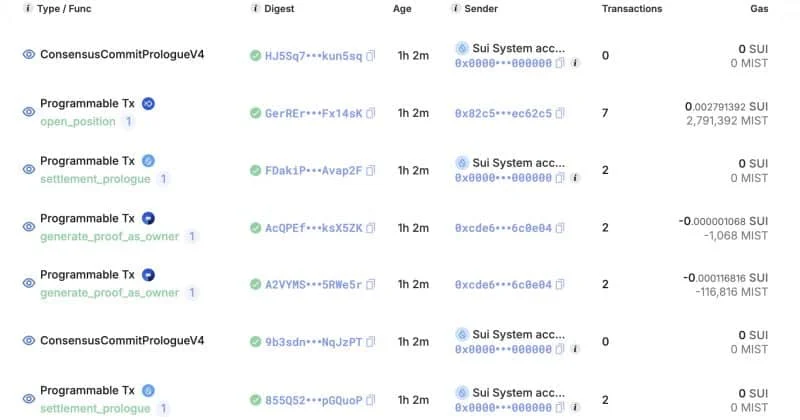
The outage was traced back to the implementation of the 1.72 software release. Shortly after the update was pushed to the validator set, the network’s internal consensus engine encountered a critical error within the gas-charging module. In the context of the Sui blockchain, the gas-charging logic is responsible for calculating the precise computational costs associated with transaction execution. When this specific piece of code failed to process incoming requests correctly, the network’s checkpoint production—the mechanism by which Sui finalizes blocks and commits them to the permanent ledger—effectively ceased.
Because Sui utilizes a sophisticated consensus mechanism designed for high performance and low latency, the failure of this logic triggered a defensive "fail-safe" mode. To prevent the processing of potentially malformed or miscalculated transactions, the validators stopped producing new checkpoints, leaving the network in a state of suspended animation. For users, this meant that the chain effectively ceased to exist as a functional financial utility for the duration of the outage.
A Chronology of the Disruption
The incident began on May 28, when the initial deployment of the 1.72 update initiated a cascade of errors. As validators began to run the new software, the divergence between nodes running the old version and those attempting to run the new, flawed code caused a fracture in the consensus state.
- Detection Phase: Validators and network monitors identified the stall in block production almost immediately, as transaction finality times spiked and then hit a permanent wall.
- Investigation Phase: Engineers and lead developers spent several hours diagnosing the root cause. The complexity of Sui’s object-based data model meant that tracing the error in the gas-charging module required a thorough review of the newly deployed code.
- Remediation Phase: Once the bug was identified, the engineering team developed a patch. However, the nature of a decentralized network means that developers cannot simply "reboot" the system from a central command center.
- Coordination Phase: The restoration process required a supermajority of validators—those holding more than two-thirds of the total staked SUI tokens—to manually download, install, and initiate the patched software version.
- Resolution: By May 29, the threshold was met, the consensus was re-established, and checkpoint production resumed. The total duration of the downtime was recorded at approximately five hours and 55 minutes.
Financial and Operational Impact
The impact of a nearly six-hour freeze on a blockchain designed for decentralized finance (DeFi) is profound. During the outage, the Sui ecosystem—which hosts numerous liquidity pools, lending protocols, and decentralized exchanges—was rendered static. Because no transactions could be finalized, traders were unable to adjust positions, exit volatile assets, or deposit collateral. This is particularly problematic for automated systems that rely on real-time price updates to trigger liquidations. Had the market seen a massive, sudden volatility event during those six hours, the inability for protocols to liquidate under-collateralized positions could have resulted in significant "bad debt" within the DeFi ecosystem.
However, the network’s design proved robust in terms of data integrity. Despite the prolonged stall, no user funds were lost, and the state of the chain remained consistent with its pre-outage status. The safety guarantees inherent in the Sui architecture prevented the corruption of the ledger, ensuring that once the network came back online, the history of assets remained accurate and verifiable.
Market Reaction and Investor Sentiment
The SUI token, which serves as the lifeblood of the network’s governance and utility, reacted immediately to the news of the technical failure. Market participants, sensitive to the risks of centralized or infrastructure-related downtime, began to divest, driving the price of SUI down by approximately 6% to 8% during the peak of the outage, dipping to lows around $0.89.
This reaction is consistent with historical patterns observed in other Layer 1 blockchains, where downtime is often viewed as a "red flag" for institutional investors who prioritize uptime and reliability above all else. While the price saw a partial recovery following the announcement that the network was back online, the incident has reignited a broader conversation about the risks associated with "move-fast-and-break-things" development cultures in the blockchain space.
The Emerging Pattern of Instability
This most recent event marks the second time in five months that the Sui network has experienced an extended period of downtime. On January 14, 2026, the network suffered a similar six-hour stall. In that instance, the culprit was a consensus commit bug, which, much like the May incident, required a coordinated manual effort by validators to resolve.
Having two major outages of this scale within such a short timeframe raises valid questions regarding the maturity of the network’s testing environment. For a blockchain that markets itself as a high-throughput, institutional-grade infrastructure, recurring technical failures of this magnitude are significant hurdles to mass adoption. Investors and developers alike are likely to demand more rigorous auditing processes and potentially a more cautious approach to future software updates to prevent a third occurrence.
Broader Implications for the Layer 1 Landscape
The Sui incident serves as a case study for the risks of modern blockchain infrastructure. As networks strive to optimize for throughput and efficiency, the complexity of their codebases increases. This complexity, while enabling faster transactions and more complex DeFi applications, also increases the "attack surface" for bugs and logic errors.
From an institutional perspective, the primary metric for a blockchain is not necessarily its transactions-per-second (TPS) capacity, but its uptime and reliability. Institutional capital requires a network that is as dependable as traditional settlement systems. When a network goes offline for six hours, it breaks the promise of 24/7 availability that is the bedrock of the cryptocurrency value proposition.
Moving forward, the Sui Foundation and its development partners will likely face pressure to implement more stringent "canary" network testing. By deploying updates to a smaller, experimental version of the network before forcing them upon the mainnet, developers can isolate bugs without impacting the primary financial ledger. Furthermore, the community will be watching closely to see if the development team changes its governance model for software upgrades, perhaps implementing more automated fail-safes that allow the network to recover more quickly without requiring hours of human coordination.
Conclusion: Navigating the Future
The May 29 recovery of the Sui mainnet is a testament to the resilience of decentralized governance and the commitment of the validator community. However, it also serves as a sobering reminder of the fragility of even the most sophisticated distributed systems. As the blockchain industry matures, the focus must shift from pure performance metrics to the foundational elements of resilience, security, and stability.
For the Sui network, the path forward involves restoring confidence among its users and institutional partners. While the network’s ability to survive these outages without data loss is a point of success, the frequency of these events will continue to be a primary concern for market participants. Whether Sui can evolve its development and deployment cycle to match its high-performance aspirations will be the defining challenge for the project in the coming year. For now, the network remains operational, and the focus turns to the next major update—and the rigorous testing that will undoubtedly accompany it.