
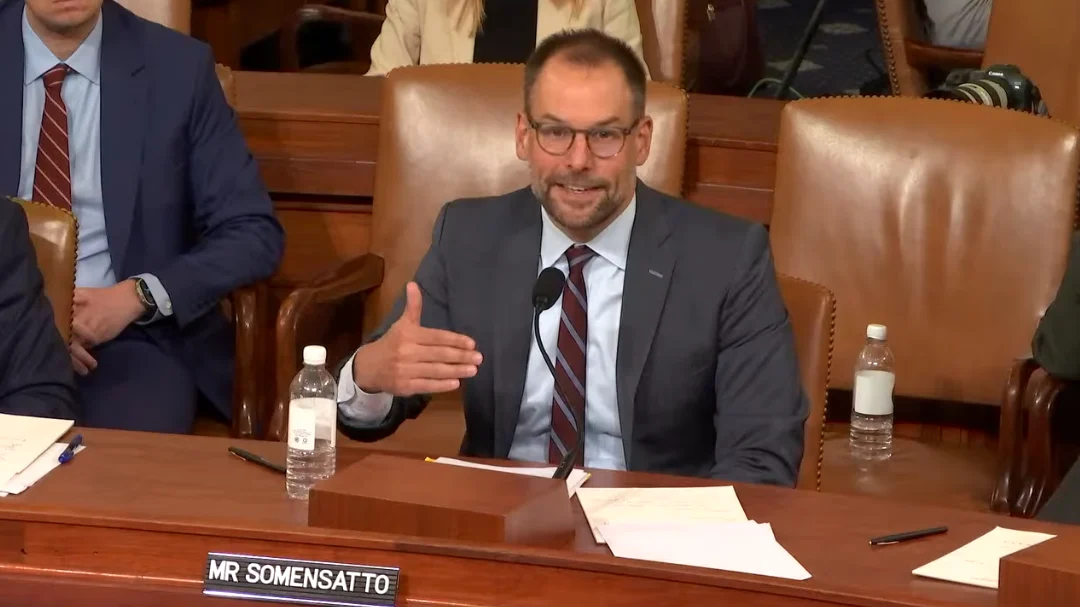
Jason Somensatto, the Director of Policy at Coin Center, appeared before the House Ways and Means Committee to provide expert testimony regarding the complex and often controversial landscape of digital asset taxation. In a comprehensive hearing aimed at addressing the legislative gaps and administrative hurdles facing American cryptocurrency users, Somensatto detailed the specific challenges that current tax laws impose on innovation and individual compliance. The testimony, delivered during a full committee legislative hearing, arrives at a critical juncture as the Internal Revenue Service (IRS) and the Department of the Treasury continue to refine reporting requirements for digital assets under the framework established by the Infrastructure Investment and Jobs Act.
The hearing served as a platform for lawmakers to examine the practical implications of existing tax codes on decentralized technologies. Somensatto’s testimony focused on several high-priority areas, including the definition of "brokers" in the digital asset space, the necessity of a de minimis exemption for small personal transactions, and the tax treatment of rewards generated through network participation, such as staking and mining. By providing a technical and policy-oriented perspective, Somensatto aimed to guide the committee toward a tax regime that balances the government’s need for revenue and oversight with the unique operational realities of blockchain technology.
The Core Arguments for Tax Reform in Digital Assets
Central to Somensatto’s testimony was the assertion that the current tax framework for digital assets is disproportionately burdensome for the average user. Under existing IRS guidance, every time a consumer uses a digital asset to purchase a good or service, it is treated as a "disposition of property." This means that buying a cup of coffee with Bitcoin or another cryptocurrency triggers a capital gains realization event, requiring the taxpayer to calculate the cost basis of the asset at the time of acquisition and the fair market value at the time of the transaction.
Somensatto argued that this requirement creates an insurmountable administrative barrier for the use of digital assets as a medium of exchange. To rectify this, he advocated for the implementation of a de minimis exemption. Such an exemption would allow individuals to make small, personal transactions—typically suggested to be under $200 or $600—without the need to track or report capital gains. This change, according to policy experts, would align cryptocurrency taxation more closely with the treatment of foreign currency used for personal travel and would significantly reduce the compliance burden on millions of American taxpayers.
Furthermore, Somensatto addressed the "broker" reporting requirements that have been a point of contention since 2021. The broad definition of a broker in current legislation could theoretically encompass software developers, miners, and validators—entities that do not have access to the personal information of the users they serve. Somensatto emphasized that requiring these non-custodial actors to issue Form 1099-DA would be technically impossible and would likely drive innovation and infrastructure development outside of the United States.
Historical Context and the Evolution of Crypto Taxation
The legislative journey toward the current state of digital asset taxation began in earnest in 2014, when the IRS issued Notice 2014-21. This notice established that for federal tax purposes, virtual currency is treated as property rather than currency. While this provided some initial clarity, it also set the stage for the capital gains tracking requirements that Somensatto criticized in his testimony.
The tension between the industry and regulators escalated with the passage of the Infrastructure Investment and Jobs Act in 2021. This legislation expanded the definition of a "broker" under Section 6045 of the Internal Revenue Code to include any person who is responsible for regularly providing any service effectuating transfers of digital assets on behalf of another person. The ambiguity of this language led to widespread concern that the law would apply to decentralized finance (DeFi) protocols and hardware wallet manufacturers.
In response to these concerns, the Treasury Department released proposed regulations in late 2023 to clarify the reporting requirements. However, the industry’s reaction remained mixed, with many arguing that the proposed rules still placed undue burdens on decentralized platforms. Somensatto’s testimony before the Ways and Means Committee represents the latest effort to influence the finalization of these rules and to encourage Congress to pass corrective legislation that provides more permanent and specific definitions.
Chronology of Recent Regulatory Developments
The timeline of digital asset taxation has been marked by several key milestones that informed the context of the House Ways and Means hearing:
- March 2014: The IRS issues Notice 2014-21, declaring virtual currency as property.
- 2019-2020: The IRS adds a specific question regarding digital asset transactions to the front page of Form 1040, signaling increased enforcement focus.
- November 2021: President Biden signs the Infrastructure Investment and Jobs Act into law, introducing new broker reporting requirements for digital assets.
- May 2022: The Virtual Currency Tax Fairness Act is introduced in Congress, seeking a de minimis exemption for small transactions.
- August 2023: The Treasury Department and the IRS release a nearly 300-page proposal on digital asset broker reporting, introducing Form 1099-DA.
- June 2026: Jason Somensatto testifies before the House Ways and Means Committee, highlighting ongoing friction between technological capabilities and tax compliance requirements.
This chronology illustrates a steady progression toward stricter oversight, which Somensatto argued must be balanced with a realistic understanding of how decentralized networks function.
Supporting Data and the "Tax Gap" Debate
A primary driver behind the push for stricter digital asset taxation is the "tax gap"—the difference between taxes owed and taxes paid. The Treasury Department has previously estimated that the tax gap related to digital assets could be significant, though specific, verifiable figures are difficult to obtain. Some government projections have suggested that improved reporting requirements for digital assets could generate billions of dollars in additional tax revenue over a decade.
However, industry analysts and organizations like Coin Center point to data suggesting that the compliance burden may outweigh the revenue benefits if not handled correctly. For instance, the cost of implementing complex tracking software for thousands of micro-transactions can exceed the actual tax liability for many users. Furthermore, if the regulatory environment becomes too hostile, the resulting "brain drain" of developers and capital to more favorable jurisdictions could lead to a long-term loss in tax revenue from the broader technology sector.
Data from third-party tax software providers indicates that a significant percentage of cryptocurrency users struggle with reporting accuracy due to the lack of standardized 1099 reporting from exchanges. Somensatto’s testimony suggested that while centralized exchanges are well-positioned to provide this data, extending the same requirements to decentralized protocols lacks a data-driven justification and ignores the fundamental architecture of the technology.
Official Responses and Political Reactions
The hearing saw a range of reactions from committee members, reflecting the broader political divide on the issue. Republican members of the committee generally expressed support for Somensatto’s call for clarity and the prevention of regulatory overreach. Many voiced concerns that overly broad reporting requirements would stifle American competitiveness in the emerging Web3 economy. Representative Jason Smith, Chairman of the House Ways and Means Committee, has previously emphasized the need for a tax code that supports American innovation rather than hindering it with "unworkable" mandates.
Conversely, some Democratic members focused on the importance of closing the tax gap and ensuring that digital asset investors are subject to the same level of scrutiny as traditional stock market investors. They argued that digital assets have been used for tax evasion and that robust reporting is essential for maintaining the integrity of the tax system. However, there appeared to be some bipartisan openness to the idea of a de minimis exemption, acknowledging that the current system is impractical for small, everyday purchases.
In his written testimony, Somensatto also addressed the issue of privacy, noting that the collection of massive amounts of transaction data by the government could create significant security risks. He argued that any reporting regime must be designed with the principle of "data minimization" in mind, ensuring that only the necessary information is collected to satisfy tax obligations without compromising the financial privacy of law-abiding citizens.
Broader Impact and Implications for the Future
The outcome of this hearing and the subsequent legislative actions will have far-reaching implications for the digital asset industry. If Congress moves forward with a de minimis exemption and a narrowed definition of "broker," it could catalyze the use of stablecoins and other cryptocurrencies for retail payments, potentially revolutionizing the payments landscape in the United States.
On the other hand, if the current trajectory of broad and stringent reporting requirements continues, the United States may see a continued migration of crypto-related businesses to jurisdictions like Switzerland, Singapore, or the United Arab Emirates, which have established more tailored regulatory frameworks. The testimony provided by Somensatto highlights the urgent need for a "middle path" that provides the IRS with the information it needs while respecting the unique decentralized nature of the technology.
As the IRS prepares to finalize its rules for Form 1099-DA, the points raised during the hearing will likely serve as a roadmap for potential legislative amendments. The digital asset community remains watchful, as the balance between enforcement and innovation will determine whether the United States remains a leader in the global financial technology sector.
Conclusion: The Path Toward Legislative Clarity
Jason Somensatto’s appearance before the House Ways and Means Committee underscores the evolving relationship between the cryptocurrency industry and federal tax authorities. By advocating for practical solutions like the de minimis exemption and clear, technical definitions of industry participants, Coin Center and Somensatto have provided a framework for how the tax code can adapt to the 21st-century digital economy.
The testimony emphasized that the goal of the industry is not to avoid taxation, but to ensure that taxation is fair, predictable, and possible to comply with. As the legislative process continues, the insights provided by policy experts like Somensatto will be vital in ensuring that the American tax system evolves alongside the technologies it seeks to regulate. The coming months will be decisive as lawmakers weigh the technical realities presented in the hearing against the administrative goals of the Treasury Department.
