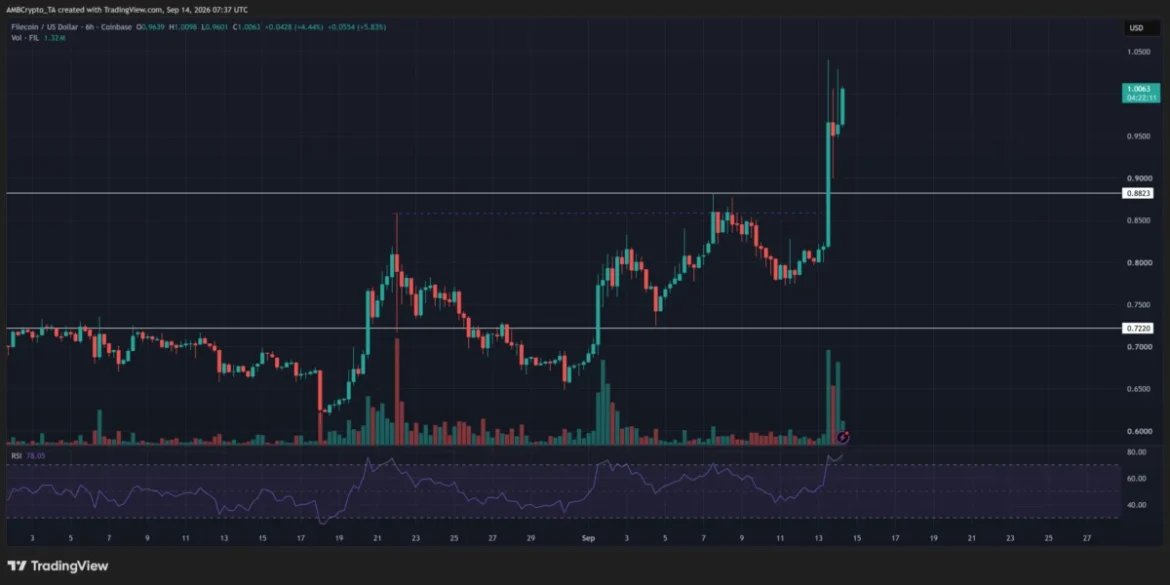
Filecoin (FIL) has officially shattered its month-long consolidation phase, staging an impressive 20.1% rally that propelled the altcoin above the $1 threshold for the first time since May. The dramatic price movement saw FIL break through a stubborn overhead resistance at $0.87, which had previously thwarted multiple recovery attempts throughout the summer.
The breakout, accompanied by a staggering surge in trading volume and a spike in derivative market participation, has shifted market sentiment. However, technical indicators suggest that while network developments and futures speculation are driving immediate momentum, the sustainability of this rally will ultimately depend on translating anticipated protocol upgrades into tangible, real-world utility.
Market Dynamics and Price Action: Breaking the Range
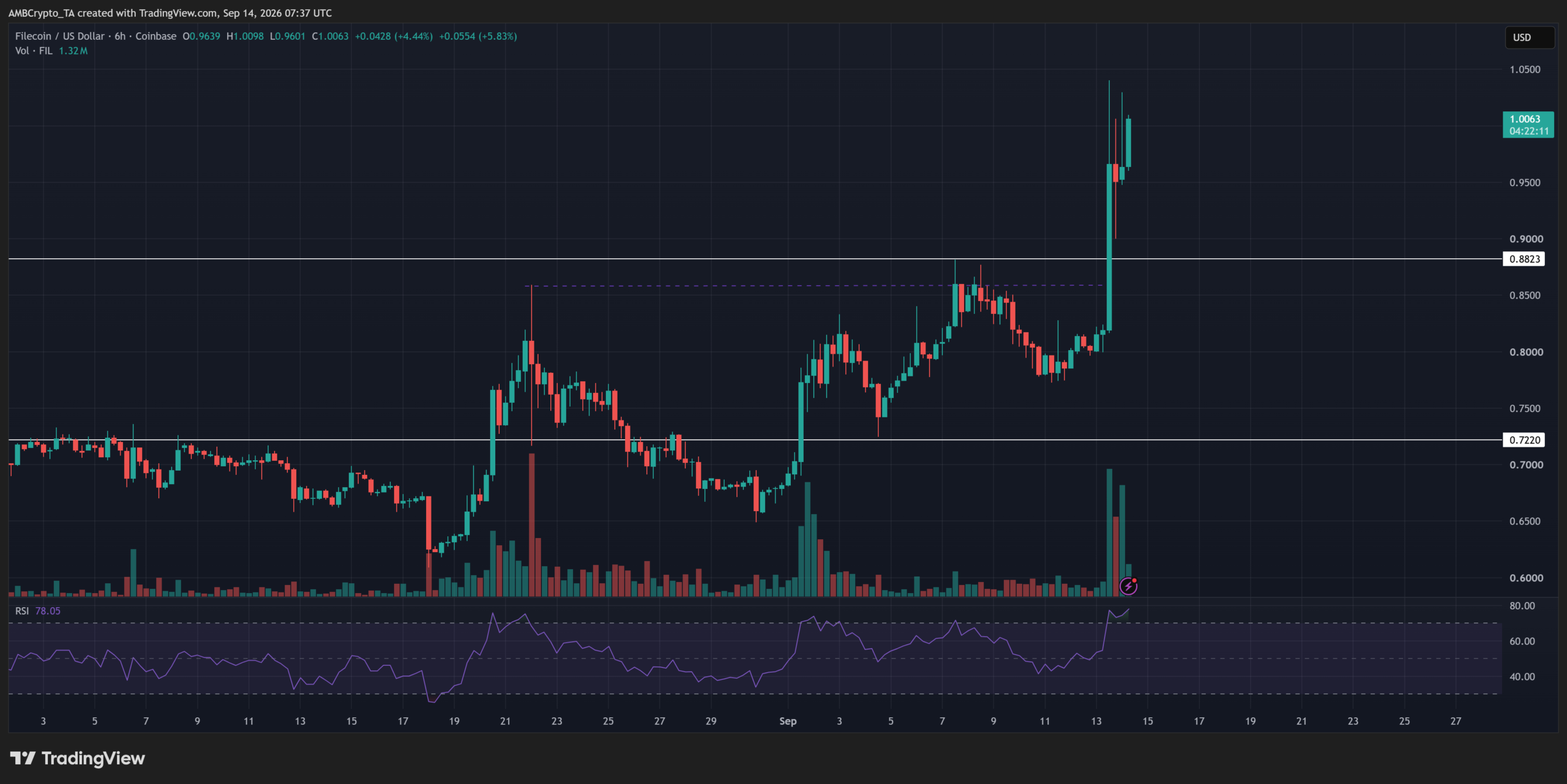
The recent price action marks a significant pivot for Filecoin, which had been trapped in a narrow trading range for approximately 30 days. As buying pressure accumulated, FIL broke past the critical $0.87 resistance barrier, igniting a powerful upward wave that peaked temporarily at $1.03 before settling back to approximately $0.9685 at the time of reporting.
Market participation expanded exponentially alongside the price appreciation. The 24-hour trading volume skyrocketed by an astonishing 1,026%, surging to $396.66 million. This massive influx of capital underscores a sharp resurgence of trader interest, transforming what was previously a stagnant asset into one of the day’s most active altcoins.
Despite the bullish enthusiasm, technical metrics flashed early signs of overheating. The Relative Strength Index (RSI) climbed to 78.05, placing FIL firmly in overbought territory. This condition naturally invited profit-taking from early-stage investors, triggering a modest correction from the $1.03 peak down to the $0.90–$0.97 range. Market analysts are now closely monitoring the former $0.87 resistance level, which has transitioned into a primary structural support floor. Maintaining this threshold is crucial; holding above $0.87 confirms that bulls have successfully absorbed previous sell orders, paving the way for another assault on the psychological $1 barrier. Conversely, a breakdown below this level could invalidate the breakout structure and drag FIL back into its historical trading channel.
Derivatives Market Surge and Leverage Risks
The anatomy of Filecoin’s recent rally reveals heavy involvement from the derivatives sector. Open interest—the total number of outstanding derivative contracts—climbed concurrently, approaching $284 million during the advance. Furthermore, futures trading volume outpaced spot market activity by roughly tenfold, highlighting that speculative leverage played a substantial role in accelerating the price discovery phase.
While high leverage can amplify upward momentum and assist in clearing major milestones like the $1 mark, it simultaneously introduces systemic vulnerability. Elevated open interest combined with an overbought RSI increases the probability of sharp, cascading liquidations if sudden downward pressure forces leveraged long positions to unwind. Consequently, risk management has become paramount for traders navigating the FIL market in the wake of the breakout.
Fundamental Catalysts: The Solstice Proposal and Network Growth
Beyond technical charts and derivatives data, the broader narrative surrounding Filecoin’s price surge is heavily influenced by fundamental developments within its ecosystem. Traders are increasingly evaluating the network’s underlying value proposition, catalyzed by the introduction of the Solstice proposal.
For months, one of the most persistent criticisms leveled against the Filecoin network has been the operational bottleneck associated with the approval process for DataCaps—mechanisms critical for verified client onboarding and data storage allocation. The Solstice upgrade aims to resolve this friction point directly by tying block reward payments explicitly to verified transactional payments. By restructuring the economic model in this manner, the protocol establishes a direct correlation between token issuance and real-world network utilization.
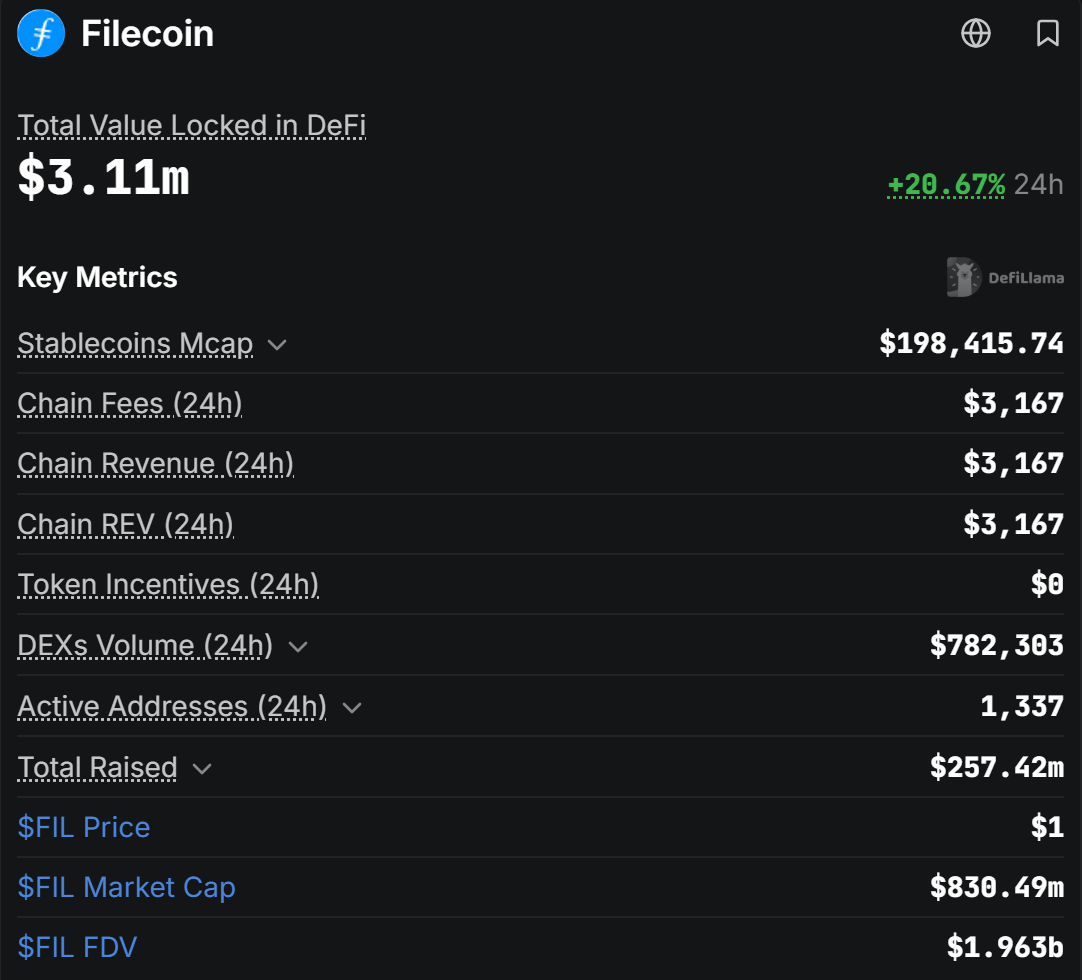
Industry observers have noted that this proposed alignment between token economics and actual network demand is a vital step toward maturing the ecosystem. However, a stark divergence currently exists between speculative market valuation and foundational metrics. On-chain data from DeFiLlama and network activity trackers reveals that Filecoin Virtual Machine (FVM) activity remains relatively modest, boasting approximately 1,337 daily active addresses and a decentralized finance (DeFi) Total Value Locked (TVL) of $3.1 million.
This disparity indicates that the recent price rally is largely forward-looking, pricing in anticipated growth and structural improvements rather than immediate, heavy network adoption. While the Solstice proposal successfully bolsters long-term confidence, analysts emphasize that sustained price appreciation above $1 will ultimately require parallel growth in active network usage and decentralized application (dApp) deployment.
Broader Industry Implications and Outlook
Filecoin’s breakout mirrors a broader trend across the cryptocurrency landscape, where altcoin projects with robust utility frameworks are increasingly sensitive to governance proposals and protocol-level overhauls. As decentralized storage networks compete for market share against centralized cloud providers, initiatives that streamline client onboarding and optimize reward distribution are viewed as essential milestones for long-term viability.
For Filecoin, the immediate outlook hinges on its ability to defend the $0.87 support zone and consolidate its position above the psychological $1 threshold. If the network can successfully implement the Solstice upgrade without technical delays, and if on-chain metrics begin to reflect the optimistic sentiment currently displayed in the derivatives markets, FIL may establish a durable foundation for extended recovery. However, failure to expand active network usage while speculative leverage unwinds could leave the asset vulnerable to retracements, underscoring the delicate balance between market perception and protocol fundamentals in the current digital asset economy.