
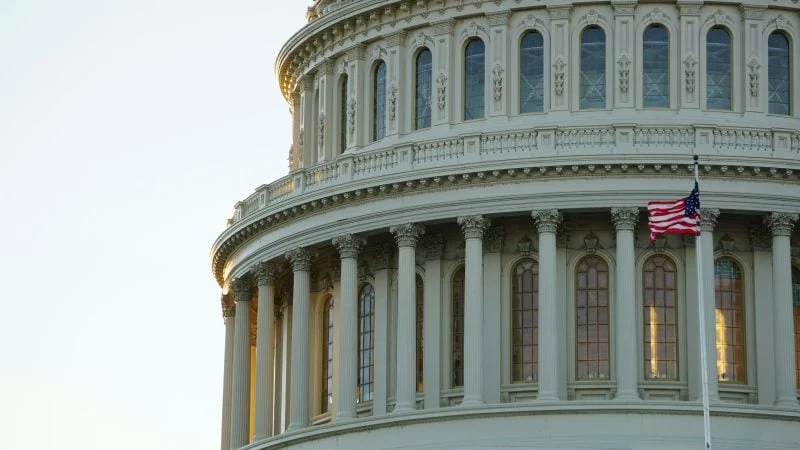
The United States Senate has entered a critical phase of legislative negotiation following the release of an updated, 616-page draft of the Digital Asset Market Clarity Act. Senator Cynthia Lummis (R-WY), a long-standing advocate for digital asset integration into the American financial system, unveiled the revised text on Wednesday, signaling a final, high-stakes push to establish a comprehensive federal framework for the cryptocurrency industry. This latest iteration of the bill introduces significant ethics provisions designed to mitigate potential conflicts of interest at the highest levels of government, most notably by prohibiting the President of the United States and other senior federal officials from issuing or sponsoring digital assets during their tenure.
As the Senate prepares for its final legislative session before the August recess, the draft represents a complex compromise intended to bridge the gap between pro-innovation Republican stances and Democratic concerns regarding consumer protection and state-level oversight. The inclusion of the White House-backed ethics framework underscores the growing realization within Washington that as digital assets become more intertwined with political campaigning and personal branding, clear boundaries are required to maintain the integrity of federal office.
A New Ethical Framework for Federal Leadership
At the heart of the updated Digital Asset Market Clarity Act is a rigorous ethics mandate that targets the intersection of executive power and the burgeoning crypto economy. The provision specifically bars the President, Vice President, and certain senior federal officials from participating in the direct issuance, promotion, or sponsorship of digital assets while in office. This move is seen by analysts as a preemptive measure to prevent the commodification of federal influence, ensuring that the prestige of the executive branch is not leveraged for private financial gain in the volatile crypto markets.
To address the reality that many incoming officials may already hold significant portfolios of digital assets, the bill establishes a "safe harbor" mechanism. Under this provision, officials can remain in compliance with federal ethics laws by placing their digital asset holdings into qualified blind trusts or by divesting from these assets entirely. This aligns crypto-asset management with existing protocols for traditional securities and real estate holdings, effectively normalizing digital assets within the standard framework of government transparency.
The proposal also includes a temporary prohibition on top federal officials maintaining direct crypto business ties. This ban is scheduled to expire in 2029, a "sunset" provision intended to allow future administrations to reassess the regulatory landscape as the technology matures and becomes more ubiquitous in traditional finance.
Enforcement and Jurisdictional Disputes
One of the most contentious elements of the 616-page draft involves the enforcement of these new ethics and market rules. The current text grants the Department of Justice (DOJ) sole authority to enforce ethics provisions, allowing the Attorney General to initiate civil actions against government officials or digital asset intermediaries who knowingly violate the law.
However, this centralized approach has drawn sharp criticism from Democratic lawmakers. The current draft explicitly prohibits state attorneys general and private individuals from initiating independent enforcement actions regarding these specific federal ethics violations. Democrats argue that this limits the ability of states to protect their constituents and weakens the overall oversight mechanism. They continue to advocate for a "dual-enforcement" model, similar to that seen in traditional consumer protection and securities laws, where both federal and state authorities have the power to act against bad actors.
This jurisdictional tug-of-war extends beyond ethics into the broader market structure. The bill seeks to clarify the "gray zone" between the Securities and Exchange Commission (SEC) and the Commodity Futures Trading Commission (CFTC). By defining the characteristics that classify a digital asset as either a commodity or a security, the bill aims to end years of "regulation by enforcement" that has characterized the U.S. crypto landscape.
Chronology of the Legislative Push
The journey toward the Digital Asset Market Clarity Act has been years in the making, reflecting the rapid evolution of the crypto industry and the shifting political winds in Washington.
- June 2022: Senators Cynthia Lummis and Kirsten Gillibrand (D-NY) introduce the Responsible Financial Innovation Act, the first major bipartisan attempt to create a holistic crypto framework.
- November 2022: The collapse of FTX sends shockwaves through the industry, leading to increased calls for stringent investor protections and transparency.
- Early 2023: Multiple committee hearings in both the House and Senate focus on the "Stablecoin" problem and the need for market structure clarity.
- May 2024: The House of Representatives passes the Financial Innovation and Technology for the 21st Century Act (FIT21) with significant bipartisan support, putting pressure on the Senate to act.
- July 2024: Senator Lummis releases the updated 616-page draft of the Clarity Act, incorporating feedback from the White House and the Treasury Department regarding ethics and national security.
Senator Lummis emphasized the urgency of the current moment, stating that the coming weeks represent the "last real chance for years" to secure a comprehensive legislative win for the industry. The goal is to reach a floor vote before the August recess, a timeline that many insiders view as ambitious but necessary given the upcoming election cycle.
Supporting Data and Market Context
The push for legislation comes at a time when the digital asset market is showing signs of renewed institutional adoption. According to recent data, more than 50 million Americans now own some form of digital asset, and the total market capitalization of the crypto industry has stabilized above $2 trillion.
Furthermore, the introduction of spot Bitcoin and Ethereum ETFs (Exchange-Traded Funds) in the U.S. has brought a new level of legitimacy to the asset class, attracting billions of dollars in inflows from traditional hedge funds and pension plans. However, without federal legislation, these institutions operate in a fragmented regulatory environment where different states have different rules, and federal agencies often issue conflicting guidance.
The Digital Asset Market Clarity Act seeks to resolve this by preserving industry-backed measures like the Blockchain Regulatory Certainty Act. This specific component ensures that non-custodial service providers—such as miners, validators, and software developers—are not treated as money transmitters or financial institutions, a move seen as vital for maintaining the decentralized nature of blockchain technology.
Official Responses and Stakeholder Reactions
The reaction to the Lummis draft has been a mix of cautious optimism and strategic pushback. While the crypto industry generally supports the move toward clarity, advocacy groups have expressed concerns regarding the DOJ’s sole enforcement power.
"While we applaud the efforts to bring clarity to the market, the restriction on state-level enforcement is a significant point of contention," noted a representative from a leading consumer advocacy group. "State attorneys general have historically been the first line of defense against financial fraud, and stripping them of that power in the crypto space could leave investors vulnerable."
On the other side of the aisle, Republican leaders have praised the bill for its focus on American competitiveness. "The US has always been at the forefront of financial innovation," Lummis stated. "Ensuring that the U.S. leads the way on digital assets is not just about finance; it’s about national security and economic sovereignty."
The White House has remained relatively quiet on the specific text but has signaled that it views the inclusion of the ethics framework as a necessary step for any bill to receive the President’s signature. The administration’s focus remains on ensuring that digital assets do not facilitate illicit finance or undermine the stability of the U.S. dollar.
Broader Impact and Implications for the Future
If passed, the Digital Asset Market Clarity Act would represent the most significant change to U.S. financial law in decades. It would provide a roadmap for other nations currently struggling with their own crypto regulations and would likely trigger a wave of new institutional investment as the "regulatory risk" premium is removed from the market.
For the political landscape, the bill sets a precedent for how the U.S. handles the personal financial interests of its leaders in an era of programmable money. By barring the President from issuing crypto, the Senate is effectively acknowledging that digital assets are not merely "investments" but are powerful tools of influence that require specific guardrails.
The next two weeks will be decisive. As negotiations continue over the role of state attorneys general and the specific definitions of "qualified blind trusts," the eyes of the global financial community are on the U.S. Senate. Whether this 616-page draft becomes the law of the land or another footnote in the history of crypto regulation depends on the ability of lawmakers to find a middle ground between innovation and oversight before the clock runs out on the current session.
